


FIRST.bet to provide tech for three OIG Gaming Brazil brands transitioning to sportsbooks

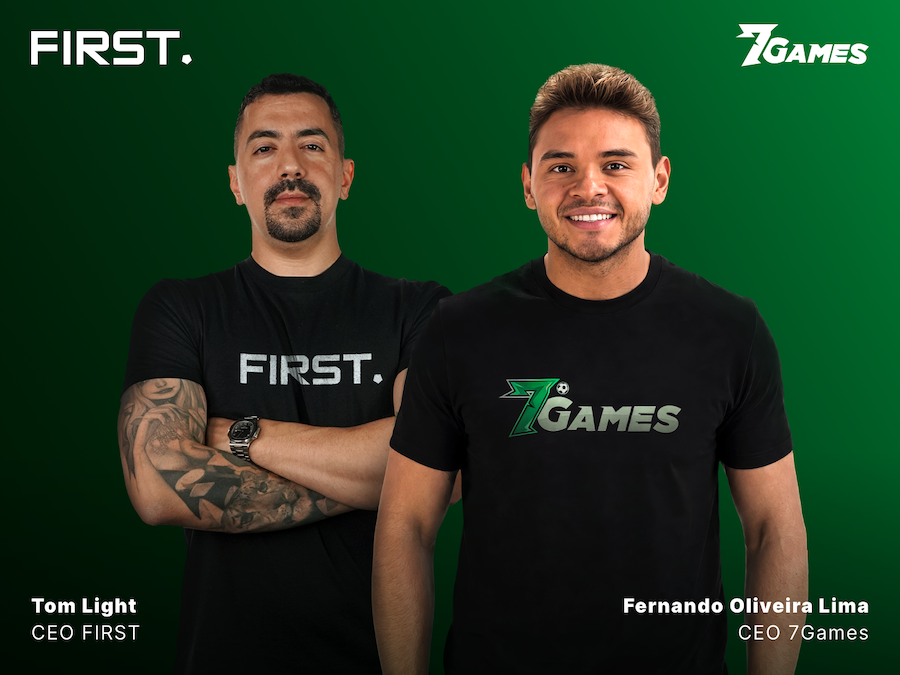
Sportsbook technology supplier FIRST.bet has partnered with online gaming operator OIG Gaming Brazil to power its three online gaming brands: 7Games, Betão, and R7.
Under the agreement, FIRST.bet will transition the three brands to sportsbook operators, using its sports betting engine. According to the supplier, 7Games has already built the front end of its sportsbook using its operating system, SportOS, alongside its betting technology engine. FIRST.bet aims to better target 7Games’ Brazilian audience through improved data performance, powering trading, live markets, and pricing with its technology.

“Brazil is not a market you can grow into slowly. The product has to work from day one,” said Fernando Oliveira Lima, Founder and Chief Executive of 7Games. “FIRST.bet gave us a sportsbook that already fits this market, so we could focus on our players instead of fixing the technology underneath them.”
“Brazil rewards operators who get the product right and punishes the ones who don’t,” said Tom Light, Founder and Chief Executive of FIRST.bet. “7Games already commands serious traffic on the casino side. Now they have a sportsbook built to hold up under that kind of pressure, on their own front-end, running on our engine. That is exactly what SportOS was built for.”
In other news in the region, the Brazilian Institute for Responsible Gaming appointed Carlos Lima as Executive President earlier this month.
Charlotte Capewell brings her passion for storytelling and expertise in writing, researching, and the gambling industry to every article she writes. Her specialties include the US gambling industry, regulator legislation, igaming, and more.

Dig Deeper
Related stories




The Backstory
Brazil’s regulated market raises the technology bar
FIRST.bet’s agreement to power OIG Gaming Brazil’s 7Games, Betão and R7 brands lands at a moment when Brazil is forcing operators and suppliers to move faster, prove more and localize more deeply than in previous gray-market cycles. The country’s transition toward a regulated betting framework has turned sportsbook technology from a back-office choice into a strategic condition for market entry, product quality and long-term compliance.
For OIG Gaming Brazil, the shift is not merely an expansion from casino traffic into sports wagering. It is a test of whether established gaming brands can convert existing audiences into sports bettors without losing them to rivals offering deeper markets, stronger live betting and faster pricing. FIRST.bet’s SportOS and betting engine are being positioned as the infrastructure layer that lets those brands move into sportsbook operations while keeping control of the front-end experience.
That model reflects a broader trend across Latin America. Operators with local brand awareness increasingly want supplier technology that can be deployed quickly, tuned to regional betting behavior and certified or adaptable for local rules. Brazil’s scale makes the stakes higher. A failed sportsbook launch can hurt retention quickly in a market where soccer, in-play betting and mobile-first wagering habits create intense demand spikes around major events.
Certification and compliance become commercial advantages
The recent expansion of sportsbook suppliers into Brazil shows how compliance is becoming a sales tool as much as a regulatory obligation. Earlier this month, Data.bet secured Gaming Laboratories International certification for Brazil, allowing operators using its platform to avoid separate technical testing as part of licensing applications. The certification covered technical architecture, risk controls and alert systems intended to detect irregular activity in real time.
That development helps explain why suppliers are racing to demonstrate readiness before operators finalize platform decisions. In emerging regulated markets, the ability to shorten launch timelines can be as valuable as product differentiation. Certification can reduce cost, lower execution risk and reassure operators that their technology stack will not become a bottleneck during licensing or launch.
FIRST.bet’s pitch to OIG Gaming Brazil sits in the same competitive context, though the emphasis is on performance, market fit and operational resilience. Its message is that Brazil’s market will reward operators that launch with a complete, stable sportsbook rather than iterate slowly after going live. That is a direct response to the country’s combination of high traffic potential and increasingly formal compliance expectations.
Suppliers are also adapting to Brazil’s demand for strong data handling. Live markets, trading models and pricing systems are central to sportsbook margins, but they also affect consumer experience. A platform that cannot manage volatility during peak betting windows risks poor odds availability, delays and player churn. As regulated competition intensifies, operators may have less room to blame technology problems on early-market turbulence.
Global suppliers target LatAm with modular sportsbooks
The OIG deal is part of a wider supplier push into Latin America, where modular sportsbook products are gaining traction among operators seeking fast deployment without surrendering brand identity. Gr8 Tech recently expanded in Asia and Latin America through a partnership with Betting Software, giving BSW access to Gr8 Tech’s iFrame Sportsbook. That product covers 50 sports, including esports, and offers markets on more than 25,000 events a day.
The iFrame model and FIRST.bet’s approach differ technically, but both reflect the same commercial logic: operators want robust sportsbook capabilities without building the full engine themselves. In markets such as Brazil, where local brands may already have customer databases and casino traffic, supplier technology can provide the bridge into sports wagering. The challenge is ensuring that the sportsbook feels native to the operator’s audience rather than bolted on.
That is why front-end control matters. FIRST.bet said 7Games has already built the front end of its sportsbook using SportOS alongside the supplier’s engine. If executed well, that can help OIG’s brands preserve local identity while relying on specialized trading, pricing and risk systems. In practice, it lets an operator focus on acquisition, retention and marketing while the supplier carries much of the technical load.
Competition among suppliers is likely to tighten as Brazil matures. Early deals can establish reference customers and operating data, giving suppliers an advantage when courting additional license holders. But the market will also test whether technology designed for other regions can handle Brazil’s payment habits, promotional intensity, betting peaks and regulatory reporting demands.
Esports and fast-betting products widen the battleground
The sportsbook race is also expanding beyond traditional sports. Betby’s partnership with SABA Sports to provide esports content in Asia, including NBA eBasketball, highlights how suppliers are packaging fast-betting products for operators seeking additional volume outside conventional match schedules. Betby also said it planned to showcase its sportsbook at SBC Rio and SiGMA Americas, underscoring Brazil’s importance in its Latin American strategy.
For Brazilian operators, esports and simulated or fast-cycle betting products could become important engagement tools, particularly for younger players accustomed to high-frequency digital entertainment. They also offer wagering opportunities outside the calendar constraints of major sports. But these products add complexity for platform providers, including risk management, integrity monitoring and market presentation.
FIRST.bet’s immediate work with OIG Gaming Brazil appears focused on converting established brands into sportsbook operators rather than launching a content-heavy esports push. Still, the broader market direction matters. Once operators have a stable sportsbook foundation, they are likely to demand additional verticals, personalization tools and live-betting depth. Suppliers that can integrate those features without undermining compliance or performance will be better positioned.
This is where Brazil differs from smaller regulated markets. Its size may support multiple product strategies at once: mainstream soccer-led sportsbooks, casino-to-sports conversions, esports-led engagement and advanced personalization. The supplier that wins a launch may later need to prove it can support rapid product expansion as operators chase share.
Gray-market retreat reshapes the supplier opportunity
Brazil’s regulatory shift is part of a broader global move away from tolerance of gray-market gambling models. Yolo Group recently said it would close gray-market online gambling brands Sportsbet.io and Bitcasino.io as it pursues UAE vendor licenses, a decision detailed in its plan to move toward regulated markets under Yolo.com. Founder Tim Heath said regulators offering licenses increasingly do not want applicants maintaining operations in pre-regulated markets.
That example, while centered on the UAE and crypto gambling, is relevant to Brazil because it illustrates the commercial pressure now facing operators and suppliers. Licensing regimes are becoming more interconnected in their expectations. Companies that want access to major regulated markets may need cleaner corporate structures, clearer compliance records and technology partners that can withstand regulatory review.
For suppliers such as FIRST.bet, Data.bet, Gr8 Tech and Betby, this creates opportunity but also scrutiny. Operators entering Brazil will look for platforms that can satisfy regulators, payment partners, investors and customers. A supplier’s past performance, certification status and ability to localize responsibly can influence whether an operator wins approval, launches on time and scales safely.
The OIG Gaming Brazil deal therefore carries significance beyond three brand migrations. It shows how Brazil’s regulated market is accelerating the professionalization of sportsbook infrastructure. Operators with traffic but no mature sports engine need partners that can deliver on day one. Suppliers, in turn, are competing to prove that speed, compliance and local relevance can coexist. In Brazil, that combination may determine which brands convert early momentum into durable market share.
