


Into the unknown with Light & Wonder’s New Markets guru

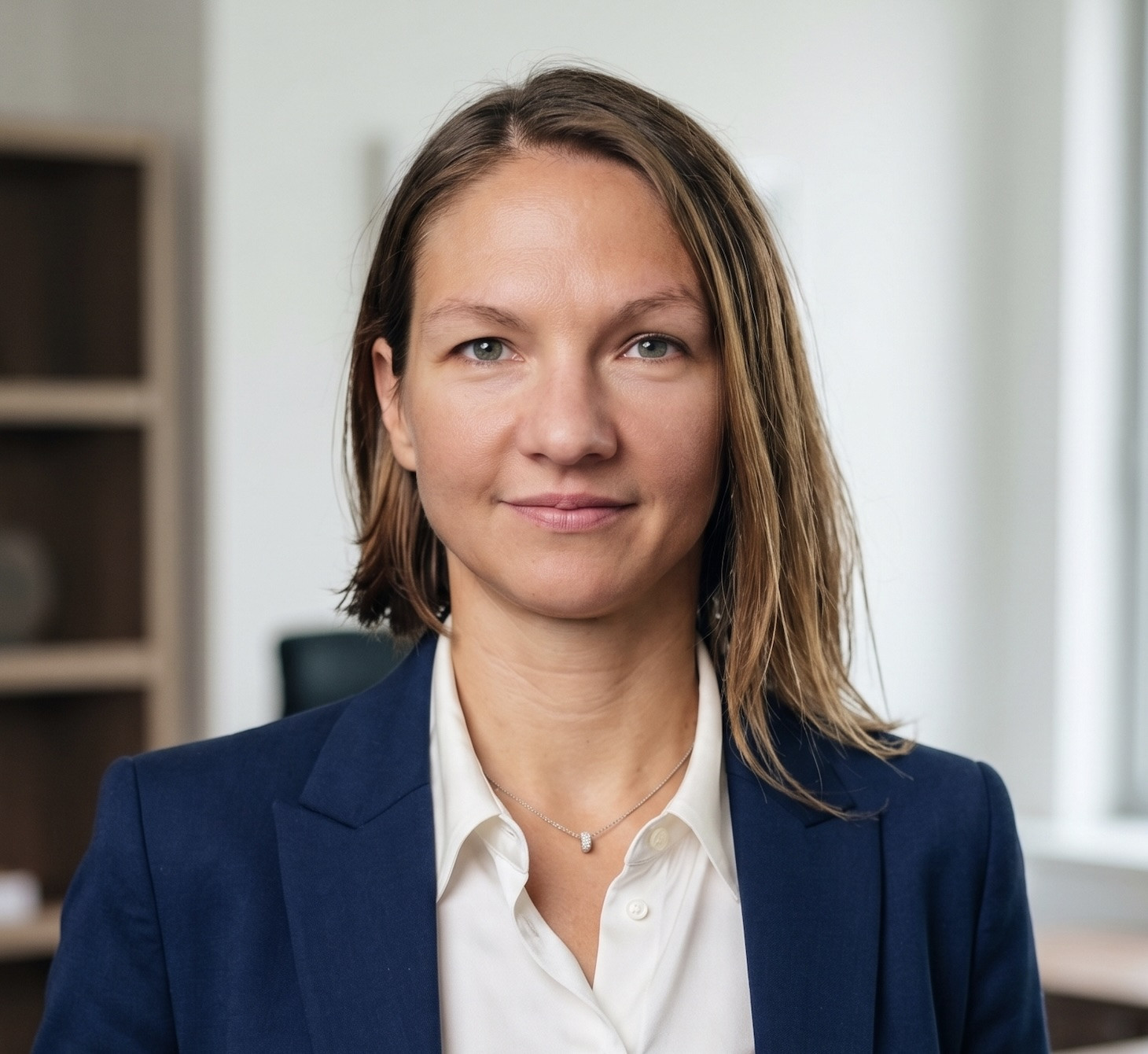
Light & Wonder Vice President of New Markets Magdalena Podhorska-Okolow explains why she plans to “fail fast” as she trailblazes into emerging markets.
Almost six months into her role as VP New Markets & Sales at Light & Wonder, Magdalena Podhorska-Okolow is immersed in some of iGaming’s most promising nascent jurisdictions.

We first met at the Inside Asia Gaming Expo in Manila in September 2025, where she had just revealed Light & Wonder as the first supplier to receive a license from the Philippine gambling regulator, PAGCOR.
The cross-platform games provider, formerly Scientific Games, already had deep relationships with the country’s land-based casinos and integrated resorts, so she explained that the move into digital was a natural progression that wouldn’t involve “reinventing the wheel.”
Catching up again in May, I asked whether anything had changed since then; had the Philippines thrown her any curve balls? The answer was a resounding “yes,” but Podhorska-Okolow was pragmatic about the evolving reality and seemed to relish working through the new intel she was gathering.

“There are nuances that only become clear once you’re operating within the market,” she says, looking back on the supplier’s early push into the Philippines’ budding online operation.

One of the key questions that became apparent only after Light & Wonder launched in the Philippines was how familiar purely online players would be with the games offered by land-based casinos. The assumption was that an omnichannel strategy would meet operators’ needs for both land-based and online customers, because “omnichannel works literally everywhere else.”
However, Light & Wonder came to realize that many Filipinos playing online were based in remote areas and couldn’t get to a casino. Consequently, big-brand casino games have little resonance with this valuable demographic. It meant the strategy needed to evolve quickly.

“This is what’s so exciting about the new role of VP New Markets,” Podhorska-Okolow says. “It’s a lot of learning. It reinforces your understanding and ultimately strengthens your approach. In future, I know to ask that question. My plan is to fail fast. It’s a fail-and-learn-fast strategy.”
However, having launched with large integrated resorts in the Philippines recently, the supplier’s assumption that land-based games would drive engagement online has been validated among the traditionally land-based demographic. “While we’re still in the early stages, we’re already seeing clear evidence of strong player appetite for land-based games in an online environment, particularly where the player base consists of existing casino patrons,” Podhorska-Okolow explains.
Pioneering online regulation


After graduating with a Hospitality and Tourism Management degree at Toronto Metropolitan University in the early 2000s, rather than apply for an entry-level hospitality job that demanded unsociable hours, Podhorska-Okolow started looking for office jobs. She landed her first position with Vancouver-based iGaming lab Technical Systems Testing. She was the Spanish-speaking executive assistant for a 14-person office, as well as supporting regulatory and business development for LatAm.
“We wanted to encourage regulators to adopt technical standards and regulations,” she says, casting her mind back 17 years to the largely unregulated dotcom era of iGaming. Regulation was limited to the UK and Italy in Europe, with Malta, the Channel Islands, and Curaçao forging their own paths internationally. Podhorska-Okolow remembers conversations with the Mexican and Colombian land-based regulators about how to regulate online and adopt technical standards as early as then.
In 2010, Technical Systems Testing was acquired by Gaming Laboratories International and formed the global testing lab’s new interactive gaming division. “I wore many hats at TST, but once we were acquired by GLI, opportunities opened up in business and regulatory development, using my additional languages.”
After five years at GLI, she relocated to the Netherlands as business development manager before moving to Malta to take a role as a sales manager at NetEnt in 2014.
She describes herself as “blessed” with her start in test labs. “You get very good exposure to the industry, because you’re working with B2C, B2B, and B2G as I call it – business to government.”
Describing B2G as the “backbone of the industry,” she adds, “This is an area people struggle with. You come in, eager to sell and do your job, but if you don’t understand what kind of license the operator needs, what is allowed, or whether the platform needs testing, your job becomes much more difficult.”
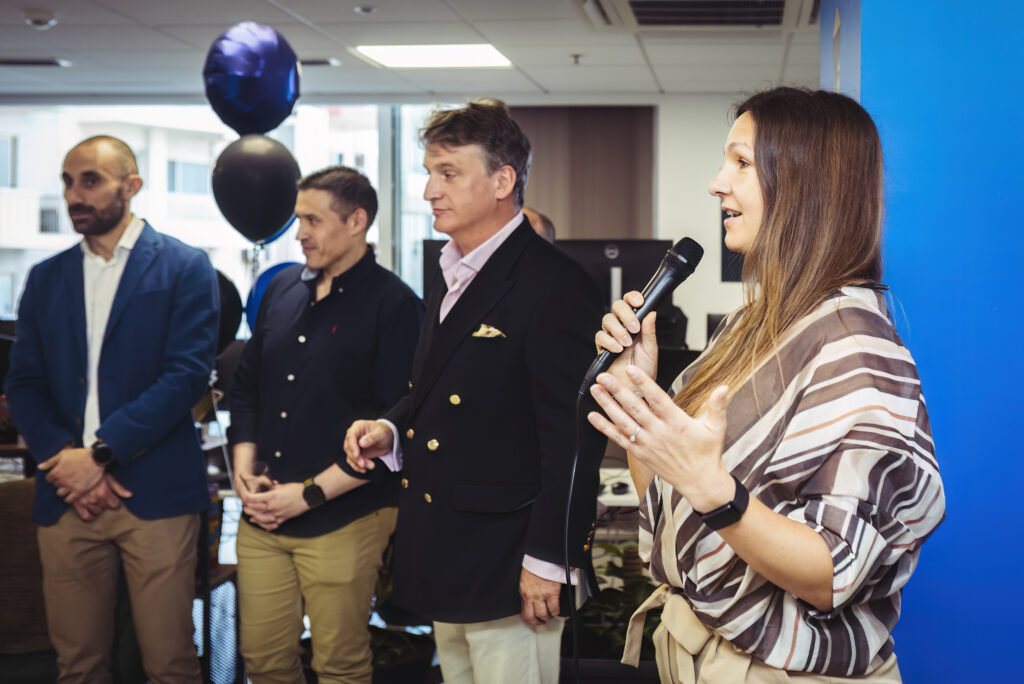
In 2017, Podhorska-Okolow left NetEnt to join live-dealer start-up Authentic Gaming. Founded by Jonas Delin and backed by Leo Ventures, the business grew quickly, expanding into 12 markets before it was acquired by Light & Wonder in 2021, bringing Podhorska-Okolow, Chief Commercial Officer by that time, with it.
Having been Vice President of Commercial and Europe iGaming Managing Director for four years, in January 2026 she stepped into her current role, leading expansion into new markets.
Asia, Latin America, Africa, and the Middle East, regions that only a few years ago seemed unthinkable as regulated gambling markets, are all now in her crosshairs. But with so much land to cover, how does she prioritize as an expansionist supplier?
“We have to focus on markets where we believe there’s a good business case. We look at several factors: Was it a gray market before? Is gambling culturally accepted? How wealthy are the people? What is the population? Are there land-based casinos? Have our games worked there before? We look at all those aspects, then we double down. But we don’t spread ourselves too thin.”
Understanding Asia
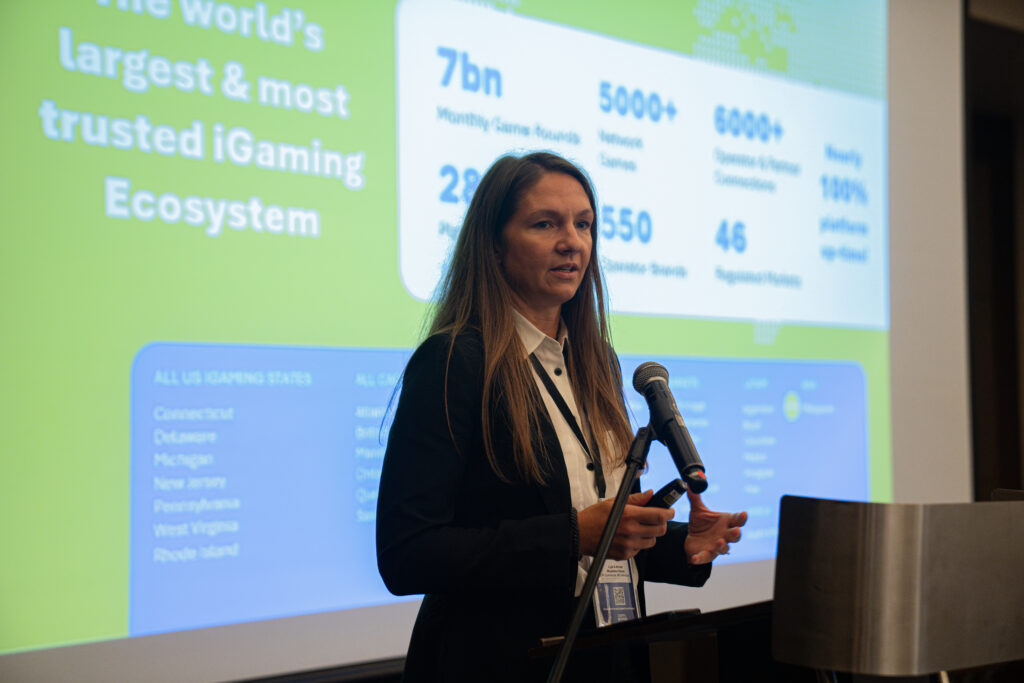
Entering the Philippines was “a bit of an eye-opener,” she admits. Light & Wonder discovered that this was a dual market, in which the land-based and digital players were distinct demographics that didn’t necessarily cross over.
Fortunately, Light & Wonder’s aggregation platform and in-house games studios, ELK Studios and Lightning Box, are enabling it to come up with a bespoke offer.
“We’re already fine-tuning certain internal products,” Podhorska-Okolow explains. “We have what it takes to be successful, even if it’s not exactly what we expected. It’s just reminded us that you need a deep focus and analysis when entering these markets.”
The broader benefit of Podhorska-Okolow and her team forging the path for Light & Wonder in the Philippines is that they have a close eye on the Asian markets most likely to move into regulated iGaming. The Cambodian regulator, for example, is deep into a program to reform its land-based gaming regulations, potentially paving the way for an online regime.
Likewise, Thai lawmakers are years into trying to build a legal framework for land-based gaming. The Entertainment Complex bill, which would legalize casinos and open a market for international investment in integrated resorts, was approved by the Thai cabinet in January 2025 but rejected by a senate committee in September following the impeachment of former Prime Minister Paetongtarn Shinawatra.
While it’s hard to know which Asian countries will follow the Philippines, Light & Wonder does see it as a gateway to further expansion in the region. As Podhorska-Okolow pointed out, online gambling is happening already at scale across Asia. “It’s a shift that needs to happen for the protection of players and the well-being of people that choose to gamble regardless,” she says. “Where we can offer our support in any way, we do. We share best practices. We share technical standards from different markets. We try to be a trusted ally if needed and if there’s a willingness from the regulators.”
The battle for Brazil

Light & Wonder’s move into Brazil in January 2025 was one catalyst for creating the new emerging markets team that Podhorska-Okolow now leads. Like many international iGaming businesses at the start of last year, Light & Wonder jumped at the chance to be among the first with a presence in this South American market, but as others found, the market was more nuanced than they had anticipated. It wasn’t as simple as replicating its core North American product in Portuguese.
“It’s a huge market, and we’d been working on it, but with hindsight, earlier local scaling would have accelerated our progress,” Podhorska-Okolow confesses. “It was a gray market before, but local operators had already been making moves, and deep local expertise and language capability proved critical to fully understanding the market dynamics. Suddenly, the market blew up and we got in on time with the global operators driving 50% of the market. The other 50% were all local operators with many more licenses, and this is a segment we have since prioritized.”
She observed the global operators entering the market with major investment and a large local presence, which Light & Wonder was reticent to do before testing the market first. Meanwhile, the structure of the market was incredibly complex. Each licensee had numerous platforms and multiple brands and suppliers could sign up either with the operator or individual platforms. It needed careful mapping and strategy, which differed from the approach Light & Wonder initially prioritized.
“We went in in our standard way. We prepared, certified products, and launched for day one. But a broader layer of opportunity required deeper investment and focus to fully unlock. We’ve since accelerated our investment and are building strong momentum.”
As part of the supplier’s expansion in Brazil, they partnered with Propane, a local marketing agency. The collaboration focused on building brand presence through digital content, influencer-led distribution, and paid ads.
“We’re in really good shape now. We have products that are working well. Crash games are big, but sharp slots also take off. ELK has seen great success, as have some of our land-based games, so we have the right product and we’re increasing distribution and our brand awareness, and firing on all cylinders.”
The long game in the Middle East and Africa
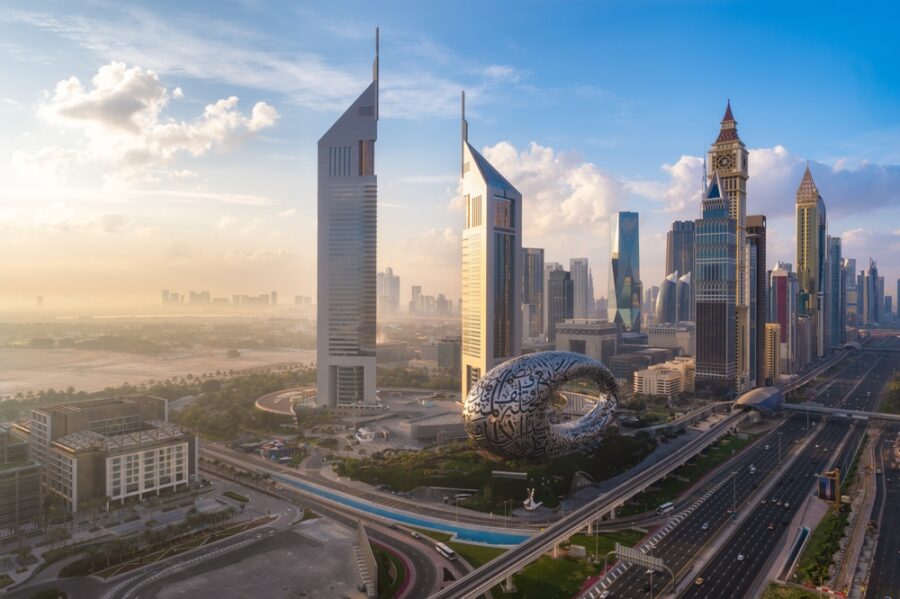
Light & Wonder has been operational in South Africa for the past four years and is ramping up the number of staff there. “In South Africa, our land-based casino games are smashing it,” Podhorska-Okolow says.
The UAE, where Light & Wonder has been licensed since July 2025, remains a “mixed picture,” despite the September 2023 establishment of the federal regulator creating anticipation across the industry globally.
Podhorska-Okolow isn’t downplaying the potential of the market, but with just one online operator licensed to date, alongside 21 suppliers, it’s not currently at the top of her list of priorities. “We’re the largest supplier by default in the UAE. We have thousands of games available for that market, but it’s a matter of learning what’s going to work, and waiting for more operators to come in.”
With all these jurisdictions, Podhorska-Okolow describes a slow cumulative approach to adapt an existing market to a regulated one. “Unless you’re first to market – which in many cases we’re not, they’ve been operating in gray, and Light & Wonder’s business model focuses strictly on regulated markets – then you’re working with what’s already out there,” she explains.
Once signs of what she calls “operational excellence” are on the ground, the next stage is to bring those localized New Markets teams more into the central processes of the wider business – a gradual homogenization of the shared features of regulated markets, while respecting their individual nuances.
“That’s the whole point of adaptation and having a specific new markets function,” she says. “It’s not about putting a square peg in a round hole. It’s understanding, adapting, and then seeing, how can we support this market with most ease within the global operation?”
And to do that? Fail fast and learn.

Verticals:
Sectors:
