


Brazilian Institute for Responsible Gaming Appoints Carlos Lima as Executive President

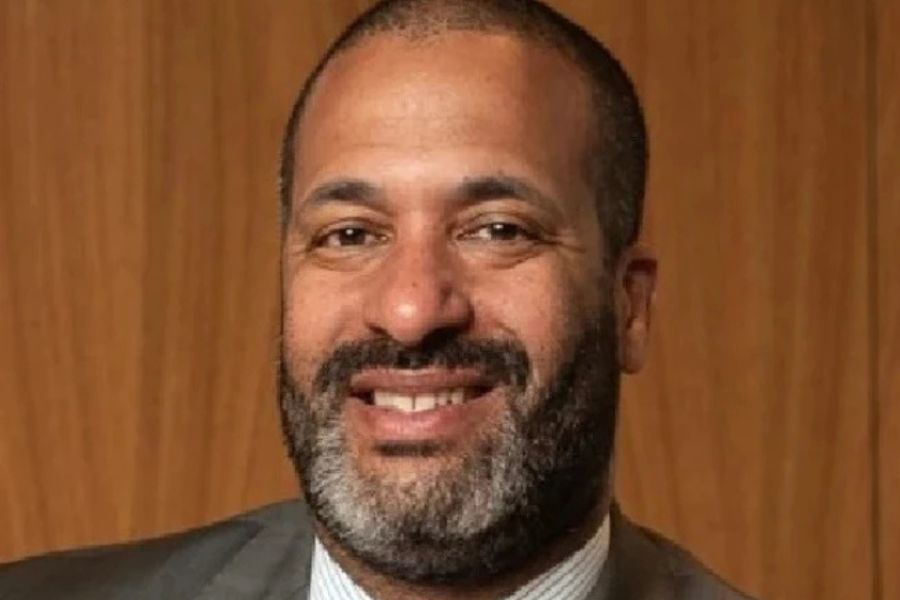
The Brazilian Institute for Responsible Gaming has appointed Carlos Lima as its new Executive President.
Lima has deep experience of government relations, public policy, and regulatory affairs. He is expected to strengthen the organisation’s dialogue with the Federal Government, the National Congress, regulatory bodies, and civil society.

His appointment follows the September resignation of Fernando Vieira, who had led the organisation since October 2024. Vieira was succeeded on an interim basis by André Gelfi who co-founded the trade body and is managing partner of Betsson Group in Brazil.
Commenting on his appointment, Lima said, “The maturation of Brazil’s betting market requires an approach grounded in data, transparency, governance, and legal certainty. The regulated environment is the most effective tool for ensuring consumer protection, preserving the integrity of the sector, and fostering its sustainable development.”
He also spoke about the role regulation plays in distinguishing licensed operators from illegal gambling sites. He pointed out that regulated operators must meet standards for consumer protection, responsible gaming, and compliance that players won’t find in the unlicensed market.

Meanwhile, Gelfi will still be involved with the organization going forward as a board member and director.
The institute said the change at the top was made to support its ongoing efforts to promote responsible gaming, fight unlicensed sites, and strengthen Brazil’s regulated betting ecosystem.
Last week, casino games developer Gaming Corps expanded into Brazil through a partnership with Brazilian operator KTO.
Charlotte Capewell brings her passion for storytelling and expertise in writing, researching, and the gambling industry to every article she writes. Her specialties include the US gambling industry, regulator legislation, igaming, and more.

Dig Deeper
Related stories
 2025/09/21: Brazilian Institute of Responsible Gaming Executive President Fernando Vieira resigns
 2026/07/14: DigiPlus joins Brazilian Institute for Responsible Gaming in support of responsible online gaming ecosystem
2025/08/11: A2FBR joins Brazilian Institute for Responsible Gaming
2026/07/14: DigiPlus joins Brazilian Institute for Responsible Gaming in support of responsible online gaming ecosystem
2025/08/11: A2FBR joins Brazilian Institute for Responsible Gaming
 2026/06/22: FIRST.bet to provide tech for three OIG Gaming Brazil brands transitioning to sportsbooks
2025/09/21: Brazilian Institute of Responsible Gaming Executive President Fernando Vieira resigns
2026/07/14: DigiPlus joins Brazilian Institute for Responsible Gaming in support of responsible online gaming ecosystem
2025/08/11: A2FBR joins Brazilian Institute for Responsible Gaming
2026/06/22: FIRST.bet to provide tech for three OIG Gaming Brazil brands transitioning to sportsbooks
The Backstory
Leadership change comes as Brazil’s market faces a political test
Carlos Lima’s appointment as executive president of the Brazilian Institute for Responsible Gaming places a public policy specialist at the center of one of the world’s most closely watched gambling markets. Brazil’s regulated online betting sector is still in its first year of operation, and the industry’s ability to defend that framework is being tested by political pressure, illegal competition and rising concern over gambling-related harm.
The institute, known as IBJR, has positioned itself as a bridge between licensed operators, regulators, lawmakers and civil society. Its leadership change is therefore more than an internal reshuffle. It comes as the industry tries to convince Brasília that regulation, not prohibition, is the best way to protect consumers, collect taxes and separate licensed operators from offshore sites that do not follow Brazilian rules.
Lima inherits that agenda after a turbulent period for the trade body. His predecessor, Fernando Vieira, left after less than a year in the role, and André Gelfi, a co-founder of the institute and Betsson Group’s managing partner in Brazil, stepped in on an interim basis. Gelfi’s continued presence on the board gives the organization continuity, while Lima’s background in government relations signals a sharper focus on institutional dialogue.
Vieira built the institute’s public case for regulation
The leadership transition began when Fernando Vieira resigned as executive president of the Brazilian Institute for Responsible Gaming in September. Vieira said he was leaving with a sense of duty fulfilled after leading the organization since October 2024, a period that covered the final preparations for Brazil’s regulated online betting market and its initial rollout.
During his tenure, IBJR expanded its membership and pressed a consistent argument: Brazil could not address betting risks by ignoring the market or allowing offshore operators to dominate it. The institute framed regulation as a consumer-protection tool and illegal betting as a broader economic and social problem. That message helped place the organization among the most visible industry voices during the transition from a gray market to a licensed system.
One of Vieira’s final initiatives, the “Chega de Bode na Sala” campaign, showed how IBJR sought to turn regulatory compliance into a consumer-facing issue. The campaign used television, radio, airport panels and social media to steer players toward platforms authorized by the Ministry of Finance. It also reflected a key concern for licensed operators: if consumers cannot distinguish approved betting sites from unlicensed ones, the regulated market loses both credibility and commercial ground.
That argument remains central to Lima’s mandate. Brazil’s licensing regime imposes obligations on approved operators, including responsible gaming, compliance and consumer-protection requirements. Illegal sites avoid those costs and oversight, giving them a competitive advantage while exposing users to weaker safeguards. IBJR’s task is to make that distinction matter to regulators, lawmakers and the public.
A broader coalition has formed around responsible gaming
IBJR’s influence has depended partly on its ability to present itself as a sectorwide coalition rather than a narrow lobbying vehicle. The institute was founded in 2023 and has attracted major international and local operators seeking to align with Brazil’s new regulatory framework. Its membership includes companies with experience in mature gambling markets, giving it access to compliance models that Brazil’s authorities are still developing.
That coalition continued to grow this year when A2FBR joined the Brazilian Institute for Responsible Gaming. The addition placed the Brazilian operator alongside Bet365, BetMGM, Betsson Group, Entain, Flutter Brazil, Kaizen Gaming, KTO Group, Skill On Net and others. At the time, IBJR said A2FBR’s arrival demonstrated the sector’s maturity and reinforced the fight against illegal betting.
The membership expansion matters because Brazil’s regulatory debate is not only about whether betting should exist. It is also about which companies should shape the standards for a market that combines sports betting, online casino-style games, advertising, payment flows and data-driven risk monitoring. Operators inside IBJR argue that licensed companies can help build a safer market by adopting responsible gaming tools, reporting requirements and integrity controls.
That pitch is increasingly common across regulated markets. In the U.S., for example, the Responsible Online Gaming Association partnered with the Responsible Gaming Council to develop a certification program for online operators. The program is intended to assess practices including self-exclusion, marketing, staff training and player support tools. While the U.S. and Brazilian markets differ, the partnership illustrates a wider industry shift toward independent standards and data-based responsible gaming programs.
Lula’s casino ban proposal raises the stakes
The political risk for Brazil’s licensed market escalated when President Luiz Inácio Lula da Silva proposed an online casino ban, arguing that digital gambling is harming families and contributing to addiction. Lula’s comments directly challenged the regulatory framework launched in 2025, which followed legislation approved in 2023 to create rules for sports betting and online gaming under Finance Ministry supervision.
The proposal targets online casino-style games rather than necessarily dismantling the entire betting market. Still, it threatens to reopen basic questions that the 2023 law appeared to settle. If lawmakers move to ban or sharply restrict parts of the market shortly after licensing begins, operators could face commercial uncertainty, investment delays and a more fragmented enforcement environment.
For IBJR, the proposal creates both a challenge and an opportunity. The challenge is that public concern about addiction has political momentum. Lula framed gambling losses as a household issue, especially for women and families dealing with money disappearing through mobile phones. That argument is powerful in a country where digital payments and smartphone access have made online wagering widely available.
The opportunity is that the government’s concerns reinforce IBJR’s core claim that consumer protection requires oversight. The institute can argue that bans may push players back to unlicensed sites, while a regulated market allows authorities to monitor operators, restrict advertising, require responsible gaming tools, block illegal competitors and collect data. Lima’s government-relations experience is likely to be tested most directly in that debate.
Illegal sites remain the central enforcement problem
Brazil’s regulated market was designed to bring order to a large betting economy that developed before comprehensive federal rules were in place. Licensing was meant to create legal certainty, but enforcement against unlicensed platforms remains difficult. Offshore operators can market online, process payments through intermediaries and target Brazilian consumers without maintaining the same local presence or compliance infrastructure as authorized companies.
Authorities have signaled that gambling-related regulatory work will continue through 2026 and 2027, including greater transparency over sector data, reviews of financial blocking against offshore operators and new rules allowing technology providers to enter the betting market. Those initiatives could determine whether the licensed system becomes dominant or whether illegal operators continue to capture significant demand.
IBJR’s messaging has therefore linked responsible gaming to market channelization. The industry’s argument is that players are more likely to use safer tools if they are betting with licensed operators that must follow Brazilian rules. If illegal sites remain easily accessible, the regulated sector bears compliance costs while less accountable competitors retain customers who may be more vulnerable to harm.
That dynamic explains why Lima’s appointment emphasizes data, transparency, governance and legal certainty. Those are not abstract principles in Brazil’s current debate. They are the terms on which the industry hopes to defend its legitimacy and persuade policymakers that enforcement against illegal gambling should be prioritized over broad restrictions on licensed operators.
Global scrutiny adds pressure on operators
Brazil’s debate also sits within a broader international backlash against online betting practices. In the U.S., the Public Health Advocacy Institute filed a lawsuit against major sportsbook operators, including DraftKings, FanDuel and Genius Sports, as well as the NFL. The complaint alleged that online sportsbooks use advanced technology and micro-betting to encourage addictive behavior.
The lawsuit reflects a growing argument among public health advocates: online gambling products are not merely traditional betting moved onto phones, but high-frequency digital platforms designed to maximize engagement. That critique is relevant for Brazil because the country’s market is mobile-first and developing at scale. If operators cannot show credible safeguards, political support for the regulated model could weaken.
For Lima and IBJR, the path forward will require more than defending commercial interests. The institute will need to show that licensed operators can produce measurable consumer-protection outcomes, support enforcement against illegal sites and engage with lawmakers on addiction concerns without dismissing them. Brazil’s market has the potential to become one of the world’s largest regulated betting sectors, but its durability will depend on whether regulation can deliver the protections its supporters promised.
