


Gaming Corps expands presence in Brazil with KTO partnership

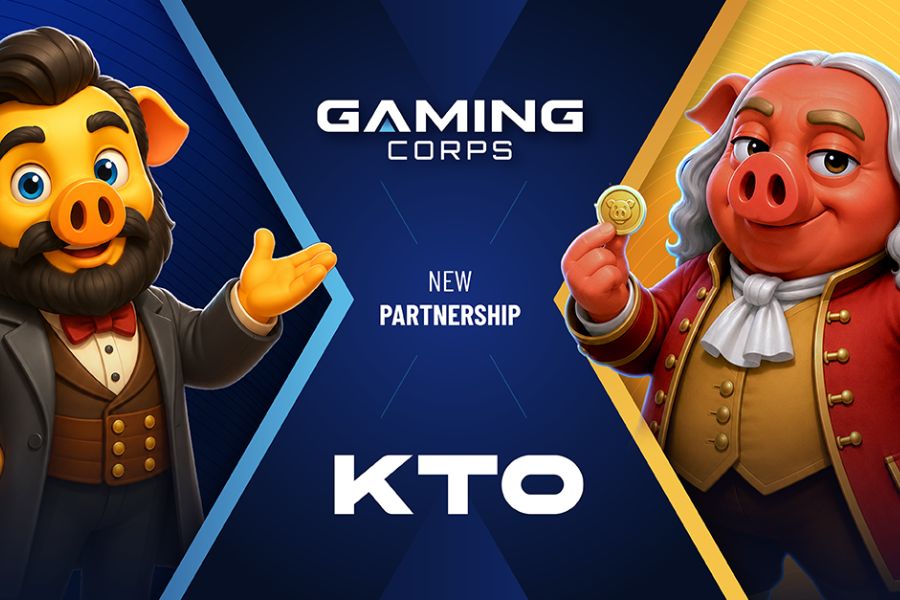
Software developer Gaming Corps has expanded its presence in Brazil through a partnership with local operator KTO.
Under the agreement, KTO users will be able to access Gaming Corps’ full portfolio of gaming titles.

This includes the football-themed Penalty Champion, the instant-win scratch game Instant Blitz, and games in the software developers’ Pigs series, like 4 Gym Pigs: Porky Power, 3 Pigs of Olympus, and 3 Pigs of Xmas.
Gaming Corps Chief Commercial Officer Graham Greensmith said, “KTO is a standout partner for us in Brazil. It has a strong local identity, a clear understanding of its players and a brand that feels energetic and ambitious, all of which makes this a very exciting launch for Gaming Corps. This partnership is also a strong reflection of where we are heading as a studio. We are building a portfolio with more range, more flexibility and more personality, and KTO gives us a great platform to showcase that in one of the world’s most exciting regulated markets.”
KTO Head of Casino, Brazil, Myrella Allgayer added, “At KTO, we want our casino experience to feel relevant and closely aligned with the way Brazilian players like to play. We work with providers that can bring something distinctive to the platform, and Gaming Corps fits that approach very well. Their portfolio adds a fresh dimension to our offering, with content that brings together strong themes, engaging mechanics and a wide range of formats. This partnership supports our ambition to keep building a premium, innovative and locally resonant experience for players in Brazil.”

Dig Deeper
Related stories
 2026/03/31: Gaming Corps expands Ontario presence with Betty deal
 2025/12/11: Gaming Corps’ 3 Pigs of Xmas launches in Brazil, with Ontario next
 2026/01/12: Gaming Corps’ complete portfolio released in Ontario with exclusive BetMGM partnership
 2026/05/18: Gaming Corps expands into Brazil with Bet365 deal
2026/03/31: Gaming Corps expands Ontario presence with Betty deal
2025/12/11: Gaming Corps’ 3 Pigs of Xmas launches in Brazil, with Ontario next
2026/01/12: Gaming Corps’ complete portfolio released in Ontario with exclusive BetMGM partnership
2026/05/18: Gaming Corps expands into Brazil with Bet365 deal
The Backstory
Brazil becomes the proving ground for studio expansion
Gaming Corps’ partnership with KTO lands in a Brazilian market that has quickly become one of the most closely watched regulated online gambling jurisdictions in the world. For suppliers, Brazil offers scale, a strong sports culture and a player base that is increasingly familiar with casino-style products on sportsbook-led platforms. For operators, the challenge is differentiation: adding content that feels local enough to retain players while broad enough to compete in a crowded market.
The KTO agreement is therefore less an isolated distribution deal than part of a wider supplier push into Brazil’s regulated framework. Gaming Corps is seeking to position its portfolio around variety, with slots, instant-win games and branded series such as its Pigs titles. KTO, meanwhile, is adding another studio to a platform built around the habits of Brazilian users, where casino content often sits alongside football-led betting engagement.
The timing also matters. Brazil’s market has moved from anticipation to execution, forcing suppliers to convert regulatory readiness into commercial relationships. That has turned operators with established local brands into important gateways. KTO, founded in 2018, has become one such platform, and its recent supplier activity shows how competitive the content race has become.
KTO has been building a broader casino library
KTO’s deal with Gaming Corps follows other recent moves to expand its casino offering. In a separate agreement, Playson expanded its Brazil presence through a KTO partnership, launching selected online gaming content to the operator’s users via the Bragg Hub delivery platform. That arrangement came after Playson received regulatory approval from the Secretariat of Prizes and Bets on Feb. 4 and entered the Brazilian market through partnerships with several operators, including Entain, Brazino777, Betano, SuperBet, EstrelaBet and NoviBet.
The Playson deal illustrated a key dynamic in Brazil: operators are not relying on a single supplier category or a narrow game type. Instead, they are layering portfolios from multiple studios to increase depth, frequency of new releases and player segmentation. For KTO, adding Gaming Corps after Playson suggests a continued effort to refresh its platform with games that differ in presentation, mechanics and volatility profiles.
That matters because Brazilian players are being courted by major international brands and domestic-facing operators at the same time. Content suppliers are using partnerships with operators such as KTO to prove that their games can perform in a market where football, mobile play and recognizable themes often shape user behavior. The practical result is a market where a supplier’s commercial success depends not only on regulatory access but also on distribution speed and operator fit.
Gaming Corps had already tested demand with Bet365
Gaming Corps’ KTO launch builds on its earlier entry into Brazil through one of the industry’s largest international operators. The company previously expanded into Brazil with Bet365, making its full gaming portfolio available to Brazilian players on the sportsbook operator’s platform. That deal included instant-win products such as Penalty Champion and slots including 3 Pigs of Olympus and 3 Pigs of the Caribbean.
The Bet365 extension gave Gaming Corps a high-profile route into Brazil and indicated that its existing operator relationships could be expanded across new regulated markets. For a studio of Gaming Corps’ size, that type of cross-market relationship can be important. It reduces the burden of building every market from scratch and allows proven integrations to support faster rollout when regulation opens.
The KTO deal adds a different kind of exposure. Bet365 brings global scale and a broad sportsbook audience. KTO brings local identity and a Brazil-specific operating profile. Together, the two relationships suggest Gaming Corps is pursuing a dual strategy: align with major multinational operators while also partnering with brands that have a sharper local focus. That approach can help a supplier understand player behavior from multiple angles and tailor future releases accordingly.
It also gives Gaming Corps a way to test whether its football-themed and instant-win products can gain traction beyond standard slot consumption. Penalty Champion, for example, fits naturally in Brazil’s sports-heavy gambling culture. The presence of that title in both Bet365 and KTO integrations shows how the studio is using familiar themes to bridge sportsbook audiences into casino content.
The Pigs franchise has become a strategic calling card
Several of Gaming Corps’ recent deals point back to the same core group of products, especially the Pigs series. That includes 3 Pigs of Olympus, 3 Pigs of the Caribbean and related titles that blend light narrative themes with familiar casino mechanics. The company has repeatedly highlighted those games when announcing market entries and operator agreements, using the franchise as a recognizable anchor for its portfolio.
The strategy was evident when Gaming Corps released 3 Pigs of Olympus in Brazil and Europe. The game expanded on the studio’s 3 Pot mechanic and added features including Pig Coins, Poseidon-themed extra free spins, a Zeus-themed multiplier and Hades synchronized reels. It also offered prizes of up to 5,000 times the original bet, with a bonus structure that could lift potential winnings to 10,000 times the stake.
That release helped frame Gaming Corps’ broader product identity. Rather than competing only on volume, the studio has leaned into distinctive mechanics, recurring characters and themed variations that can be redeployed across markets. The KTO partnership reflects that same direction. Titles such as 4 Gym Pigs: Porky Power, 3 Pigs of Olympus and 3 Pots of Xmas give the operator a set of games with shared branding but different seasonal, mythological and humor-driven angles.
In a market such as Brazil, where operators are looking for games that can stand out on mobile lobbies, that kind of recognizable series can be commercially useful. It can support repeat engagement, simplify promotion and give players a clearer reason to sample related titles. The risk, as with any recurring franchise, is saturation. The opportunity is that a recognizable theme can become a supplier’s shorthand in a crowded content marketplace.
North America shows the same regulated-market playbook
Gaming Corps’ Brazil push is part of a wider expansion strategy across regulated jurisdictions. In North America, the company recently partnered with Caesars Entertainment, supplying games to Caesars Palace Online Casino, Horseshoe Online Casino and Caesars Sportsbook & Casino. The agreement included titles such as 3 Pigs of Olympus, Piggy Smash, BlackJack Multihand, Shootout Champion, Penalty Champion and Plinko Slam Dunk.
The Caesars deal gave Gaming Corps access to one of the most established gambling brands in the U.S. and reinforced its focus on regulated markets with recognizable operators. It also showed the breadth of the studio’s catalogue, extending beyond slots into table games, plinko-style content and sports-themed instant-win products. That range is central to how Gaming Corps is pitching itself to operators that need more than one type of game to serve different customer segments.
Ontario has served a similar role. Gaming Corps expanded its Ontario presence through a deal with Betty, adding titles including 3 Easter Pigs, Vendetta Fury, 3 Pigs of Olympus and 3 Pigs of the Caribbean. The integration also covered plinko, mine, crash and table games. That deal followed an earlier partnership with High Flyer Casino in the province.
These North American moves help explain the importance of the KTO agreement. Gaming Corps is not simply adding another operator logo. It is trying to repeat a regulated-market model: secure distribution with operators that have clear audiences, highlight a diversified portfolio and use established titles to open space for new content. Brazil is now one of the biggest tests of whether that model can translate across regions.
The stakes are shifting from access to performance
As Brazil’s regulated market matures, the competitive question is changing. Early momentum was about approvals, market entry and signing distribution agreements. The next phase will be about performance: which games retain users, which mechanics convert sportsbook customers into casino players and which supplier relationships produce enough revenue to justify lobby space.
For KTO, the Gaming Corps deal supports a premium-content strategy in a market where operators must keep refreshing their casino tabs. For Gaming Corps, it expands Brazilian distribution beyond Bet365 and places its games with a locally resonant brand that may offer different insights into player preferences. The partnership also gives the studio another platform for its mix of football content, instant-win formats and character-led slots.
The broader context is clear. Suppliers are moving aggressively into Brazil because the market combines regulation with scale. Operators are adding studios because content depth has become a competitive necessity. Gaming Corps’ agreement with KTO sits at that intersection, linking a studio with international ambitions to an operator trying to sharpen its Brazilian casino experience. The commercial stakes will depend on whether that combination can turn portfolio breadth into sustained player engagement.
