


US soldier charged with prediction market insider betting after US$400,000 Maduro bet

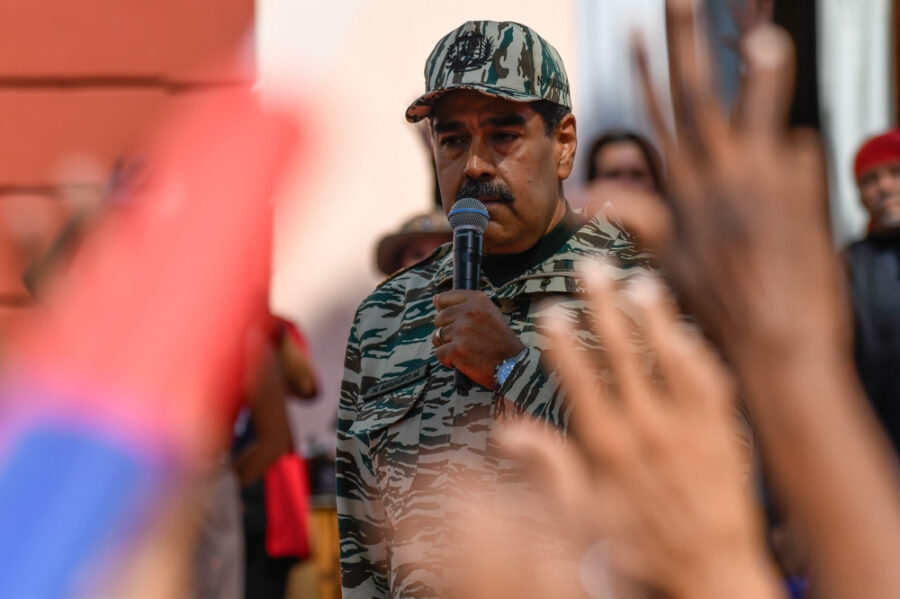
US federal authorities have arrested Gannon Ken Van Dyke, a US special operations soldier involved in the January mission to capture Venezuelan President Nicolas Maduro, on allegations that he used classified information to place bets on the operation.
Kalshi recently fined and suspended congressional candidates for betting on their own elections, but this is believed to be the first-ever arrest and indictment linked to prediction market insider trading.

Prosecutors allege that Van Dyke placed over US$33,000 in bets on the predictions platform Polymarket just before Maduro’s capture was announced, which reportedly returned him more than US$409,000.
Van Dyke has been charged with offenses including unlawful use of confidential information for personal gain, theft of government information, commodities fraud, and wire fraud.
According to the indictment, he tried to conceal the activity by deleting his account and changing linked account details after the media began reporting on unusual trading patterns linked to Maduro’s capture.

According to ABC News, the investigation began after suspicious trades were referred by Polymarket to the Department of Justice.
Although this is thought to be a first in the US, there have been similar arrests globally. Notably, an Israeli Air Force reservist was charged in March with using insider information to place bets on Polymarket regarding the start and end dates of Israel’s 2025 war with Iran.

Dig Deeper
Related stories
 2026/01/28: The Coalition for Prediction Markets reacts to controversial Maduro bet on Polymarket
 2026/06/30: Former NBA stars Malik Beasley and Ed Davis indicted in illegal betting scandal
 2026/01/08: Polymarket rejects payouts on Venezuela invasion bets
 2026/05/22: House Committee to probe prediction market insider trading on Kalshi, Polymarket
2026/01/28: The Coalition for Prediction Markets reacts to controversial Maduro bet on Polymarket
2026/06/30: Former NBA stars Malik Beasley and Ed Davis indicted in illegal betting scandal
2026/01/08: Polymarket rejects payouts on Venezuela invasion bets
2026/05/22: House Committee to probe prediction market insider trading on Kalshi, Polymarket
The Backstory
Why the Maduro trade became a watershed
A single, perfectly timed wager on Venezuelan President Nicolas Maduro’s capture turned a niche debate over prediction markets into a national test of market integrity. After a Polymarket user staked roughly $32,500 on a contract tied to Maduro hours before U.S. forces apprehended him on Jan. 3, the trader reportedly walked away with more than $400,000. The episode galvanized industry rivals and policymakers alike. Within days, the Coalition for Prediction Markets — whose members include Kalshi, Coinbase and Robinhood — took out a full-page ad urging Congress to back a bright-line ban on insider trading and “keep regulation transparent.” The campaign, described as an opening salvo with a seven-figure budget, marked the industry’s most public bid to shape the rules of the road as scrutiny intensifies from state and federal officials. The coalition emphasized that the scandal unfolded on an offshore venue and cast its push as a contrast to platforms seeking U.S. regulatory cover, as detailed in the coalition’s response to the controversial Polymarket bet.
Lawmakers seized on the moment. Rep. Ritchie Torres introduced a measure aimed at barring federal officials from trading in event contracts tied to government decisions when they have access to nonpublic information, an early sign Congress may tighten the boundaries between civic duty and speculation. The coalition’s ad also underscored a broader concern: rapidly growing liquidity and media attention are pulling novel event markets into gray areas where outcomes can be known, nudged or gamed before retail traders catch on.
Regulators signal they are on the beat
The market shock put a spotlight on who, exactly, polices insider trading in event contracts. The Commodity Futures Trading Commission has been clear that it retains authority to investigate and prosecute fraud and manipulation in prediction markets. In reaffirming that jurisdiction, the CFTC pointed to recent cases handled in coordination with Kalshi, including penalties and suspensions for a political candidate who traded on a contract about his own race and for a media figure who bet on outcomes tied to a channel he worked on. The agency said it can pursue misappropriation of confidential information, wash trades and other classic derivatives offenses in this space, as described in its statement on policing prediction markets.
That message served two purposes. First, it reminded platforms and traders that even when exchanges act first, the CFTC can escalate if it spots systemic abuse. Second, it pushed back against a wave of litigation and jurisdictional challenges facing event-contract venues nationwide. The commission has framed its stance as both enforcement and defense: tamp down misconduct while arguing that supervised markets can exist within the derivatives framework.
Platforms race to harden their defenses
Facing legal and political headwinds, major operators moved to close obvious loopholes. Kalshi announced new screening that bars politicians, athletes and other insiders from trading in markets they could influence, and added a whistleblower tool that lets users flag suspect activity in public data. Polymarket updated “integrity rules” to clarify that trading on stolen or confidential information, illegal tips or outcomes one can affect violates its terms. Both steps, though incremental, acknowledged the core risk the Maduro trade exposed: prediction contracts can incentivize misuse of nonpublic information at scale. The changes and their limits are outlined in new insider trading restrictions from Kalshi and Polymarket.
The political response was swift and skeptical. Critics argued that screening lists and self-policing will not catch sophisticated tip-sharing by staffers, consultants and family members who sit near sensitive decisions. Some lawmakers also advanced proposals to ban certain categories of sports-related event contracts outright, reflecting unease that markets could creep into domains where information asymmetries are pervasive and public trust fragile.
Sports push back against manipulable markets
The NFL added its voice to the crackdown, warning exchanges to stop listing wagers on outcomes that teams or league officials can set or anticipate before the public. In letters to platforms, the league flagged markets on broadcast commentary, draft outcomes, trades, coaching changes, officiating and injuries as either manipulable or predetermined, arguing they invite suspicion of players and staff. The stance sharpened a fault line between entertainment and speculation: when a market’s resolution hinges on a decision made behind closed doors, it looks less like price discovery and more like a liability. The campaign is detailed in the NFL’s call to end insider trading on prediction markets.
The league’s intervention also dovetailed with congressional moves to rein in areas most vulnerable to abuse. As event markets spill into pop culture and sports operations, the pool of people with foreknowledge multiplies, raising the odds that contracts function as private arbitrage for insiders rather than public predictors.
When the outcome is already in the can
The tension is starkest in markets tied to preproduced spectacles. Ahead of Super Bowl LX, both Kalshi and Polymarket listed contracts on which ads would run and which celebrities would appear — information known weeks in advance by advertisers, agencies and broadcasters. Even if rules nominally prohibit trading on nonpublic information, the sheer number of people in the loop makes detection and deterrence difficult. The controversy over these contracts highlights the line between forecasting uncertain events and monetizing embargoed decisions, a distinction that matters for legality and legitimacy. The concerns are laid out in coverage of Super Bowl ad event contracts.
For platforms, the business upside of buzzy, media-friendly markets can clash with compliance realities. For regulators and leagues, the risk is reputational: if fans or voters suspect outcomes are being gamed for profit, confidence in the underlying institutions erodes.
The road ahead: clearer rules, narrower markets
The Maduro trade jolted prediction markets into a new phase where scale demands stricter guardrails. Industry players are courting Congress to codify insider trading bans while drawing distinctions between regulated exchanges and offshore venues, as seen in the coalition’s Washington Post ad and lobbying plan. Regulators are asserting oversight and documenting cooperation with compliant platforms, per the CFTC’s reaffirmed authority. And major content owners like the NFL are pressing to wall off categories that invite manipulation, as outlined in the league’s warning to platforms.
The next steps will likely include narrower product menus, enhanced identity and role-based screening, and faster data-sharing pipelines between exchanges and enforcers. Markets premised on outcomes known to a large class of insiders — from ad lineups to editorial decisions — may fade as compliance costs rise. What remains will test whether prediction markets can deliver socially useful information without turning sensitive decisions into private windfalls. That balance, not just headline-grabbing trades, will determine whether event contracts mature into a durable asset class or get carved back by laws and regulators wary of turning governance and sports into speculative arbitrage.
