


NFL calls for an end to insider trading on prediction markets

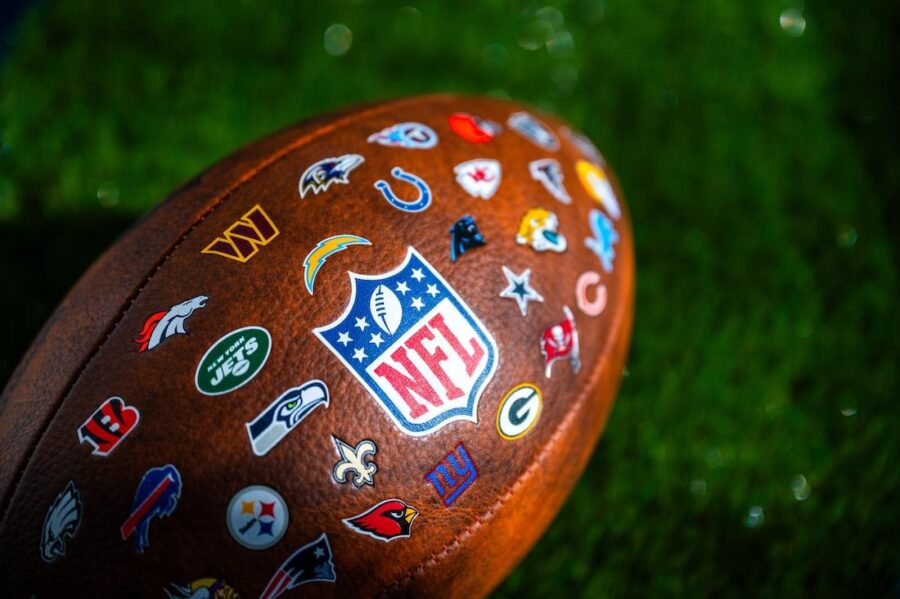
The NFL has called for prediction markets to stop accepting trades on events that are easily manipulated.
In letters sent to platforms like Kalshi and Polymarket on Sunday, the NFL highlighted markets such as broadcast commentary, celebrity appearances, draft outcomes, player transactions, coaching changes, officiating decisions, injuries, and even fan safety concerns.

The league argued that, in addition to these markets being manipulable, they can also be predetermined, leading to what it describes as unwanted and unwarranted allegations against players and staff members.
“Some people are going to have that information … that they can then share,” NFL executive vice president Jeff Miller told ESPN. “We’re trying to stay as far as we can from some of those sorts of inside information wagers that could exist in this space.”
The NFL is not alone in its fear that these prediction markets could be ripe for exploitation.

The rapid growth of prediction markets, which allow users to trade on the likelihood of real-world events, has not been without controversy. Regulators and lawmakers are increasingly scrutinizing the space amid fears of insider trading and market abuse related to sports, politics, and military strategy.
Recently, bills have been introduced to Congress that would halt insider trading on prediction markets. Earlier this month, Sen. Richard Blumenthal introduced legislation to tighten regulations on prediction markets.
Charlotte Capewell brings her passion for storytelling and expertise in writing, researching, and the gambling industry to every article she writes. Her specialties include the US gambling industry, regulator legislation, igaming, and more.

Dig Deeper
Related stories
 2026/05/22: House Committee to probe prediction market insider trading on Kalshi, Polymarket
 2026/03/25: Kalshi and Polymarket introduce new insider trading restrictions
 2026/05/01: Polymarket partners with Chainalysis on insider trading detection
 2025/08/21: Aristocrat Leisure, NFL combine for free-to-play NFL Super Bowl Slots social casino game
2026/05/22: House Committee to probe prediction market insider trading on Kalshi, Polymarket
2026/03/25: Kalshi and Polymarket introduce new insider trading restrictions
2026/05/01: Polymarket partners with Chainalysis on insider trading detection
2025/08/21: Aristocrat Leisure, NFL combine for free-to-play NFL Super Bowl Slots social casino game
The Backstory
Why the NFL is escalating its warning now
The league’s call to curb prediction markets that can be influenced by inside knowledge comes after a year of accelerating frictions among platforms, regulators and policy makers. Contracts that trade on outcomes known in advance to insiders — from ad lineups to staffing moves — have pushed the sector beyond simple predictions into areas where access to nonpublic information can confer an edge. The NFL’s intervention signals a shift from quiet compliance conversations to a public stance that frames these products as susceptible to manipulation and reputational risk for teams and personnel.
That evolution tracks with a widening range of tradable events, a surge in volumes tied to football viewership and a regulatory posture that has grown more explicit about policing fraud and insider trading. The stakes are no longer abstract: exchanges have already sanctioned users, lawmakers have floated bans, and the league has begun treating these markets as if they were traditional sportsbooks for the purpose of internal policy. The through line is simple: as prediction markets expand into events that individuals can foresee or affect, the integrity questions get sharper — and so do the responses.
When ad buys became a trading edge
One early flash point arrived with contracts on high-profile advertising. Ahead of Super Bowl LX, platforms listed event contracts on which brands and celebrities would appear during the game. Because advertisers, agencies and production crews knew those answers weeks in advance, the set-up raised obvious red flags about who could trade and when. Critics warned that these were not bets on uncertain outcomes but on prepackaged content known to large groups of insiders. The debate broadened beyond sports and into market design and policing capacity, with questions over whether the Commodity Futures Trading Commission could realistically monitor such flows at scale. Those concerns were detailed in reporting on Super Bowl ad event contracts and the risk of insider trading, which also noted a growing push from industry coalitions for stricter federal rules after controversial political markets drew scrutiny.
That episode foreshadowed the NFL’s focus on any tradable proposition that is either predetermined or easily manipulated. Once the public sees markets that look like wagers on broadcast scripts, casting decisions or personnel announcements, the line between harmless novelty and a structured advantage for insiders becomes harder to defend. It also invited allegations that players, coaches or staff could be targeted by rumors tied to their private status — injuries, transactions, even officiating — precisely the kind of speculation the league now seeks to deter.
Platforms tighten guardrails under pressure
Facing mounting scrutiny, exchanges moved to codify new restrictions. One operator outlined screening lists blocking politicians, athletes and other relevant figures from trading on sensitive markets, and added a whistleblower tool to flag suspicious activity from public order books. Another clarified integrity rules that ban trading on stolen or confidential information, on illegal tips, or by individuals who can influence outcomes. These measures, described in updates on insider trading restrictions by Kalshi and Polymarket, underscored both a willingness to harden controls and an admission that no system can prevent every motivated actor from slipping through.
Yet the political response suggested these steps might not satisfy lawmakers. Critics argued the policies left ample room for an ecosystem of staff, advisers, consultants and spouses to trade around nonpublic knowledge. The same story noted that a bill introduced that week would bar sports betting on prediction markets, showing how quickly operational fixes can give way to statutory solutions once Congress takes notice.
Regulators assert their authority
Regulatory agencies also sharpened their message. The CFTC reiterated it can pursue cases involving misappropriation of confidential information, wash trades, fraud and manipulation on prediction venues. It pointed to recent enforcement handled in coordination with an exchange, including one matter in which a political figure traded on a contract tied to his own prospects and another where a media insider bet on a market linked to a channel with which he was affiliated. In each case, the platform levied penalties and suspensions, and the commission emphasized it stands ready to investigate and prosecute violations. Those examples, outlined in the CFTC’s reaffirmation of its authority over prediction markets, sent a clear signal that self-policing would be monitored and backed by federal muscle when needed.
The regulator’s stance matters because it narrows the gray area exchanges have used to distinguish themselves from sportsbooks and financial derivatives while they test new categories. If the watchdog treats insider trading and manipulation on event contracts as familiar offenses with familiar remedies, the compliance burden rises and the room for experimental markets that trip established rules shrinks.
The NFL’s policy view on prediction markets
The league has already drawn a hard line for its own personnel. In a prior briefing, officials said prediction markets mimic sports betting and are covered under the NFL’s prohibited conduct rules. The league cited gaps in integrity monitoring, information-sharing and market prohibitions when compared with regulated sportsbooks. Exchange operators counter that their users trade against each other rather than the house, but the NFL’s focus is functional, not structural: if an instrument allows betting on outcomes such as winners, totals or player performance — and if some of those outcomes can be influenced or previewed by insiders — it is off-limits to players and staff. That position was laid out in the league’s move to officially flag prediction markets as sports betting.
This framing helps explain why the latest warning targets markets on commentary, personnel shifts and other broadcast-adjacent content. They look less like forecasts of uncertain competition and more like wagers on production choices or internal decisions that employees and partners often learn before the public.
Rising volumes heighten the stakes
Money and attention have poured into event contracts tied to football, which amplifies the integrity dilemma. Investment bank estimates last fall projected that trading volume on two leading platforms could reach roughly $10 billion in November alone, with NFL-related markets accounting for more than a quarter of that activity to date. Analysts also linked spikes in prediction trading to matchups involving teams from states without legal mobile sports betting, suggesting these venues function as substitutes when sportsbooks are unavailable. Those dynamics were captured in analysis of Thanksgiving week NFL matchups and prediction market volumes, which also noted that mainstream betting operators are eyeing the space.
As liquidity deepens, even a small edge based on nonpublic information can produce outsize gains and visible distortions. That prospect is exactly what alarms leagues, regulators and lawmakers. It also raises questions for platforms about where to draw the line on listing markets that are popular but inherently asymmetrical.
What comes next
Expect a two-track response. First, platforms will continue to narrow or redesign markets most prone to inside knowledge, expand screening lists and invest in surveillance that can catch coordinated trading. Second, regulators and legislators will test whether existing authority and exchange-level penalties are sufficient or whether new rules — particularly around sports-related contracts — are necessary to close gaps.
For the NFL, the objective is to reduce reputational risk and potential integrity breaches while the technology and policy frameworks evolve. The league’s latest warning, coupled with its existing prohibition on personnel participation, sets a higher bar for what it considers acceptable event trading around football. The question now is whether exchanges and the CFTC can balance innovation with protections robust enough to convince leagues and lawmakers that markets will not become a vector for insider advantage or manipulation.
