


Bill introduced in U.S. Senate would add guardrails to prediction markets

U.S. lawmakers are pushing for stronger regulations on online prediction markets, a fast-growing industry that allows users to bet on the outcomes of real-world events across sports, politics, and culture.
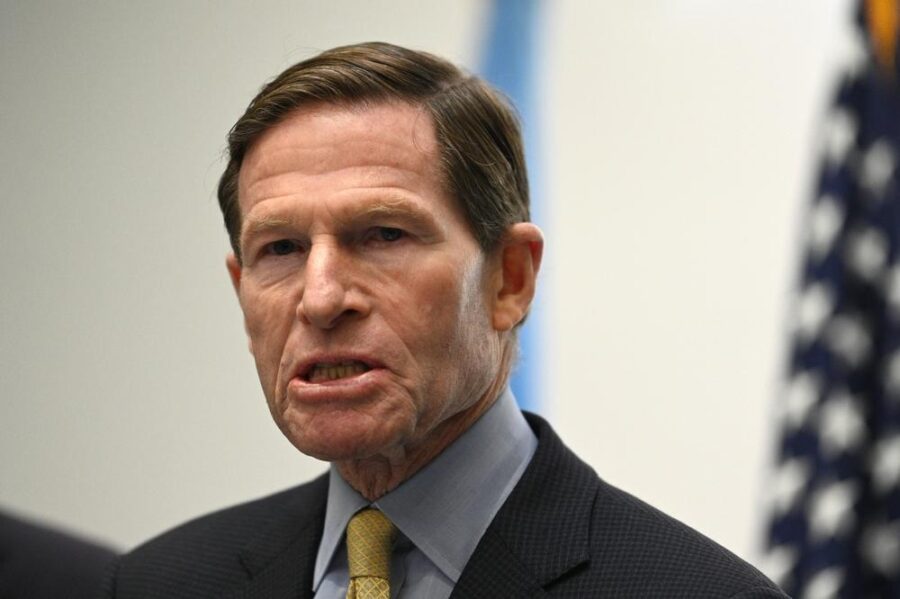
Richard Blumenthal (D-Connecticut) has introduced legislation to tighten rules on these platforms and address concerns about fraud, insider trading, and consumer protection, according to the CT Mirror.

The measure, called the Prediction Markets Security and Integrity Act, is being introduced with support from New Jersey Democratic Sen. Andy Kim. The bill seeks to stop the misuse of sensitive or nonpublic information in prediction markets and to prevent operators or users from participating in bets in which they have a conflict of interest.
These platforms have been shrouded in controversy lately, with certain accounts trading contracts on markets involving the war with Iran and seemingly having information before the general public.
The measure also addresses the role of technology in the industry. It would restrict the use of artificial intelligence to track individual betting behavior or to deliver personalized promotions that encourage participation.

In a statement, Blumenthal said, “Prediction markets have become a haven for insider trading, market manipulation, and underage gambling. These billion-dollar businesses are turning war into a casino game and creating a market for national security leaks.”
This week, an Ohio judge denied prediction market operator Kalshi’s attempt to block state enforcement by deciding that the state’s gambling laws can be used to regulate prediction markets.
Charlotte Capewell brings her passion for storytelling and expertise in writing, researching, and the gambling industry to every article she writes. Her specialties include the US gambling industry, regulator legislation, igaming, and more.

Dig Deeper
Related stories



The Backstory
How prediction markets became a policy priority
A fast-growing class of platforms that let users trade on real-world events is now colliding with a patchwork of gambling and commodities rules. The push to tighten oversight has accelerated as operators expand beyond politics into sports and current affairs, inviting scrutiny from both state gaming regulators and federal market watchdogs. The current proposal in Congress to add guardrails on insider information, conflicts and targeted marketing follows months of state-level maneuvers and legal threats that tested where prediction markets fit in the regulatory stack.
At the state level, Iowa moved first to explicitly assert jurisdiction. Lawmakers introduced Senate File 2085, a measure that would require prediction market operators to secure a state permit and pay a multimillion-dollar licensing fee before offering contracts to Iowans. The bill, as detailed in a state-focused report, frames these products as akin to gambling when they look and function like sports-betting instruments. That approach signals a willingness by states to treat event contracts as wagers, not derivatives, especially when consumer protections lag.
Elsewhere, lawmakers are leveraging traditional gaming debates to influence the same market. In Mississippi, a revised mobile sports betting plan would trim taxes for brick-and-mortar casinos and set a higher rate for online operators, with proceeds earmarked to stabilize a strained pension fund. The proposal, outlined in a Mississippi legislative update, doubles as a hedge against revenue flight to unregulated or out-of-state apps while giving casinos a backstop if mobile launches dent retail sales. The message to prediction markets is clear: if a product walks and talks like gambling, states want it inside a taxed and supervised framework.
States test their own levers
The Iowa bill highlights one lever: licensing power. By demanding permits and sizable fees, the state would put prediction platforms on the same footing as sportsbooks, then police them for compliance. Supporters say permitting could standardize oversight and give regulators tools to act against bad actors. Critics warn that simply forcing licensure, without parallel consumer safeguards like robust age checks or self-exclusion programs, could entrench risks rather than mitigate them. The Iowa effort sits within a broader trend of state regulators asserting authority when federal bodies have not clarified boundaries or enforcement doctrine.
Wisconsin is advancing a different lever: channel the activity to existing sovereign frameworks. A pending bill would allow mobile wagering if the user is in Wisconsin and the servers sit on tribal land, a design that keeps enforcement and revenue squarely within compacted relationships. As detailed in a report on the Wisconsin debate, backers warn that if lawmakers do not act, prediction markets will backfill demand outside the state’s jurisdictional perimeter. Framed that way, the state is racing the platforms: establish lawful conduits tied to tribal sovereignty, or watch dollars and data migrate to national apps that argue they answer to federal, not state, rules.
Sports-bet lookalikes in the crosshairs
Pressure is rising at the federal level to draw a bright line around sports contracts. Nevada Rep. Dina Titus introduced a bill to bar event contracts tied to professional or amateur sports outcomes by amending the Commodity Exchange Act. Backers cast the plan as protecting consumers and preserving state-regulated gaming channels, particularly for tribes and legacy casinos. A recent analysis underscored how the Titus proposal would wall off one of the fastest-growing segments just as platforms tout record volume around marquee events.
Titus promoted the measure on social media, arguing that users deserve transparency and accountability. Her post followed the formal filing of H.R. 7477 and amplified concerns that prediction markets divert revenue from states and tribes reliant on regulated gaming. She emphasized the consumer angle on X, reinforcing the call for “meaningful oversight” in a public post. Opponents counter that the bill protects incumbent gaming interests at the expense of innovation and financial-market experimentation, and they argue that event contracts function as derivatives with hedging utility rather than bets.
Tribal sovereignty, lawsuits and jurisdictional gaps
The battle lines are not just ideological; they are legal. Wisconsin’s tribes and some lawmakers say prediction markets risk eroding compacted systems that fund public services and jobs. With lawsuits threatened against Kalshi for alleged end runs around gambling laws, the dispute turns on jurisdictional claims: Do these contracts sit under federal commodities oversight, or do they function as gambling subject to state and tribal authority? The answer matters for revenue allocation, consumer redress and investigative reach. If states succeed in recasting prediction contracts as gambling, operators could face licensing mandates, geofencing and compliance audits that mirror sportsbooks. If platforms prevail, states would have fewer tools, and enforcement would hinge on federal agencies and courts.
Mississippi’s proposal shows how fiscal stakes intersect the legal ones. Its bill would tax mobile sports betting at 22 percent and cut physical casino rates, with a fund to offset losses at properties that forgo mobile partnerships. The structure, as noted in the Mississippi coverage, ties public pensions to digital betting receipts, creating a constituency for stable, regulated channels. For prediction platforms, that kind of fiscal linkage raises the bar to operate outside state systems without a backlash from beneficiaries of regulated revenue.
AI personalization and the case for guardrails
Beyond line-drawing, technology is reshaping how these markets engage users. Industry voices concede artificial intelligence can sharpen pricing and personalize offers, but they also warn of bias and liability exposure. A panel at SBC Digital Sportsbook stressed the need for human oversight, rigorous data validation and risk controls to avoid catastrophic errors. The discussion, captured in coverage of the AI session, aligns with calls to restrict AI-driven behavioral tracking and targeted promotions. For lawmakers weighing stricter rules, AI is not an abstraction; it is a live channel for funneling users into higher-risk activity without their full awareness.
As prediction operators increasingly resemble consumer-facing sportsbooks in product and promotion, the case for explicit AI guardrails grows. That convergence explains why proposals now bundle insider-trading bans and conflict checks with limits on algorithmic nudges. The intent is to blunt the most problematic incentives without shutting down markets that offer legitimate price discovery or hedging utility.
What to watch next
Expect more states to follow Iowa’s lead by asserting oversight, especially where sports-like contracts proliferate. Track the progress of Iowa’s SF 2085 alongside the broader state-level debate over licensing scope and consumer protections. In Congress, watch whether H.R. 7477 gains support from lawmakers aligned with regulated gaming or consumer groups concerned about underage access and manipulation. In Mississippi, the fate of HB 4074 will signal whether states tie social spending to digital betting revenues, strengthening arguments to corral prediction markets into taxed channels.
The outcome will shape who sets the rules—state gaming commissions, federal market regulators or tribal compacts—and how much latitude platforms retain to innovate. For consumers, the stakes are transparency and protection in a sector that can swing from sophisticated hedging to casino-style risk with a few product tweaks. For incumbents, it is a fight to keep revenue and accountability inside existing systems. The next moves in statehouses and on Capitol Hill will determine where the lines harden.
