


Nevada Rep. Titus’s bill aims to stop prediction markets from offering sports event contracts in the U.S.

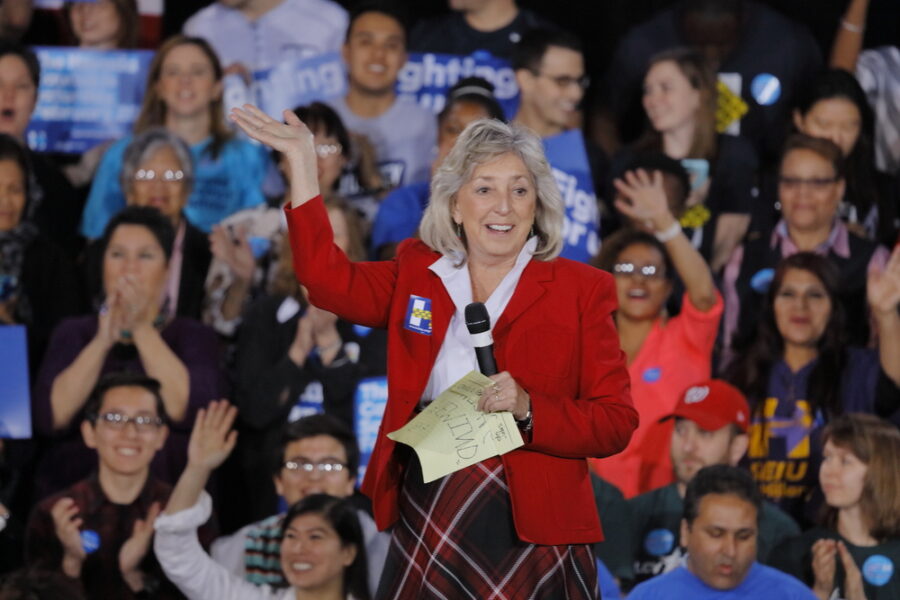
Nevada Rep. Dina Titus has introduced federal legislation aimed at stopping sports event contracts offered by prediction market platforms.
Sports contracts have proven controversial across the US, with state gambling regulators trying to block the platforms, which they believe amount to illegal sports gambling.

Titus’ Fair Markets and Sports Integrity Act, introduced on February 10, would amend the Commodity Exchange Act and bar platforms from offering contracts tied to the results of professional or amateur sports contests – a move proponents frame as protecting established gaming regulations and consumer safeguards.
Titus believes more protection is needed, saying in a social media post, “Consumers deserve transparency, accountability, and protections against predatory practices. Without meaningful oversight, these platforms expose users to misleading financial risks, while diverting revenue away from states and tribes that rely on regulated gaming to invest in their communities.”
Opponents of Titus’s proposal argue that it stifles innovation and could protect established casino interests. Prediction markets currently operate under federal oversight and the operators contend their products are financial derivatives rather than gambling.

Others have pointed out that some established sportsbook and casino operators supported Titus’ congressional elections.
The bill comes on the heels of a successful Super Bowl LX weekend for prediction markets, with Kalshi reporting over US$1 billion in trading volume, while Nevada’s sportsbook operators reported lackluster results compared to previous years.
Charlotte Capewell brings her passion for storytelling and expertise in writing, researching, and the gambling industry to every article she writes. Her specialties include the US gambling industry, regulator legislation, igaming, and more.

Dig Deeper
Related stories
 2025/07/08: Nevada lawmaker introduces act to combat Trump’s Big Beautiful Bill
 2026/07/24: Nevada legislators introduce bill to ban sports event contracts
2026/02/18: Nevada Gaming Control Board takes next step in action against Kalshi
2026/07/24: Nevada legislators introduce bill to ban sports event contracts
2026/02/18: Nevada Gaming Control Board takes next step in action against Kalshi
 2026/06/15: Nevada Gaming Control Board seeks Kalshi contempt ruling
2025/07/08: Nevada lawmaker introduces act to combat Trump’s Big Beautiful Bill
2026/07/24: Nevada legislators introduce bill to ban sports event contracts
2026/02/18: Nevada Gaming Control Board takes next step in action against Kalshi
2026/06/15: Nevada Gaming Control Board seeks Kalshi contempt ruling
The Backstory
Why the fight over “event contracts” is accelerating
Rep. Dina Titus’ push to bar sports event contracts on federally supervised prediction markets arrives after months of mounting clashes between state gambling regulators and tech platforms that frame their products as derivatives, not bets. The proposal, introduced Feb. 10, would amend the Commodity Exchange Act to wall off contracts tied to pro and amateur sports. Titus has argued publicly that users need stronger guardrails and that unlicensed offerings siphon revenue from regulated books. She previewed the consumer protection rationale in a social media post, echoed in a House filing now tracked on Congress.gov and amplified on X.
The timing is notable. Prediction markets touted a surge in trading around major sports weekends, while several sportsbooks reported softer results. That divergence sharpened political attention on whether “markets” for game outcomes are simply sportsbooks by another name. The answer now carries national stakes: a federal ban would cap a growth channel for crypto-native and app-based operators while reinforcing the primacy of state-licensed sports wagering.
States test jurisdiction with cease-and-desist orders
Connecticut has been among the most aggressive. In early actions described by the state’s consumer protection agency, regulators ordered several platforms to halt sports event contracts, calling them illegal, unlicensed gambling and warning of possible criminal referrals. The enforcement sweep included targeted letters to three companies. The orders to Kalshi, documented here, were paired with directives to Robinhood and Crypto.com. Connecticut’s broader rationale, including underage access concerns and the absence of settlement oversight, is outlined in our coverage of the state’s crackdown: Connecticut orders prediction markets to stop offering sports contracts.
Iowa is charting a different path: pull the platforms into the state’s framework and make them pay. A new proposal would require a permit from the Department of Revenue, a steep initial licensing fee and annual renewals, and a definition broad enough to capture sports, politics and current affairs. Supporters say it clarifies the rules and brings revenue onshore. Skeptics warn the draft lacks core consumer protections and could normalize addictive behavior. Read our report on the measure, Iowa bill aims to bring prediction markets under state regulation, and the underlying text of Senate File 2085.
These divergent state approaches set the backdrop for Titus’ federal bill. If enacted, a categorical bar on sports outcomes would supersede attempts to license those products at the state level, while reinforcing cease-and-desist actions against platforms that claim federal preemption.
Nevada draws a line, then goes to court
Nevada, home to the most mature sportsbook regime, has hardened its stance. In a notice circulated to licensees, the Nevada Gaming Control Board said sports event contracts qualify as wagers under state law even if listed on federally supervised exchanges. That means only nonrestricted licensees with sports pool approval can touch them. The board warned that associating with unlicensed offerings in other states could call a licensee’s integrity into question. Our coverage summarizes the directive in Nevada Gaming Control Board warns licensees that sports event contracts are wagers, alongside the board’s Notice 2025-77.
The stance is not just advisory. In February, the board asked a Nevada court to enjoin Coinbase Financial Markets from offering prediction products in the state, arguing the company was running unlicensed gambling. The filing follows a broader pattern of temporary blocks and civil actions against fast-growing operators around key sporting events. Details are in Nevada regulators try to stop prediction market platform Coinbase from operating in state and the agency’s news release.
Nevada’s legal posture matters nationally. If a court endorses the state’s view that event contracts are indistinguishable from sports wagers, it will undercut arguments that federally overseen markets enjoy a carve-out. It would also validate warnings to Nevada licensees against partnering with platforms that frame sports outcomes as financial products.
Ethics, insider risk and political optics
Even as policymakers haggle over jurisdiction, a separate concern has risen: insider trading and the appearance of influence. A bill circulating on Capitol Hill would bar federal elected officials, political appointees and executive branch employees from using these platforms. The measure responds to controversy over concentrated bets on geopolitical outcomes and questions about access to nonpublic information. Our report, Bill aims to prevent government officials from using prediction market platforms, outlines how the proposal seeks to shore up public trust while leaving room for regulated retail participation.
For Titus’ effort, the optics cut both ways. Supporters pitch consumer protection and the sanctity of state-regulated gambling. Opponents say a ban would shield incumbents from competition under the guise of integrity. The ethics debate expands the frame, suggesting that even if platforms survive regulatory scrutiny, their user base may be curtailed by conflict-of-interest rules that target a high-information cohort.
The stakes for markets, casinos and consumers
For prediction platforms, the road forks. Connecticut-style crackdowns raise legal risk and customer churn. Iowa-style licensing could impose high fixed costs and surveillance, but offer stability. Nevada’s line-drawing threatens both access to a key market and relationships with established operators who cannot imperil their licenses. A federal sports ban would close the biggest retail on-ramp and constrain liquidity that often spills into adjacent markets.
For casinos and sportsbooks, the push to classify event contracts as wagers protects their franchise and reinforces the narrative that only licensed books can manage risk, settle outcomes and guard against manipulation. For consumers, the patchwork means rules can shift overnight. Cease-and-desist orders, like those described in Connecticut’s action and memorialized in official notices, can freeze accounts or bar access during marquee events.
What to watch next
Three tracks will define the next phase. First, Congress. Track the procedural path of Titus’ bill on Congress.gov and watch whether the ethics-focused proposal advances in tandem, which could reset who can legally participate even if markets persist. Second, courts. Nevada’s case against Coinbase, detailed in the NGCB release, could become a template. Parallel state litigation, including actions around Super Bowl windows, will signal how judges parse the line between derivatives and bets. Third, states. Iowa’s SF 2085 will test appetite for licensing over prohibition. More notices like Nevada’s 2025-77 would tighten the perimeter for licensees considering partnerships.
The core question remains unchanged: Are sports event contracts a financial innovation or simply wagers in novel packaging? Titus’ bill seeks to answer it in federal code. Until then, operators are navigating a tightening vise of state enforcement, emerging ethics rules and a political climate newly attuned to what looks, feels and pays like betting.
