


The Coalition for Prediction Markets reacts to controversial Maduro bet on Polymarket

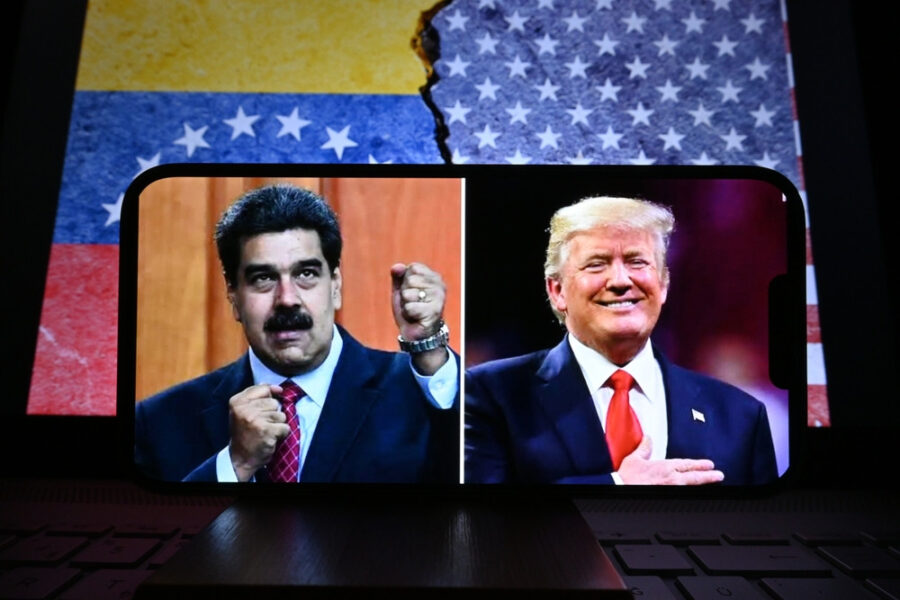
A controversial bet taken on Polymarket in relation to Venezuelan President Nicolas Maduro has triggered alarms in legal and political circles in the US, with the Coalition for Prediction Markets taking out an ad on Wednesday showing support for a ban on insider trading.
The coalition is made up of numerous prediction market operators, including Kalshi, Coinbase, and Robinhood. The ad, published in the Washington Post, calls on Congress to work with them to keep the regulation of prediction markets transparent.

Speaking to Business Insider, a spokesperson for the coalition said the ad was part of an “opening salvo” by operators to push for stronger federal regulation, as prediction markets are under increasing scrutiny from state gambling regulators across the US.
The spokesperson confirmed that the coalition is planning to spend upwards of seven figures over the coming months as it campaigns for stronger government relations.
The catalyst for the movement was a US$32,537 bet placed on Polymarket earlier this month related to Maduro just hours before US forces captured him on January 3.

The user netted US$436,000 from the well-timed bet and sparked multiple accusations over possible insider trading, including from lawmakers.
In response, Congressman Ritchie Torres introduced a bill that would bar federal officials from trading on government-linked events contracts when they have access to insider information.
So far, Polymarket remains independent of the coalition, with its spokesperson saying that the ad was meant to show “a clear contrast with offshore platforms where concerning scandals such as the Maduro trade have occurred.”
Charlotte Capewell brings her passion for storytelling and expertise in writing, researching, and the gambling industry to every article she writes. Her specialties include the US gambling industry, regulator legislation, igaming, and more.

Dig Deeper
Related stories
 2026/02/02: Event contracts on Super Bowl ads raise concerns about insider trading
 2026/04/24: US soldier charged with prediction market insider betting after US$400,000 Maduro bet
 2025/12/12: Kalshi and Crypto.com launch predictions markets advocacy coalition
 2026/01/08: Polymarket rejects payouts on Venezuela invasion bets
2026/02/02: Event contracts on Super Bowl ads raise concerns about insider trading
2026/04/24: US soldier charged with prediction market insider betting after US$400,000 Maduro bet
2025/12/12: Kalshi and Crypto.com launch predictions markets advocacy coalition
2026/01/08: Polymarket rejects payouts on Venezuela invasion bets
The Backstory
How a single trade became a stress test for prediction markets
The furor over a well-timed wager tied to Venezuelan President Nicolás Maduro did not erupt in a vacuum. It landed in the middle of a power struggle over who regulates prediction markets in the United States and under what rules. The Coalition for Prediction Markets, a new industry group featuring Kalshi, Coinbase, Robinhood, Underdog and others, had already been organizing to shift oversight firmly to Washington and away from state gambling regulators. The coalition’s launch outlined a push for federal standards on integrity and insider-trading controls, warning that a patchwork of state rules would push users offshore and splinter a fast-growing market that had generated nearly $28 billion in trading volume through October. The group framed its effort as a bid for a single national rulebook, arguing Americans deserve clarity and consistent compliance expectations nationwide, as detailed in its formation announcement.
The disputed Maduro-linked trade — and the outsized profit it produced — accelerated that campaign. Industry leaders saw an opening to argue that disciplined federal oversight can curb abuses without shutting down innovation. Critics, meanwhile, seized on the episode to question whether event contracts can be policed at all, particularly when platforms straddle financial markets and gambling. The clash set the stage for a broader fight over who draws the lines in a market that now sits at the intersection of crypto, sports, politics and mainstream finance.
Federal vs. state: the battle lines harden
Even before the latest controversy, courtroom and regulatory skirmishes were multiplying. State gaming commissions have moved to assert authority over event contracts, with Connecticut ordering prediction markets to halt certain offerings and other states probing whether platforms are functionally operating sportsbooks. The coalition’s case rests on the view that prediction markets are federally supervised derivatives-like venues, not gambling, and should be treated uniformly. That position was underscored when the industry group rallied high-profile political firepower to its cause, naming former Rep. Sean Patrick Maloney as president and chief executive and former House Financial Services Chair Patrick McHenry as a senior adviser. The hires, announced in a leadership expansion, were a signal to regulators and lawmakers that the industry expects federal primacy to prevail, pointing to recent legal wins such as a federal judge’s move to temporarily block Tennessee’s attempt to stop Kalshi’s operations pending a hearing.
This divide over jurisdiction is not academic. If states set the rules, operators face 50 interpretations of what an “event contract” is and whether it mirrors gambling. If Washington takes the lead, the market could consolidate under one framework analogous to commodity derivatives. The coalition has been blunt about the stakes: fragmentation would drive users to offshore venues, whereas a unified regime would keep trading onshore and visible to supervisors.
Polymarket’s expanding footprint complicates the narrative
The Maduro flare-up placed Polymarket at the center of scrutiny, even as the company pursued mainstream partnerships that nudge prediction markets further into the U.S. sports and entertainment economy. The platform struck a multi-year agreement with daily fantasy operator PrizePicks to bring event contracts into the PrizePicks app, positioning the product next to a large base of sports-first users. The tie-up represents a route back into the U.S. for Polymarket after its acquisition of a CFTC-licensed exchange and clearinghouse, and follows PrizePicks’ registration as a Futures Commission Merchant with the National Futures Association. The strategy, outlined in the companies’ partnership announcement, is to fold prediction markets into familiar sports experiences while emphasizing federal compliance plumbing.
At the same time, Polymarket agreed to supply real-time sentiment data and trading functionality to TKO’s UFC and Zuffa Boxing broadcasts, creating a feedback layer that mirrors live odds but behaves like an exchange. Fans can buy and sell positions as momentum shifts, a model that complements traditional wagering but is architected as trading rather than betting. The tie-up with TKO, described in the UFC integration deal, shows how prediction markets are edging into broadcast and event production, not just apps and websites. That expansion gives regulators more reason to engage — and gives the industry more incentive to lock in rules that match its exchange-based ambitions.
Why integrity standards are the fulcrum
The coalition’s early policy focus has zeroed in on insider trading and consistent compliance. That is not accidental. A core defense of prediction markets is that prices aggregate disparate information, improving public understanding of probabilities; the model breaks if privileged information can be monetized without consequence. In its platform principles, the coalition proposed federal insider-trading protections and audit-ready integrity rules as part of a uniform regime. The Maduro incident offers a concrete test: can regulators distinguish legitimate information discovery from illicit use of nonpublic government intelligence? The industry’s answer is to codify the line and keep enforcement centralized, while skeptics argue that the line is too blurry when markets trade on political and national security events.
The coalition’s public campaign underscores a second point: perception risk. Even if most trading is benign, a few high-profile cases can discredit the market in the eyes of lawmakers. By spending seven figures on advocacy and recruiting bipartisan leadership, the industry is betting it can turn controversy into momentum for a clearer federal framework, and that transparency measures will win over moderates wary of gambling creep.
The broader gambling debate bleeds into igaming policy
The regulatory tug-of-war is playing out against a larger debate about online wagering and consumer protection. In Massachusetts, lawmakers are weighing bills to legalize internet casino gaming, with supporters arguing that a regulated market would capture activity already happening on illegal sites and generate tax revenue. Opponents warn that fresh access will turbocharge addiction, calling igaming the “fast food of gambling.” While prediction markets are not traditional casino games, the policy currents overlap. If states expand regulated online gambling, they may be more inclined to assert authority over adjacent products like event contracts. Conversely, if prediction markets secure federal treatment distinct from gambling, that separation could insulate them from state-level expansions or crackdowns.
For operators, the policy direction matters to product design and partnerships. A world where prediction markets are boxed into gambling rules limits integration with mainstream finance and media. A federal markets framework, however, would favor collaborations like PrizePicks-Polymarket and TKO’s broadcast integrations, where trading mechanics and compliance resemble capital markets more than sportsbooks.
What comes next
The industry’s trajectory will turn on two fronts: enforcement decisions in ongoing state-federal disputes and whether Congress moves to codify insider-trading prohibitions tailored to event contracts. The coalition’s push for uniform standards, its recruitment of prominent political figures, and the rapid mainstreaming of prediction markets through sports and fantasy platforms suggest a near-term sprint to lock in rules. If regulators accept a centralized model with strong integrity controls, prediction markets could broaden into finance-adjacent infrastructure. If not, more headlines like the Maduro trade will prompt states to act, inviting fragmentation and pushing activity into less supervised channels.
Either way, the market is at an inflection point. Partnerships are scaling, user adoption is accelerating and the costs of regulatory ambiguity are rising. The next moves by federal courts, agencies and Congress will decide whether prediction markets settle into a coherent national framework or remain a regulatory orphan buffeted by state-by-state crosswinds.
