


Nevada secures ban on Kalshi’s sports event contracts

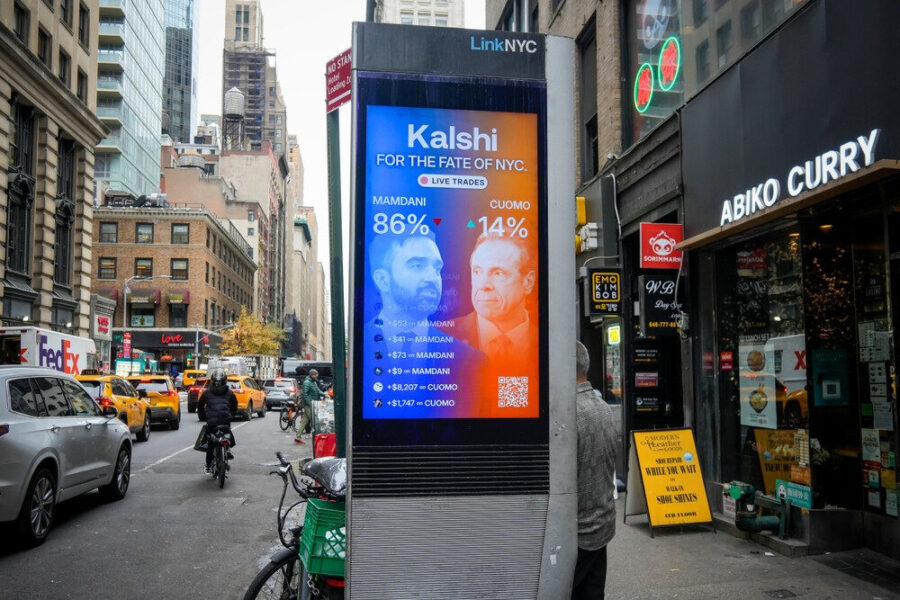
Nevada gambling regulators have secured a short-term ban on some contracts offered by Kalshi, pending a court hearing.
According to the Wall Street Journal, the temporary restraining order prevents Kalshi from offering event-based contracts tied to sports, elections, and entertainment within the state.

The order, issued by the Nevada First Judicial District Court on Friday, is in effect for 14 days, with a hearing set for 3 April.
Kalshi must secure the appropriate state gambling licenses and restrict access to users 21 and older if it wants to continue offering such contracts. State regulators argued that the platform’s operations are unlicensed gambling under Nevada law.
Kalshi notified users of the decision over the weekend, saying that customers can close out existing positions in affected markets but cannot open new ones. Contracts linked to other categories, such as weather and cryptocurrencies, can still be traded.

The case is the latest development in a long-running argument between state authorities and prediction-market platforms over whether event-based contracts fall under gambling regulations or federal oversight.
Kalshi, which faces criminal charges in Arizona and multiple lawsuits in other states, maintains that its contracts are legal because they are overseen by the Commodity Futures Trading Commission.
State regulators disagree, and federal lawmakers also have raised concerns about some of the markets offered by Kalshi and rival Polymarket, which have included contracts related to military action and other high-profile events.
Charlotte Capewell brings her passion for storytelling and expertise in writing, researching, and the gambling industry to every article she writes. Her specialties include the US gambling industry, regulator legislation, igaming, and more.

Dig Deeper
Related stories
 2026/07/27: Kalshi withdraws unlicensed event contracts from Nevada under new agreement
 2026/06/15: Nevada Gaming Control Board seeks Kalshi contempt ruling
 2026/02/18: Nevada Gaming Control Board takes next step in action against Kalshi
 2026/02/20: Tennessee judge grants Kalshi a preliminary injunction
2026/07/27: Kalshi withdraws unlicensed event contracts from Nevada under new agreement
2026/06/15: Nevada Gaming Control Board seeks Kalshi contempt ruling
2026/02/18: Nevada Gaming Control Board takes next step in action against Kalshi
2026/02/20: Tennessee judge grants Kalshi a preliminary injunction
The Backstory
Why Nevada moved now
Nevada’s temporary restraining order against Kalshi is the latest turn in a fast-evolving fight over whether event contracts belong in financial markets or on sportsbook ledgers. The order, effective for 14 days with a hearing set for April 3, follows a clear prelude: the state’s top regulator put licensees on notice that “sports and other event contracts” constitute wagers under Nevada law and require a full sports pool license. In mid-March, the Nevada Gaming Control Board formalized that stance in a bulletin to the industry, warning that operators and affiliates dabbling in event markets without proper approvals could face suitability questions. That position is detailed in the board’s Notice 2025-77 and summarized in this report on the Nevada Gaming Control Board’s warning to licensees.
The court action tightened the screws. As first reported by the Wall Street Journal, Nevada secured a temporary ban on Kalshi’s sports, elections and entertainment contracts while the licensing question plays out in court. The Journal’s coverage of the state’s legal move can be found here. For now, Kalshi can let users close existing positions in affected markets but cannot accept new wagers tied to sports or entertainment in the state. Weather and crypto contracts remain tradable.
The state’s posture matters beyond one platform. Nevada’s bright-line declaration that these products are wagers, even when listed on federally supervised venues, invites a direct test of federal preemption and the practical boundaries between commodity derivatives and sports betting.
Kalshi’s pivot to sports raised the stakes
The flash point came when Kalshi expanded from policy and macro outcomes into mainstream sports. The company began listing “will [team] win [title]” markets in late January after seeking CFTC clearance to launch sports event contracts. That move followed a bruising but ultimately successful battle with the Commodity Futures Trading Commission over election markets, which Kalshi says helped it demonstrate that event contracts can be regulated as financial instruments. The sports listings drew heat because they shadowed traditional sportsbooks. Crypto.com tested similar waters with Super Bowl markets and, despite a CFTC request to pull them, continued to offer sports predictions.
Nevada’s bulletin listed sports, esports, the World Series of Poker and the Oscars as examples of covered events. By grouping traditional sports with high-profile cultural competitions, the board signaled a broad view of what looks like wagering when odds-based outcomes are packaged for consumer speculation. The timing was not incidental. Interest in these products surged around the NFL playoffs and Super Bowl, when prediction venues reported record volume.
States push back, courts weigh in
Nevada is not alone. State regulators from New Jersey to Massachusetts have questioned the legality of sports-linked event markets, while others have moved to stop them outright. In Tennessee, the state’s Sports Wagering Council ordered Kalshi, Crypto.com and Polymarket to cease offering sports event contracts to residents and refund deposits or face fines and possible criminal referrals. A federal judge temporarily blocked Tennessee’s order, agreeing to hear Kalshi’s argument that CFTC jurisdiction shields it from state gambling oversight.
Kalshi has also taken an offensive posture in New York, suing the state’s gaming commission and asserting that the CFTC holds exclusive jurisdiction over its exchange. The complaint casts New York’s enforcement as an intrusion into federal financial regulation and warns of spillovers for consumer platforms where trading and gaming converge. The case arrived days after Kalshi and Polymarket announced a multiyear data partnership with the NHL, underscoring how quickly event markets have tried to integrate into the sports ecosystem even as regulators push back.
Legal scholars and gaming-law veterans have flagged the clash as a test of the boundaries between state police powers over gambling and federal oversight of derivatives. One prominent practitioner framed Nevada’s TRO as a predictable assertion of state sovereignty in gambling, while noting the unsettled federal preemption questions now heading toward appellate courts, a view reflected in early legal commentary.
Congress enters the fray
The jurisdictional split has spilled onto Capitol Hill. Rep. Dina Titus of Nevada introduced the Fair Markets and Sports Integrity Act on Feb. 10 to bar federally regulated platforms from listing contracts tied to pro or amateur sports. Her proposal to block sports event contracts would amend the Commodity Exchange Act, clarifying that these products belong under state gambling regimes rather than federal commodities law. Titus framed the bill as a consumer protection measure to curb misleading risks and safeguard state and tribal gaming revenues, a message she amplified on social media. The legislation’s progress and actions are tracked on the congressional docket here.
Critics argue the bill would cement an advantage for incumbent sportsbooks and chill innovation in retail-accessible hedging tools, while supporters say the line between prediction markets and betting has already blurred beyond recognition. The politics are sharp for Nevada, which is seeking to defend a regulated sports wagering model that ties consumer protections, age gates and taxation to licensure.
What it means for markets and gaming
The immediate stakes are operational. If Nevada’s position holds, event-exchange operators seeking to list sports, entertainment or even major televised competitions would have to secure nonrestricted gaming licenses with sports pool approval, implement 21-plus age restrictions and comply with the state’s account and book rules. The board has warned that Nevada licensees partnering with unlicensed event platforms elsewhere could face disciplinary action, making it harder for prediction markets to find distribution or data support inside the state.
Nationally, the outcome will shape how event risk is packaged for consumers. A win for Kalshi in federal court would embolden exchanges to expand beyond politics and weather into sports and pop culture, leveraging media rights and league data to drive volume. A win for states would keep those products within sportsbook channels, subject to geofencing, tax and responsible gaming regimes.
Either way, the legal map is fracturing. Tennessee’s setback shows state orders are not bulletproof when federal jurisdiction is invoked. New York’s case will test the durability of the CFTC’s authority when a product looks like a bookmaking market. Nevada’s TRO, and the board’s explicit warning to licensees, raise the risk for casino companies that might be tempted to partner with event exchanges for customer acquisition without full licensure.
For consumers, clarity will dictate access. If exchanges prevail, retail users could see more low-dollar, binary contracts priced like options on everything from championships to awards shows. If states win, the offerings would likely consolidate inside existing sportsbook apps with tighter KYC controls. That fork will also determine who captures the economics: CFTC-regulated venues pitching financialized predictions or state-licensed operators charging vigorish under sports betting rules. The next hearing in Nevada will test how quickly that question gets answered, and by whom.
