


Minnesota Senate to vote on prediction market ban

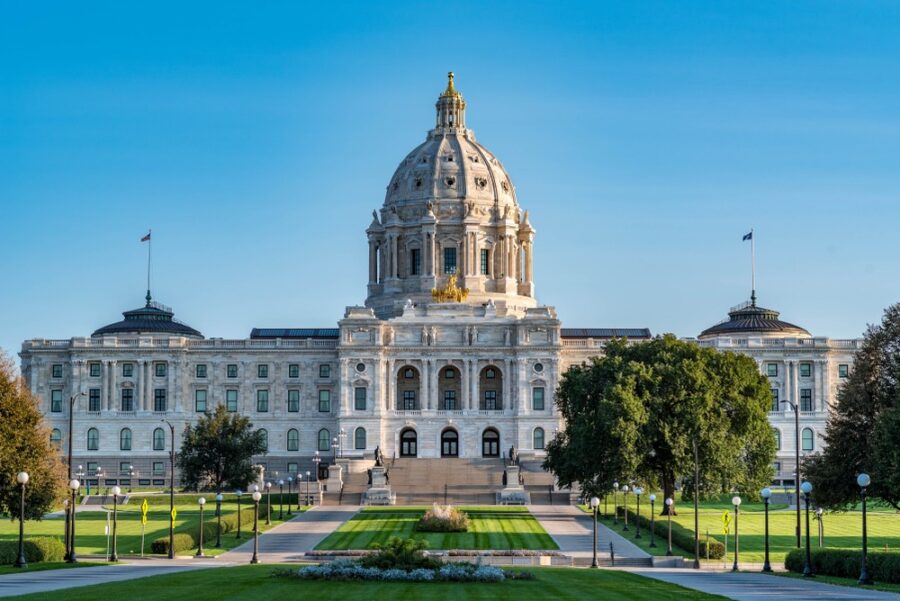
A bill that would ban most wagers on prediction platform markets is set to advance to a Minnesota Senate floor vote after controversy involving a state senator who placed a bet on his own primary race for Congress.
The bill, which has cleared a key Senate committee, would classify trades on areas such as the weather, popular culture, court cases, and election outcomes as illegal.

Supporters of the ban argue that prediction market platforms, like Kalshi and Polymarket, are operating outside of Minnesota’s gambling regulations.
“Kalshi now claims it’s the first nationwide legal sports betting app and we would argue it’s not in compliance with our laws,” Minnesota Sen. John Marty, the primary sponsor of the bill, told CBS News.
The issue gained attention after Kalshi’s investigation team recently identified three US political candidates who had placed bets on their own races, which goes against the platform’s rules.

One was Minnesota Sen. Matt Klein, who admitted to placing a US$50 wager. He later described it as a mistake and agreed to a settlement, which included a five-year ban from the platform.
A similar bill in the Minnesota House is facing uncertainty, with Rep. Harry Niska, the Republican floor leader, raising concerns over its legal foundation and potential conflict with federal oversight of the Commodity Futures Trading Commission.
Minnesota House Democratic leaders, meanwhile, have expressed support for the legislation, explaining how they believe Klein’s actions demonstrate wider issues with prediction markets.

Dig Deeper
Related stories
 2026/04/10: Minnesota Senate advances prediction market ban
 2026/07/28: Prediction markets win in Minnesota, judge blocks ban days before implementation
2025/04/24: Minnesota betting bill introduces push notification ban
2025/01/09: Minnesota sports betting faces renewed opposition ahead of legislative session
2026/07/28: Prediction markets win in Minnesota, judge blocks ban days before implementation
2025/04/24: Minnesota betting bill introduces push notification ban
2025/01/09: Minnesota sports betting faces renewed opposition ahead of legislative session
2026/04/10: Minnesota Senate advances prediction market ban
2026/07/28: Prediction markets win in Minnesota, judge blocks ban days before implementation
2025/04/24: Minnesota betting bill introduces push notification ban
2025/01/09: Minnesota sports betting faces renewed opposition ahead of legislative session
The Backstory
Why Minnesota is moving now
Minnesota’s push to outlaw most wagers on prediction platforms did not happen in a vacuum. The bill advancing to a Senate floor vote arrives after months of scrutiny over event-based trading and a statehouse increasingly focused on where online wagering fits in the law. A key inflection point: a committee-stage win for supporters who argue markets like Kalshi and Polymarket fall outside state gambling rules and invite abuse by those with privileged information. That case was laid out publicly as the measure cleared its first hurdle, with lawmakers pointing to both legal ambiguity and the pace at which these platforms have grown over the past year. For a detailed look at the committee proceedings and the concerns raised, see the account of how the bill cleared the State and Local Government Committee in Minnesota Senate advances prediction market ban.
The current flash point follows a self-inflicted crisis of confidence: a sitting Minnesota senator acknowledged placing a small wager tied to his own political future on a prediction platform, a violation of the site’s rules. That episode amplified fears that event markets can be compromised by people with inside knowledge, whether in politics, business or entertainment. It also pushed the question of oversight to the forefront just as other corners of the state’s gambling debate—sports wagering, consumer protections and tribal compacts—are demanding attention in St. Paul.
Insider edges and the integrity argument
Supporters of the ban have focused on the structural risks of event contracts, especially when the outcome can be known—or influenced—by a small circle. During the bill’s first hearing, lawmakers warned that staffers, operatives and even candidates could exploit nonpublic information for financial gain. Sen. Erin Maye Quade sketched a plain example of how campaign insiders might time bets to announcements no one else can see coming, underscoring why conventional guardrails used in sports betting may not fit prediction markets built around politics and real-world events. Those exchanges, and the rationale that prediction markets sit outside Minnesota’s existing gambling framework, are captured in Minnesota Senate advances prediction market ban.
The integrity case is not limited to elections. Backers also cite markets on court rulings, government decisions and even weather outcomes—areas where specialized or inside information can be both common and consequential. That logic resonates with regulators wary of transforming policy and governance into tradable assets that invite conflicts of interest. It also mirrors a broader national reassessment of where to draw lines between acceptable speculation and gambling that corrodes public trust.
A parallel fight over how to legalize sports betting
Even as lawmakers move to restrict prediction markets, Minnesota is again debating whether and how to legalize online sports wagering. The contours of that debate reveal a legislature intent on drawing tighter consumer safeguards if legalization happens—and a bloc resistant to expansion altogether. One notable proposal, Minnesota betting bill introduces push notification ban, would legalize mobile sports betting while barring push notifications designed to bring users back to apps, a first-of-its-kind restriction among U.S. states. The bill ties licenses to tribal operators and sets a 22% tax rate, positioning Minnesota to regulate an activity many residents already access through offshore books.
Opposition remains entrenched. Ahead of the 2025 session, a Senate finance committee hearing led by a longtime skeptic spotlighted the social and public health costs of expanded gambling. Critics argued that legalization normalizes a product that can be addictive and predatory, while supporters countered that a regulated market can impose safeguards the illegal market ignores. The contours of that clash, including plans to reintroduce a high-tax framework channeling revenue to problem gambling programs, are detailed in Minnesota sports betting faces renewed opposition ahead of legislative session.
That divide has spilled into the current session, where a new push to authorize mobile betting has met familiar pushback. Proponents argue that regulation will bring transparency and consumer protections; opponents say any expansion increases harm and that proposed safeguards are insufficient. The latest temperature check is in Minnesota online sports betting bill faces pushback.
Federal crosscurrents and Kalshi’s legal shadow
Minnesota’s prediction market crackdown is unfolding as federal policymakers revisit whether certain event contracts should exist at all. In March, a second U.S. Senate proposal surfaced to bar traders from betting on event contracts, a move cited by Minnesota backers as evidence that state action aligns with a shifting national mood. That federal momentum appears in the backgrounding of the committee action described in Minnesota Senate advances prediction market ban.
Separately, the legal fights around Kalshi—the best-known regulated venue for event contracts—are bleeding into state-level debates. In Massachusetts, a judge kept a case against Kalshi in state court rather than moving it to federal court, a procedural turn that could encourage more aggressive state enforcement even where federal agencies like the Commodity Futures Trading Commission have overlapping jurisdiction. That ruling is part of a broader backlash that also includes a push to outlaw in-game prop bets and tighten advertising, as outlined in Massachusetts lawmaker regrets vote to legalize gambling, wants to ban in-play prop bets.
These crosscurrents matter for Minnesota. House leaders weighing the state bill have flagged potential conflicts with federal oversight, and any eventual law may invite challenges testing the boundary between state gambling authority and federal commodities regulation. How those tensions resolve will shape whether event markets remain a niche financial product or are treated as a form of gambling subject to state bans.
What to watch as the bill heads to the floor
The Senate floor vote will test whether concerns about insider trading and public trust outweigh arguments that prediction platforms are a nascent financial tool. Passage would push the debate to the House, where questions about federal preemption and the scope of the prohibition could slow the process. Lawmakers skeptical of a blanket ban may prefer targeted restrictions or clearer carve-outs for research markets, while supporters see a clean prohibition as the only way to avoid hard-to-police gray areas.
The outcome will also ripple through the state’s broader gambling agenda. If Minnesota clamps down on prediction markets while advancing a tightly regulated sports betting model, it would signal a policy posture that favors consumer protections and tribal partnerships over market experimentation. The notification ban proposal in SB 3414 is a case in point: even where expansion is on the table, lawmakers are experimenting with guardrails that go beyond other states.
Nationally, more states and courts are testing where event contracts belong—on a commodities exchange with federal oversight, or under state gambling laws with tighter controls or outright bans. As those lines harden, Minnesota’s floor vote will be watched not just for what it says about politics and wagering, but for how states intend to police information advantages in an era when markets can be spun up around almost any outcome.
