


Minnesota Senate advances prediction market ban

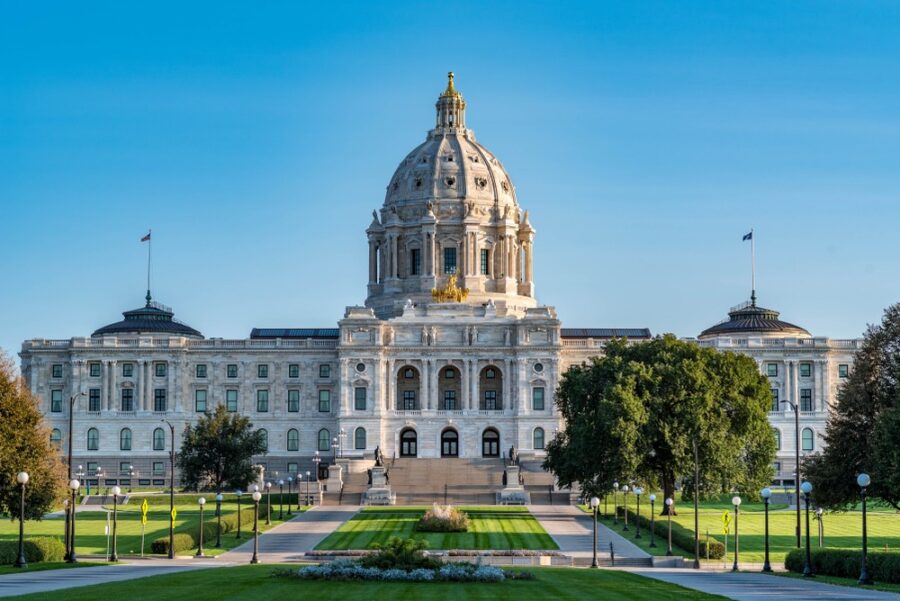
A bill that would ban prediction markets in Minnesota moved forward this week after passing the Minnesota Senate State and Local Government Committee stage.
Supporters of the bill say prediction markets, such as Kalshi and Polymarket, are not covered by current state law and that this bill would bring clarity to the issue.

During the committee hearing, Sen. John Marty highlighted the rapid rise of prediction markets over the last year and said the issue of their legal status had become more widely known.
Proponents of the bill said they were concerned that prediction markets could be operating outside of the state’s gambling regulations, and that there was potential for those with inside information to bet on future events.
This comes after a second US Senate proposal aiming to prevent traders from betting on event contracts was introduced to Congress in March.

Speaking during the hearing, Sen. Erin Maye Quade said, “I have a really good friend who works for an elected official who’s planning to announce a run for something else, and I know exactly what day that they’re going to announce or that they’re planning to announce before most other people know. I can bet on that. The person who runs the campaign can bet on that. The member themselves can bet on that.”
The bill was passed on a voice vote, and it will now be considered by the Senate Commerce Committee.

Dig Deeper
Related stories
 2026/04/27: Minnesota Senate to vote on prediction market ban
2025/01/09: Minnesota sports betting faces renewed opposition ahead of legislative session
2026/04/27: Minnesota Senate to vote on prediction market ban
2025/01/09: Minnesota sports betting faces renewed opposition ahead of legislative session
 2026/07/28: Prediction markets win in Minnesota, judge blocks ban days before implementation
2025/04/24: Minnesota betting bill introduces push notification ban
2026/07/28: Prediction markets win in Minnesota, judge blocks ban days before implementation
2025/04/24: Minnesota betting bill introduces push notification ban
2026/04/27: Minnesota Senate to vote on prediction market ban
2025/01/09: Minnesota sports betting faces renewed opposition ahead of legislative session
2026/07/28: Prediction markets win in Minnesota, judge blocks ban days before implementation
2025/04/24: Minnesota betting bill introduces push notification ban
The Backstory
How Minnesota arrived at the brink
Minnesota’s push to prohibit prediction markets did not emerge in a vacuum. Lawmakers have spent months weighing where federally overseen event contracts fit within the state’s gambling framework while separately wrestling with a contested sports betting bill. Sen. John Marty, who has pressed for stronger consumer safeguards in gambling, has been a prominent skeptic in both debates. He has warned that prediction platforms such as Kalshi and Polymarket can slip past state oversight and invite insider trading risk, echoing concerns he also raised as Minnesota’s online sports betting bill faced pushback from problem gambling advocates and tribal stakeholders. That parallel track helped set the table for this week’s committee vote advancing a ban and propels the issue into the Senate Commerce Committee with momentum.
The core dispute is jurisdictional as much as it is moral. Prediction platforms register with the Commodity Futures Trading Commission, allowing them to claim a federal derivatives umbrella and operate nationally, even where sports wagering remains illegal. State regulators argue those sports and pop culture contracts are gambling by another name and should be licensed or shut down. Minnesota’s ban effort is a direct response to that friction and to heightened scrutiny by other states that say unregistered activity is already occurring within their borders.
A federal squeeze on event contracts
Capitol Hill pressure has intensified the state-level reckoning. A bipartisan bill introduced by Sens. Adam Schiff and John Curtis would amend the Commodity Exchange Act to bar CFTC-registered entities from offering sports and casino-style markets nationwide. The sponsors say prediction platforms are expanding into traditional wagering with massive liquidity and insufficient consumer protections. The proposal has energized attorneys general and gaming boards that have pursued enforcement actions against operators they view as unlicensed sportsbooks. For a detailed look at the measure, see reporting on the bipartisan Senate bill targeting sports prediction contracts, and the bill text posted by Schiff’s office here.
Supporters of federal limits argue CFTC oversight was designed for hedging economic risk, not for wagering on touchdowns or tournament brackets. They point to brisk volumes in Super Bowl and March Madness contracts as evidence the line has blurred. That has fueled statehouse action by lawmakers who say they can’t rely on federal regulators to wall off gambling products from residents, or to return any tax revenue to local coffers.
States test divergent strategies
Even as Minnesota eyes prohibition, Iowa is moving the other direction. The Iowa Senate approved a bill to regulate and tax event-contract platforms with a 45-1 vote, positioning the state as an early adopter of a licensing regime. The plan would require a permit from the Department of Revenue, impose a 20 percent tax on revenue and a 20 percent excise tax on each contract sale, and set steep entry fees. Read more in our coverage of Iowa’s Senate passage of SF 2470 and the underlying proposal’s introduction as SF 2085. The legislative text is posted by the state at SF 2470 and SF 2085.
Iowa’s bet is that aggressive licensing fees and taxes, combined with state oversight, can channel activity into a compliant system and capture revenue. Critics counter that the bill, even after amendments raising the upfront fee to $20 million, still leaves gaps in consumer protections and could normalize highly speculative products. The divergence between Minnesota and Iowa underscores the absence of a national standard. Where some states mobilize prosecutors — Arizona brought criminal charges against Kalshi and Washington’s attorney general sued the company — others are building on-ramps that legitimize prediction contracts as a taxable industry. The patchwork raises the stakes for multistate platforms and complicates compliance as product menus span sports, elections and economic indicators.
Leagues, integrity and the endorsement line
Sports properties have become an unexpected fulcrum in the policy fight. Prediction markets pitch themselves as price-discovery tools, but leagues see the same integrity risks that shadow sportsbooks. The NFL and the PGA Tour continue to prohibit players from endorsing prediction platforms, a bright-line rule that contrasts with some properties and athletes warming to commercial deals. As we reported, the NFL and PGA Tour maintain bans on player endorsements even as the NHL and individual athletes test partnerships. The NFL Players Association told Front Office Sports that prediction markets are treated as gambling entities under league policy; Front Office Sports’ coverage is available here.
The leagues’ stance reinforces arguments in statehouses that sports-linked event contracts should be regulated like betting or confined altogether. It also spotlights a loophole that worries regulators: if CFTC-registered outfits can list sports markets in every state while licensed sportsbooks cannot, the competitive field tilts and compliance burdens drift from gambling authorities to a federal commodities cop not structured for consumer harm mitigation.
Minnesota’s parallel debate on sports betting
Minnesota’s renewed attempt to legalize online sports betting has run into the same coalition divisions that have stalled prior efforts. Lawmakers backing legalization frame it as a way to pull billions in illicit wagers into a taxed, regulated market with tribal partnership. Detractors, including Marty, argue that past promises of robust safeguards have not held up in other states and that marketing practices can exacerbate addiction. Our recent look at the latest proposal, Senate File 4139’s uncertain path, captures the crosscurrents that now bleed into the prediction market debate. For ban supporters, drawing a line on event contracts helps inoculate the state’s broader gambling ecosystem from a fast-moving, lightly supervised product category.
The linkage matters. If Minnesota ultimately legalizes mobile sportsbooks but bars prediction markets, it would cement a regulatory distinction that many operators dispute but leagues and problem gambling advocates welcome. If both efforts falter, platforms will continue operating under federal registration claims, and the state may turn to litigation, as peers have, to draw boundaries by court order.
What to watch next
The Senate Commerce Committee will determine whether Minnesota’s ban advances to the floor this session. Watch for amendments that clarify definitions, carve out academic research trials or address non-sports contracts, which have drawn less political ire but pose similar oversight questions. Any move by Congress on the Schiff-Curtis bill would also ripple quickly into state strategies, either validating Minnesota’s hard line or narrowing the gap between prohibition and licensing models like Iowa’s.
For platforms, the stakes are immediate. A Minnesota ban could catalyze similar bills in Upper Midwest legislatures and chill league partnerships, while a competing regulatory framework next door in Iowa may lure operators to concentrate investment and compliance resources there. The emerging mosaic — federal pressure, state divergence, league policies — explains why Minnesota moved now and why the outcome will reverberate far beyond St. Paul.
