


Iowa advances bill to regulate prediction markets

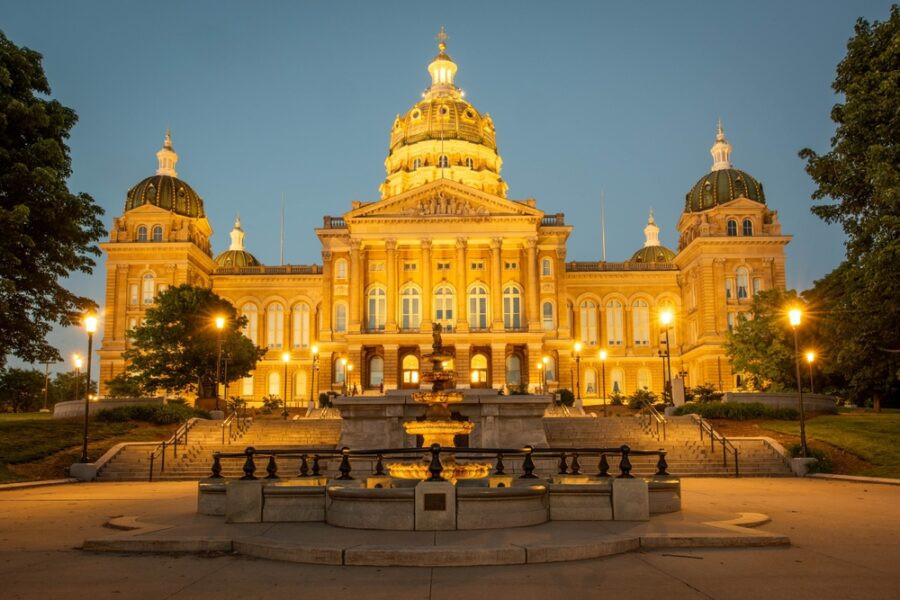
The Iowa Senate has passed a bill to regulate and tax online prediction market platforms, making it the first US legislative chamber to try to regulate the sector.
Senators voted 45-1 in favor of an amended version of Senate File 2470 on Tuesday. The bill would make prediction markets illegal in the state unless operators obtain a license from the Department of Revenue and pay taxes on event contract activity.

The measure now moves to the Iowa House of Representatives, with the legislative session set to end on April 21.
The proposal was initially introduced to the Senate Ways and Means committee in January by Sen. Mike Klimesh and advanced through committee in March.
It applies to sites that let users trade event-based financial contracts tied to outcomes such as sports events, elections, and economic indicators, and proposes a 20% tax on revenue from these contracts as well as a 20% excise tax on the purchase price of each contract.

Money generated would be put towards the state’s general fund.
Before final passage, senators adopted amendments that increased the entry fee for operators. Initial licensing fees were doubled from US$10 million to US$20 million, with annual renewals set at US$100,000. Licenses would expire each year on June 30.
The bill’s passage comes as multiple state regulators have taken legal action against companies such as Kalshi and Polymarket. Most recently, Washington’s Attorney General filed a lawsuit against Kalshi, alleging that the operator was offering illegal gambling in the state.

Dig Deeper
Related stories
 2026/04/28: Iowa lawmakers advance bill to tax prediction markets
2026/01/20: Proposed Iowa bill would expand regulators’ authority to control illegal betting platforms
2026/04/28: Iowa lawmakers advance bill to tax prediction markets
2026/01/20: Proposed Iowa bill would expand regulators’ authority to control illegal betting platforms
 2026/07/01: New Jersey lawmakers advance bill to tax prediction markets
2026/01/23: Iowa bill aims to bring prediction markets under state regulation
2026/07/01: New Jersey lawmakers advance bill to tax prediction markets
2026/01/23: Iowa bill aims to bring prediction markets under state regulation
2026/04/28: Iowa lawmakers advance bill to tax prediction markets
2026/01/20: Proposed Iowa bill would expand regulators’ authority to control illegal betting platforms
2026/07/01: New Jersey lawmakers advance bill to tax prediction markets
2026/01/23: Iowa bill aims to bring prediction markets under state regulation
The Backstory
Why Iowa moved first
State lawmakers have been circling prediction markets for months, weighing whether event contracts look more like derivatives or gambling. That debate landed in Des Moines early when lawmakers floated a framework to bring federally overseen platforms under state control. In January, Sen. Mike Klimesh introduced an initial proposal to require permits from the Department of Revenue for any operator offering contracts on outcomes such as sports, politics and current affairs. That plan, outlined in Iowa bill aims to bring prediction markets under state regulation, set steep entry costs and annual renewals to establish a gatekeeping function.
The measure’s backers argued a licensing regime would clarify oversight and capture tax revenue from a fast-growing digital sector already courting Iowa users. Critics flagged gaps in consumer protections, including missing age checks and self-exclusion tools. That early tension set the stage for the Senate’s near-unanimous vote to advance a stricter plan, with higher fees, explicit taxation of contracts and annual license expirations designed to force ongoing compliance reviews. The Senate’s move now puts the issue in the House with the session set to end April 21, compressing the timeline for the first state-level framework of its kind to become law.
A patchwork of state crackdowns
Iowa’s push is part of a broader race by states to define prediction markets before federal regulators or courts do it for them. Regulators and attorneys general in several states have challenged platforms that list sports and political contracts without local licenses, arguing those products mirror wagers. In Connecticut, lawmakers advanced a proposal to raise the minimum age on prediction markets to 21 and tighten advertising rules, taking a page from the state’s gambling standards. The debate was shaped by cease-and-desist orders the state issued to multiple firms late last year and a court ruling that limited enforcement. The episode, detailed in Connecticut continues crack down on prediction markets by raising age limit, underscored the legal gray zone around these platforms and the friction between statewide gambling compacts and online event contracts.
Wisconsin surfaced a different risk: if lawmakers stall on legal sports betting, prediction markets may step in with functionally similar products that do not rely on state gambling licenses. In Wisconsin lawmaker warns prediction markets will launch even if sports betting is not approved, a leading legislator argued that failure to authorize mobile wagering under tribal compacts could push activity to national apps that list sports outcome contracts. That framing matters for revenue and enforcement. It also highlights a strategic calculation for states: regulate and tax prediction markets on state terms, or risk letting them operate in the margins with fewer consumer safeguards.
Platforms court policymakers as rules tighten
While states act, platforms are building political strategies in large markets. In New York, Kalshi registered with the state’s lobbying commission and hired an Albany firm as lawmakers introduced bills to license and set age limits for event contract trading. The move reflects a recognition that the nation’s most lucrative sports betting state could set influential precedents. As reported in Kalshi lobbying in New York as state lawmakers seek to regulate event contracts, sponsors said the absence of federal clarity is forcing states to move and that time is short to put guardrails in place.
Industry leaders say those guardrails raise existential questions because prediction markets are not structured like sportsbooks and often sit under commodity or derivatives frameworks. The Commodity Futures Trading Commission has asserted authority to police the platforms on issues like insider trading. But on the ground, state definitions and enforcement priorities are now shaping where and how event contracts can be offered. That dynamic is fueling urgent lobbying and legal positioning even as legislatures consider licensing fees, taxes and consumer protections that could resemble gambling regimes.
Tribal sovereignty and the money at stake
State-by-state decisions carry clear fiscal and political stakes. Supporters of tighter oversight say regulation will keep activity and revenue within state borders. That is a core argument in Wisconsin, where lawmakers backing compacted sports betting stressed that local control protects consumers and respects tribal sovereignty while blunting the rise of unregulated apps. The warning in Wisconsin lawmaker warns prediction markets will launch even if sports betting is not approved resonates beyond one state. Tribes with exclusive gaming rights view prediction markets as an encroachment when platforms list sports or casino-style contracts without compact obligations or revenue sharing.
Those tensions are not hypothetical. In multiple states, tribes and regulators have weighed litigation against platforms they contend are running illegal gambling under the guise of event contracts. That posture informs why some legislatures, including Iowa’s, are exploring high licensing thresholds and transaction taxes. By explicitly taxing contract revenue and purchases, lawmakers aim to capture an emerging revenue stream and discourage lightly capitalized entrants. The model also signals that if event contracts resemble gambling in substance, they will be treated like gambling for tax and oversight purposes.
Congress edges into the fight
Even as states advance their own rules, Congress is testing federal limits. A bipartisan Senate bill would amend the Commodity Exchange Act to bar any CFTC-registered entity from listing contracts tied to sports or casino-style games. The proposal, described in Bipartisan Senate bill aims to prohibit sports betting on prediction markets, responds to rapid growth in sports-related event trading, including high-volume markets around March Madness and the Super Bowl. Sponsors argue that such contracts are sports bets by another name and undermine state consumer protections and tribal compacts.
If enacted, the bill would narrow what federally registered platforms can offer nationwide, even in states that opt to regulate more broadly. That prospect adds urgency to state calendars. For Iowa, it raises a practical question: should the state set a comprehensive structure now, knowing Congress could later constrain specific product lines, or focus on a baseline regime that can adapt as federal policy evolves. Either way, the push and pull between state authority and federal oversight is tightening.
What to watch as Iowa’s clock runs
The Senate’s plan reflects lessons from other states’ skirmishes: define prediction markets in statute, force licensing, embed taxes and align contract trading with gambling-style compliance. The outcome in the House will signal whether Iowa intends to be an early model for a regulated market or a cautionary line against platforms viewed as skirting gambling law. Parallel actions in Connecticut’s age and advertising reforms, New York’s looming licensing debate and Congress’s proposed sports prohibitions will shape how much room Iowa and its peers have to maneuver.
For operators, the message is clearer by the week. The regulatory window for offering broad event contracts without state approval is narrowing. Whether through state tax codes, age limits, tribal compacts or federal carve-outs, the patchwork is hardening. Iowa’s late-session decision will show if that convergence produces the first full state framework for prediction markets or another flashpoint in a national fight without a single referee.
