


Iowa lawmakers advance bill to tax prediction markets

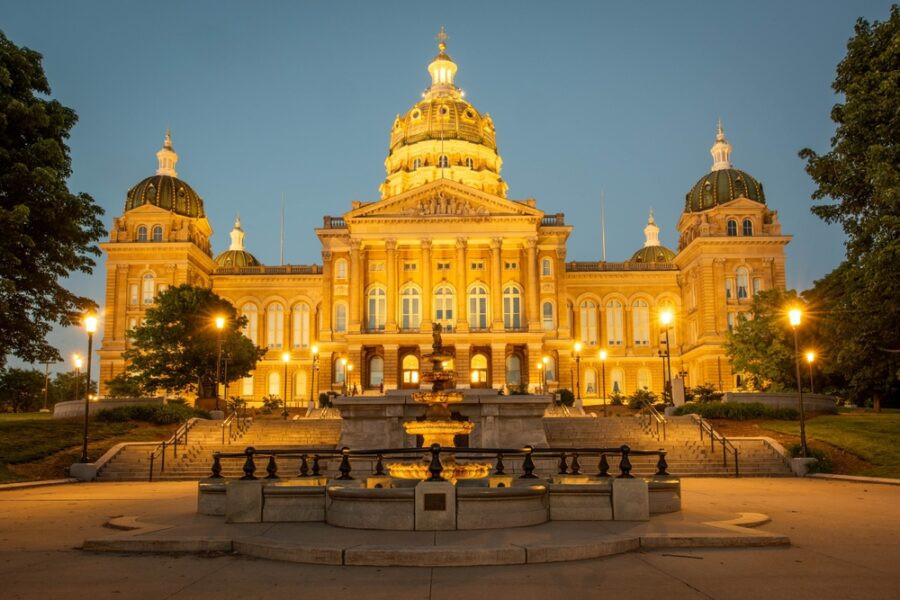
Lawmakers in Iowa have moved ahead with a bill that would introduce regulations and taxes on prediction market platforms that operate in the state.
Senate File 2470, which has now passed out of a House subcommittee, would require companies that offer event-based trading markets to obtain a state permit, at an initial cost of US$20 million, with an annual renewal fee of US$100,000.

The bill also includes a 20% tax on adjusted revenue generated from Iowa users, and a 20% excise tax on the purchase price of each contract.
According to estimates from the Iowa Legislative Services Agency, the law could produce approximately US$40 million in revenue in fiscal year 2027, largely from the initial permit fees, although projected revenues would decrease over future years.
The bill is being considered as legal disputes continue between prediction market Kalshi and several states, including Iowa.

Kalshi has argued in court that federal law grants oversight of its operations to the Commodity Futures Trading Commission, but state regulators have argued that it should be bound by state gambling law.
Iowa Senate Majority Leader Mike Klimesh said the bill would establish a regulatory framework as the industry grows, although representatives from Kalshi urged lawmakers to delay action, citing ongoing litigation and uncertainty over federal jurisdiction.

Dig Deeper
Related stories
 2026/01/20: Proposed Iowa bill would expand regulators’ authority to control illegal betting platforms
2026/01/23: Iowa bill aims to bring prediction markets under state regulation
2026/04/01: Iowa advances bill to regulate prediction markets
2026/05/19: Iowa governor signs bill targeting sweepstakes casinos
2026/01/20: Proposed Iowa bill would expand regulators’ authority to control illegal betting platforms
2026/01/23: Iowa bill aims to bring prediction markets under state regulation
2026/04/01: Iowa advances bill to regulate prediction markets
2026/05/19: Iowa governor signs bill targeting sweepstakes casinos
2026/01/20: Proposed Iowa bill would expand regulators’ authority to control illegal betting platforms
2026/01/23: Iowa bill aims to bring prediction markets under state regulation
2026/04/01: Iowa advances bill to regulate prediction markets
2026/05/19: Iowa governor signs bill targeting sweepstakes casinos
The Backstory
How Iowa’s push took shape
State lawmakers in Iowa moved to regulate event-based trading after months of friction between prediction platforms and state gambling authorities. The Senate first advanced a framework to bring federally overseen exchanges under state control with Senate File 2085, proposing that operators secure a permit and pay a hefty fee to reach Iowans. That early draft set a US$10 million initial charge and US$100,000 annual renewals, and defined covered activity broadly to include markets tied to sports, politics and current affairs. Supporters said the measure would provide clarity, while critics warned it lacked safeguards common in gambling laws, such as age checks or self-exclusion tools. The proposal signaled bipartisan appetite to assert state jurisdiction as companies expanded across the country without local licenses. For detail on the opening bid in January, see Iowa’s first proposal to bring prediction platforms under state oversight in Iowa bill aims to bring prediction markets under state regulation.
Momentum accelerated when the Senate voted 45-1 to advance a revised bill that would make prediction markets illegal in Iowa unless operators obtain a state license and pay taxes on event contracts. Lawmakers doubled the entry fee to US$20 million and kept renewals at US$100,000, reflecting a tougher stance as legal fights mounted in other states. The proposal also layered on a two-part tax structure: 20% on adjusted revenue and a 20% excise tax on each contract’s purchase price. That version moved to the House with the session’s end date tightening, a sign legislators wanted a firm framework even as federal-state jurisdiction questions persisted. Read the chamber’s action in Iowa advances bill to regulate prediction markets.
The revenue pitch is straightforward: an upfront hit from license fees and ongoing taxes directed to the state’s general fund. But after the first big spike, recurring revenue would depend on contract activity and the number of firms willing to pay Iowa’s price of entry. That calculus is colored by litigation risk, given multiple clashes over who regulates which markets and when state gaming laws apply.
The federal-versus-state fault line
Platforms like Kalshi argue their contracts are financial products regulated by the Commodity Futures Trading Commission, not gambling bets that trigger state licensing and tax regimes. That position has drawn repeated pushback from state regulators and attorneys general who say the products walk and talk like sports wagers or casino-style play. The conflict is now a fixture of court dockets, shaping how states such as Iowa evaluate their options.
In New York, Attorney General Letitia James sued two crypto-affiliated platforms tied to Coinbase and Gemini, alleging their event-based markets constitute illegal gambling and sidestep state licensing and taxes. The case underscores a broader strategy by states to treat these markets as wagering when they touch sports, politics or entertainment outcomes. Coinbase counters that federal oversight via the CFTC governs these offerings, not the state’s gambling regime. The New York clash is detailed in New York Attorney General sues Coinbase and Gemini Titan over prediction markets.
Maryland has gone further into the preemption thicket. After the state’s lottery and gaming commission ordered Kalshi to stop operating, the company sued, arguing Maryland’s action intrudes on a federal framework Congress set for derivatives on designated exchanges. Kalshi also won a temporary injunction in Nevada, showing the legal terrain can swing by jurisdiction. Those moves highlight how fast the industry is testing the limits of state enforcement and federal deference. See the legal fight in Prediction markets platform Kalshi files lawsuit in Maryland.
Sports contracts sharpen scrutiny
Nothing has attracted more attention than sports-linked contracts. States view these as bets that should sit inside existing sports wagering laws, with age limits, responsible gambling rules and tax obligations. Platforms contend they are peer-to-peer swaps or event contracts governed by federal commodities law. That disagreement has already led to criminal exposure in at least one jurisdiction, raising the stakes for operators and any state contemplating a licensing lane.
On Capitol Hill, a bipartisan bill aims to draw a bright federal line by amending the Commodity Exchange Act to prohibit CFTC-registered entities from listing contracts tied to sporting events and casino-style games such as poker and blackjack. Backers say the markets are sports betting by a different name and undermine state consumer protections and tribal sovereignty, while generating no local revenue. If enacted, the measure would narrow what prediction platforms can offer nationwide, even in states that are open to licensing them. The congressional push is outlined in Bipartisan Senate bill aims to prohibit sports betting on prediction markets.
State enforcement is also escalating. Washington’s attorney general recently sued Kalshi for allegedly offering illegal gambling, according to legislative debate in Iowa. Arizona has brought criminal charges, reflecting a tougher posture where products intersect with sports. These actions inform why Iowa lawmakers have bundled permitting, taxes and an explicit illegality provision for unlicensed activity into one package.
Why Iowa’s model matters beyond Des Moines
Iowa’s structure would be among the most explicit efforts by a state to both tax and gatekeep prediction markets while acknowledging the federal overlay. By setting a high initial fee and layering two taxes, lawmakers are testing whether well-capitalized operators will submit to state supervision to access a defined market. The approach could influence copycat bills in other statehouses that want revenue, data visibility and consumer protections without fully embracing every type of contract.
The model also positions Iowa to claim jurisdiction regardless of CFTC registration status. If courts later narrow federal preemption or if Congress curbs sports contracts, Iowa’s framework still functions for non-sports markets, with permitting and tax levers intact. Conversely, if federal courts endorse broader CFTC authority, Iowa’s law could face challenges, as seen in Maryland and Nevada. Either way, codifying a regime now gives the state a seat at the table in a fast-moving policy fight.
Politically, the near-unanimous Senate vote suggests a coalition that spans revenue hawks, consumer protection advocates and brick-and-mortar gaming interests that favor regulatory parity. The move to double the license fee between drafts shows how quickly lawmakers calibrated to legal risk, enforcement costs and market appetite.
The road ahead: litigation, legislation, or both
Even if Iowa enacts a law this session, the real test will come from courtrooms and federal rulemaking. Operators are likely to keep pressing preemption arguments while challenging state attempts to treat their contracts as gambling. At the same time, attorneys general will continue to target platforms that reach residents without local licenses. That dual track is visible in New York’s litigation against crypto-linked prediction venues and Kalshi’s countersuits in Maryland and Nevada. For the New York example, see the attorney general’s case against Coinbase and Gemini Titan, and for Maryland, see Kalshi’s challenge to the state’s cease-and-desist order.
Congress could short-circuit part of the debate with a federal ban on sports-linked contracts for CFTC registrants. If that bill advances, state-level fights would shift to non-sports markets and tax compliance. If it stalls, more states may follow Iowa’s template, setting steep license fees and explicit tax rules while daring operators to test preemption in court. The bipartisan proposal is summarized in the Senate measure to prohibit sports betting on prediction markets.
For Iowa, the stakes are immediate. A clear regime could channel activity into licensed, taxable platforms or push it underground if operators balk at the costs. Either outcome will reverberate nationally, as other states watch to see whether prediction markets assimilate into gambling frameworks or claim a separate lane under federal commodities law.
