


Proposed Iowa bill would expand regulators’ authority to control illegal betting platforms

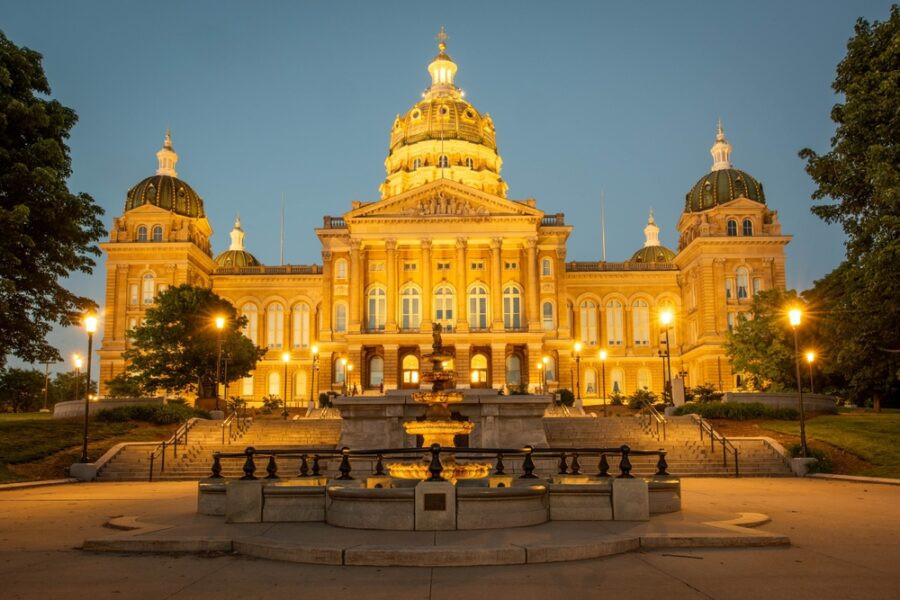
Iowa lawmakers are drafting legislation that would give state regulators the necessary authority to act against unlicensed sports betting platforms operating in the state.
According to We Are Iowa, a pre-filed bill for the upcoming legislative session proposed granting Iowa’s gambling regulator, the Iowa Racing and Gaming Commission, explicit power to issue cease-and-desist orders and seek injunctive relief against illegal operators.

Sports wagering has increased rapidly in Iowa. In 2025, bettors placed nearly US$3 billion in wagers, generating about US$19 million in state tax revenue from online sportsbooks. State officials said the growth had been accompanied by a rise in consumer complaints tied to unlicensed platforms.
Former Chief Executive of the Iowa Lottery, Terry Rich, said fraud risks had increased over the past two to three years as betting expanded faster than regulatory oversight.
Iowa Racing and Gaming Commission Administrator Tina Eick said her office has increasingly heard from residents who were unable to collect winnings after betting online, often because the wagers were placed on illegal sites.

Under current law, the commission regulates nineteen casinos and their associated online sportsbooks, but lacks the authority to pursue unlicensed operators.
Eick said the bill would clarify enforcement powers and allow the commission to require illegal platforms to remedy the harm they have caused. She described the proposal as an initial step toward addressing a problem that was growing as the legislative session approached.
Abi Bray brings strong researching skills to the forefront of all of her writing, whether it’s the newest slots, industry trends or the ever changing legislation across the U.S, Asia and Australia, she maintains a keen eye for detail and a passion for reporting.

Dig Deeper
Related stories
 2026/01/12: Iowa regulators to get new cease-and-desist powers in illegal gambling crackdown
2026/01/23: Iowa bill aims to bring prediction markets under state regulation
2026/05/19: Iowa governor signs bill targeting sweepstakes casinos
2026/04/28: Iowa lawmakers advance bill to tax prediction markets
2026/01/12: Iowa regulators to get new cease-and-desist powers in illegal gambling crackdown
2026/01/23: Iowa bill aims to bring prediction markets under state regulation
2026/05/19: Iowa governor signs bill targeting sweepstakes casinos
2026/04/28: Iowa lawmakers advance bill to tax prediction markets
2026/01/12: Iowa regulators to get new cease-and-desist powers in illegal gambling crackdown
2026/01/23: Iowa bill aims to bring prediction markets under state regulation
2026/05/19: Iowa governor signs bill targeting sweepstakes casinos
2026/04/28: Iowa lawmakers advance bill to tax prediction markets
The Backstory
Regulators seek sharper tools as complaints surge
Iowa’s push to give its gambling watchdog explicit cease-and-desist and injunctive powers is the product of a market that has grown faster than its enforcement playbook. Regulators say consumer complaints have mounted as unlicensed operators target bettors online, often with offers that resemble legal sportsbooks but lack the accountability of licensed platforms. The proposed measure would upgrade the Iowa Racing and Gaming Commission’s authority from warning and advising to ordering and compelling, enabling the agency to act quickly against sites that refuse to pay out or mislead players.
The move aligns with a national shift toward more aggressive oversight of gray-market and offshore platforms. In recent months, several states have accelerated enforcement against operators that fall outside their regulatory frameworks, reflecting anxiety that illegal sites are siphoning activity from legal books while exposing consumers to higher risks. For Iowa, where legal wagering has become a steady revenue source, the stakes include tax integrity, market fairness and public trust.
A pivot from advisories to enforcement
Until now, the commission’s toolkit has leaned on public alerts and consumer advisories to steer players away from risky sites. The new proposal would mark a turn toward direct action. In an interview detailed by the Iowa Capital Dispatch and summarized by Complete iGaming, Commission Administrator Tina Eick outlined the bill’s focus on three problem areas: fraudulent lookalike sites that imitate legitimate brands, offshore sportsbooks that take Iowa bets without a state license, and sweepstakes-style casinos that permit cashouts, at times in cryptocurrency. That shift was captured in reporting on the commission’s plan to issue cease-and-desist letters to illegal igaming sites, a step beyond consumer warnings.
Complaints tied to sweepstakes platforms have drawn special scrutiny. Regulators have heard from players who struggled to withdraw funds or faced unexpected delays after winning, underscoring a consumer protection gap. The legislation would not outright ban sweepstakes-style gaming, but it would clarify that the commission can intervene when an operator targets Iowans without authorization, including ordering them to stop and to remedy harm when possible. That enforcement clarity is meant to deter unlicensed operators before problems escalate and to give the state leverage if they do.
Benchmarks from other states’ crackdowns
Iowa’s proposal follows a pattern established by regulators elsewhere. In Arizona, authorities have begun to publicly name and sanction unlicensed platforms that marketed to residents despite lacking approval. The Arizona Department of Gaming issued cease-and-desist orders to four operators it said were offering unauthorized sportsbook and sweepstakes-style products, warning of potential felony exposure under state law. The state framed the actions as necessary to mitigate fraud, identity theft and financial loss while protecting licensed operators that comply with consumer safeguards. Details of that campaign are outlined in coverage of Arizona gaming regulators targeting illegal online operators.
Tennessee has taken a complementary approach, coupling cease-and-desist orders with financial penalties to push unlicensed books out of the market. The Tennessee Sports Wagering Council has levied fines totaling hundreds of thousands of dollars and heralded the exit of several illegal brands after enforcement escalated. The most recent action included US$100,000 in fines for two offshore sportsbooks operating without a license, part of a broader strategy to reduce the reach of illegal operators in the nation’s largest online-only sports betting state. Those steps were highlighted in reporting on Tennessee’s latest enforcement wave.
These precedents matter for Iowa lawmakers weighing what tools to grant regulators. Cease-and-desist authority is now a common baseline among active enforcement states. Pairing that power with the ability to seek injunctive relief enables regulators to act quickly when operators ignore warning letters or resurface under new domains. It also signals to payment processors, platforms and media partners that the state is willing to escalate if necessary.
The scale of Iowa’s market raises the stakes
Iowa’s legal sports betting market has matured into a significant channel for tax revenue and consumer activity, amplifying the urgency of addressing illegal operators. Online sportsbooks produced a US$203.5 million handle in February 2025, nearly level with the prior year. Over the first months of 2025, the state recorded US$1.9 billion in handle, US$1.7 billion in payouts and US$155.8 million in online net receipts, according to state figures reported by Complete iGaming. DraftKings led the market that month with US$75.2 million in handle and higher year-over-year net receipts, pointing to durable demand among regulated operators.
That scale underscores why officials are concerned about illegal sites skimming activity. Every dollar diverted to an unlicensed platform not only reduces taxable revenue but also shifts risk onto consumers who lack recourse if bets go unpaid or data are compromised. For legal operators, an enduring gray market can dampen customer acquisition and distort competition, especially when offshore books ignore responsible gaming rules and offer promotions that regulated sportsbooks cannot match.
Consumer protection and community impact
The consumer risks that drive Iowa’s enforcement push also feed into a broader policy debate about who benefits from gambling activity. Internationally, governments are weighing how to balance competition, consumer protection and community funding. In New Zealand, local sports groups warn that moving more gambling online could erode the grants that underpin youth programs. The Auckland Cricket Association said a pending bill to authorize up to 15 online casinos lacks provisions to share profits with communities, threatening funding for equipment, coaching and facilities. Those concerns are detailed in reporting on the potential impact to Auckland cricket clubs.
While Iowa’s bill is narrower and focused on enforcement, the same principle applies: ensuring that gambling dollars circulate through legal channels helps preserve consumer protections and public benefits. Regulators say that is harder to guarantee when offshore or sweepstakes-style platforms operate beyond state oversight. Giving the commission clear authority to compel bad actors to stop, and to seek court orders when needed, is meant to fortify those guardrails.
What to watch at the Capitol
The proposal, developed with the Iowa Department of Inspections, Appeals and Licensing, will advance through committee hearings before a floor vote. Lawmakers are expected to hear from regulators, legal operators, consumer advocates and possibly companies tied to sweepstakes-style gaming. As outlined in the commission’s preview of the bill’s scope, the measure would not outlaw sweepstakes gaming on day one but would give regulators leverage to act when platforms cross the line into unauthorized gambling or mislead consumers.
If enacted, Iowa would join states that have codified modern enforcement against illegal betting platforms, aiming to align a fast-growing industry with clearer rules. The immediate test will be whether cease-and-desist authority and the threat of injunctive relief prompt unlicensed operators to exit the market or block Iowa users. Longer term, lawmakers could face pressure to revisit definitions and penalties as operators evolve and new formats emerge. For now, the bill represents a first step to close gaps that have widened as online wagering proliferates.
