


Second bill banning sports betting on prediction platforms introduced


A second US Senate proposal that would stop traders from betting on event contracts ranging from sports, politics, and the military is set to be introduced to Congress.
Sen. Jeff Merkley introduced the Stop Corrupt Bets Act, alongside a companion bill in the House led by Rep. Jamie Raskin, on March 26.

“When anyone can use prediction markets to make a well-timed bet on Congress passing a bill, government decisions or a military strike, it’s ripe for corruption and erodes public trust,” Merkley told Axios.
Merkley’s bill is backed by Sen. Elizabeth Warren and would introduce further restrictions on prediction market platforms, compared to a bill introduced this week by Sens. Adam Schiff and John Curtis, which would just ban contracts resembling sports betting or casino-style gaming.
The proposed law would clarify that existing regulations, particularly the Commodity Exchange Act of 1936, were never intended to permit this type of activity. Lawmakers pushing the measure say clearer rules are needed as prediction platforms expand rapidly and attract mainstream attention.

Merkley also added that the Act would “restore the original intent of prediction markets” and stop them from turning democratic institutions into casinos.
On the other side of the aisle, those opposing the bill believe this will just lead to more illegal gambling.
Elisabeth Diana, a spokesperson for prediction market Kalshi, said in a statement, “Banning sports on regulated prediction markets would just push this behavior offshore, where no regulation exists.”
Charlotte Capewell brings her passion for storytelling and expertise in writing, researching, and the gambling industry to every article she writes. Her specialties include the US gambling industry, regulator legislation, igaming, and more.

Dig Deeper
Related stories
 2026/05/01: Democrats urge CFTC to increase oversight over prediction markets
 2026/03/24: Bipartisan Senate bill aims to prohibit sports betting on prediction markets
 2025/08/05: Senate committee approves military gambling addiction research
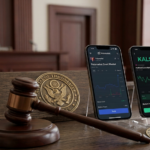 2026/06/29: US Democrats try to block CFTC funding supporting prediction market cases
2026/05/01: Democrats urge CFTC to increase oversight over prediction markets
2026/03/24: Bipartisan Senate bill aims to prohibit sports betting on prediction markets
2025/08/05: Senate committee approves military gambling addiction research
2026/06/29: US Democrats try to block CFTC funding supporting prediction market cases
The Backstory
Why Washington is escalating oversight
Prediction markets have shifted from academic curiosities to high-volume platforms where users wager on outcomes across politics, sports and geopolitics. As volumes climbed and offerings expanded, federal and state officials sharpened their scrutiny. A series of proposals now moving through Congress — some seeking outright prohibitions, others crafting guardrails — reflect mounting concerns about insider trading, market manipulation and the blurring of lines between federally regulated event contracts and state-regulated gambling.
A notable push came earlier this week with a bipartisan move to wall off sports. In a measure that would narrow what federally regulated platforms can offer, Sens. Adam Schiff and John Curtis proposed amending the Commodity Exchange Act to bar contracts tied to sporting events and casino-style games. Their case hinges on a view that such contracts are functionally sports bets and therefore undermine state authority and tribal sovereignty. As described in coverage of the bipartisan sports prohibition bill, state regulators have already escalated scrutiny, and Arizona has brought criminal charges against a major operator.
The debate is accelerating as these platforms attract mainstream attention. Some lawmakers argue that current federal derivatives rules were never intended to accommodate bets on public affairs, while platform operators say a regulated marketplace is safer than pushing activity offshore. That tension runs through competing legislative blueprints now vying to set the industry’s trajectory.
Competing blueprints for federal control
The most targeted federal approach focuses on conduct, not categories of markets. Sen. Richard Blumenthal’s plan, detailed in reporting on the Prediction Markets Security and Integrity Act, would prohibit the misuse of nonpublic information, bar conflicted operators or users from participating in relevant markets, and restrict the application of artificial intelligence to surveil bettors or deliver personalized inducements. The bill seeks to transpose key investor-protection concepts from securities and commodities law onto event contracts, reflecting concerns that the platforms can become conduits for manipulation or national security leaks.
That approach contrasts with efforts to cordon off entire market types, as in the Schiff-Curtis sports prohibition. Another strand of federal policymaking aims to separate public integrity from market speculation altogether. A proposal by Rep. Ritchie Torres would ban federal elected officials, political appointees and executive branch employees from trading on prediction platforms. The measure arrives amid heightened scrutiny of trading tied to sensitive foreign policy developments and a broader ethics debate about whether public officials, or those close to them, should profit from markets that may intersect with government action.
Together, the proposals sketch three different frameworks: constrain platforms with conduct rules (Blumenthal), wall off politically sensitive participants (Torres), or prohibit specific categories of contracts (Schiff-Curtis). The new bill at issue in the current piece would go further than the sports-only approach, signaling a growing appetite among some lawmakers to define the space more narrowly under federal law.
Insider trading fears move to the forefront
Momentum for tighter federal oversight has been propelled by episodes that suggest an uneven playing field. Reports on recent controversies cite accounts that appeared to trade on geopolitical events involving Iran ahead of public disclosures, underscoring the difficulty of policing information flows in a market that monetizes real-time news. Separately, coverage of a high-profile trading account tied to developments in Venezuela spotlighted both the profit potential and the perception risks when events touch national security or foreign policy.
The role of prominent political figures around the industry has intensified the optics challenge. As reported in the same ethics-focused coverage, Donald Trump Jr. joined a prediction platform’s advisory board after his venture firm invested in the space and separately serves as an advisor to another operator. Those relationships, even when compliant with platform rules, have sharpened calls for bright-line bans to mitigate conflicts of interest and preserve public trust.
Courts and state enforcers are also testing the boundaries. An Ohio judge recently declined to block state enforcement, as noted in the Blumenthal bill story, affirming that state gambling laws can apply to prediction markets. That decision adds legal weight to state regulators who argue these products resemble traditional wagering more than hedging tools designed for commercial risk management.
States test their own levers
While Congress debates national standards, states are asserting jurisdiction through permitting requirements, enforcement actions and adjacent gambling policy. Iowa is advancing one of the most aggressive state-centered frameworks. Senate File 2085 would require prediction platforms to secure a state permit, pay a $10 million licensing fee and $100,000 annually thereafter, and abide by oversight from the Department of Revenue. Proponents say the bill would bring clarity; critics warn it lacks baseline consumer protections and could normalize highly addictive behavior without sufficient safeguards.
Elsewhere, the broader sports wagering market continues to evolve, feeding the policy context. Connecticut lawmakers introduced a bill to legalize in-flight sports betting tied to flights originating or ending in the state, with revenue directed to public education and operations aligned with tribal partners and the lottery. The same reporting noted Sen. Blumenthal’s warning to a major sportsbook about partnerships that could expand access and exacerbate problem gambling. Those crosscurrents — expansion in some channels, retrenchment in others — frame the political debate driving new restrictions on prediction platforms.
The result is a patchwork: some states pressing criminal charges or asserting regulatory reach; others experimenting with licensing regimes; and still others refining sports betting rules. That fragmentation raises the stakes of federal action, since preemption or harmonization could reshape where and how prediction markets operate.
Sports markets become a political flashpoint
Sports-linked contracts are an immediate target because they resemble traditional bets, scale quickly and can be marketed broadly. As outlined in the bipartisan bill targeting sports contracts, supporters argue that allowing nationwide access through federally regulated platforms undercuts state licensing systems, deprives governments of revenue and conflicts with tribal compacts. Operators counter that federal oversight by the Commodity Futures Trading Commission offers a compliant structure and that bans would push bettors to offshore sites with fewer protections.
Whether Congress narrows the field to exclude sports or adopts a broader prohibition will determine much of the sector’s near-term growth profile. A sports ban could funnel volume into political and economic indicators — unless broader limits advance that reinterpret the bounds of permissible event contracts under the Commodity Exchange Act.
What’s next for platforms and regulators
The near-term trajectory hinges on whether Congress coalesces around a single approach. Conduct-based guardrails would force platforms to boost surveillance, restrict AI-driven marketing and harden controls against insider trading, while still permitting a range of markets. A categorical sports prohibition would cut off one of the fastest-growing segments but leave space for policy and financial outcomes. A broader reinterpretation of permissible contracts could compress the industry sharply or push activity toward unregulated venues.
In the meantime, state actions — from Iowa’s proposed licensing regime to court decisions like the one in Ohio — will pressure platforms to design state-by-state compliance strategies or retrench offerings. As federal and state rules converge or collide, the central question remains whether prediction markets are financial instruments that aid information discovery or gambling products that demand the same constraints as sportsbooks. Lawmakers on both sides frame their plans as restoring public trust. How they draw those lines will decide whether the industry matures within a regulated perimeter or fragments into offshore and gray markets.
