


Minnesota online sports betting bill faces pushback


Minnesota’s attempt to legalize sports betting in the state is once again encountering resistance, despite a renewed push by lawmakers during the current legislative session.
Senate File 4139 aims to establish a regulated framework for sports gambling in the state, including mobile betting options and partnerships with tribal operators. However, as with previous attempts, the measure faces an uncertain path forward amid ongoing political and stakeholder disagreements.

As reported by KTTC, one of the authors of the bill, Nick Frentz, said, “Hopefully, legislators who have been concerned in the past will say, ‘we have billions of illegal sports betting deals being made in the state, let’s regulate it. You want a bill that, when it passes, will have buy-in from all different corners, so you can’t just jam it down the throat of opponents. You want to engage them.”
Sen. John Marty is on the other side of the argument. He believes the new bill does not provide enough to prevent problem gambling and addiction.
“They’ve been trying to say for years that their bill has safeguards,” Marty said. “No, their bill, as it has in every state, increases gambling.”

Marty said he wanted more to be done to prevent gambling operators from advertising to young people. He also called for amendments to hold companies responsible when they encourage people with an addiction to gamble.
A similar bill was introduced last year, but faced staunch opposition and ultimately stalled.
Charlotte Capewell brings her passion for storytelling and expertise in writing, researching, and the gambling industry to every article she writes. Her specialties include the US gambling industry, regulator legislation, igaming, and more.

Dig Deeper
Related stories
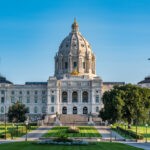 2026/04/27: Minnesota Senate to vote on prediction market ban
 2025/04/24: Minnesota betting bill introduces push notification ban
2025/01/09: Minnesota sports betting faces renewed opposition ahead of legislative session
2026/04/21: Minnesota Lottery partners with Scientific Games for system upgrade
2025/04/24: Minnesota betting bill introduces push notification ban
2025/01/09: Minnesota sports betting faces renewed opposition ahead of legislative session
2026/04/21: Minnesota Lottery partners with Scientific Games for system upgrade
2026/04/27: Minnesota Senate to vote on prediction market ban
2025/04/24: Minnesota betting bill introduces push notification ban
2025/01/09: Minnesota sports betting faces renewed opposition ahead of legislative session
2026/04/21: Minnesota Lottery partners with Scientific Games for system upgrade
The Backstory
Why the latest push matters
Minnesota’s renewed bid to legalize online sports betting arrives after years of false starts, shifting coalitions and rising pressure to corral a large gray market. Lawmakers backing legalization argue that a regulated system tied to tribal operators would move betting into the open and add consumer protections. Opponents counter that rapid mobile access will expand gambling harm faster than safeguards can keep pace. That fault line has defined recent hearings and bill drafts and sets the stage for another contentious session.
The political terrain is crowded. Tribes hold exclusivity over casino gambling, and most proposals would anchor mobile betting to tribal compacts. Professional sports leagues, national sportsbook brands, charities reliant on pull-tabs and addiction-treatment advocates all want a say. The debate no longer centers on if Minnesotans are betting — they are — but whether the state can shape the market without exacerbating risk.
Heading into votes, lawmakers are weighing what level of tax, which guardrails and whose platforms will define the market. The stakes are financial and social. Every design choice — advertising limits, data privacy, app features and revenue splits — carries consequences for operators, tribes and problem gambling services.
A long-running divide at the Capitol
Skepticism sharpened before the 2025 session at a Senate finance committee hearing led by Sen. John Marty, a longtime critic of expansion. The proceeding highlighted economic, health and social risks of statewide online betting and amplified constituent worries about addiction and advertising to young people. Proponents responded that legalization can put rules around activity that is already widespread through illegal sites and offshore apps. That early clash set the tone for the session’s floor strategy and amendments.
In that hearing, supporters like Sen. Nick Frentz and Sen. Matt Klein argued that regulation could establish age checks, geolocation controls and responsible gaming tools. Opponents pressed for tougher curbs on marketing and more funding for treatment. The Sports Betting Alliance later criticized the process as incomplete, saying key tribal voices were missing. That procedural fight fed a broader narrative: any bill that survives must thread tribal sovereignty, consumer protections and political optics without losing critical votes. Coverage of that pre-session showdown appears in reporting on renewed opposition ahead of the session.
Compacts, control and regional pressure
Minnesota is not legislating in a vacuum. Regional peers are moving on mobile wagering, and their models carry lessons and leverage. Wisconsin advanced a tribal-led framework this year. Lawmakers passed a bill that would mirror Florida’s structure by allowing the state’s tribal nations to run mobile sports betting, with the measure now on Gov. Tony Evers’ desk amid late turbulence. Operator groups pushed back, warning that compacts could be reshaped broadly at taxpayer expense and arguing for a constitutional amendment instead. The dynamics, detailed in coverage of Wisconsin’s AB 601, underscore how disputes over compact scope and gubernatorial authority can become pivotal.
AB 601’s path, despite polling headwinds and intraparty divisions, shows how quickly a mobile market can advance once legislative leadership aligns on tribal control. For readers interested in bill specifics, the text is available via LegiScan at AB 601 (2025). That context matters in St. Paul. If Wisconsin finalizes a tribal-first system, pressure increases on Minnesota to reconcile its own tribal partnerships and enforcement goals to avoid losing tax base and tech talent to neighbors.
Closer to home, Minnesota lawmakers have floated several blueprints that differ on tax rates, revenue use and regulator roles. The throughline is tribal exclusivity on mobile skins, with state-issued licenses to platform providers. But control mechanisms — from push alerts to advertising rules — are becoming make-or-break provisions that determine stakeholder support.
Guardrails on the table
One proposal has stood out nationally for targeting a specific engagement tool. A separate Minnesota bill introduced a ban on push notifications intended to curb real-time nudges that draw lapsed users back. The measure would allow security alerts but block marketing pings when an app is idle or a user has self-excluded. It couples the ban with standard safeguards like visible helpline information and prohibitions on “risk-free” claims in ads. The bill also would impose a 22% net revenue tax and set license structures for operators, platform providers and suppliers, all tied to tribal participation and new compacts.
That approach signals where negotiations may land even if the underlying vehicle changes. Lawmakers are testing how product design can mitigate harm — throttling notifications, clarifying odds, moderating promotions and imposing time and deposit tools — while preserving a market competitive enough to crowd out illegal operators. The practical test is whether these rules meaningfully alter bettor behavior without pushing play back into offshore channels.
Advocates for tougher rules want more. They press for broader ad restrictions, age-gating beyond digital checks, and explicit penalties if operators target or retain known problem gamblers. Skeptics worry that aggressive limits dull legal apps while doing little to stop unlicensed sites. The eventual compromise will determine how much Minnesota’s legal market differs from typical U.S. playbooks.
Wider signals from Maryland to Manila
The legalization calculus is also playing out in other gambling verticals. In Maryland, an online casino bill faces local pushback from Worcester County officials and a brick-and-mortar operator worried about cannibalization. The sponsor casts iGaming as a budget tool that could avoid tax increases, with set-asides for problem gambling and education. The argument mirrors sports betting debates: capture existing digital play, regulate it and direct revenue to public programs. The split is covered in reporting on Maryland’s online gaming proposal, and the bill text is posted at the legislature’s site as SB 885.
Abroad, the Philippine experience shows how fast digital wagering can scale and how policy whiplash can ripple through markets. A proposal from Sen. Sherwin Gatchalian to tighten iGaming rules — from stronger identity checks to ad limits and payment bans for popular e-wallets — jolted investors and drew church criticism that online betting had entered homes unchecked. The crosscurrents are detailed in coverage of the proposed Philippine iGaming bill. PAGCOR, the national regulator, reported a record PHP104.12 billion in first-quarter gross gaming revenue, with e-games nearly half, portraying the surge as a managed shift to digital. Its release is posted at PAGCOR’s first-quarter GGR update, while the church’s critique is reflected in a post by Cardinal Pablo Virgilio David at his Facebook page.
These stories map the policy trade-offs awaiting Minnesota. Move too slowly and illegal operators entrench, innovation and jobs migrate, and consumer protections lag. Move too fast or too loosely and social costs climb, political support erodes and future legislatures are forced into corrective crackdowns. The current debate sits at that hinge point. The outcome will determine who runs the market, who gets paid and who is shielded when the next surge of in-play bets hits a phone in Minneapolis or Mankato.
