


Wisconsin online sports betting bill heads to Governor despite pushback

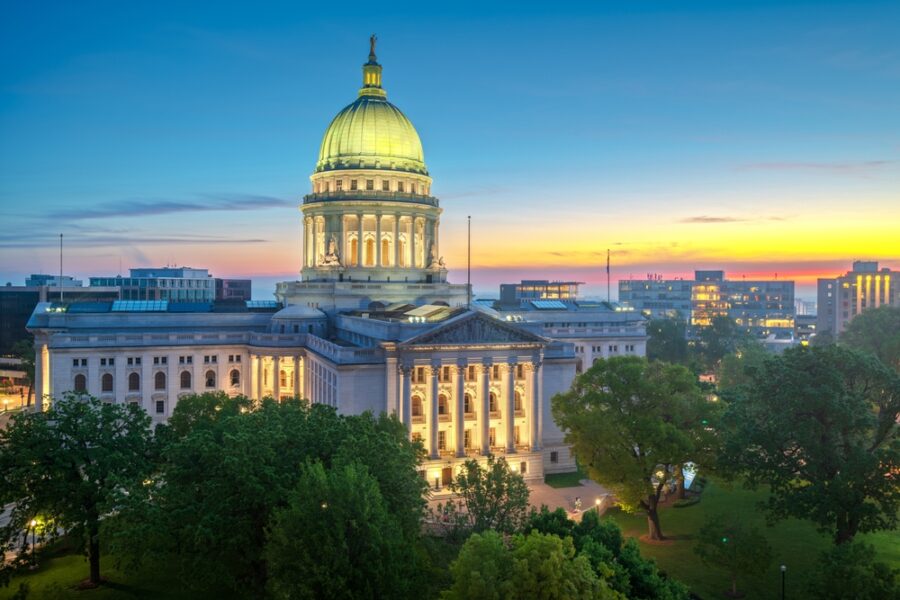
Wisconsin’s online sports betting bill has passed the Senate with a vote of 21-12 and now heads to the desk of Gov. Tony Evers, despite mounting opposition from Senate lawmakers and industry bodies.
Assembly Bill 601, introduced last October with bipartisan support, would mirror Florida’s betting market, allowing the state’s tribal nations to offer mobile sports betting.

The bill made quick progress through the legislature, first passing the Assembly in February with no debate on the floor. However, once it arrived in the Senate, the bill’s future looked uncertain.
Prior to the Senate vote, opposition among Republicans was high, with Sen. Chris Kapenga telling WSIN-TV earlier this week that they were “absolutely split on this.”
A Marquette University Law School poll published earlier in the month found 64% of voters opposed legalizing online sports betting, compared with 34% who supported it.

Sportsbook operators increased opposition ahead of the vote, with the Sports Betting Alliance urging lawmakers to reject the measure. In an email sent to Republican staff on March 10, lobbyist for the Sports Betting Alliance, R. J. Pirlot, said that operators would prefer online sports betting through a constitutional amendment.
“Make no mistake, AB 601 means the compacts will be opened far and wide to allow Gov. Evers to find ways to benefit the Tribes, potentially at the expense of Wisconsin taxpayers,” he wrote.
The bill now heads to Gov. Evers, who has previously signaled hesitation towards the measure, citing the lack of unified tribal backing.
Charlotte Capewell brings her passion for storytelling and expertise in writing, researching, and the gambling industry to every article she writes. Her specialties include the US gambling industry, regulator legislation, igaming, and more.

Dig Deeper
Related stories

The Backstory
From quiet House passage to a turbulent sprint
Wisconsin’s online sports betting push did not begin with fanfare. The effort advanced in February when the Assembly approved a bipartisan measure on a voice vote with no floor debate, a low-drama step that nonetheless carried high stakes for tribal sovereignty and the state’s gambling framework. As outlined in the Assembly’s action, the proposal would let people in Wisconsin place mobile wagers so long as the sportsbooks’ servers sit on tribal land — a structure meant to align with long-standing tribal compacts and the state constitution’s gambling limits. That chamber’s action was framed as pragmatic regulation of activity already occurring on offshore platforms and in gray-market venues. The uncertainty, sponsors acknowledged, would come in the Senate, where top Republicans had not made the issue a priority and warned the clock could run out before adjournment. That early calculation set the stage for the Senate’s higher-profile battle that followed. For the Assembly debate and framing, see the report on how the Wisconsin Assembly approved an online sports betting bill.
Tribal compacts and the model lawmakers chose
Supporters engineered AB 601 around the state’s core legal reality: most gambling is prohibited off tribal land, and the 11 federally recognized tribes hold exclusive rights to certain gaming through compacts negotiated in the early 1990s and recognized in a 2006 court decision. The bill’s architecture mirrors Florida’s model by extending tribal operations into mobile betting via servers located on tribal territory, attempting to keep legal jurisdiction within compact boundaries while opening consumer access statewide. Tribal leaders publicly backed the approach as a modernization of existing rights, saying it would help retain revenue and local control as neighboring states evolve their markets. In a high-visibility plea during the annual State of the Tribes address, leaders argued that regulated mobile wagering would fund health, housing and public safety while keeping proceeds in Native communities. Their message: the market already exists; the question is who governs it and where the money goes. Read more about tribal leaders’ case for legalization and compact-aligned mobile betting in the push from Wisconsin’s tribal nations.
National operators press for access and warn of a monopoly
The Assembly’s narrow, compact-centric design drew immediate resistance from national sportsbook brands and their trade group. The Sports Betting Alliance pressed senators to amend the bill or pursue a statewide referendum to authorize a broader commercial framework. The group argued that limiting licenses to tribes would dull competition, constrain promotions for customers and reduce potential state tax collections compared with models in which commercial operators pay licensing fees and remit taxes on handle or revenue. Alliance leaders also pointed to rapid growth in illegal books and the emergence of novel wagering venues as reasons to open the market beyond the compact system. Their position set up a blunt policy contrast: maintain tribal exclusivity in a compact-driven scheme or shift to a hybrid or commercial marketplace like those in many other states. For details on the lobbying campaign and proposed alternatives, see how the Sports Betting Alliance fought to change Wisconsin’s bill.
A constitutional line and the prediction markets threat
Wisconsin’s constitution looms over the debate. Backers of AB 601 contend the server-location rule keeps the activity on tribal land for legal purposes and inside renegotiated compacts that would still require federal approval. Critics question whether that interpretation stretches the spirit of the constitution’s gambling restrictions and could invite litigation. Into that gray area stepped another pressure point: prediction markets. These platforms offer event contracts under a distinct federal framework and have spread nationally, often outside state gambling regimes. Assembly Majority Leader Tyler August warned that if lawmakers balk on sports betting, prediction markets would gain traction anyway, funneling activity into channels the state does not license and cannot fully police. He cast AB 601 as a consumer-protection and jurisdiction move as much as an economic one — keeping wagering tied to Wisconsin entities and rules rather than “unaligned national apps.” The strategic argument underscored a theme running through the bill: regulate what exists, don’t cede it to loopholes. August’s warning is detailed in coverage of how a Wisconsin lawmaker said prediction markets will launch regardless.
Public opinion turned the Senate into a crucible
Even as policy arguments sharpened, political risk rose. A Marquette University Law School poll found that nearly two-thirds of registered voters opposed legalizing online sports betting, with majorities against it across Republicans, Democrats and independents, and especially among frequent churchgoers. The findings emboldened skeptics and fueled a flood of constituent messages to legislative offices, prompting at least one senator to cite both addiction risks and the prospect of “funneling more money” to a single party under a tribal-only model. Those headwinds help explain why Senate Republicans were divided and leadership hesitant to expend capital as session deadlines approached. The dynamic also complicated the governor’s lane. Tony Evers, who had earlier signaled openness to a tightly drawn, tribe-centered bill, faced a shifting environment as opposition hardened and industry groups demanded a wider market. For the polling data and how it reshaped the calendar, see the report that 64% of Wisconsin voters oppose legalizing online sports betting.
Why the stakes are bigger than one bill
AB 601 is a test of how far compact-based gaming can stretch in the smartphone era without cracking under constitutional strain or political backlash. If signed, Wisconsin would join a small cohort advancing mobile betting through tribal servers, betting that federal approval and judicial precedent will hold. Tribes would gain a new revenue stream and regulatory control, and the state would strengthen oversight of a market that already exists in the shadows. If vetoed or stalled, pressure will shift to workarounds: prediction markets that expand beyond Madison’s reach, offshore apps that continue to thrive and a renewed push by national operators for a ballot-driven constitutional change. Either outcome will echo beyond sports betting, influencing how policymakers approach online casino debates, compact renegotiations and tax policy tied to digital wagering. The road to this week’s Senate vote was paved by a quiet Assembly passage, forthright tribal advocacy, an aggressive industry counteroffensive and public skepticism captured in polling. What happens next will determine not just who takes bets, but who writes the rules of Wisconsin’s digital gambling future.
