


Wisconsin tribal leaders push for online sports betting legalization

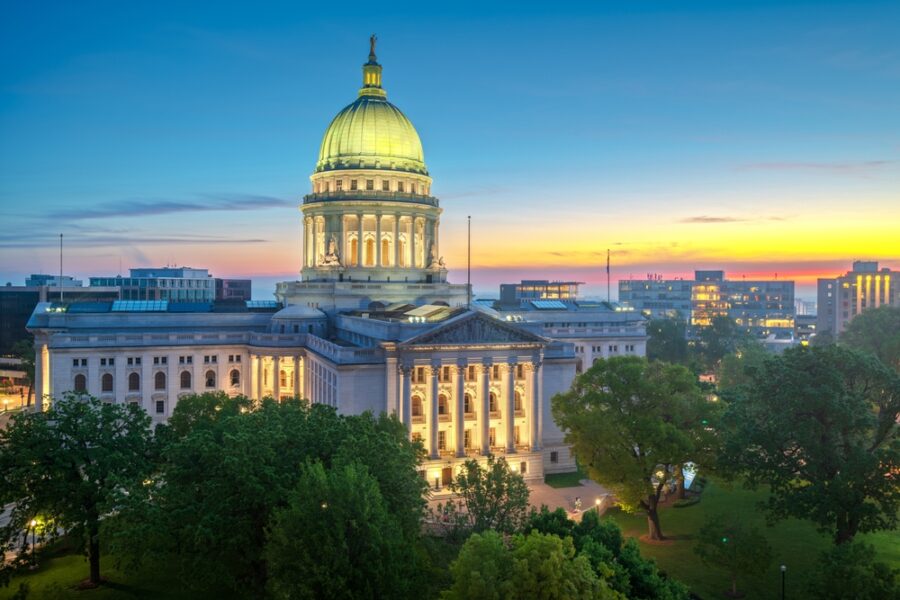
Wisconsin’s tribal nations have urged state lawmakers to advance a bill that would authorize online sports wagering across the state.
Speakers at the annual State of the Tribes address highlighted the legislation as a way to modernize gambling options and keep revenue within tribal communities, according to WISN 12. They also emphasized economic benefits and regulatory control that would come with legalizing sports gambling.

Chairwoman of the Red Cliff Band of Lake Superior Chippewa Indians, Nicole Boyd, discussed the benefits of a 2025 partnership with the Oneida Nation and the NFL draft in Green Bay, which brought in over US$105 million in revenue.
She went on to add that the legalization of sports gambling is an economic necessity for tribes, saying, “Gaming revenue helps ensure that mothers and babies have access to health care and healthy food, that our elders can receive care, and that families have housing. That our roads are plowed, and that law enforcement and fire departments are able to serve us.”
State legislators have expressed cautious optimism regarding the potential new measure.

Republican Rep. Mark Born said leadership hopes to bring the bill to a floor vote soon. On the other side, Democratic Gov. Tony Evers has indicated he would likely sign the legislation if it reaches his desk.
The Assembly vote on the bill is expected early this year, and, if passed, would allow tribes to offer mobile sports wagering by changing the state’s definition of the word ‘bet’.
Abi Bray brings strong researching skills to the forefront of all of her writing, whether it’s the newest slots, industry trends or the ever changing legislation across the U.S, Asia and Australia, she maintains a keen eye for detail and a passion for reporting.

Dig Deeper
Related stories
 2025/04/01: FanDuel and DraftKings made peace with California tribes over sports betting expansion
 2026/03/18: Wisconsin online sports betting bill heads to Governor despite pushback
 2025/09/10: California tribes team up to protest anti-sweepstakes bill
 2025/01/22: Tribes work to unite behind single sports betting policy for California
2025/04/01: FanDuel and DraftKings made peace with California tribes over sports betting expansion
2026/03/18: Wisconsin online sports betting bill heads to Governor despite pushback
2025/09/10: California tribes team up to protest anti-sweepstakes bill
2025/01/22: Tribes work to unite behind single sports betting policy for California
The Backstory
Why the tribes are pressing now
Wisconsin’s push to bring sports betting online did not surface overnight. Lawmakers in both parties have steadily moved toward a model that would extend wagering beyond casino walls while keeping control with the state’s tribal nations. A bipartisan bloc last year outlined the case for mobile wagering that would allow tribes to launch their own apps so long as the servers remain on tribal land, as detailed in a proposal to allow online sports betting. Supporters framed it as a modernization play that aligns Wisconsin with most states where mobile betting now dominates handle and guardrails are tighter than on offshore or gray-market apps.
The current legislation builds on that framework and the political groundwork that followed. Sponsors argue a statewide mobile option would formalize activity already occurring informally, close revenue leaks to platforms outside tribal compacts and give regulators better visibility. It also responds to pressure from local leaders to capture tourism-related spikes in wagering tied to marquee events. Tribal officials have cited recent surges from pro football events and regional partnerships as proof of concept for a broader rollout, while stressing that proceeds fund health care, housing, public safety and infrastructure in their communities.
The politics have tilted pragmatic. Key Republicans have signaled comfort with a compact-centered system that preserves sovereignty, and Democratic Gov. Tony Evers has indicated he would sign a bill that keeps gambling with the tribes. That bipartisan alignment has helped move the conversation from if to how online wagering should operate statewide.
How the “hub-and-spoke” model would work
Backers point to a legal path already tested elsewhere. Lawmakers introduced a plan to route every mobile bet through servers located on tribal land — a so-called hub-and-spoke structure first deployed in Florida in 2021 and later upheld by the D.C. Circuit. The blueprint, outlined in a bill seeking to legalize online sports betting statewide, aims to reconcile Wisconsin’s constitutional limits on gambling with modern consumer behavior. Under the approach, a bettor could place a wager anywhere in the state, but the transaction would be deemed to occur on tribal territory because the servers sit there.
Supporters say that design preserves the integrity of tribal compacts while opening a regulated market that can be monitored for compliance, taxes and responsible gaming commitments. They also emphasize that national brands would not be licensed directly under the current vision, which centers control with tribal operators and their chosen technology partners. That positioning is critical to tribes, who see online extensions of their brick-and-mortar rights as a matter of sovereignty and economic stability.
Still, the model has a balancing act. Public health advocates have warned about the risks of always-on gambling and frictionless payments. Lawmakers backing the measure have acknowledged those concerns, pointing to safeguards, data sharing and helpline funding even as they argue that prohibition has pushed bettors to less accountable markets.
Prediction markets are raising the stakes
One reason the debate has sharpened is the rapid rise of prediction markets that offer event contracts with the look and feel of sports bets but operate under a different regulatory banner. Wisconsin leaders have warned that if lawmakers fail to authorize tribal mobile wagering, event-contract platforms could capture demand without state licenses, consumer protections or clear jurisdiction. Assembly leaders outlined that risk in a warning that prediction markets will launch even if sports betting is not approved, arguing that a compact-based system is the best way to keep activity inside state lines and under tribal oversight.
Nationally, the gaming establishment has taken a harder line. At a high-profile industry forum, leaders from the American Gaming Association and the Indian Gaming Association described a “gamblefication of everything” as prediction apps pitch event contracts as investment products, often with crypto rails and limited know-your-customer rigor. Their concerns — spanning consumer messaging, insider trading and jurisdictional evasion — were laid out in a session confronting prediction markets at ICE 2026. Tribal officials warned that if mainstream sportsbooks wade into event contracts alongside traditional betting, partners in Indian Country may need to reassess those relationships.
The pressure is not abstract. In California, tribal leaders have gone to federal court to block prediction market offerings they say amount to unauthorized sports betting, highlighting the potential for legal and financial harm on tribal lands. They outlined those claims — including lawsuits against Robinhood and Kalshi — in a challenge targeting prediction market apps. A hearing is set for Oct. 23 in San Francisco, underscoring that the fight over how to classify and regulate these products is moving from conference panels to courtrooms.
Momentum, caution and the political calculus
The Wisconsin plan’s broad contours — tribal control, server localization and statewide mobile access — have attracted bipartisan sponsors who view it as a middle path. The early legislative pitch, described in an initial proposal to expand wagering online, emphasized consumer choice and parity with neighboring states, while keeping national apps at arm’s length. That framing has endured as lawmakers have refined bill language and worked to square the approach with constitutional constraints.
Even so, the timeline matters. Backers have tried to move the bill quickly, with floor votes targeted early in the session and an expressed intent to deliver a compact-consistent solution for tribes this year. Opponents and skeptics have used that urgency to press for stronger addiction-mitigation provisions and clearer lines around advertising, data use and college sports markets.
The governor’s stance has been pivotal. Evers has signaled he will support a measure that preserves tribal sovereignty and channels revenue through Wisconsin-based operations. That commitment has helped smooth negotiations over regulatory roles and reinforced that the administration sees tribal-led online betting as the legitimate venue for any expansion.
What it means for consumers and tribal economies
For bettors, a regulated mobile market could mean standard safeguards: age and location verification, deposit limits, self-exclusion tools and dispute resolution. Industry leaders argue those protections are core to licensed sports betting and stand in contrast to the looser standards on unlicensed apps and some event-contract platforms. The industry’s case for guardrails and responsible gaming, including warnings about investment-style pitches, featured prominently in the ICE discussion on prediction markets.
For tribes, mobile wagering represents both a defensive move and an expansion opportunity. It would extend an existing revenue base that funds social services and jobs, while reducing leakage to gray-market operators. Lawmakers backing the hub-and-spoke model have cited potential revenue gains for the state and compact partners, referencing an estimated uptick in gambling tax receipts and a structure that keeps proceeds tied to in-state operations, as outlined in the statewide bill analysis and Assembly leaders’ arguments for a compacted system.
The risk side remains in focus. Studies cited by lawmakers show a material share of online gamblers find it easier to overspend digitally, and addiction rates are rising nationally. Those data points surfaced in the initial Wisconsin proposal and subsequent bill coverage, sharpening calls for funding treatment and prevention as part of any expansion. The policy test in the months ahead is whether Wisconsin can marry tribal sovereignty with modern access while insulating consumers from the worst outcomes — and keep would-be workarounds from defining the market before lawmakers do.
