


Wisconsin mobile sports betting vote regains momentum among lawmakers

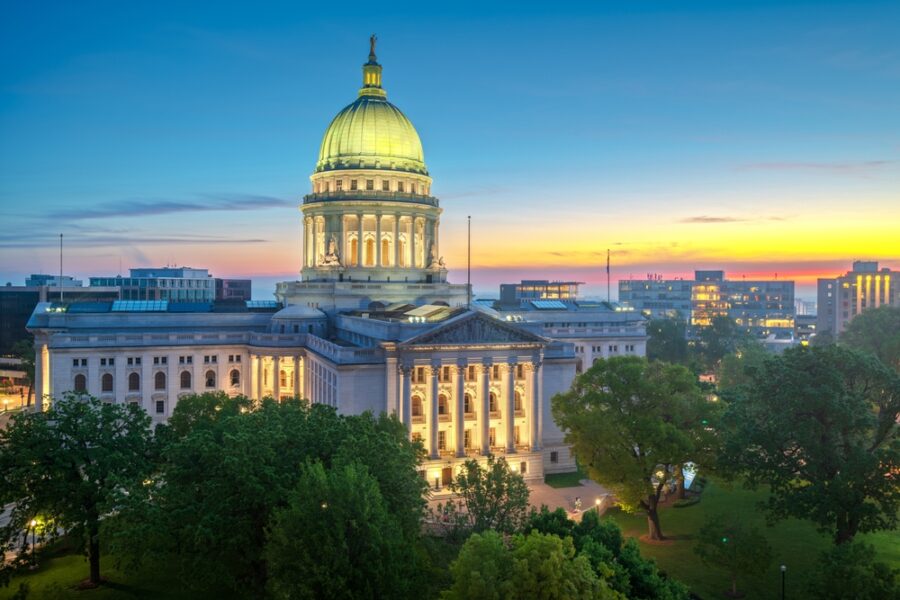
Wisconsin lawmakers are preparing to revisit legislation that would permit online sports wagering through the state’s tribal casinos, with an Assembly vote expected early this year.
While Assembly leaders anticipate action soon, the timing of a Senate vote remains uncertain. The proposal would allow the state’s native tribes to offer mobile sports wagering by changing the state’s definition of the term ‘bet.’

Currently, in-person sports and casino betting are allowed but only when present on tribal land.
Assembly Speaker Robin Vos and Majority Leader Tyler August, a co-sponsor of the bill, have said that the proposal is back on track after being removed from the Assembly calendar late last year.
Speaking to Spectrum News this week, August mentioned that the primary focus of the bill was allowing tribes to compete in the marketplace.

In a November interview, August also said that there was no rush to pass the bill, affirming the need to first address certain issues, but believed that the vote would come in early 2026.
In a separate interview in December, Vos mentioned that there was pushback from anti-gambling campaigners, who cited “constitutional issues” as well as concerns over micro-betting and prediction markets.
On the topic of prediction markets, August confirmed to Spectrum News that they were already operating in the state, using them as well as offshore gambling, as a reason why mobile sports betting should be legalized.

If approved by the Assembly, the legislation would still require Senate passage and the signature of Gov. Tony Evers, who has signaled his support.
Charlotte Capewell brings her passion for storytelling and expertise in writing, researching, and the gambling industry to every article she writes. Her specialties include the US gambling industry, regulator legislation, igaming, and more.

Dig Deeper
Related stories
 2025/04/01: FanDuel and DraftKings made peace with California tribes over sports betting expansion
 2026/01/06: Wisconsin lawmakers grapple with online sports betting legislation ahead of Assembly vote
 2026/02/19: Wisconsin lawmaker believes sports wagering bill will pass the Assembly
2026/03/18: Wisconsin online sports betting bill heads to Governor despite pushback
2026/02/19: Wisconsin lawmaker believes sports wagering bill will pass the Assembly
2026/03/18: Wisconsin online sports betting bill heads to Governor despite pushback
2025/04/01: FanDuel and DraftKings made peace with California tribes over sports betting expansion
2026/01/06: Wisconsin lawmakers grapple with online sports betting legislation ahead of Assembly vote
2026/02/19: Wisconsin lawmaker believes sports wagering bill will pass the Assembly
2026/03/18: Wisconsin online sports betting bill heads to Governor despite pushback
The Backstory
Momentum returns after a stalled fall push
Wisconsin’s effort to bring mobile sports betting under tribal control has whipsawed between urgency and delay for more than a year. Legislative leaders now say an Assembly vote is back on the near-term agenda after the proposal was yanked from consideration late last year amid resistance inside the Republican caucus and from national operators. Assembly Speaker Robin Vos has repeatedly argued that wagering is already occurring in Wisconsin and that lawmakers should put a transparent framework around it. In late December, he described ongoing negotiations on a bipartisan package and signaled confidence that Gov. Tony Evers would sign a bill that protects tribal interests. That positioning was detailed in a December update on how lawmakers were still “working on a bipartisan bill” with an Assembly vote expected, even as Vos acknowledged thorny issues around market structure and consumer protections that still needed to be resolved. Read more about Vos’ comments and the evolving bill in this report on how lawmakers are grappling with online sports betting legislation ahead of a vote.
The reboot follows a turbulent November, when a planned Assembly vote on AB 601 was abruptly pulled. The bill had enjoyed visible backing from the governor and support from several key stakeholders, including the Ho-Chunk Nation and the Forest County Potawatomi Community. But resistance from some Republican members, unease from professional sports interests and sharp objections from national sportsbooks froze the effort. A contemporaneous account of the reversal explained how the proposal hit a “legislative roadblock” and why vote timing slipped, with sponsors publicly insisting they would be back when the numbers were there. That backstory is detailed here: Wisconsin online betting bill hits legislative roadblock.
Redefining the bet to keep gambling compacted
The policy core of the bill has remained consistent through its stops and starts. Lawmakers aim to legalize mobile wagering statewide by redefining a “bet” so that a wager is considered to occur on tribal land if the sportsbook’s servers are located on reservation territory, even when a customer places a bet anywhere within Wisconsin borders. The construct mirrors models used in other tribal-gaming states and seeks to avoid a direct conflict with Wisconsin’s constitutional constraints by anchoring the activity inside existing tribal-state compacts.
Supporters frame the approach as a pragmatic way to channel existing demand into a regulated system while honoring tribal sovereignty. The Assembly’s No. 2 Republican, Rep. Tyler August, has underscored that point repeatedly, arguing the status quo drives dollars to offshore books or gray-market venues. He has also couched the bill as a consumer-protection measure that adds accountability and jurisdiction to an activity already happening in the shadows. August’s rationale is laid out in coverage of the legislative debate and in his warning that, absent action, other forms of speculative wagering will fill the void. See: Wisconsin lawmaker warns prediction markets will launch even if sports betting is not approved.
Industry pushback and constitutional crosscurrents
The clearest opposition has come from two fronts. National sportsbooks objected to the revenue split that could leave an outsize share with tribes operating the market, arguing the economics would be challenging if third-party operators could not capture enough margin. At the same time, anti-gambling advocates warned of constitutional risks and a rapid expansion of betting access, particularly via phones. Vos acknowledged those concerns in December and said any plan must incorporate sensible guardrails. His comments came after a series of meetings in which lawmakers weighed micro-betting limits and considered how to handle prediction markets that blur lines between financial instruments and gambling.
Those crosscurrents jolted the process last fall. Even sports stakeholders walked a careful line. The Green Bay Packers said they did not oppose the bill but disputed reports they had endorsed it, highlighting how politically sensitive the expansion remains. For a detailed look at the fall pushback and the caucus arithmetic that scuttled the vote, see this account of the bill’s legislative roadblock. For the subsequent recalibration, including Vos’ assertion that betting is already happening and must be regulated, revisit the December explainer on how lawmakers are working toward an Assembly vote.
Prediction markets complicate the timeline
As lawmakers weighed changes, prediction markets emerged as a flashpoint. August warned that if Wisconsin does not move on sports betting under the tribal compact system, prediction markets could expand and siphon activity into less regulated channels under the guise of event contracts. His argument hinges on keeping wagering inside Wisconsin’s jurisdiction and compact framework, which would direct revenue locally and align oversight with tribal partners.
The attention on prediction markets is not isolated to Wisconsin. Federal and state regulators have been scrutinizing platforms that offer contracts on political or economic outcomes. In Massachusetts, regulators and lawmakers have pushed back against efforts to reclassify such products outside gambling law. Wisconsin’s debate reflects that wider friction: the longer the state delays, the greater the risk that alternative products normalize consumer behavior without the responsible gambling tools, tax capture and enforcement clarity envisioned under tribal mobile books. August’s warning and policy framing are summarized in this piece on why prediction markets will launch even if sports betting is not approved.
Stop-and-go path to a floor vote
The political choreography has been halting. August said in November there was “no rush,” projecting a vote after more internal work. By December, Vos was again pointing to an imminent Assembly vote while acknowledging the Senate’s timing was less clear. The governor’s posture has been consistent: Evers signaled support for keeping gambling growth within the tribal compact structure, an anchor that has narrowed the feasible policy options. The Assembly’s renewed push suggests drafters believe they have done enough to address caucus concerns on definitions, consumer protections and market structure. But the experience of last fall shows that a single caucus meeting can reshuffle plans.
Stakeholders are acting accordingly. Tribes have treated the mobile framework as an extension of existing rights under compacts. National operators have lobbied to ensure commercial viability if they partner with tribes. Sports teams and civic groups have tried to avoid being cast as pro-expansion while staying engaged on integrity and fan engagement issues. That balance of interests will determine whether the Assembly’s latest window translates into a vote that can clear the Senate and reach Evers’ desk.
What other jurisdictions signal
Wisconsin is not debating in a vacuum. In Massachusetts, enthusiasm for sports betting has cooled among some lawmakers less than two years after launch. Citing addiction risks and the proliferation of in-play props, a state senator introduced a package to ban live prop wagers during broadcasts and double public health contributions from operators. The move underscores how quickly policymakers can pivot from access to guardrails when product design accelerates betting frequency. See the details on the proposed “Bettor Health Act” and why a Massachusetts senator regrets his vote to legalize gambling and wants to ban in-play prop bets.
Abroad, lawmakers are taking the opposite tack to tame illegal markets. Hong Kong’s legislature recently voted to legalize betting on basketball, complementing existing football wagering, paired with a steep net profit tax and promises of strict enforcement. Proponents say bringing demand onshore can squeeze illicit syndicates. Opponents counter that legalization risks normalizing gambling without stopping illegal operators. That argument echoes in Wisconsin’s halls, where the choice is between channeling activity into tribal-run mobile books or leaving a vacuum for offshore apps and prediction markets. For more on Hong Kong’s calculus and the debate it sparked, read how lawmakers legalized basketball betting to combat illegal gambling.
The stakes in Wisconsin mirror those themes: consumer protection, channelization and control of tax and licensing benefits. Whether the latest burst of momentum yields floor action will show if lawmakers have forged a compromise on definitions, market economics and product limits robust enough to withstand the next wave of pressure.
