


Sports Betting Alliance fights back against Wisconsin’s online sports betting bill

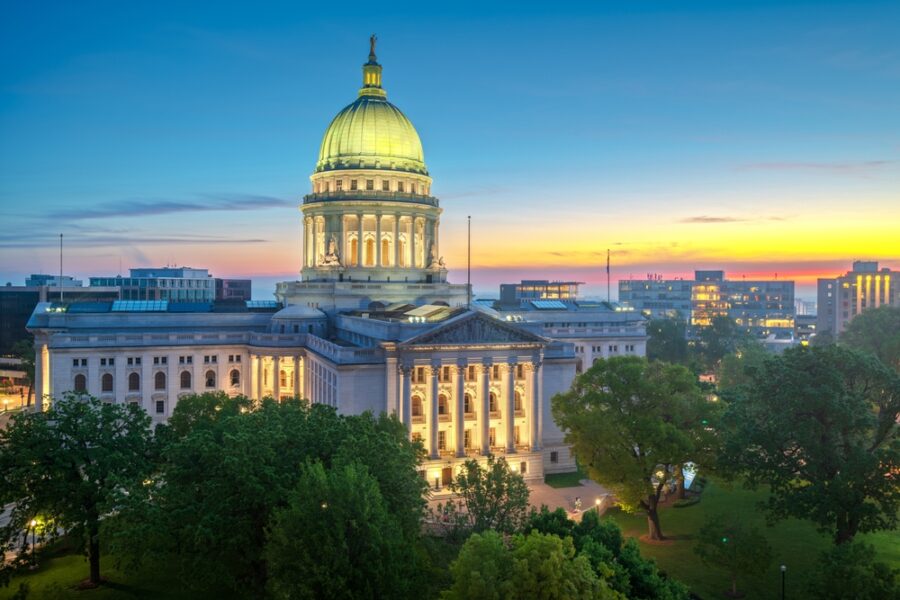
The Sports Betting Alliance is pushing the Wisconsin Senate to amend the sports betting bill to include members of the advocacy group.
The bill, which was passed by the Assembly last month, would create a model for the state’s tribes that already offer retail sports betting on tribal land to begin offering online sports betting.

The Sports Betting Alliance is advocating for a change in the bill’s framework or in the state’s constitution, which would then go to the state’s ballot, according to the Center Square.
The proposed framework would allow its members, such as DraftKings, FanDuel, and BetMGM, to operate in Wisconsin and pay state taxes as they do in other states.
Sports Betting Alliance President and Chief Executive Joe Maloney said limiting the operation of online sports betting to Wisconsin tribes would reduce users’ access to competitive deals, creating a monopoly.

Maloney urged Wisconsin lawmakers to consider the impact of illegal sportsbooks and the emergence of prediction markets.
He described the latter as an “entirely new category” and a “federally registered, federally regulated framework that is sidestepping some of the state controls that we see in the traditional online sportsbook model, specifically, which grant and deliver millions of tax revenue.”
Abi Bray brings strong researching skills to the forefront of all of her writing, whether it’s the newest slots, industry trends or the ever changing legislation across the U.S, Asia and Australia, she maintains a keen eye for detail and a passion for reporting.

Dig Deeper
Related stories
 2025/04/01: FanDuel and DraftKings made peace with California tribes over sports betting expansion
 2026/04/10: Wisconsin Governor greenlights online sports betting
 2025/12/12: The Sports Betting Alliance names Joe Maloney as President
 2026/03/18: Wisconsin online sports betting bill heads to Governor despite pushback
2025/04/01: FanDuel and DraftKings made peace with California tribes over sports betting expansion
2026/04/10: Wisconsin Governor greenlights online sports betting
2025/12/12: The Sports Betting Alliance names Joe Maloney as President
2026/03/18: Wisconsin online sports betting bill heads to Governor despite pushback
The Backstory
How Wisconsin became the next test
Wisconsin’s move to expand sports wagering online through a tribes-only model has drawn a quick counter from national operators, setting up a familiar clash over access, taxes and control. The Assembly-backed bill would let tribes that already run retail sportsbooks bring betting to mobile, continuing a state-by-state trend of anchoring expansion in compacts. The Sports Betting Alliance argues that a closed market would curb competition, depress promotions and odds, and risk pushing players to illegal sites. Its stance mirrors the group’s recent posture elsewhere, as operators press lawmakers to avoid structural limits they say undercut legal channels.
The Alliance’s warning extends beyond market structure to new federalized products. It has flagged prediction markets as a parallel track that could siphon action under a different regulatory umbrella. That concern surfaced in California analysis too, where a Wall Street note sketched a future in which federally regulated prediction platforms operate at an advantage over taxed sportsbooks, unless state frameworks adapt. The dynamic adds urgency to how Wisconsin defines its online system and who is allowed to participate.
A playbook forged in tax fights
The Wisconsin debate follows a year of pushback in states testing higher rates and new levies on betting. In North Carolina, operators have mobilized against a proposed jump in the effective tax rate on sportsbook revenue, warning it would lead to thinner odds, fewer bonuses and leakage to the offshore market. The Senate-backed hike, which would lift the burden well above today’s 18 percent rate, drew a coordinated response from the Sports Betting Alliance, which urged customers to pressure lawmakers and underscored the sector’s tax contributions since launch. The trade group framed the increases as counterproductive at a time when the legal market is still scaling.
Illinois has gone further, layering fresh costs onto an already steep regime. Lawmakers there approved a per-bet surcharge on top of last year’s move that lifted the online sports betting rate to 40 percent, among the nation’s highest. Industry voices warned the last-minute fee would hit consumers and small bettors hardest. The Alliance condemned the change post-passage and signaled it would fight similar policies in other states. For Wisconsin, those episodes offer a roadmap: operators will try to shape rules early, argue consumer harm from constrained markets and draw a direct line between structure, tax policy and the health of the legal channel.
The national context matters because operators calibrate promotions and pricing across portfolios. If Wisconsin adopts a tribes-only system while peers lift tax burdens, multi-state firms may redirect marketing and capital to friendlier markets, amplifying the incumbency advantage of tribal operators within the state. That is the scenario the Alliance is trying to preempt.
Messaging shift with new leadership
The Alliance’s more assertive posture comes as it refreshes leadership. The group named longtime industry communicator Joe Maloney as president and chief executive this year, bringing a mix of league, trade and responsible gaming experience to its advocacy. In announcing his appointment, Maloney highlighted the legal market’s consumer protections and integrity monitoring as key arguments for access. That framing runs through the Alliance’s current campaigns, including efforts to open closed models and resist new cost layers that operators say would blunt the legal channel’s appeal.
Maloney has also emphasized collaborative work with stakeholders, an approach that hints at compromises where tribes retain primacy but national brands gain a path in. The contours of such partnerships are already being tested in the largest untapped market in the country.
California’s complex template
California remains the bellwether. Two strands emerged this year that help explain the Alliance’s stance in Wisconsin. First, operators floated a proposal to channel statewide sports betting through a single Native American tribal entity that could contract with a limited number of sportsbook brands. The idea would guarantee payments to tribes and cap operators, but tribal leaders immediately signaled deep skepticism, and the plan was quickly labeled dead on arrival. The early reaction underscored a persistent gap between operator-led frameworks and tribal sovereignty priorities.
Second, investors cheered reports of fresh talks between operators aligned through the Alliance and California tribes, even as no party confirmed negotiations. A Jefferies analyst called the prospect a clear positive if it yields an industry-wide approach and forecast a large but complicated market dominated by tribal revenue flows. He warned that California’s more than 100 tribes, ballot requirements and unanswered questions — from license economics to the threat of prediction markets — would make any deal arduous and slow, with 2028 likelier than 2026 for a vote. Those constraints echo in Wisconsin, where structure and partners chosen now could either speed compromises or harden opposition down the line.
The California analysis also raised a strategic question: if traditional sportsbook access stalls, would operators pursue prediction markets to gain a foothold under federal permissions, and at what cost to relationships with tribes and state regulators? That uncertainty gives urgency to getting the state frameworks right, whether in the nation’s largest market or in a smaller but symbolically important battleground like Wisconsin.
Why the Wisconsin decision carries outsized stakes
Wisconsin is not among the biggest handle states, but policy there could set a template for how compact-centric jurisdictions handle mobile betting. A tribes-only model would likely speed launch but concentrate power and constrain consumer choice, a dynamic that operators argue limits taxable activity. A hybrid that admits a handful of licensed brands under tribal oversight could broaden competition while preserving sovereignty and revenue flows to nations. The Alliance’s ask — amending the bill or pursuing a constitutional change to allow commercial operators to participate and pay state taxes — aims for that middle ground.
For tribes, the trade-off is control versus incremental revenue and shared risk. For state officials, it is speed and legal certainty versus a more open market that could produce higher long-term tax receipts. For operators, Wisconsin is both a revenue opportunity and a precedent. A closed system here could embolden similar structures elsewhere. An inclusive framework could inform agreements in states still on the sidelines or in those rethinking tax policy that has pinched promotions and margins.
The through line across North Carolina, Illinois and California is the same: rules that narrow participation or raise costs tend to shrink the legal market’s advantages over unregulated options. Wisconsin lawmakers now have to decide which side of that line they want to land on — and how much leverage they are willing to trade for speed.
