


Maryland online gaming proposal faces local opposition


A proposed bill in Maryland to legalize online casino games such as blackjack and poker is facing opposition from officials in Worcester County and from representatives of a local casino.
Senate Bill 885 was introduced by State Sen. Ron Watson and would allow internet gaming across the state.

Watson has introduced similar measures in previous legislative sessions and says the issue has been delayed for too long, citing Maryland’s projected US$1.5 billion budget deficit and arguing that lawmakers should consider alternatives to tax increases or fee increases.
The Senator also noted that neighboring states have already adopted or are considering similar forms of online gambling.
Under the proposal, a portion of gambling revenue would be distributed to programs, including 1% for problem gambling services and another 1% to the Maryland Lottery and Gaming Commission.

Local education authorities would get 5%, and the rest would support the state’s Blueprint for Education program.
However, the bill has been criticized by officials in Worcester County, where Ocean Downs Casino operates.
Local leaders say that the online expansion could hit existing casino businesses and reduce the economic benefits they bring to the area. County officials say Ocean Downs has invested heavily in the local community since opening in 2011.

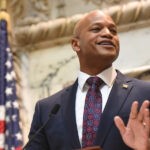
The bill has moved to the Budget and Taxation Committee, but if approved and signed by Gov. Wes Moore, it would take effect on July 1, 2026.
Maryland isn’t the only state considering legalizing igaming; Massachusetts has also introduced similar legislation, but faces a tight deadline.
Charlotte Capewell brings her passion for storytelling and expertise in writing, researching, and the gambling industry to every article she writes. Her specialties include the US gambling industry, regulator legislation, igaming, and more.

Dig Deeper
Related stories


The Backstory
Budget math meets a fast-moving industry
Maryland’s latest push to legalize online casino gaming is as much about fiscal pressure as it is about technology catching up with consumer behavior. Senate Bill 885, sponsored by Sen. Ron Watson, would authorize statewide internet gaming and direct slices of revenue to problem gambling services, the Maryland Lottery and Gaming Commission and local education, with the balance earmarked for the Blueprint for Education. The measure arrives as lawmakers stare at a projected $1.5 billion budget gap and weigh alternatives to tax or fee hikes. The bill has been referred to the Budget and Taxation Committee and, if approved and signed by Gov. Wes Moore, would take effect July 1, 2026. The full text of SB 885 outlines the proposed licensing, revenue distribution and oversight framework.
Supporters frame the effort as a catch-up play. Neighboring states have already adopted or are considering digital gambling, and unregulated offshore platforms have become easier for consumers to access via mobile phones. The legislative question in Annapolis is whether a regulated market can capture revenue now leaking to illegal sites while installing modern guardrails. That balancing act has defined gambling debates nationwide and underscores why Maryland’s deliberations extend beyond a simple up-or-down vote.
The political timing is notable. With public budgets tightening and consumer entertainment shifting online, lawmakers across the country are revisiting long-shelved ideas with new urgency. That urgency does not erase concerns about addiction, integrity and the displacement of economic activity from casinos and surrounding businesses to smartphones. It does, however, sharpen the stakes of standing pat.
Casino communities press their case
Worcester County officials, home to Ocean Downs Casino, have warned that online play could siphon customers, undercut on-site spending and threaten jobs tied to hospitality and local supply chains. That argument has traction beyond Maryland. In Maine, a proposal to legalize online casino games while granting the Wabanaki Nations exclusive contracting rights advanced out of committee and drew swift pushback from the state’s two commercial properties. Opponents warned of job losses and revenue hits if play migrates online. The debate, captured in our coverage of online gaming back on the table in Maine, shows how brick-and-mortar operators view digital expansion as a structural change, not a sidecar to existing business.
Maine’s Legislative Document 1164 would tax internet gaming and route funds to addiction treatment, mirroring the policy trade-offs under consideration in Maryland. For readers tracking the details, the state’s bill tracker for LD 1164 offers live status updates. The core tension is similar: whether the tax and regulatory architecture can both protect vulnerable populations and preserve economic ecosystems built around physical venues.
Casino communities argue they provide year-round employment, support local nonprofits and draw tourism, making any cannibalization a broader public policy issue. Proponents of digital legalization counter that much of the online demand already exists on illicit platforms, so the choice is between unmanaged harm and regulated play with funding for treatment and enforcement. That framing has set the terms of debate in statehouses from Augusta to Annapolis.
States probe where to draw the line
The boundaries of what to legalize, and how, remain fluid. Minnesota’s latest round of hearings, previewed in our report on renewed opposition to sports betting, highlighted public health concerns and the risks of normalizing wagering. Advocates there argue that regulation can bring consumer protections and tax revenue to an activity already thriving underground. Opponents warn that legal access expands the pool of problem gamblers and imposes downstream social costs that exceed projected receipts.
Even in states with no gambling tradition, momentum exists. Hawaii, one of two states without legal wagering, advanced a narrowly tailored bill to permit online sports betting despite steep resistance. Lawmakers signaled discomfort by amending the effective date to July 1, 3000, a symbolic move that underscores unresolved issues. The measure would license at least six operators, tax adjusted gross revenue at 15% and place oversight under the economic development agency. The close committee vote and public testimony documented in our Hawaii coverage reflect how policy is inching forward even in hostile terrain.
These state-level experiments inform Maryland’s path. The substance varies—sports betting versus online casino games—but the policy levers are consistent: tax rates that do not push players back to illegal sites, funding to address addiction and robust know-your-customer systems to deter underage play. Maryland’s bill includes revenue carve-outs for treatment and regulation, aligning with the playbooks unfolding elsewhere.
College sports and integrity fears rise
Regulators are also grappling with where to draw lines around who can bet. The NCAA Division I Council floated a proposal to let athletes and staff wager on professional sports, prompting fast backlash. As we reported in the NCAA betting debate, the plan has not been approved and current bans remain in force, but the conversation shows how quickly norms are shifting. Advocates argue updated rules would reflect legal realities post-PASPA. Critics warn that expanding access for athletes risks addiction, conflicts of interest and exposure to illegal markets.
For Maryland, integrity issues matter even outside sports. The same verification, monitoring and data-sharing systems designed to detect anomalous betting patterns can support responsible gaming requirements for online casinos. Conversely, any erosion in public confidence—whether tied to college athletics or problem gambling headlines—raises the political bar for legalization. The NCAA’s deliberations, even if outside the state’s authority, shape the atmospherics around broader gambling policy.
International currents add crosswinds
Global developments offer a cautionary tale and a note of opportunity. In the Philippines, a proposal by Sen. Sherwin Gatchalian to tighten online gambling rules sparked market jitters, even as the country’s gaming regulator reported record first-quarter revenue. The regulator, PAGCOR, said gross gaming revenue hit PHP104.12 billion, up 27% year over year, with e-games nearly half the total. At the same time, the head of the Catholic Bishops’ Conference, Cardinal Pablo Virgilio David, blasted the spread of igaming into homes and smartphones, warning of risks to families and children in a public post.
Our analysis of the Philippine scrutiny of igaming shows how growth invites tighter controls and sharper social critique. For U.S. states, including Maryland, the signal is clear: digital gaming can scale quickly, and the policy infrastructure must keep pace. Revenue promises draw interest during budget season, but public tolerance depends on credible enforcement, transparent reporting and visible investments in harm reduction.
What to watch as Maryland weighs the leap
Maryland’s committee work will test whether lawmakers can reconcile local economic concerns with the lure of new revenue and consumer protection claims. Expect scrutiny of tax rates, license caps, enforcement budgets and the structure of payments to schools and treatment programs. Also watch for amendments that address brick-and-mortar operators, such as marketing rules, on-premise incentives or revenue-sharing mechanisms to blunt displacement risks.
The timeline is tight but not rushed. If SB 885 advances, implementation would run into mid-2026, leaving time for regulators to build systems and for operators to integrate responsible gaming tools. The broader lesson from Maine, Minnesota, Hawaii and even the Philippines is that policy durability hinges on balance. Maryland’s choice is not whether online gambling exists—it does—but whether the state will write the rules, capture the revenue and shoulder the accountability that comes with both.
