


Delaware County prohibits poll workers from using prediction market platforms


Poll workers in Delaware County, Pennsylvania, have been banned from using prediction market apps for election-related markets, following a recent update to their official oath of service.
According to WGAL, the change aims to reinforce public confidence in the electoral process and eliminate any perception that those overseeing elections could have a financial interest in the outcome.

County officials said that this is a move that just reinforces what’s already expected, as Pennsylvania law already prohibits poll workers from betting on elections.
Prediction markets allow users to buy and sell shares based on the outcome of events, such as elections and sports. While prediction market platforms like Kalshi are regulated by the Commodity Futures Trading Commission, this framework has been subject to regulatory challenges.
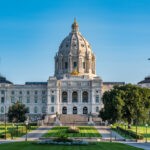
Several US states have introduced bills to restrict or ban prediction markets, including in Minnesota, where legislation passed the Minnesota Senate State and Local Government Committee stage earlier this month.

Delaware County Elections Director Jim Allen said, “I think they’re a pernicious, horrible factor, and I don’t think elections should be bet on in one shape or form. The last thing we need is the referee in elections being accused of having a financial stake in these so-called prediction markets.”
The county is the first in Pennsylvania to take this kind of action against prediction markets, though state lawmakers are reportedly exploring broader regulations around prediction markets.

Dig Deeper
Related stories


The Backstory
Why a county oath became a flash point
Delaware County’s move to bar poll workers from using election-related prediction markets slots into a fast-evolving national debate over whether betting on real-world outcomes can coexist with public trust. The county added the prohibition to poll workers’ oath to eliminate any doubt about financial conflicts at the polls, reinforcing existing Pennsylvania law that already bans such wagers by election officials. The step arrives as prediction platforms expand their event contracts and visibility, the Commodity Futures Trading Commission’s oversight is tested in court and legislatures, and policymakers weigh how to draw lines between market-based forecasts and gambling.
The core concern is simple: people with access to nonpublic information or influence over processes could profit from that knowledge. That worry has been driving a wave of bills, hearings, and enforcement that reach from statehouses to Congress. Delaware County’s targeted safeguard shows how local administrators are moving ahead of statewide action, responding to perception risks before they become headline problems in a major election year.
States test bans, carve-outs, and definitions
The most aggressive state approach has been to block prediction markets outright. Minnesota lawmakers advanced a proposal that would ban platforms like Kalshi and Polymarket, saying the services exploit a gap in existing gambling law and create avenues for insider advantage. In committee, senators cited the ease with which campaign staff, officeholders, or connected consultants might trade on private timelines or decisions. The measure cleared its first hurdle on a voice vote and shifted to the Commerce Committee for further review. See coverage of the Minnesota Senate advancing a prediction market ban.
Other states are trying to channel the activity into regulated lanes. Iowa’s Senate voted 45-1 to license and tax online prediction markets under an amended Senate File 2470. The bill would make unlicensed platforms illegal, impose a 20% tax on platform revenue from event contracts plus a 20% excise tax on each contract purchase, and require steep entry fees that were doubled to $20 million before passage. The proposal also points to ongoing litigation, noting Washington state’s attorney general sued Kalshi over allegedly illegal gambling. The House will decide whether Iowa becomes an early model for state-level licensure. Read more on Iowa’s bid to regulate prediction markets.
These diverging paths preview a patchwork landscape: bans to curb perceived corruption risk versus containment through licensure, taxation, and formal definitions of what constitutes an event contract. For county election administrators, even the appearance of a conflict can be destabilizing, which helps explain why a local oath can move faster than a legislature.
Congress zeroes in on corruption risk
Federal scrutiny is intensifying around whether event contracts enable trading on the inner workings of government. Sen. Jeff Merkley introduced the Stop Corrupt Bets Act with Rep. Jamie Raskin leading a House companion, aiming to halt betting on a wide swath of events tied to sports, politics, and national security. The sponsors argue prediction markets invite “well-timed bets” on government action, eroding trust and misaligning incentives. The bill would clarify that the Commodity Exchange Act of 1936 never intended to permit such activity at scale. Lawmakers backing the measure say clearer rules are needed before markets normalize wagers on legislative calendars or military moves. Details are in reporting on the Stop Corrupt Bets Act.
Industry advocates counter that prohibitions will push activity offshore, removing what guardrails exist. That argument underscores a central dilemma: expanding regulation could reduce harm onshore or simply displace it, while permissiveness risks embedding gambling mechanics in civic life. Delaware County’s action sidesteps that debate by narrowing the aperture to the people running elections, where even small doubts can snowball into broader skepticism about outcomes.
Policing insider trading and official conduct
The parallel line of federal action targets who can participate, not just what they can bet on. Rep. Ritchie Torres has proposed the Public Integrity in Financial Prediction Markets Act of 2026 to ban federal elected officials, appointees, and executive branch employees from using the platforms. The bill’s urgency rose after an online controversy over a short-lived account that concentrated bets on U.S. actions in Venezuela and reaped a large profit when the market resolved. The episode crystallized lawmakers’ fear that proximity to decision-making, even absent direct control, can confer an informational edge and damage public confidence. For context, see coverage of the Torres bill to restrict federal officials’ access to prediction markets.
Platforms say they prohibit trading on nonpublic information and can police misconduct, but the compliance burden is steep and the gray zones are many. Campaign timelines, regulatory announcements, or personnel moves often circulate among insiders before public release. Minnesota lawmakers highlighted exactly that risk in arguing for a ban, describing how a campaign insider could profit from a planned announcement date. The logic behind Delaware County’s oath revision tracks these concerns: when the stakes are the integrity of ballot administration, prophylactic rules can be more defensible than ex post enforcement.
A global caution on government gambling
While the U.S. debate centers on financial contracts and market structure, other governments are drawing a harder line on public-sector gambling of any kind. The Philippines’ Department of the Interior and Local Government banned government employees from engaging in any online gambling, extending an existing casino prohibition. Manila’s rationale is blunt: gambling by public servants undermines institutional credibility and distracts from duty, with violators facing sanctions. The move followed domestic pressure over youth exposure and addiction risks. Read more on the Philippine ban on online gambling for government workers.
The contrast is instructive. Delaware County’s update is scoped narrowly to poll workers and election markets, an attempt to neutralize a specific conflict channel without dictating broader conduct. Yet the Philippine posture shows how quickly the conversation can widen when trust and integrity are the frame. If U.S. states and counties struggle to police edge cases in prediction markets, pressure may build for broader occupational restrictions.
What comes next
The stakes are immediate. Platforms are expanding, traders are pouring in, and regulators are still refining what’s allowed. Congress could limit the scope of tradable events or who can trade. States may ban, regulate, or defer. Litigation will shape the CFTC’s reach and what counts as a permissible contract. Meanwhile, county officials responsible for secure and trusted elections are acting within their lane, tightening rules to avert real or perceived conflicts before November.
Delaware County’s prohibition on poll worker participation in election prediction markets is not an outlier so much as an early local adaptation to a national policy fight. As Minnesota pursues a ban, Iowa tests licensure, and Capitol Hill weighs anti-corruption guardrails, the through line is the same: protecting public trust when the line between forecasting and gambling blurs. The choices made now will determine whether prediction markets mature into a regulated tool, retreat to offshore venues, or get ringfenced away from the institutions where confidence is paramount.
