


Brazil to tighten online betting advertising rules for operators

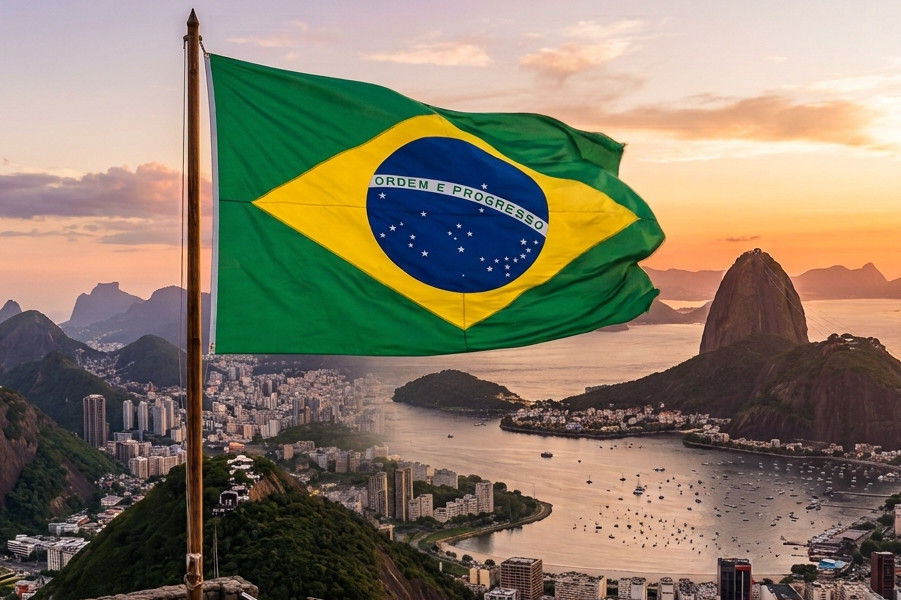
Brazil will impose stricter advertising rules on sports betting operators starting next week, with new restrictions including addiction warnings and a ban on claims that bettors can make easy money from sports betting.
The nation’s Finance Minister Dario Durigan also told reporters on Thursday that mandatory warning labels will now appear on betting ads, warning about potential addiction risks and financial losses that come with gambling.

Advertisements that also present sports betting as a way to make quick and easy profits and use “expert” endorsements to lure in bettors will be outright banned.
The new rules apply to betting operators, as well as third-party advertisers, and will take effect on 17 July, days before the FIFA World Cup final on 19 July.
Throughout the World Cup, Brazilians have been betting heavily. Folha de S.Paulo shared a report from fintech firm Klavi stating that 34.8% of the population had placed bets on the tournament, three times the 11% recorded in May. Average deposits from bettors during the early weeks of the tournament nearly doubled when compared to before the World Cup began.

Brazil’s sports betting market opened in 2018 and, according to data analysis by Comscore, it ranked third-largest in 2023, behind the US and UK. Figures from Data Bridge Market Research estimate Brazil’s sports betting market is expected to reach US$19.2 billion in revenue by 2032, at a compound annual growth rate of 12.8%.
Brazil has also been increasing measures to crack down on unregulated gambling. Last month, Brazilian president Luiz Inacio Lula da Silva signed a decree that would allow the government to freeze funding from financial institutions, payment providers, and promoters that operate illegal gambling platforms.
Charlotte Capewell brings her passion for storytelling and expertise in writing, researching, and the gambling industry to every article she writes. Her specialties include the US gambling industry, regulator legislation, igaming, and more.

Dig Deeper
Related stories
 2026/04/02: Beter expands eFootball content ahead of FIFA World Cup
 2026/04/07: Fanatics Fest teams up with FIFA ahead of 2026 World Cup
 2026/07/02: Australia gambling ad reform bill sent to Senate inquiry after backlash
 2025/08/13: Optimove study indicates NFL bettors will bet consistently this year
2026/04/02: Beter expands eFootball content ahead of FIFA World Cup
2026/04/07: Fanatics Fest teams up with FIFA ahead of 2026 World Cup
2026/07/02: Australia gambling ad reform bill sent to Senate inquiry after backlash
2025/08/13: Optimove study indicates NFL bettors will bet consistently this year
The Backstory
Brazil moves from market opening to tighter guardrails
Brazil’s decision to impose tougher online betting advertising rules marks a shift from legalization and market expansion toward consumer protection and enforcement. The country has become one of the world’s most important sports betting markets since opening the sector in 2018, drawing major operators into a fast-growing economy with a deep soccer culture and high levels of mobile payments adoption.
The new restrictions, scheduled to take effect July 17, come as betting activity surges around the FIFA World Cup. The timing is significant. Global tournaments concentrate advertising, sponsorship and consumer deposits in a short window, increasing the political pressure on regulators to show that legalization is not simply a revenue play. Brazil’s rules will require warnings about addiction and financial losses and prohibit ads that suggest betting is a path to easy income. They also target third-party advertisers, a key detail in a market where affiliates, influencers and media partners often extend operator reach beyond conventional paid campaigns.
That approach mirrors a broader international trend. Governments that first embraced regulated betting to draw consumers away from offshore sites are now confronting the social and political consequences of mass-market gambling promotion. The question has shifted from whether legal betting should exist to how aggressively it can be marketed, particularly during sports events watched by children and casual fans.
Advertising backlash has become a global regulatory driver
Brazil is not acting in isolation. In Australia, the Labor government’s gambling advertising reform package was sent to a Senate inquiry after opposition and cross-bench lawmakers argued it did not go far enough. The proposal would limit television gambling ads to three per hour between 6 a.m. and 8:30 p.m., ban ads during live sports in those hours, restrict online ads for minors and prohibit athletes and influencers from promoting gambling. The political fight, detailed in coverage of Australia’s gambling ad reform bill being sent to a Senate inquiry, shows how difficult it has become for governments to balance commercial sports funding, broadcaster revenue and public health concerns.
The Australian debate is especially relevant to Brazil because both markets are dominated by sports-led wagering and heavy promotion around major competitions. The World Cup has highlighted the limits of partial restrictions: gambling brands can appear through broadcast partnerships, on-field signage and international sponsorship arrangements that national lawmakers may struggle to police. That creates an enforcement gap between domestic ad rules and the global commercial architecture of sports.
Brazil’s decision to include third-party advertisers suggests officials are aware of those loopholes. A ban on misleading claims from operators alone would have limited effect if affiliates or influencers could continue to frame betting as financial strategy, expert-backed entertainment or easy profit. By extending obligations across the promotional chain, Brazil is attempting to make the message itself the regulated product, not just the licensed sportsbook.
U.S. states offer warnings on speed and fragmentation
The U.S. experience has also shaped the global conversation. Since the Supreme Court struck down the federal sports betting ban in 2018, legalization has expanded to most states, but oversight remains fragmented. That state-by-state model has allowed rapid commercial growth while leaving national consistency on advertising, self-exclusion and bet types largely unresolved.
Massachusetts Gaming Commission Chair Jordan Maynard recently called for stronger federal action, warning that the industry’s growth has outpaced safeguards. His comments, reported in coverage of a Massachusetts gambling official urging stricter advertising rules, reflect a regulatory concern now echoed in other jurisdictions: legal markets can become politically vulnerable if they appear to replicate the excesses of unregulated operators.
That point matters for Brazil, where officials are also cracking down on illegal gambling platforms. President Luiz Inacio Lula da Silva has already signed a decree allowing the government to freeze funding from financial institutions, payment providers and promoters linked to illegal gambling. The advertising rules and financial enforcement measures are connected. A regulated market cannot maintain legitimacy if legal operators flood consumers with aggressive ads while illicit operators continue processing payments in the background.
Regulators therefore face a two-front challenge. They must make the legal market attractive enough to keep bettors from offshore sites, while limiting the promotional intensity that can drive problem gambling and political backlash. Operators often argue that heavy restrictions push customers toward illegal markets. Regulators increasingly counter that a legal market without guardrails risks losing public trust.
Sports integrity concerns widen the policy agenda
Advertising is only one part of the tightening cycle. In the U.S., leagues and lawmakers have focused increasingly on bet types that may create integrity risks, particularly player-based proposition wagers. The NFL has reminded teams about rules covering bets tied to injuries, officiating decisions and individual player actions, following scandals in other leagues. As reported in coverage of the NFL’s push to tighten player-based prop bet rules, leagues are trying to prevent the betting market from creating incentives around events that are easier to manipulate than final scores.
Kentucky lawmakers have moved in a similar direction. The state House passed a bill that would raise the sports betting age from 18 to 21 and ban prop bets on college sports, according to coverage of Kentucky legislation tightening sports gambling rules. Supporters cited gambling harm among younger adults and concerns over college sports integrity after point-shaving scandals. The bill also addresses fantasy sports licensing, fixed-odds horse racing and prediction markets, showing how sports wagering regulation is expanding into adjacent products.
These developments help explain why Brazil’s advertising restrictions are likely an early stage rather than an endpoint. Once a legal betting market scales, governments tend to move from licensing and taxation to questions about who can be targeted, what products can be offered and how betting affects athletes, fans and competitions. Brazil’s market size makes those questions more urgent. A country projected to generate billions in betting revenue cannot treat harm reduction as a secondary issue.
Platforms and affiliates face a shrinking gray area
Technology platforms are also tightening their own rules, narrowing the channels available for gambling promotion. YouTube will enforce stricter gambling content policies starting Nov. 17, expanding coverage to digital goods with monetary value, including NFTs and video game skins. The changes, described in coverage of YouTube’s tighter rules on gambling content, will bar creators from uploading real-money gambling content unless sites are certified by Google and will age-restrict casino-style content even when no real money is involved.
For Brazil, platform rules could reinforce national policy, especially if regulators expect warning labels and bans on easy-money claims to apply across social media. But they could also complicate enforcement. A betting promotion may involve a licensed operator, an affiliate network, a local influencer, a foreign platform and an algorithmic ad system. Assigning responsibility when rules are breached is harder than regulating a television commercial.
That is why Brazil’s inclusion of third-party advertisers is important. Affiliate marketing has been central to gambling growth in many markets because it allows operators to buy traffic through comparison sites, tipsters, streamers and sports personalities. Those channels can be more persuasive than direct ads because they appear to come from independent voices. They also pose higher consumer-protection risks when financial claims or “expert” endorsements blur the line between entertainment and investment advice.
The stakes for Brazil’s betting model
Brazil’s new advertising rules are intended to protect consumers, but they also protect the regulatory model itself. Legalization depends on a public bargain: operators gain access to a large market, governments gain tax revenue and consumers receive safer alternatives to illegal sites. If advertising makes betting appear risk-free, profitable or socially unavoidable, that bargain weakens.
The World Cup surge demonstrates both the opportunity and the risk. High betting participation can boost legal revenue and channel activity through regulated operators. It can also expose more households to losses, addiction and debt, particularly if marketing emphasizes quick returns. Mandatory warnings and bans on easy-money messages are modest compared with full advertising prohibitions, but they signal that Brazil wants to avoid the backlash now confronting more mature markets.
The next test will be enforcement. Rules on paper will matter only if regulators can monitor television, digital ads, influencer campaigns, affiliate content and payment flows in real time. Operators will also need to adjust compliance systems quickly, especially around creative approvals and partner oversight. Brazil is entering a phase familiar to other betting markets: growth is no longer the only metric. The durability of the sector will depend on whether regulators can contain its harms while keeping legal operators competitive.
