


Brazil implements new measures to freeze and transfer illegal betting funds

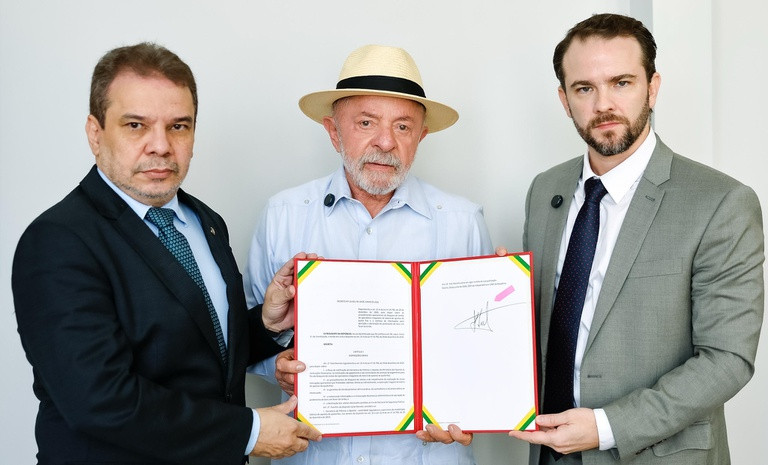
Brazil’s federal government has approved new measures to stop unlicensed betting operators, increasing the responsibility of financial institutions, payment providers and promoters, with the nation’s president saying, “we will fight, in every possible way, any illegal bet in this country.”
According to an official government release, the Brazilian president signed the new regulations on 19 June. Law decree 13,033/2026 defines the procedures for blocking and freezing the accounts of illegal fixed-odd betting operators, how verification is handled and the reversion of assets to the state.

“This provision decisively establishes the capacity of the Brazilian state to challenge illegal operators. Those who skirt the law cannot continue to use the financial system to sustain their clandestine business. By blocking the circulation of unauthorized betting resources, the provision cuts to the heart of these illicit economic activities, reducing the incentives for illegality and reinforcing the promise of the government for serious, effective and public good-focused regulation,” stated Brazil’s Minister of Finance Dario Durigan (image right).
The Secretariat of Prizes and Betting (SPA) had previously implemented measures in 2025 to only allow SPA-authorized companies to operate, facing a termination of their activities in the nation and bans on advertising and sponsorships for non-compliance. The measures also included tighter oversight on financial transactions and bettor behavior.
The new measure grants the SPA authority to issue a block notice to financial institutions, allowing for investigation and even seizure of assets – which are transferred to the National Public Security Fund (FNSP). This can be initiated by a complaint or evidence of fraud, with relevant parties given 24 hours to act on the notice and a block on new transactions to unlicensed businesses, which themselves are given 48 hours to prove their compliance to the SPA.

However, a court action is still necessary before any funds can be seized or transferred to the FNSP, with protection for funds owed to punters.
A recent anti-illegal betting activity on 18 June resulted in the blocking of 50,000 sites from illegal companies, and the interruption of activities for 350 operators, as well as identifying 37 financial institutions involved in the transfer of illicit funds.

Dig Deeper
Related stories
 2026/07/14: DigiPlus joins Brazilian Institute for Responsible Gaming in support of responsible online gaming ecosystem
 2026/07/10: Brazil to tighten online betting advertising rules for operators
 2026/06/24: Caesars partners with three Maine tribes for iGaming
 2025/07/07: Brazilian igaming panel calls for more certainty in the market
2026/07/14: DigiPlus joins Brazilian Institute for Responsible Gaming in support of responsible online gaming ecosystem
2026/07/10: Brazil to tighten online betting advertising rules for operators
2026/06/24: Caesars partners with three Maine tribes for iGaming
2025/07/07: Brazilian igaming panel calls for more certainty in the market
The Backstory
Brazil moves from licensing to financial interdiction
Brazil’s latest action against illegal fixed-odds betting marks a shift from market authorization to direct pressure on the payment rails that keep unlicensed operators alive. After building a national framework for legal betting, the government is now giving the Secretariat of Prizes and Betting, known as SPA, clearer tools to identify, block and seek the transfer of funds connected to unauthorized gambling activity.
The immediate significance is practical. Offshore and informal operators often survive even after website blocks by changing domains, relying on local payment intermediaries or moving money through accounts that are difficult for regulators to trace. By forcing financial institutions, payment companies and promoters to respond quickly to SPA notices, Brazil is trying to narrow the gap between detecting illegal activity and stopping money from moving.
The measure also reflects a broader political calculation. Legal betting has become a sizable regulated industry in Brazil, but its credibility depends on whether consumers, licensed companies and public authorities believe the state can distinguish lawful operators from black-market rivals. If illegal platforms can continue to advertise, process deposits and evade tax, the formal regime risks losing both revenue and public trust.
A tax fight exposed the fiscal stakes
The enforcement push comes after lawmakers wrestled with how directly betting revenue should support public security. Brazil’s Chamber of Deputies recently removed a proposed 15% fixed-odds betting tax from the Anti-Faction Bill, separating the levy from legislation aimed at organized crime and prison investment. The proposal, known as CIDE-Bets, had been promoted as a way to generate billions of reais for security programs, including prison construction and modernization.
That legislative dispute matters because it showed how betting is no longer treated solely as a consumer or entertainment issue. It has become a revenue source, a compliance test and a public security concern. Supporters of the tax framed the sector as a place to raise money for state priorities. Opponents pushed the levy into a separate debate, leaving the government to rely on other tools to tie betting regulation to security outcomes.
The new decree does that through enforcement rather than taxation. Funds seized after court approval may be transferred to the National Public Security Fund, giving authorities a direct pathway from illegal betting proceeds to security financing. The legal threshold remains important: SPA can initiate blocking procedures, but seizure and transfer still require judicial action. That design appears intended to balance speed against due process, especially where customer balances may be involved.
Other markets are attacking access points
Brazil’s approach fits a pattern in which governments are targeting the infrastructure around online betting rather than relying only on criminal penalties or consumer warnings. Pakistan’s National Cyber Crime Investigation Agency recently named 46 illegal betting, casino and trading apps and asked the country’s telecom regulator to block access. Officials cited not only gambling-law violations, but also financial security, privacy and identity-theft risks.
The comparison is useful because both countries are dealing with digital markets that can be reassembled quickly. App bans and website blocks can slow access, but payment disruption raises the cost of operating. Brazil’s decree goes further by creating a procedure for freezing accounts tied to illegal fixed-odds betting operators and by setting deadlines for institutions and suspected operators to respond.
Those deadlines are central to the strategy. Financial institutions may be required to act on block notices within 24 hours, while unlicensed operators may have 48 hours to prove compliance. That timeline recognizes that online betting transactions can move quickly across processors and intermediaries. It also increases the compliance burden on banks and payment providers, which are being pulled into the front line of gambling enforcement.
For licensed companies, this could be a competitive advantage. A regulated operator paying tax, meeting advertising rules and complying with responsible-gambling obligations has little incentive to compete against platforms that face none of those costs. More aggressive action against illegal rivals may help stabilize the regulated market, though it also raises the risk of disputes if legitimate payment flows are incorrectly flagged.
Financial crime concerns are widening
The financial dimension of online gambling has become more prominent across jurisdictions. In the Philippines, a district official in Sarangani province was recently accused of using public funds for online casino gambling, after local officials found that most of PHP600,000 set aside for district programs had been withdrawn. The case underscored how online platforms can become conduits for misuse of funds, especially when banking controls and account oversight are weak.
That episode is not directly comparable to Brazil’s campaign against unlicensed operators, but it points to the same vulnerability: digital gambling depends on fast financial access, and weak controls can magnify harm. Whether the issue is a public official allegedly spending community funds or an illegal operator collecting deposits from Brazilian bettors, regulators increasingly see bank accounts and payment channels as the place where policy must be enforced.
Brazil’s measure also aligns with broader scrutiny of financial privacy rules. Philippine lawmakers have discussed changes to bank secrecy provisions to help authorities examine suspicious accounts tied to fraud, bribery and other offenses. Brazil is not dismantling bank secrecy through the new decree, but it is expanding the circumstances in which betting regulators can trigger financial freezes and demand verification.
The challenge will be execution. Banks and payment companies must identify accounts linked to unauthorized betting without overblocking lawful activity. Regulators must build evidence strong enough to withstand court review. Consumers must be protected when funds owed to bettors are held by targeted operators. Those operational details will determine whether the decree becomes a deterrent or another layer of bureaucracy.
Advertising battles show the consumer-protection gap
Enforcement against illegal operators is only one side of the regulatory debate. In Australia, the federal government has faced criticism for what reform advocates described as a limited response to a parliamentary inquiry on gambling harm. The government’s position drew backlash after it leaned on previously announced advertising restrictions rather than adopting the inquiry’s broader recommendations. The debate over Australia’s gambling advertising measures shows how quickly public concern can shift from market legality to exposure, inducements and youth gambling.
Brazil has already moved to ban advertising and sponsorships by unauthorized operators, but the Australian dispute illustrates why enforcement alone may not settle the issue. Even legal markets can face public pressure if betting promotion becomes too visible or if young people are seen as being normalized into gambling behavior. For Brazil, where the legal market is still being consolidated, the credibility of advertising controls will matter alongside payment enforcement.
There is a causal link between the two. Illegal operators often rely on aggressive marketing to draw customers before regulators can act. If advertising channels are not policed, website blocks and payment freezes become reactive tools. Conversely, if financial institutions cut off unlicensed operators quickly, advertising becomes less effective because consumers cannot easily deposit funds or receive payouts.
Prediction markets blur the boundary
The regulatory pressure is not limited to sports betting and casino-style gambling. In the U.S., financial services companies have sought approval to launch exchange-traded funds linked to political prediction markets, a development that would bring event-contract exposure into ordinary brokerage accounts. The applications described in plans for investment funds tied to prediction markets show how products resembling wagers can migrate into financial markets under a different regulatory label.
That trend raises a question relevant to Brazil’s decree: who regulates when betting, trading and payments overlap? Prediction markets, sports event contracts, online casinos and fixed-odds betting all depend on platforms, account verification and money movement. Legal classification may differ, but regulators face similar concerns over consumer protection, market integrity and illicit finance.
Brazil’s decision to focus on illegal betting funds suggests the government is prioritizing enforceability. Licensing rules matter only if regulators can deny noncompliant operators access to customers and money. The new procedures create a clearer chain from detection to account blocking to possible asset transfer. If implemented effectively, they could make the legal market more defensible and raise the cost of operating outside it.
The stakes are high for the state, licensed bookmakers and bettors. For the government, the measure promises revenue protection and a public security dividend. For compliant operators, it offers relief from black-market competition. For consumers, it may reduce exposure to platforms that lack safeguards, though it could also complicate recovery of funds if operators are frozen midtransaction. Brazil’s next test is whether a tougher financial dragnet can keep pace with an online market built to move faster than regulators.
