


DigiPlus joins Brazilian Institute for Responsible Gaming in support of responsible online gaming ecosystem

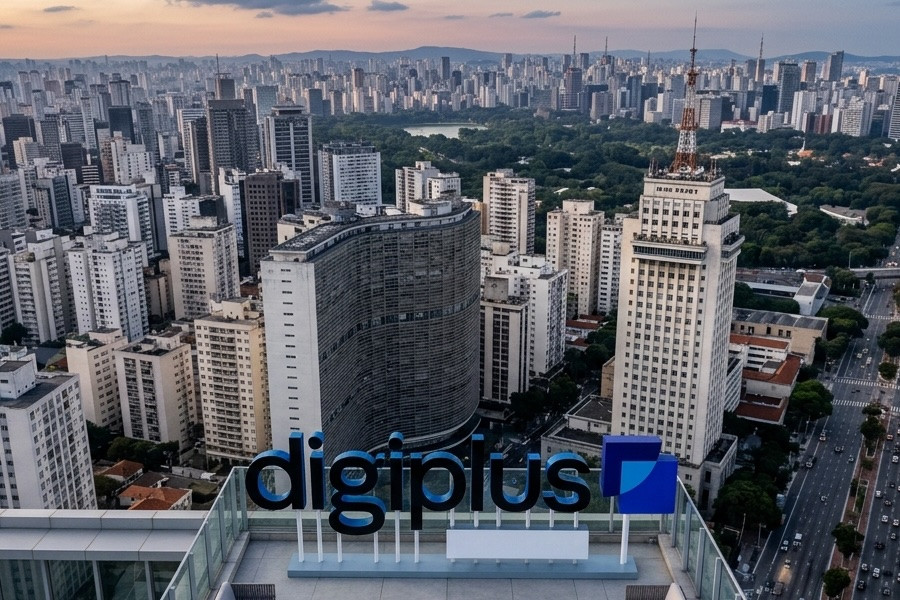
Philippine Stock Exchange-listed DigiPlus Interactive Corp. is deepening its presence in the Brazil market by joining the Brazilian Institute for Responsible Gaming (IBJR).
The IBJR was established in 2023 to “promote an online betting ecosystem that is ethical, sustainable, and responsible,” aimed at combatting the illegal market and promoting responsible gaming in Brazil.

In a 13 July note, IBJR Executive President Carlos Lima welcomed DigiPlus’ membership, calling the company “a benchmark of the interactive gaming and entertainment market of the Philippines and all of Asia.
“The entrance of the company is a demonstration of the maturity of the sector and reinforces its regulatory promises and firm combat against the illegal betting sector,” furthered Lima.
DigiPlus operates gaming platforms BingoPlus, ArenaPlus and Gamezone in the Philippines and recently expanded into the Brazilian market.


Graham Tidey, Managing Director of DigiPlus in Brazil since March of 2025, noted that “Joining the IBJR reflects DigiPlus’s expansion in Brazil, where we already operate the BingoPlus brand and continue to invest in growing our presence in the country.
“Bringing over 25 years of experience in the entertainment industry, we pioneered digital entertainment in the Philippines and are committed to replicating this success in the Brazilian market in a responsible manner and in full compliance with regulatory requirements,” noted the executive.
The IBJR now counts among its members key international operators such as BetMGM, bet365, Betsson Group, Entain, Flutter and Kaizen Gaming – and their respective brands operating in the country.

The entry of DigiPlus into the IBJR comes amongst a strong push for eliminating illegal operators in Brazil, with new measures to freeze illegal betting funds, increased advertising restrictions and crackdowns on bad actors, as operators aim to get their piece of the pie in the Brazil and LatAm markets.

Dig Deeper
Related stories
 2026/07/06: Investor urges DigiPlus to launch substantial share repurchase due to “absurd” valuation of shares
 2025/02/27: Philippine gaming technology firm DigiPlus setting up Singapore office to drive global expansion
 2025/05/06: DigiPlus Interactive launches global hub in Singapore
 2025/07/02: DigiPlus announces Brazil launch for September
2026/07/06: Investor urges DigiPlus to launch substantial share repurchase due to “absurd” valuation of shares
2025/02/27: Philippine gaming technology firm DigiPlus setting up Singapore office to drive global expansion
2025/05/06: DigiPlus Interactive launches global hub in Singapore
2025/07/02: DigiPlus announces Brazil launch for September
The Backstory
Brazil’s regulated market becomes the prize
DigiPlus Interactive Corp.’s decision to join the Brazilian Institute for Responsible Gaming lands at a pivotal moment for Brazil’s online betting industry. The Philippines-listed operator is not simply adding its name to a trade group. It is positioning itself inside the policy conversation that will define how one of the world’s most closely watched new regulated markets separates licensed operators from illegal platforms.
Brazil’s betting framework has moved from legislative ambition to market reality, drawing global gambling groups that see Latin America’s largest economy as a long-term growth engine. That has brought opportunity and scrutiny in equal measure. Regulators are tightening rules around advertising, payment flows and consumer safeguards, while legal operators are pressing for faster action against offshore sites that avoid taxes, licensing standards and responsible gambling controls.
For DigiPlus, whose brands include BingoPlus, ArenaPlus and Gamezone in the Philippines, membership in the institute gives the company a local platform for engagement with peers, policymakers and civil society. It also signals that its Brazil push will be judged not only by user growth but by how well it adapts to a regulatory environment built to distinguish authorized operators from the gray market.
A trade group built around legal certainty
The Brazilian Institute for Responsible Gaming, known as IBJR, was founded in 2023 as Brazil moved toward a formal online betting regime. Its mission has centered on responsible gambling, market integrity and the fight against illegal betting, themes that have become more urgent as the number of interested operators has grown.
The institute has assembled a roster of major local and international companies, including Bet365, BetMGM, Betsson Group, Entain, Flutter, Kaizen Gaming and KTO Group. More recently, the group added domestic operator A2FBR to its responsible gaming coalition, underscoring its effort to broaden beyond multinational brands and present itself as a representative voice for licensed market participants.
That coalition model matters because Brazil’s regulated market is still being shaped in practice. Rules on player protection, advertising conduct, sports integrity, taxation and enforcement require continuing dialogue between operators and authorities. A trade body with a broader membership can argue that regulation is not only a compliance burden but also a competitive moat against illegal betting sites.
DigiPlus’ entry fits that strategy. The company brings experience from Asia’s digital entertainment sector and a track record in a Philippine market where online gaming has expanded quickly under regulator oversight. In Brazil, that experience may help the company argue that mass-market digital gaming can coexist with stronger consumer protection if platforms invest in controls, monitoring and education.
Leadership changes sharpened the institute’s agenda
DigiPlus is joining IBJR after a period of leadership transition that reflected the increasing complexity of Brazil’s betting debate. Fernando Vieira, who had led the institute since October 2024, resigned after a tenure focused on regulation, public messaging and the fight against illegal operators. His departure, described in a LinkedIn post announcing Vieira’s resignation, came as the institute was expanding its membership and intensifying its public campaigns.
One of the final initiatives under Vieira was the “Chega de Bode na Sala” campaign, which used television, radio, airport displays and social media to direct bettors toward platforms authorized by the Ministry of Finance. The message was direct: legalization alone does not protect consumers if bettors cannot distinguish compliant operators from unlicensed sites.
After Vieira’s exit, André Gelfi, an IBJR co-founder and Betsson Group’s managing partner in Brazil, served on an interim basis. The organization later named Carlos Lima as executive president of the institute, emphasizing his background in government relations, public policy and regulatory affairs. Lima’s appointment suggested a shift toward deeper institutional engagement as Brazil’s regulated market matured from launch phase to enforcement phase.
That context is important for DigiPlus. Joining IBJR under Lima places the company inside an organization that is seeking to influence not only public opinion but also the practical details of regulation. For a new entrant, membership can help reduce political and reputational risk while giving the operator a clearer line of sight into policy expectations.
DigiPlus brings a Philippine compliance playbook
DigiPlus’ Brazil strategy is also informed by its experience in the Philippines, where the company has worked with the Philippine Amusement and Gaming Corp., known as PAGCOR, on responsible gambling initiatives. In June, the company outlined a more proactive stance through its responsible gambling campaign with PAGCOR, including player tools for limits and self-exclusion, as well as efforts to identify signs of problem gambling through platform behavior.
That approach matters because responsible gambling expectations are becoming more data-driven. Regulators increasingly expect operators to move beyond static disclosures and helpline links. The industry is under pressure to detect risky play, intervene earlier and document how its systems reduce harm. DigiPlus’ stated focus on behavioral analysis and player education could become part of its case for legitimacy in Brazil.
The company’s Philippine experience also shows the commercial tension at the center of online gaming. Rapidly scaling digital platforms can bring tax revenue, employment and technology investment, but they also raise concerns about addiction, advertising exposure and consumer debt. Operators entering Brazil must prove that growth is not being achieved at the expense of vulnerable customers.
By joining IBJR, DigiPlus is aligning its Brazil expansion with an industry narrative that regulation and responsible gaming are prerequisites for sustainable revenue. That is a useful message for investors and regulators alike, particularly as Brazil’s authorities seek to show that legalization can channel demand into safer, taxable environments.
Illegal operators remain the central threat
The strongest through line across Brazil’s betting policy is the effort to curb illegal operators. Licensed companies argue that unregulated sites undermine the entire framework by avoiding tax, failing to apply consumer protections and competing aggressively through channels that compliant companies cannot use. Regulators, in turn, face pressure to demonstrate that obtaining a license carries real advantages.
IBJR’s campaigns and membership growth are aimed at reinforcing that divide. The addition of A2FBR, DigiPlus and other operators helps the institute frame responsible gaming as a collective standard rather than a marketing slogan. It also increases the number of companies with a stake in stricter enforcement against unlicensed competitors.
International operators have used similar positioning in other markets. BetMGM, for example, has paired expansion with public-facing commitments around responsible gaming, including GameSense tools and community initiatives tied to sports partnerships. Its recent Las Vegas Aces charitable initiative was not about Brazil, but it reflects a broader industry push to connect market access with corporate responsibility and consumer safeguards.
In Brazil, that reputational work has higher stakes because the market is still earning public trust. If illegal operators continue to capture significant traffic, licensed companies face a weaker business case and regulators face questions over enforcement capacity. If enforcement succeeds, companies inside the regulated perimeter could benefit from greater consumer confidence and a more stable competitive field.
Why the membership move matters
DigiPlus’ entry into IBJR is a small step in formal terms but a meaningful one strategically. It gives the company a seat in a coalition that is trying to shape how Brazil defines responsible online betting, how it communicates legal options to consumers and how it pressures authorities to act against illegal sites.
The move also suggests that Brazil is becoming a more important pillar of DigiPlus’ international ambitions. As the company expands beyond its home market, it must show that its operating model can travel across jurisdictions with different political expectations and compliance standards. IBJR membership helps it make that argument before full market performance data is available.
For Brazil, the broader significance is that the regulated betting market is entering a consolidation of legitimacy. Operators are not only competing for customers but also for credibility with regulators, lawmakers, payment partners and the public. Trade group participation, responsible gambling tools and anti-illegal-market campaigns are becoming part of the cost of doing business.
That does not guarantee success for DigiPlus or any other entrant. Brazil’s market will be crowded, regulatory demands will keep evolving and enforcement will determine whether licensed operators can convert compliance into commercial advantage. But by joining IBJR, DigiPlus is signaling that it understands the terms of competition in Brazil are being set as much in policy forums as on betting platforms.
