


US lottery group NASPL joins fight against prediction markets, calling for increased regulation

The North American Association of State and Provincial Lotteries (NASPL) has published a statement calling for urgent clarification by regulators on sports contracts’ inclusion in prediction markets, calling them “an attempt to create a new type of gambling and conceal its true identity.”
The NASPL furthered that “failing to establish appropriate regulatory parameters will have a negative impact on the integrity of the very games (sports as well as lottery) that prediction markets target, compromise consumer protection and responsible gaming efforts nationwide, undermine public benefit funding efforts, and compound the challenges law enforcement faces in combatting tax evasion, money laundering and racketeering.”

The group went on to argue that if players gain or lose something of value due to the outcome of a future event, then that meets the definition of gambling in many legal standards. The NASPL argued that making a “prediction” falls under the same terms as placing a “wager” at a sportsbook.
The NASPL also endorsed a paper published by the World Lottery Association (WLA) that argues that the rise of prediction markets undoes established policy and blurs the line between what counts as gambling and what doesn’t.
The NASPL joins the WLA in its call for “urgent regulatory clarification in all jurisdictions where prediction markets offer or even plan to offer sports events or other event contracts.” The WLA paper it endorsed doesn’t only stop at sports, including events “political, or otherwise,” noting such products should be licensed and regulated as wagers “irrespective of the operator’s preferred label.”

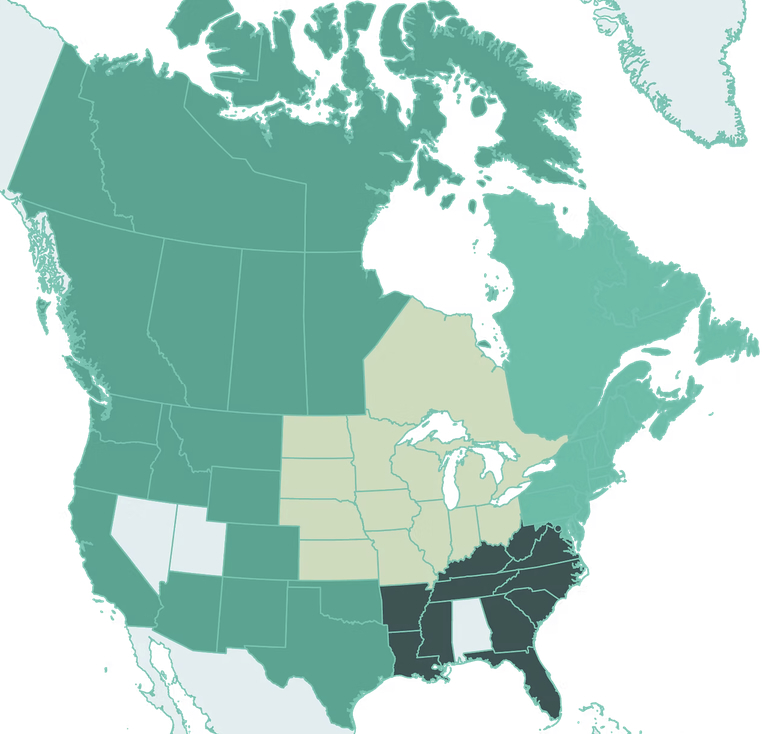
The NASPL represents 53 lottery organizations across North America, including Brightstar, Bally’s Intralot, Scientific Games and Aristocrat Interactive. Its “mission is to advocate for state and provincial lottery organizations on matters of general lottery policy and leverage collaboration, communication, education, and information for the betterment of the industry.” The lottery group’s statement comes as US lawmakers debate the regulation of prediction markets. On 22 July, members of the House Agriculture Committee Subcommittee on Commodity Markets, Digital Assets, and Rural Development listened to testimony on whether sports-event contracts should fall under federal regulation or whether new rules were needed to ensure that prediction markets operate within the proper guidelines.
Charlotte Capewell brings her passion for storytelling and expertise in writing, researching, and the gambling industry to every article she writes. Her specialties include the US gambling industry, regulator legislation, igaming, and more.

Dig Deeper
Related stories
 2025/06/25: The UAE Lottery to join the World Lottery Association
 2025/02/26: ‘We’re not afraid of competition’, says Atlantic Lottery Corporation’s new President
 2025/03/14: Scientific Games achieves WLA re-certification
 2026/07/21: AGA and IGA call for ban on sports event contracts ahead of Congressional hearing
2025/06/25: The UAE Lottery to join the World Lottery Association
2025/02/26: ‘We’re not afraid of competition’, says Atlantic Lottery Corporation’s new President
2025/03/14: Scientific Games achieves WLA re-certification
2026/07/21: AGA and IGA call for ban on sports event contracts ahead of Congressional hearing
The Backstory
Lotteries enter a widening jurisdictional fight
The North American Association of State and Provincial Lotteries’ intervention puts lotteries more directly into a dispute that has already drawn state gambling regulators, tribal governments, sportsbook operators and federal commodities overseers. The core question is whether sports-event contracts offered by prediction markets are financial products regulated under federal commodities law or wagers that should be subject to state and tribal gambling rules.
That distinction matters because lotteries are state-created monopolies or quasi-monopolies in many jurisdictions, with proceeds earmarked for public programs. If prediction markets can offer sports, political or other event contracts without the licensing, tax and consumer-protection obligations imposed on gambling operators, lottery officials see a threat not only to competitors but to the public-benefit model that underpins their existence.
The debate has accelerated as platforms such as Kalshi and Robinhood have expanded into products that resemble sports betting to critics, while maintaining they operate within a federal regulatory framework. NASPL’s statement follows a series of state and tribal challenges that have shifted the issue from a niche market-structure dispute into a broader test of who controls the future of online wagering in the U.S.
State regulators push back against federal preemption claims
States have been among the earliest and most aggressive challengers. Gambling regulators in several jurisdictions have argued that event contracts tied to sports outcomes amount to unlicensed sports betting when offered to residents. Prediction market operators have responded that states are trying to regulate products already overseen at the federal level, setting up a conflict over preemption and the reach of commodities law.
Iowa has moved to address that uncertainty through legislation. A proposal covered in Iowa’s Senate File 2085 effort to bring prediction markets under state oversight would require prediction market operators to obtain a permit from the Iowa Department of Revenue before offering contracts to residents. The bill would impose a US$10 million initial licensing fee and US$100,000 annual renewals, signaling that some lawmakers view the sector as sufficiently close to gambling to warrant a state licensing model.
The Iowa bill also shows how hard it is to draw clean lines. Its definition would cover platforms allowing users to wager on real-world outcomes, including sports, politics and current affairs. Supporters frame that as a framework for legal operation. Critics say the proposal, at least as introduced, may still fall short if it does not include tools commonly attached to gambling regulation, such as age checks, self-exclusion and responsible gaming requirements.
Those state efforts are part of the background for NASPL’s call for “urgent regulatory clarification.” Lotteries are not merely asking whether a company has the right federal registration. They are asking whether a product that creates gain or loss based on a future event should be treated as gambling regardless of the label placed on it.
Tribal sovereignty raises the stakes
The dispute carries particular weight for Native American tribes because tribal gaming revenue funds government services, health programs, housing, education and economic development. Many tribes negotiated gaming compacts under a legal structure that gives them defined rights and responsibilities within state and federal gambling law. Prediction markets that bypass that structure are seen by tribal advocates as a threat to sovereignty as well as revenue.
That concern is central to the Ho-Chunk Nation’s legal fight against Kalshi and Robinhood. A coalition of tribes backed the Ho-Chunk Nation in a brief described in Native American tribes’ support for the Ho-Chunk Nation challenge to prediction markets. The tribes argue the contracts are effectively unlawful sports wagering when offered on tribal lands and that their spread undermines the legal regime governing Indian gaming.
The tribal argument also broadens the policy lens. For commercial operators, the fight may center on market access, customer acquisition and compliance costs. For tribes, gaming is tied to self-government. A federally regulated event-contract model that reaches customers nationwide could erode the value of state and tribal exclusivity arrangements, without requiring the same compact negotiations or revenue-sharing terms.
NASPL’s position aligns with that broader concern. Lottery organizations and tribes both rely on regulated gaming structures that convert wagering activity into public or community funding. Both groups argue that prediction markets, if left outside gambling regulation, could extract gambling-like revenue without participating in the same public-interest obligations.
Sportsbooks see opportunity as well as risk
The controversy is not limited to regulators trying to stop new entrants. Some established gambling companies are exploring whether prediction markets can become a parallel route into states that have not legalized online sports betting or igaming. That commercial incentive complicates the debate because the same product category criticized as regulatory arbitrage may also become part of large operators’ expansion strategies.
DraftKings Chief Executive Jason Robins has suggested that prediction markets could push more states toward legalization. In DraftKings’ discussion of prediction markets as a possible driver of igaming regulation, Robins said the company planned to launch DraftKings Predictions in states where it does not offer a sportsbook. He characterized the product as a significant incremental opportunity and argued that growth in predictions may motivate states to adopt regulated online sports betting and igaming frameworks with taxation.
That view reflects a strategic calculation. Nearly half of the U.S. population lacks access to legal online sports betting, leaving large markets unavailable to licensed sportsbook operators. Prediction contracts may offer a way to reach consumers in those states while legal disputes play out. If they gain traction, lawmakers could face pressure either to regulate them as gambling or to legalize more conventional sports betting to regain control and tax revenue.
For lotteries, this is a warning sign. Lottery agencies have long operated under state authorization and typically face detailed oversight on game integrity, distribution, advertising and proceeds. If prediction markets become a workaround for national operators, state lotteries could face new competition that is neither taxed nor regulated in the same way.
Advertising surge intensifies consumer-protection concerns
The rapid rise of prediction market advertising has sharpened the consumer-protection argument. During major sports events such as March Madness, gambling-related promotions are already under scrutiny. Prediction platforms have added a new category of ads that may not carry the responsible gaming messages required of licensed sportsbooks.
American Gaming Association data highlighted in coverage of March Madness sports betting advertising trends showed that prediction market platforms dramatically increased their digital presence even as online sportsbook ad impressions declined. The AGA said a significant share of digital sports betting ads seen by consumers did not comply with state-mandated responsible gaming messages because they came from prediction market operators. Kalshi was identified as one of the most visible brands by digital impressions.
That advertising shift is central to NASPL’s concern that the issue is not just market classification. If consumers experience these products as betting, and if the ads appear alongside sports content in ways similar to sportsbook promotions, regulators may struggle to explain why one product carries age limits, self-exclusion options and responsible gaming disclosures while another does not.
The research gap also matters. The growth of sports betting and adjacent products has outpaced academic study, particularly in Canada and in areas involving vulnerable groups. Michael Naraine of Brock University, named the first Canadian member of San Diego State University’s Institute on Sports Wagering and Gaming, has warned that research has lagged the market’s expansion. His concerns, discussed in Brock University’s work on the gambling boom and evidence-based policy, point to unanswered questions about youth, Indigenous communities, marketing ethics and gambling harm.
A fight over labels, revenue and control
NASPL’s statement lands at a moment when lawmakers are being asked to decide whether existing categories still work. Prediction markets describe their products as contracts. Gambling regulators and lottery groups say the customer experience often resembles a wager: a person risks something of value on an uncertain outcome, with a chance to win or lose based on that event.
The consequences of that classification are substantial. If sports-event contracts are treated as federally regulated financial products, operators may gain broad market access without the state-by-state licensing burden that defines U.S. sports betting. If they are treated as gambling, platforms would face state and tribal rules, taxation, advertising restrictions and responsible gaming obligations.
That is why NASPL’s entry matters. Lotteries bring political weight because they are tied to state budgets, education funding and other public purposes. Their opposition adds another constituency to a coalition already including state regulators, tribal governments and parts of the licensed gaming industry. The fight is no longer only about whether prediction markets can list sports contracts. It is about whether the next phase of online wagering will be built through gambling law, commodities law or a collision of both.
