


March Madness brings increased focused on sports betting ads

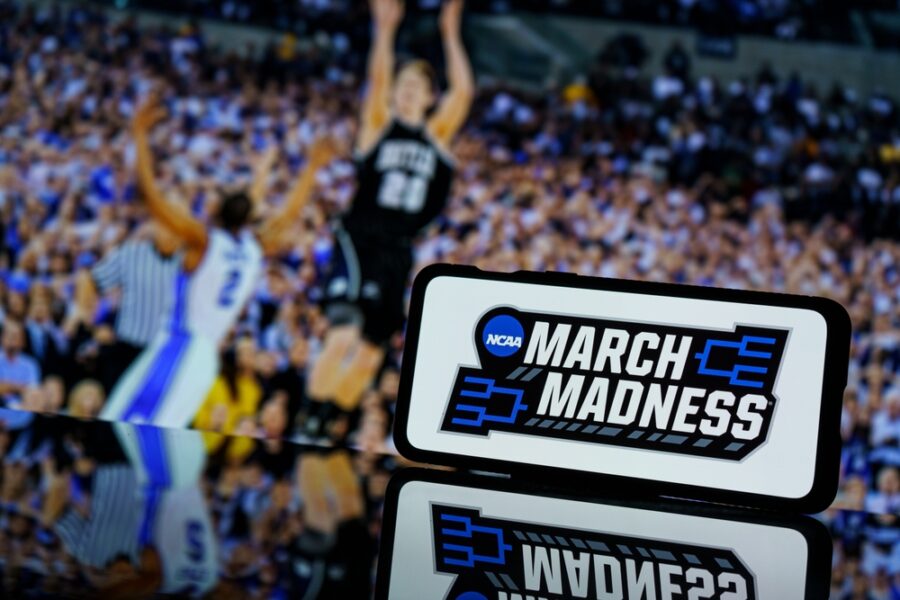
As March Madness nears, Americans are eager to wager on this year’s NCAA Basketball tournaments.
The American Gaming Association estimates that Americans will legally wager US$3.3 billion on the NCAA Division I Women’s and Men’s Basketball Tournaments this year, a 54% increase over the past three years. The growth reflects the strength of the legal state- and tribal-regulated sports betting market and increasing consumer confidence in regulated wagering options.

“March Madness is the highlight of the college basketball season and fans are gearing up for a month of tournament action,” American Gaming President and CEO Bill Miller said in a statement. “Fans continue to engage with legal, state- and tribal-regulated sports betting in record numbers during one of the biggest moments on the sports calendar.”
Sensor Tower data compiled by the AGA shows that prediction market platforms have rapidly increased their presence in sports betting advertising. While digital ad impressions for online sportsbooks declined nearly 14% in 2025, impressions tied to prediction market advertising surged dramatically.
With the expansion of prediction market advertising, 15% of digital sports betting ads seen by consumers last year did not comply with state-mandated responsible gaming messages. Kalshi alone became the third largest sports betting advertiser by digital impressions in 2025.

Through the first two months of 2026, 43% of digital sports betting ads seen by US consumers did not comply with state gaming regulations requiring responsible gaming messaging since they came from prediction market operators. Kalshi is the most visible sports betting brand by digital ad impressions, with consumers exposed to its advertising about 5.2 billion times this year, compared with 2.9 billion impressions for FanDuel, the next most frequent sportsbook advertiser.
A Nielsen study commissioned by the AGA shows that despite increased betting activity, overall sportsbook advertising volume has continued its multi-year decline.
- Total sports betting advertising spend fell 5% year-over-year.
- Sports betting ad volume across all channels declined 1% year-over-year and is 27% lower than the 2021 peak.
- Sports betting TV advertising volume declined 9% and has decreased 50% since 2021
The data shows sports betting advertising represents just a small portion of US television advertising. In 2025, sports betting accounted for 0.9 % of TV advertising spend, compared with 1.5% for alcohol advertising.

Sports betting advertising volume (0.3%) is half that of the alcohol industry (0.6%) and dwarfed by pharmaceuticals at 13.9%. For every sports betting commercial aired on television in 2025, 39 pharmaceutical advertisements aired.
“Confidence in your wager – and in the integrity of the games – starts with a fair and compliant betting market,” said Miller. “That’s why it’s so important that everyone offering sports bets in the US comply with state and tribal regulations, ensuring that consumers are protected.”
Digital advertising specific figures come from Sensor Tower data compiled by the AGA. Pathmatics by Sensor Tower is a digital advertising intelligence platform that provides analytics and insights into digital advertising campaigns across channels including display, video, social, and mobile.

A Nielsen study, commissioned by the American Gaming Association, analyzed trends around sports betting advertising in the United States in 2025. The research leveraged Ad Intel, Nielsen’s advertising monitoring service for tracking detailed ad spend in markets and media outlets including TV, print, digital, out-of-home and cinema.

Dig Deeper
Related stories
 2026/04/14: Hong Kong pauses basketball betting launch due to concerns around impact of prediction markets
 2025/11/25: What does the future hold for prediction markets after big players break from AGA?
 2025/04/01: FanDuel and DraftKings made peace with California tribes over sports betting expansion
 2026/05/14: New Mexico tribes sue Kalshi over sports betting contracts
2026/04/14: Hong Kong pauses basketball betting launch due to concerns around impact of prediction markets
2025/11/25: What does the future hold for prediction markets after big players break from AGA?
2025/04/01: FanDuel and DraftKings made peace with California tribes over sports betting expansion
2026/05/14: New Mexico tribes sue Kalshi over sports betting contracts
The Backstory
Why scrutiny of sports betting ads is peaking
As the men’s and women’s college basketball tournaments swell interest in wagering each spring, the ad spotlight grows harsher. March Madness compresses a year’s worth of audience attention into a few frenzied weeks, prompting campaigns to jostle for share of voice while regulators and advocates press for tighter standards. This cycle sets the table for recurring questions: Where is the legal line, who is responsible for protecting consumers and athletes, and how are operators adapting as state rules evolve and viewers tire of saturation?
That tension is evident across this season’s newsflow. Industry groups project record legal bets, state regulators urge bettors back to licensed platforms, cybersecurity experts flag a rise in scam sites and college sports officials track abuse directed at athletes tied to wagering. The ad market lives at the center of these crosscurrents — powerful in shaping behavior yet constrained by compliance obligations that vary by jurisdiction. As campaigns escalate around the tournament, the stakes for brands and policymakers do too.
Legal handle rises, but so does responsibility
The industry’s growth narrative has been consistent. The American Gaming Association projected legal wagers on this year’s college tournaments could reach up to US$3.1 billion, a jump from last year as more states permit regulated betting. That expansion bolsters the case for a licensed market that can be monitored and taxed, and it underpins the AGA’s “Have A Game Plan. Bet Responsibly” campaign that promotes budgeting, social play and staying within legal channels.
But jurisdictions still worry that the wider funnel brings higher consumer risk. Ahead of the championship game, the Michigan Gaming Control Board urged residents to use only state-licensed operators, emphasizing encryption, game fairness and access to responsible gambling tools. The message was blunt: illegal sites offer fewer safeguards and little recourse. Such advisories effectively set the floor for ad practices, since licensed books shoulder disclosures, age gates and formal complaint processes that unlicensed outfits sidestep.
For advertisers, that distinction matters. Campaigns that point audiences to regulated products help reduce policy risk and reputational blowback. It also frames the competitive field: compliant brands must absorb the cost of meeting standards, while gray-market operators can undercut with aggressive creative that omits warnings or fine print. The pressure to stand out without crossing lines is highest during the tournament window, when every impression is expensive and every misstep visible.
Fraudsters exploit the spotlight
The same surge in attention that fuels big-brand media plans also draws impostors. Cybersecurity specialists warned that March Madness is “peak season” for fake websites and apps that mimic sportsbooks, luring fans with promised payouts and disappearing with deposits. A recent rundown on scam dynamics noted that online gaming was among the sectors most associated with suspected digital fraud last year, and urged bettors to stick with recognized, licensed operators during the tournament crush. That risk profile was laid out in detail in reporting on the rise of online betting scams during March Madness.
Scams complicate the advertising picture in two ways. First, they muddy consumer trust, making even legitimate ads work harder to reassure skeptical viewers. Second, they can siphon traffic from licensed operators, undermining the public-policy premise of legal markets. Platforms and regulators have pushed back with verification badges, clearer app-store rules and takedowns, but enforcement lags the volume of pop-up sites. During high-interest events, that gap widens.
Protecting athletes becomes part of the ad calculus
College sports officials have linked ad intensity and wagering buzz to a separate risk: harassment of players and coaches. The NCAA said social media abuse tied to sports betting declined this tournament compared with last year, even as overall volumes of online commentary surged. The organization credited expanded monitoring with partner Signify Group and policy steps like bans on high-risk prop bets through its renewed deal with Genius Sports.
Although the NCAA’s data is encouraging, it underscores how advertising can shape tone and expectations. Messaging that emphasizes entertainment, odds education and responsible play may help blunt extreme reactions to game outcomes. Conversely, hype that leans into certainty and quick-profit language can exacerbate fan frustration and fuel targeted abuse when bets go bust. For brands, creative choices now carry implications well beyond conversions and click-through rates; they can influence how the public treats young athletes at the center of the spectacle.
Regulatory gray areas test compliance claims
As state- and tribal-regulated sportsbooks compete with newer, nontraditional operators, compliance becomes a differentiator and a flashpoint. The advertising landscape now includes prediction platforms that market around sports outcomes but don’t always fall neatly under sportsbook statutes. That ambiguity has led to uneven use of responsible gaming taglines and other mandated disclosures. Regulators have started to scrutinize these gaps, especially when ad volume spikes during marquee events.
The policy trajectory suggests tighter harmonization ahead. Expect more states to clarify what constitutes a sports wager for advertising purposes and to extend disclosure rules to products that let consumers bet on game-related questions, even if structured differently from conventional moneyline or spread bets. In the interim, mainstream operators face a competitive quandary: play by stricter rules and risk losing share of voice, or push creative boundaries and invite enforcement. Either path carries cost.
An inclusion lesson from Ontario’s market
Outside the U.S., Ontario offers a case study in how public priorities can reshape gaming products and, by extension, their marketing. The Ontario Lottery and Gaming Corporation launched what it calls the province’s first accessibility-focused online slot, a move framed as reducing barriers for players with disabilities and collaborating with advocacy and studio partners. The rollout, covered in detail in reporting on Ontario’s accessibility-focused game launch, aligns with local demographics: the Ontario Human Rights Commission notes that about 15.4% of Ontarians report a disability.
The lesson for sports betting marketers is straightforward. Aligning creative and product design with consumer protection and inclusion goals can expand audiences while satisfying regulators who increasingly weigh accessibility and responsible play in licensing reviews. Ontario’s regulated online market has also shown durable momentum since its 2022 launch, with recent months near record revenue, according to iGaming Ontario’s monthly performance reports. Markets that prioritize structure and safeguards can still grow at scale — and give advertisers clearer rules to operate within.
As March Madness recedes, the ad debate will shift from volume to standards. The next phase is less about how many spots run and more about what they say, whom they target and how they steer fans toward legal, responsible play. With billions at stake and public tolerance for missteps thinning, the industry’s messaging choices now carry regulatory, reputational and human consequences that last long after the brackets bust.
