


US Congress questions whether CFTC is fit to oversee prediction markets

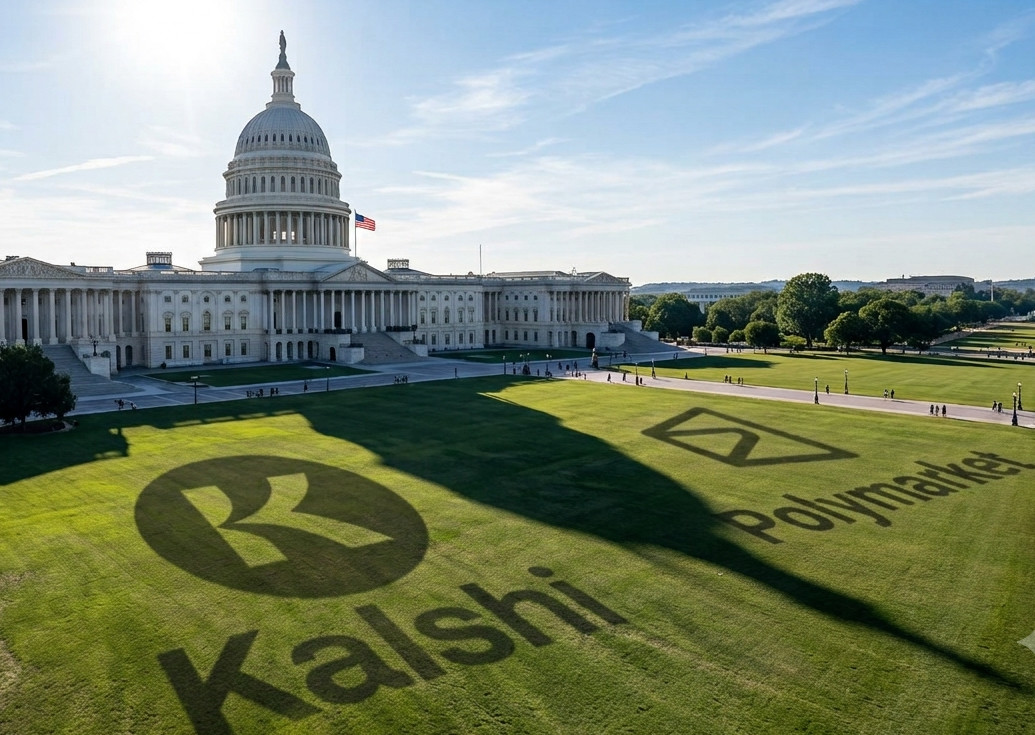
US lawmakers are debating whether Congress should play a bigger role in regulating prediction market platforms, after a hearing examined whether existing federal oversight is fit for the purpose.
According to WCTI 12, members of the House Agriculture Committee Subcommittee on Commodity Markets, Digital Assets, and Rural Development questioned whether the Commodity Futures Trading Commission (CFTC) should continue to oversee sports event contracts on prediction markets.

During the hearing, lawmakers raised concerns about how these contracts fit in the current regulatory system and whether additional rules are needed to ensure prediction markets operate within clear guidelines.
Representative Dusty Johnson said, “As with many emerging technologies, our laws are being asked to answer questions that we had never really contemplated when we wrote the laws years ago.”
House Committee on Agriculture Chair Representative Glenn Thompson added, “Where the commission’s authority is found to be insufficient to meet its mandate to support responsible innovation and protect market participants, we will consider legislation as may be appropriate. But first, the committee must understand if such gaps exist.”

The hearing follows calls from the American Gaming Association (AGA) and the Indian Gaming Association (IGA) for sports event contracts to be banned from prediction markets. At the hearing, both organizations argued that prediction market platforms avoid the regulations and consumer protections required of regulated sportsbooks.
The discussion also comes as concern grows among sports organizations over the impact of prediction markets on athletes and collegiate sports. According to USA Today, the NCAA raised concerns about sports prediction markets, warning that sports-event contracts linked to collegiate sports could create additional risks for student athletes.
Additionally, reporting from CNBC has found that both prediction market platforms and gambling groups are increasing their efforts to influence the regulatory debate. Prediction market operator Kalshi spent US$990,000 on lobbying efforts in the first half of 2026, even as the AGA has already spent US$1.4 million fighting the rise of prediction markets.

With increased discussion over the regulation of prediction markets, many in the industry think the topic could be elevated to the Supreme Court.
Charlotte Capewell brings her passion for storytelling and expertise in writing, researching, and the gambling industry to every article she writes. Her specialties include the US gambling industry, regulator legislation, igaming, and more.

Dig Deeper
Related stories
 2025/06/12: Kalshi director and CFTC nominee advocates for prediction markets
 2026/07/21: AGA and IGA call for ban on sports event contracts ahead of Congressional hearing
 2026/07/23: US lottery group NASPL joins fight against prediction markets, calling for increased regulation
 2025/10/17: Kraken eyes prediction market launch with acquisition of CFTC-licensed Small Exchange
2025/06/12: Kalshi director and CFTC nominee advocates for prediction markets
2026/07/21: AGA and IGA call for ban on sports event contracts ahead of Congressional hearing
2026/07/23: US lottery group NASPL joins fight against prediction markets, calling for increased regulation
2025/10/17: Kraken eyes prediction market launch with acquisition of CFTC-licensed Small Exchange
The Backstory
Congress tests the limits of a federal framework
The congressional scrutiny of prediction markets reflects a wider collision between financial regulation, gambling law and the fast expansion of event-based trading. Sports contracts offered by platforms such as Kalshi and Polymarket have pushed the Commodity Futures Trading Commission into territory that did not exist when much of the federal commodities framework was written. Lawmakers are now weighing whether that framework is flexible enough to supervise products that resemble financial derivatives in form but sports wagering in public perception.
The debate has sharpened because prediction market operators are asserting federal jurisdiction while state gambling regulators argue that sports event contracts fall within their licensing systems. That conflict has produced court fights, lobbying campaigns and calls from sports bodies for intervention. The current congressional review is therefore not an isolated oversight exercise. It is the latest step in a regulatory struggle over whether sports-linked contracts should be treated as federally regulated markets, state-regulated betting or something requiring a new statutory category.
From niche contracts to sports betting flashpoint
Prediction markets were long framed as tools for aggregating information on elections, economic indicators or public events. Their move into sports has changed the political and regulatory stakes. The CFTC has already tried to draw lines, issuing guidance to prediction markets on sports event contracts that warned exchanges to assess whether certain products could be vulnerable to manipulation. Contracts tied to the actions or performance of a single player were identified as especially risky because one person could influence the result.
That guidance showed the agency was not ignoring the issue, but it also underscored the limits of case-by-case supervision. The CFTC said it wanted to encourage innovation while reminding designated contract markets of their obligations under the Commodity Exchange Act. At the same time, it opened a public consultation on insider information, investor protection and sensitive markets. Those steps suggested the regulator viewed sports event contracts as manageable within its existing mandate. Critics argue the opposite: that the speed of product development has outpaced a framework built for commodities and swaps, not game outcomes and player movement.
The tension has been amplified by state actions. Gambling regulators in multiple states have challenged platforms they say are offering unlicensed sports betting. Prediction market operators have responded that their products are federally regulated contracts, placing them beyond state sports wagering regimes. Courts have delivered mixed interim signals, leaving platforms, regulators and leagues without a settled national rule.
College sports raise the political temperature
Concerns are particularly acute around college athletics, where integrity risks intersect with the age and visibility of student athletes. NCAA President Charlie Baker has asked the CFTC to suspend college sports prediction markets until stronger safeguards are in place. In his request, detailed in coverage of the NCAA president’s call for a CFTC suspension of college sports prediction markets, Baker argued that the rapid growth of these products creates threats to student athletes and competition integrity.
The NCAA’s position matters because college sports already sit at the center of U.S. betting integrity concerns. Student athletes can be more exposed to harassment, coercion or misuse of private information than professionals with stronger institutional protections. Prediction markets tied to outcomes, roster movement or athlete decisions could create incentives for individuals to trade on nonpublic information or pressure athletes and staff for details. Even if exchanges prohibit certain activity, sports bodies are asking whether federal market rules can address those risks as effectively as state betting regulators that have direct experience supervising sportsbooks.
The college sports issue also gives lawmakers a clearer consumer protection frame. The question is no longer only whether a contract is legally a commodity instrument. It is whether markets connected to games and athletes create harms that Congress did not anticipate when assigning oversight to the CFTC. That distinction is central to the House Agriculture Committee’s inquiry into whether the agency is fit for this new role.
Industry mobilizes as legal stakes rise
Prediction market operators and their allies are not waiting for regulators to define the battlefield. The sector has begun building a more formal political operation, including through a new coalition that brought in former members of Congress. The Coalition for Prediction Markets’ recruitment of former lawmakers signaled that the industry expects an extended fight over federal preemption, market structure and the future of sports event contracts.
The coalition’s position is that federal oversight offers a consistent national framework, avoiding a patchwork of state rules that could make event contracts difficult to operate at scale. That argument mirrors the logic used by many financial technology sectors: national markets need national rules. But gambling regulators and sportsbook interests see a different dynamic. They argue that prediction platforms are using commodities law to bypass licensing fees, responsible gambling obligations, advertising restrictions and integrity monitoring that apply to regulated sportsbooks.
Lobbying expenditures show how quickly the issue has become a Washington priority. Prediction market firms have increased spending as gaming trade groups press for restrictions or bans on sports event contracts. The more money and political capital entering the debate, the more likely Congress is to consider whether the CFTC’s authority needs to be clarified or narrowed. For lawmakers, the choice is not simply innovation versus prohibition. It is whether to preserve a federal market model, defer to state gambling systems or build a hybrid regime with explicit limits on sports-related products.
Global regulators see the same boundary problem
The U.S. fight is part of a broader international reassessment of prediction markets. Other countries have confronted similar questions about whether platforms offering event contracts are financial exchanges, gambling services or illegal offshore operators. South Korea is now reviewing whether Polymarket constitutes illegal gambling, according to a Korea Communications Standards Commission review of Polymarket. The review is focused partly on whether the service targets Korean users through language access and availability, even if its infrastructure is based elsewhere.
That review follows actions in several jurisdictions that have blocked or restricted Polymarket, including France, Germany, Italy, India, Brazil, Ukraine and Argentina, as well as Asia-Pacific markets such as Singapore, Thailand, Australia and New Zealand. The pattern is significant for U.S. lawmakers because it shows that prediction markets often test regulatory perimeters wherever they scale. Platforms can operate across borders, but gambling and financial laws remain national, and in the U.S., partly state-based.
Polymarket’s own history in the U.S. illustrates the difficulty. The CFTC charged its parent company in 2022 with operating an unregistered trading platform and failing to register as a designated contract market or swap execution facility. After settling, winding down noncompliant markets and blocking U.S. users, Polymarket later moved back toward the market through a regulated structure. That trajectory has become a reference point for both sides: proof for supporters that federal compliance can work, and proof for critics that aggressive oversight is needed before platforms become too large to police effectively.
Unlicensed platforms add pressure beyond Washington
The same regulatory blind spot is appearing in traditional gambling markets. In Sri Lanka, lawmaker Harsha de Silva questioned officials about the growth of unlicensed igaming platforms, saying operators were advertising during cricket broadcasts and in some cases using government imagery despite lacking approval. His concerns, covered in the report on Sri Lanka’s scrutiny of unlicensed igaming platforms, centered on lost tax revenue, consumer risk and the absence of a clear regulator.
Although Sri Lanka’s issue involves igaming rather than U.S. prediction markets, it points to the same policy problem: digital betting-like products can scale faster than the institutions meant to supervise them. Once advertising, sports sponsorships and consumer adoption take hold, governments face pressure to react quickly. The result is often a scramble to determine which agency has authority, what licenses are required and how to protect users without pushing activity further offshore.
That is the backdrop for the current U.S. congressional questioning. Prediction markets have moved from a technical corner of derivatives regulation into the mainstream sports economy. The CFTC can issue guidance and pursue enforcement, but Congress must decide whether the agency has enough authority, expertise and political mandate to police products that millions of consumers may experience as betting. The outcome will shape not only Kalshi, Robinhood and Polymarket, but the line between financial innovation and gambling regulation in the U.S. market.
