


Sri Lanka MP raises questions over rise of unlicensed igaming platforms

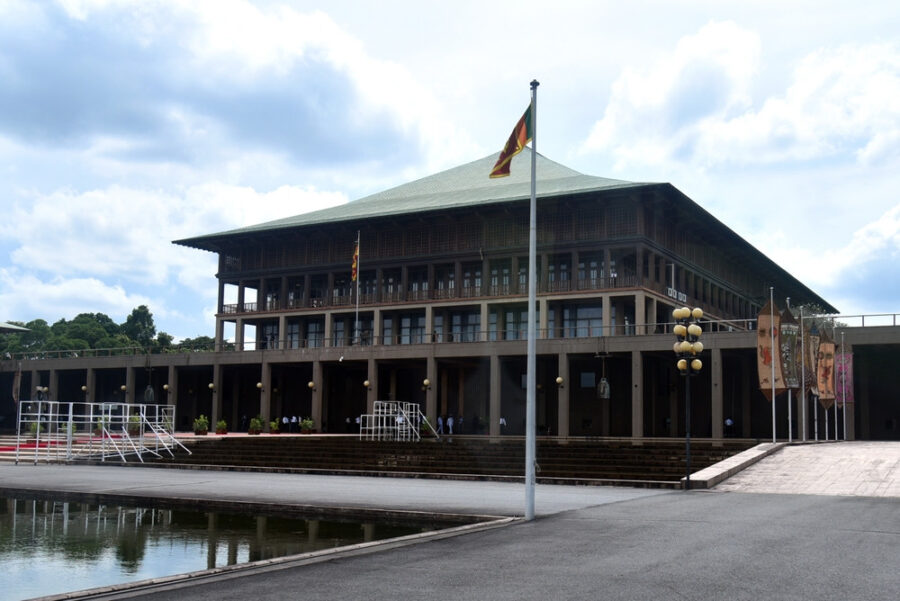
Harsha de Silva, a Sri Lankan Member of Parliament and Chairman of the Parliamentary Committee on Public Finance, has questioned officials about the sudden rise in igaming platforms and directed that a regulator be established.
Speaking during a parliamentary session on Tuesday, de Silva raised concerns about the sudden rise in gambling platforms and advertisements and asked government officials how they were able to operate in the country without a license or regulatory oversight.

He added that these platforms also were being openly advertised during cricket matches and that some were even using the Sri Lankan government logo in promotions despite holding no license.
“Using the government’s logo they are telecasting online casinos for every ball in cricket matches. If no license has been issued, then rewind and watch the last overs; you will see advertisements stating ‘licensed’ with the Sri Lanka logo. How is this happening? Who is approving this?” de Silva asked during the session.
De Silva said that there is a “massive legal blind spot” with the lack of regulation surrounding gambling platforms and added that billions of potential revenue were being lost to unlicensed operators.

He concluded the session by asking officials to explain how licenses were being issued to these operators and how advertisements could air without checks.
This month, Sri Lanka and China expanded joint law enforcement efforts to crack down on cross-border igaming operations.
Charlotte Capewell brings her passion for storytelling and expertise in writing, researching, and the gambling industry to every article she writes. Her specialties include the US gambling industry, regulator legislation, igaming, and more.

Dig Deeper
Related stories
 2026/07/20: Sri Lanka authorities unsure how to enforce igaming regulation, new rules still under debate
 2026/06/08: China and Sri Lanka expand cooperation against igaming
 2025/10/22: Sri Lanka to establish Gambling Regulatory Authority by June 2026
2025/09/19: Sri Lankan cabinet backs gambling tax amendments
2025/10/22: Sri Lanka to establish Gambling Regulatory Authority by June 2026
2025/09/19: Sri Lankan cabinet backs gambling tax amendments
2026/07/20: Sri Lanka authorities unsure how to enforce igaming regulation, new rules still under debate
2026/06/08: China and Sri Lanka expand cooperation against igaming
2025/10/22: Sri Lanka to establish Gambling Regulatory Authority by June 2026
2025/09/19: Sri Lankan cabinet backs gambling tax amendments
The Backstory
Regulatory gap moves to the center of the debate
Sri Lanka’s renewed scrutiny of unlicensed igaming platforms reflects a problem that has been building faster than the country’s laws and enforcement systems. Online betting brands have become more visible to local consumers, including through sports advertising, while officials have struggled to explain who is authorizing activity that appears to sit outside the existing licensing framework.
The latest questions from Harsha de Silva, chairman of the Parliamentary Committee on Public Finance, fit into a broader push by lawmakers to bring online gambling under a national regulator. The committee has repeatedly warned that the absence of a dedicated oversight body is creating financial, consumer protection and law enforcement risks. Those concerns have sharpened as online gambling shifts across borders, making it harder for tax authorities and police to identify operators, revenue flows and customer safeguards.
The issue is not limited to whether companies can advertise or accept bets. For Sri Lanka, the stakes include lost public revenue, anti-money laundering controls, possible targeting of local consumers by offshore firms and the credibility of sports sponsorship and media advertising. The country is now trying to build a regulatory system while unlicensed platforms already appear to have gained market visibility.
Legislation followed years of pressure over online betting
The immediate policy backdrop is the government’s move toward a single gambling regulator. Lawmakers advanced that process when the Cabinet of Ministers approved publication of a draft bill to create a gambling regulatory authority, a step described as bringing the country closer to an online gambling authority. The proposed Gambling Sports Regularization Act would cover offshore and onshore operators, online gambling platforms, offshore casinos, ships and activity connected to Colombo Port City.
That draft followed a February Cabinet decision to prepare legislation after repeated calls from the Committee on Public Finance. Officials framed the bill as a response to the rapid expansion of an industry operating largely without rules tailored to digital betting. The proposed authority would act as the sole national regulator, with a mandate to supervise licensing, compliance, revenue collection and measures intended to reduce social harms.
The causality is clear: as online gambling expanded outside the reach of older betting laws, the government faced pressure to create a specialist agency. The absence of such an agency left responsibilities divided among tax authorities, police, financial intelligence officials and other arms of government. That fragmentation made it difficult to answer basic questions about who was licensed, where platforms were based and whether they were paying taxes.
For operators, a formal authority could define a legal path into the market. For unlicensed platforms, it could create enforcement exposure. For the state, the legislation is an attempt to convert a grey market into a taxable and monitored industry before it becomes more entrenched.
June 2026 target set the clock ticking
The government’s own timeline has added urgency. Sri Lanka has said it expects to establish the Gambling Regulatory Authority and make it fully operational by June 20, 2026. De Silva previously said the timetable followed recommendations from the Committee on Public Finance to the Treasury and Inland Revenue Department, with the committee urging faster action in line with Financial Action Task Force standards on anti-money laundering and counter-terrorism financing.
That timeline was outlined in a report that said Sri Lanka plans to establish the Gambling Regulatory Authority by June 2026. The authority is expected to have a seven-member board, including representatives from the Treasury, Inland Revenue, the Financial Intelligence Unit and police, along with three ministerial appointees. Once the board is constituted, the law’s commencement date can be published and the regulator can begin work.
Officials have identified online gambling as one of the largest gaps in the current framework. Estimates cited by policymakers suggest 60% to 70% of gaming activity may take place on foreign websites. That means large portions of the market may be outside domestic licensing, tax collection, age checks, consumer dispute systems and suspicious transaction monitoring.
The regulatory design is also being shaped by outside models. The Treasury has sought international consultancy support, including looking at Singapore’s approach. That reflects the complexity of regulating a digital industry that can be licensed in one jurisdiction, marketed in another and accessed by consumers through mobile devices, payment intermediaries and social media advertising.
Cross-border crime concerns widened the issue
Law enforcement pressure has been rising alongside the legislative process. China and Sri Lanka recently expanded cooperation against cross-border igaming, with the Chinese Embassy in Colombo saying the two countries were targeting illegal gambling operations and fraud networks that had moved to Sri Lanka from other parts of Southeast Asia. The Embassy linked those networks to wider criminal activity, including human trafficking and fraud.
The cooperation, described in a report on how China and Sri Lanka expanded efforts against igaming, shows why the issue has moved beyond revenue leakage. Under Chinese law, citizens are barred from operating foreign casinos, investing in them or being targeted by overseas casino operators. China also has tightened criminal laws covering gambling on overseas sites.
Sri Lankan authorities have conducted raids in recent months, breaking up gambling operations and arresting suspects from multiple countries. Some Chinese nationals accused of fraud-related offenses have been transferred to Chinese authorities. The Embassy praised cooperation from Sri Lanka’s foreign affairs, finance and public security agencies, as well as immigration and police officials.
These developments matter for the domestic regulatory debate because they show how unlicensed gambling platforms can overlap with fraud, illegal labor movement and offshore criminal networks. A regulator alone cannot solve those problems, but a licensing system can help authorities distinguish approved operators from illegal ones, establish reporting duties and coordinate with financial intelligence and police agencies.
Advertising and legitimacy are the next pressure points
The most politically sensitive question now is how unlicensed platforms are presenting themselves to consumers. De Silva’s concerns about gambling promotions during cricket matches and the alleged use of Sri Lankan government branding point to a risk common in unregulated markets: operators may gain public legitimacy before regulators can verify their legal status.
Sports advertising can accelerate that effect. Cricket reaches a mass audience in Sri Lanka, and betting promotions around matches can make platforms appear mainstream. If consumers see claims of licensing or government approval without an actual license behind them, the result can be confusion over legal protections, responsible gambling tools and recourse if funds are withheld.
Other jurisdictions have treated similar issues as core enforcement priorities. In the U.S., the Michigan Gaming Control Board has pursued offshore operators and emerging betting-adjacent platforms, warning that unlicensed companies undermine consumer protection and state revenue. The regulator recently said it would investigate unlicensed prediction markets, arguing that sports contracts framed as investment products could confuse consumers and bypass betting safeguards.
Michigan also has issued cease-and-desist orders to offshore casino sites, including a recent action in which the regulator targeted six unlicensed operators. While Sri Lanka’s legal and market context is different, the enforcement logic is similar: regulators seek to protect licensed channels, preserve tax revenue and ensure age checks, know-your-customer rules, anti-money laundering controls and responsible gambling measures are not optional.
A test of enforcement before the regulator opens
Sri Lanka is therefore in a transitional phase. The policy direction is toward a national gambling regulator, but the market is already active and highly visible. That creates a sequencing problem for officials: they must prepare the legal architecture while responding to current advertising, consumer exposure and possible illegal operations.
The June 2026 deadline gives the government a target, but it also raises expectations. If platforms can continue operating or advertising without clear authorization before the regulator is fully operational, lawmakers are likely to keep pressing ministries and enforcement agencies for interim action. That may include closer scrutiny of broadcasters, payment providers, sponsors and any company claiming official approval.
The broader stakes are fiscal and institutional. Sri Lanka is seeking to capture revenue from a digital gambling market that has grown beyond older law, while also meeting international standards on financial crime controls. The government’s ability to answer basic licensing questions will determine whether the new authority starts as a credible regulator or inherits a market already shaped by unlicensed operators.
For now, the backstory is one of a grey market forcing the state to catch up. The current parliamentary scrutiny is not an isolated exchange; it is the result of years of delayed regulation, rising online gambling activity, cross-border enforcement concerns and growing discomfort over betting brands presenting themselves as legitimate before the law has clearly said who is allowed to operate.
