


China and Sri Lanka expand cooperation against igaming

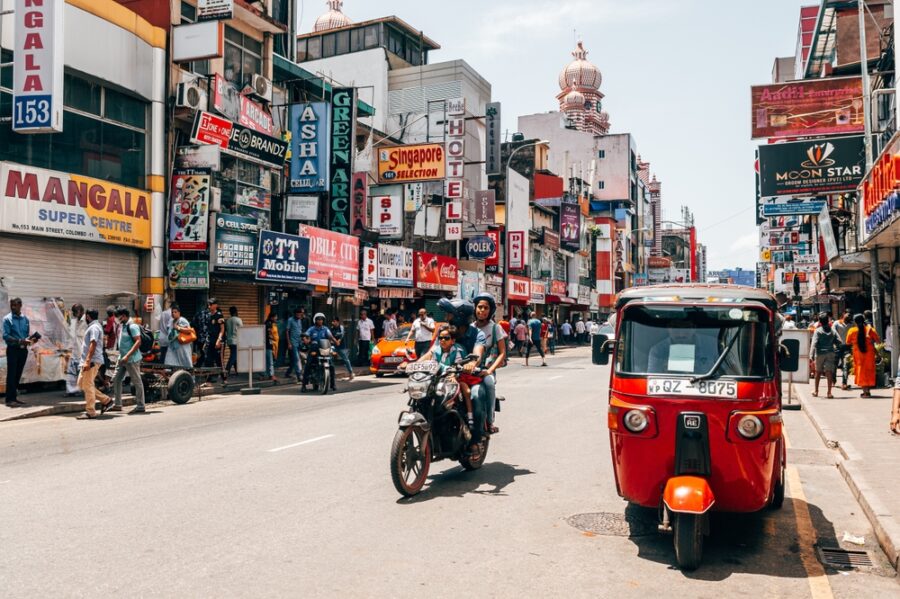
China and Sri Lanka have stepped up joint law enforcement efforts to combat cross-border igaming, according to the Chinese Embassy in Colombo.
The Embassy said authorities in both countries are working together to target illegal gambling operations and fraud networks that have reportedly moved to Sri Lanka from other parts of Southeast Asia, noting that they are often linked to human trafficking and other forms of crime.

Under Chinese law, it is illegal to invest in foreign casinos. Citizens are not permitted to operate them, and overseas casinos are barred from targeting Chinese nationals. The Embassy also highlighted recent changes to China’s Criminal Law that criminalize gambling on overseas sites.
Sri Lankan authorities have conducted a series of raids in recent months, breaking up gambling operations and arresting suspects from multiple countries. According to the Embassy, several Chinese nationals accused of fraud-related offenses have been transferred to Chinese authorities.
The Embassy also praised cooperation from Sri Lanka’s Foreign Affairs, Finance, and Public Security ministries, as well as immigration and police officials. It said continued action was necessary to prevent illegal gambling and fraud from affecting public security and social stability.

China also has taken part in similar cooperation with several countries, including Spain, the United Arab Emirates, Myanmar, and Cambodia. The Embassy said it would continue building security cooperation with Sri Lanka as part of broader efforts to combat international crime.
Last year, Sri Lanka announced that it would establish its new Gambling Regulatory Authority by this June.

Verticals:
Sectors:
Dig Deeper
Related stories
 2026/06/19: Sri Lanka MP raises questions over rise of unlicensed igaming platforms
 2026/07/20: Sri Lanka authorities unsure how to enforce igaming regulation, new rules still under debate
 2026/06/18: Member of Chen Zhi-linked illegal gambling network extradited from Cambodia to China
 2025/10/22: Sri Lanka to establish Gambling Regulatory Authority by June 2026
2026/06/19: Sri Lanka MP raises questions over rise of unlicensed igaming platforms
2026/07/20: Sri Lanka authorities unsure how to enforce igaming regulation, new rules still under debate
2026/06/18: Member of Chen Zhi-linked illegal gambling network extradited from Cambodia to China
2025/10/22: Sri Lanka to establish Gambling Regulatory Authority by June 2026
The Backstory
China’s pressure campaign reaches Sri Lanka
China’s expanded law enforcement cooperation with Sri Lanka reflects a broader effort to shut down illegal online gambling and fraud networks that have shifted across Asia as enforcement has tightened elsewhere. Beijing has long treated offshore gambling aimed at its citizens as a public security issue, tying it to capital flight, telecom fraud, money laundering and human trafficking. Its latest cooperation with Colombo places Sri Lanka inside that regional enforcement map.
The Chinese position is straightforward: citizens are barred from operating overseas casinos, investing in foreign gambling businesses or being targeted by offshore gambling sites. Recent changes to China’s Criminal Law have added penalties for gambling on overseas platforms, giving authorities a stronger basis to pursue operators and customers beyond China’s borders. That legal framework has made overseas cooperation central to enforcement, because many illegal operators are physically located outside China while serving Chinese-language markets.
Sri Lanka has become more relevant because authorities there have reported raids involving foreign nationals and alleged online gambling or fraud operations. The Chinese Embassy in Colombo has said some suspects accused of fraud-related offenses have been transferred to Chinese authorities. That marks a shift from domestic policing to cross-border criminal enforcement, with immigration, police, foreign affairs and finance officials all pulled into the response.
A regulatory vacuum created the opening
Sri Lanka’s enforcement push is unfolding while the country tries to build a formal gambling regulator. The government has acknowledged that online gambling has grown faster than its oversight system, especially where activity is hosted abroad or routed through foreign websites. Officials have estimated that 60% to 70% of gaming activity occurs on foreign platforms, leaving tax collection, consumer protection and anti-money laundering controls weak.
That gap prompted lawmakers to move toward a new national authority. In a major procedural step, the Cabinet approved publication of a draft bill to create a gambling regulator, bringing Sri Lanka one step closer to an online gambling authority. The proposed body would oversee offshore and onshore operators, online gambling platforms, offshore casinos, gambling on ships and activity linked to Colombo Port City. It also would become the sole national regulator for a sector that has operated across multiple legal gray zones.
The push has been driven partly by fiscal concerns. Sri Lanka’s Committee on Public Finance has repeatedly warned that unregulated gambling deprives the government of revenue. But the enforcement rationale has grown more prominent as illegal betting operations have become associated with fraud compounds, trafficking and other organized crime. The same legal vacuum that reduces tax intake can make it easier for operators to move people, money and technology through loosely supervised channels.
June 2026 target adds urgency
The timetable for formal oversight remains a key constraint. Sri Lanka’s Gambling Regulatory Authority is expected to be established and operational by June 20, 2026, under a timeline outlined after recommendations from the Committee on Public Finance to the Treasury and Inland Revenue Department. The plan to have the Gambling Regulatory Authority operating by June 2026 gives the government a target, but it also leaves a period in which police-led action must do much of the work.
Officials have said detailed rules are still needed to define licensing conditions, penalties, enforcement powers and safeguards for consumers. The authority’s structure is expected to include representatives from the Treasury, Inland Revenue Department, Financial Intelligence Unit and police, along with ministerial appointees. That design shows how Sri Lanka views gambling not only as a commercial activity but also as a financial-crime and public security risk.
The Financial Action Task Force angle is important. Sri Lankan officials have linked the regulator’s development to anti-money laundering and counter-terrorism financing standards. That places gambling oversight inside a broader financial integrity agenda, particularly as offshore websites and informal payment channels can complicate tracing of funds. If Colombo wants to attract legitimate gaming investment while avoiding the reputational costs seen in other markets, it will need licensing rules that separate regulated gambling from criminal infrastructure.
China’s cooperation may therefore serve two purposes for Sri Lanka. In the short term, it supports raids, deportations or transfers of suspects and disruption of illegal operations. In the longer term, it underscores the need for a regulator capable of monitoring cross-border digital gambling before criminal networks settle into gaps between agencies.
The Philippines became the warning case
The regional context is shaped heavily by the Philippines, where offshore gaming operators once formed a major industry but became politically untenable after years of links to scam hubs, money laundering, drugs and human trafficking. Philippine Offshore Gaming Operators, known as POGOs, expanded after their launch under former President Rodrigo Duterte in 2016. By 2024, the sector had become a symbol of how licensed or semi-licensed offshore gambling can overlap with organized crime.
President Ferdinand Marcos Jr. banned POGOs after a series of criminal investigations and public scandals. Inside Asian Gaming reported that Marcos banned all POGOs with immediate effect in July 2024, ordering existing operators to wind down by the start of 2025. The ban did not end the problem. Inside Asian Gaming later reported that 47 POGOs were still operating as the shutdown deadline approached.
The post-ban phase has been as important as the ban itself. Manila has since introduced new standard operating procedures to coordinate agencies enforcing the ban, moving from simple closures to asset preservation, evidence handling, prosecution, corporate intelligence and victim protection. The Philippines’ decision to strengthen inter-agency cooperation against POGOs reflects a lesson now relevant to Sri Lanka: illegal online gambling businesses can reappear under new names, fronts and corporate structures unless enforcement follows the money and protects witnesses.
Criminal networks move faster than regulators
The alleged movement of gambling and fraud networks from Southeast Asia to Sri Lanka fits a wider displacement pattern. When one jurisdiction cracks down, operators look for markets with weaker rules, limited enforcement capacity or unclear licensing laws. That does not always mean they move as traditional gambling companies. Increasingly, authorities describe hybrid operations that combine online betting, scam centers, illegal lending, crypto payments and trafficking of workers who may be coerced or deceived.
Philippine Sen. Risa Hontiveros has argued that the region needs a coordinated response, saying illegal POGO-style operations are part of a transnational criminal web. Her renewed push for an Anti-POGO Act and regional cooperation against illegal online gaming reflects concern that deportation or domestic closures alone may simply move the problem to neighboring countries. She has also urged governments to distinguish trafficked workers from criminal organizers, a distinction that matters as raids in multiple countries have found foreign workers inside scam or gambling compounds.
That framing helps explain China’s emphasis on Sri Lankan cooperation. Beijing’s priority is not only to block gambling access for Chinese citizens but also to dismantle the networks that target them through fraud and illicit betting. Sri Lanka’s priority is to prevent becoming a substitute hub as pressure rises in the Philippines, Myanmar, Cambodia and elsewhere. Both governments have an incentive to act before illegal operators can establish deeper financial, immigration and corporate roots.
What is at stake for Colombo
For Sri Lanka, the challenge is balancing enforcement, revenue and investment credibility. A formal regulator could help the government tax legal activity and set standards for operators. But if the regulatory system arrives after criminal networks have expanded, Colombo may face the same problem seen elsewhere: a gambling sector viewed less as an entertainment market than as an entry point for organized crime.
The stakes extend beyond gambling policy. Weak oversight can expose banks, payment firms, property markets and company registries to illicit finance. It can also strain relations with countries whose citizens are recruited, trafficked or targeted by gambling-linked fraud. China’s involvement raises the diplomatic profile of the issue, but the underlying risk is regional. Digital gambling businesses can be incorporated in one country, host servers in another, recruit workers from several more and target customers globally.
That is why the Sri Lankan regulator’s design will matter. Licensing rules, beneficial ownership checks, reporting requirements, payment controls and coordination with police and financial intelligence officials will determine whether the country can allow legitimate gambling activity without attracting the operators now being pushed out of other jurisdictions. Until then, joint enforcement with China is likely to remain a stopgap, aimed at disruption while Sri Lanka builds the machinery to regulate a market that has already outpaced the law.
