


US adults opposed to betting on election outcomes on prediction markets: poll

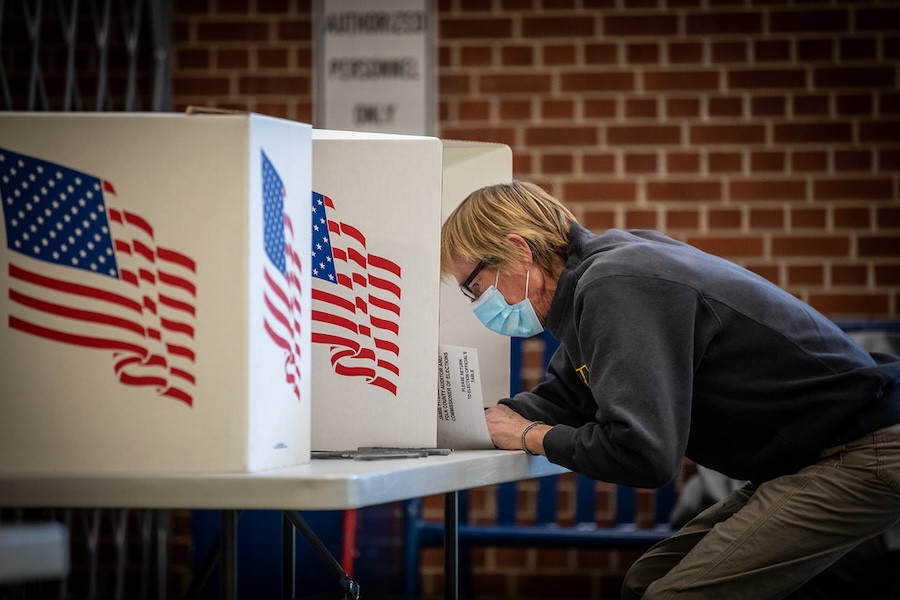
United States adults are largely opposed to betting on election outcomes on prediction markets, with the majority of one poll’s respondents saying they would not consider placing wagers on prediction markets at all.
A new poll from POLITICO found that 44% of adults believe that betting on election outcomes should be unlawful, with a similar percentage of respondents showing concern over wagers on statements by presidents and public figures, and on decisions on presidential pardons.

The survey, conducted in partnership with UK-based polling firm Public First, found that, while adults are largely averse to prediction markets, 12% of respondents in the 18-24 and 25-34 age brackets had placed bets on prediction markets. This compares to 6% of respondents overall.
Approximately 30% of 18- to 24-year-olds indicated they would consider placing bets on prediction markets, compared to 17% overall.
Almost US$700 million has been traded on markets linked to the 2028 US presidential election across Kalshi and Polymarket’s international platforms so far.

Prediction markets have faced regulatory challenges, despite a 2024 federal court ruling that enabled expanded election contracts, after previous resistance from the Commodity Futures Trading Commission.
Since then, political markets have expanded, with Bloomberg analysts predicting that political contracts could reach US$266 billion in trading volume by 2030.
Prediction market platforms, like Kalshi and Polymarket, allow users to trade contracts tied to the outcomes of future events. While sports account for the majority of trading activity, political contracts have expanded to include elections, government appointments and more.

Dig Deeper
Related stories
 2026/05/28: US poll finds sports betting supporters in the minority
 2026/04/01: Advocacy group claims Americans view sports prediction markets as gambling
 2026/03/17: Few prediction market users are 50 or older, Truist analyst says
 2025/01/23: Prediction market Kalshi launches event contracts on sports
2026/05/28: US poll finds sports betting supporters in the minority
2026/04/01: Advocacy group claims Americans view sports prediction markets as gambling
2026/03/17: Few prediction market users are 50 or older, Truist analyst says
2025/01/23: Prediction market Kalshi launches event contracts on sports
The Backstory
Election contracts move from legal fight to public test
The poll showing broad discomfort with election betting lands after prediction markets moved from a niche financial product into a national gambling and politics dispute. Platforms such as Kalshi and Polymarket have framed event contracts as federally regulated derivatives that let users trade on the likelihood of real-world outcomes. Critics, including state gambling regulators and gaming industry groups, say the same products often function like bets, with weaker consumer protections and little state oversight.
That tension has sharpened around elections. Political contracts were once constrained by resistance from the Commodity Futures Trading Commission, which had argued that some election markets raised public interest concerns. But a 2024 federal court ruling in Kalshi’s favor opened the door to expanded political contracts in the United States, changing the commercial and regulatory stakes. The CFTC later dropped its appeal against Kalshi over election betting, leaving the lower-court victory intact and giving prediction platforms a clearer path to list contracts tied to political outcomes.
The decision did not settle the broader debate. It instead shifted the battlefield. Once election contracts gained legal oxygen, political markets grew more visible and more controversial. The latest polling suggests that legal permission and public acceptance are not the same thing. Adults may understand that these contracts are offered through federally regulated platforms, but many still view wagering on elections, presidential statements and pardons as too close to gambling on civic institutions.
Kalshi’s court win changed the leverage
Kalshi’s clash with the CFTC became the central precedent for the current market. The company argued that its contracts fell within the Commodity Exchange Act and should be regulated as event-based derivatives. The CFTC had sought to block certain political contracts, citing concerns that election markets could be contrary to the public interest. When a federal district court judge sided with Kalshi, the ruling gave prediction market operators a powerful argument: if they are federally regulated exchanges, states and other regulators have limited room to stop them.
The CFTC’s decision to abandon its appeal was significant because it reduced the likelihood of a near-term appellate ruling that could have narrowed or reversed the decision. Kalshi hailed the outcome as a validation of its approach. Financial reform advocates took the opposite view, warning that the regulator had allowed gambling on elections to proceed under the language of financial innovation.
That regulatory pullback helped fuel expansion beyond elections. Prediction platforms began drawing more activity from sports, entertainment and other event categories. The structure is simple: users buy or sell contracts that pay out depending on whether an event happens. The legal classification, however, is much more consequential. If the product is a swap or derivative, federal law and the CFTC are central. If it is a wager, state gambling law, licensing rules, taxes and responsible gambling requirements come into play.
Sports contracts turned a niche dispute into a state fight
The public debate over election betting is now intertwined with the faster-growing fight over sports event contracts. Sports have generated much of the trading volume that brought prediction markets to the attention of state regulators, tribes, commercial casinos and lawmakers. A bipartisan Senate proposal introduced by Sens. Adam Schiff and John Curtis would prohibit federally regulated prediction platforms from offering sports betting and casino-style markets. The bill would amend the Commodity Exchange Act to bar CFTC-registered entities from listing contracts tied to sporting events, athletic competitions, poker, blackjack and similar games.
The legislation reflects a growing view among gambling regulators that the difference between a sports event contract and a sportsbook wager may be formal rather than substantive. Schiff pointed to large trading volumes around March Madness and the Super Bowl as evidence that these markets had moved well beyond experimental finance. His argument also raised issues that states and tribes have stressed for months: prediction markets can operate nationwide without the licensing, tax and consumer protection systems that govern legal sports betting.
The CFTC has not ignored the risks. It issued guidance to prediction markets on sports event contracts, warning designated contract markets to assess products vulnerable to manipulation. The agency singled out contracts based on the actions or performance of a single athlete, which resemble prop bets and may be easier for one person to influence. That advisory showed the CFTC trying to build guardrails without conceding that states should control the products.
States have pressed harder. Some gambling regulators have taken legal action against prediction platforms, arguing that contracts offered by Kalshi, Robinhood and others amount to illegal sports betting. An Ohio judge ruled that Kalshi’s sports event contracts fell under state gambling laws, while Arizona moved to press criminal charges. Those cases matter for election markets because they test the same jurisdictional question: whether a federally regulated exchange can avoid state gambling restrictions by labeling a wager as a contract.
States and casinos see lost control and lost revenue
The gaming industry’s opposition has centered on both consumer protection and money. The American Gaming Association has said states have lost more than $1 billion in tax revenue because prediction markets operate outside the framework applied to licensed sportsbooks. In comments covered in the association’s claim that prediction markets have cost states $1 billion in tax revenue, AGA President and CEO Bill Miller described the products as backdoor sports betting and said the lost revenue would otherwise support community services.
That argument has resonance because legal sports betting in the U.S. was built state by state after the Supreme Court struck down the federal ban in 2018. States decided whether to legalize wagering, how to tax it, who could operate and what responsible gambling controls were required. Tribes also negotiated compacts and market access under sovereign frameworks. Prediction markets threaten that architecture if they can offer sports-style products in all 50 states under federal derivatives law.
The same concern explains why a bipartisan coalition of 36 attorneys general entered litigation involving Kalshi and New Jersey. The attorneys general filed an amicus brief opposing Kalshi in a federal case, arguing that states must retain the ability to protect residents from online gambling harms. New Jersey had lost in federal district court when Kalshi challenged its Division of Gaming Enforcement, but the appeal has become a broader test of state authority.
The coalition’s position is not limited to sports. If courts conclude that state gambling regulators cannot reach event contracts because they are federally regulated derivatives, the ruling could affect political, entertainment and other markets. That is why the latest poll on election betting is politically important. It gives opponents evidence that public skepticism extends beyond sports and into the democratic process itself.
Public skepticism may shape the next regulatory phase
The new polling points to a gap between younger users’ willingness to trade and the broader public’s discomfort. Younger adults reported more experience with prediction markets and more openness to future wagers. That demographic pattern could help platforms argue that event contracts are becoming a mainstream product. But the larger finding — that many adults oppose election betting outright — gives lawmakers and regulators a reason to revisit the rules before political markets become much larger.
Congress is already in the debate through the sports-focused Schiff-Curtis bill. If public concern over election contracts grows, lawmakers could face pressure to go further and clarify which event categories are off-limits for federally regulated exchanges. The CFTC also remains under pressure to define its role. It has tried to encourage innovation while warning against manipulation and seeking public comment on insider information, investor protections and sensitive markets. That balancing act becomes harder when the underlying events are elections, government appointments or acts by public officials.
For prediction market operators, the stakes are commercial and existential. A broad federal clampdown could limit their highest-volume growth categories. A favorable court and regulatory environment could leave them with a nationwide market unavailable to traditional sportsbooks, casinos and state-licensed operators. For states, tribes and the gaming industry, the stakes include tax revenue, licensing power and the credibility of the regulated gambling system.
The poll therefore is not just a snapshot of consumer sentiment. It is part of the evidence base shaping the next phase of the fight. Courts have given prediction markets room to expand, the CFTC has stepped back from a key election appeal and sports contracts have drawn state and congressional backlash. Public opposition to election betting adds a different pressure point: the possibility that markets tied to democratic outcomes may be legal before they are politically durable.
