


US poll finds sports betting supporters in the minority

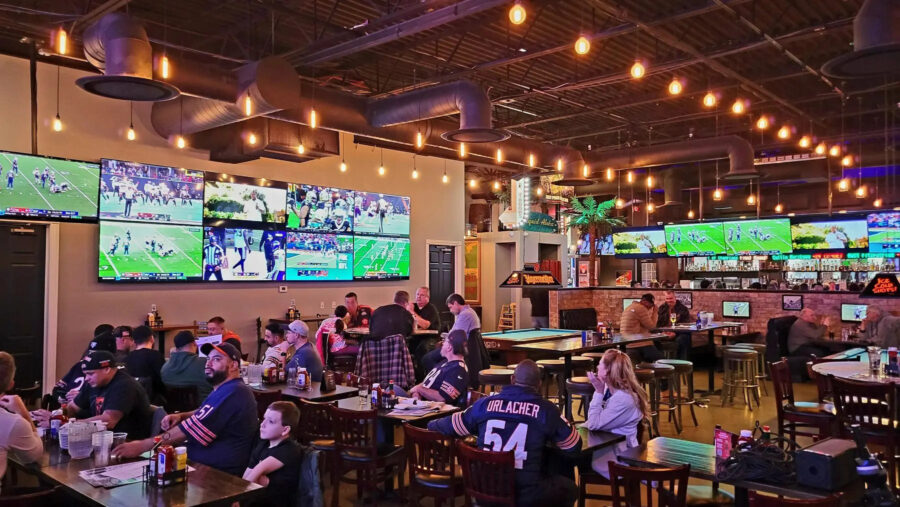
A new poll, exclusively provided to The Center Square, found that more Americans oppose the legalization of sports wagering than support it.
The poll, conducted by public opinion research firm Overton Insights, was conducted between May 16 and 20 and surveyed 1,377 registered voters.

The survey found that 47% of respondents opposed legalized sports wagering, including 32% who said they strongly opposed it and 15% who somewhat opposed it.
Support for legalized sports betting stood at 31%, with 16% strongly supporting it and 15% somewhat supporting it. An additional 22% of respondents said they were unsure or had no opinion.
The poll also found that opposition to sports betting cut across political affiliations.

Among Republicans, 32% supported legalized sports wagering, 36% opposed it, and 32% were undecided. More Democrats and independent voters opposed legalization than supported it.
There were also differences across age groups. In the 45-54 age group, support for legal sports betting was around 53%, but it dropped to 24% in the 30-44 age group.
“Sports betting has become one of the most debated issues at the state level over the past several years, with more and more states legalizing it since the 2018 Supreme Court ruling that opened the door,” said Overton Insights Poll Director Mark Cunningham. “Even with that rapid expansion, voters in our poll remain skeptical.”

Similar polls that looked at states individually also found growing disdain towards sports betting. In Wisconsin, 64% of voters opposed legalized sports betting, while in Massachusetts it was 56%.

Dig Deeper
Related stories
 2026/06/23: US adults opposed to betting on election outcomes on prediction markets: poll
 2026/01/06: National Association Against iGaming claims majority of Maine residents oppose the legalization of igaming
 2026/03/02: Poll finds 64% of Wisconsin voters oppose legalizing online sports betting
 2026/04/01: Advocacy group claims Americans view sports prediction markets as gambling
2026/06/23: US adults opposed to betting on election outcomes on prediction markets: poll
2026/01/06: National Association Against iGaming claims majority of Maine residents oppose the legalization of igaming
2026/03/02: Poll finds 64% of Wisconsin voters oppose legalizing online sports betting
2026/04/01: Advocacy group claims Americans view sports prediction markets as gambling
The Backstory
Expansion meets a more skeptical electorate
The latest national polling on sports betting lands at a moment when the U.S. market is no longer a new experiment but not yet politically settled. Since the Supreme Court in 2018 cleared the way for states to authorize sports wagering, lawmakers have often treated legalization as a revenue question, with consumer demand, tax receipts and competition with illegal bookmakers driving debate. The new survey suggests a different pressure point: Voters may be less enthusiastic than the pace of state expansion implied.
That matters because sports betting has grown through state-by-state political approval, not a single national framework. Legislatures, governors, gaming commissions and tribal authorities have built separate markets with different tax rates, advertising rules, mobile betting access and responsible gambling requirements. Public sentiment can therefore have direct consequences. A skeptical electorate can slow legislation, narrow bills, embolden opponents or push regulators to tighten oversight after markets open.
The poll’s finding that opposition cuts across party lines is especially important. Gambling policy often creates unusual coalitions, combining fiscal conservatives wary of social costs, religious groups, addiction advocates, anti-corporate critics and lawmakers concerned about market concentration. Supporters have usually countered with arguments about regulation, tax revenue and consumer choice. The current political risk for operators is that those arguments may be losing force as sports betting becomes more visible in broadcasts, advertising, social media and daily fan culture.
State polling has already signaled resistance
National sentiment mirrors several state-level surveys that have complicated the industry’s growth narrative. In Wisconsin, a Marquette University poll found that nearly two-thirds of registered voters opposed legalizing online sports betting, according to Complete iGaming’s report on Wisconsin voter opposition. The resistance was broad: Republicans, Democrats and independents all opposed legalization by wide margins, and opposition was particularly high among frequent religious-service attendees.
That Wisconsin result was not just academic. Legislative momentum slowed after lawmakers reported a surge of constituent emails urging them to reject the proposal. Although the bill passed the Assembly in February, its Senate path remained uncertain, showing how public pressure can affect the timing and viability of gambling expansion. Wisconsin also has a distinctive market structure because sports wagering has been tied to tribal gaming agreements, adding a further layer of political sensitivity over who benefits from legalization.
New York offers a different lesson. The state is one of the largest regulated online sports betting markets in the country, yet public opinion remains mixed. A Siena Research Institute survey found residents nearly split between those who view online sports betting as a regulated and taxed form of entertainment and those who see it as a source of problem gambling, financial hardship and integrity risks. The findings, detailed in Complete iGaming’s report on divided New York attitudes, show that even in mature, high-revenue markets, legalization does not end public debate.
From tax revenue to social costs
The political center of the sports betting debate has shifted as markets have matured. Early legalization campaigns emphasized recapturing illegal wagering, creating consumer protections and generating tax revenue without broad-based tax increases. Those arguments helped bills pass in many states, especially as lawmakers sought new revenue after the pandemic. But widespread advertising, easy mobile access and the normalization of in-game betting have made the consumer-protection side of the ledger more prominent.
Opponents increasingly frame sports betting as a public-health and household-finance issue. Concerns include gambling addiction, debt, exposure among young adults and the effect of betting promotion on sports fans who did not previously gamble. Those themes are evident in the New York poll, where concerns about problem gambling and game integrity nearly matched support for taxation and regulation. They were also central in Wisconsin, where lawmakers cited addiction risks and social costs when resisting market expansion.
International data has added to those concerns. In Brazil, where the legal fixed-odds betting market launched this year after legalization in 2018, a PoderData survey found 36% of people over 16 had placed sports bets in the past year. Complete iGaming reported that the figure represented a sharp increase from 24% in the prior survey and that betting-related debt had more than doubled. The findings in Brazil’s rapidly expanding sports betting market underscore why regulators often pair legalization with self-exclusion systems, advertising oversight and restrictions on vulnerable groups.
For U.S. policymakers, Brazil’s experience is a cautionary example of how quickly participation can scale once online betting becomes accessible. It also demonstrates the political trade-off behind legalization: A regulated market can provide oversight and tools that an illegal market lacks, but it can also broaden participation and increase visible harm if safeguards lag behind growth.
Adjacent products add to regulatory unease
Sports betting is also being judged in a wider context of online wagering products that blur traditional regulatory categories. Daily fantasy sports, sweepstakes casinos and prediction markets have each raised questions about whether existing laws are keeping pace with digital gambling behavior. That broader environment can shape voter attitudes toward sports betting, even when the legal definitions differ.
Prediction markets are a recent flashpoint. Delaware County, Pennsylvania, barred poll workers from using prediction market platforms for election-related contracts, a move aimed at avoiding any perception that election workers could have a financial stake in outcomes. As Complete iGaming reported on Delaware County’s prediction market restrictions, officials cited public confidence and concerns about election integrity. Although platforms such as Kalshi operate under federal commodities oversight, several states have explored limits on event-contract markets.
The concern is not identical to sports betting, but the political logic overlaps. Regulators are asking when financialized event prediction becomes gambling, who should oversee it and whether sensitive public institutions can be compromised by wagering-like incentives. For sports betting operators, the risk is reputational spillover: Public anxiety about betting on elections, court cases or other real-world outcomes can reinforce skepticism toward wagering generally.
Sweepstakes casinos have produced another regulatory test. Virtual Gaming Worlds, the operator behind brands including Chumba Casino, LuckyLand Slots and Global Poker, has faced mounting U.S. scrutiny as states question whether sweepstakes models allow companies to operate casino-style products outside traditional gambling rules. In its report on VGW founder Laurence Escalante’s proposed buyout of minority shareholders, Complete iGaming noted that Montana banned sweepstakes casinos, Delaware issued a cease-and-desist order and VGW exited some states including New York.
Industry stakes now extend beyond legalization
For sportsbook operators, the new polling environment raises questions beyond whether more states will legalize. The larger issue is whether existing markets will become more restrictive. Legislators and regulators could consider limits on advertising, promotional credits, celebrity endorsements, campus marketing, credit-card funding, in-game wager design or the treatment of customers showing signs of harm. Even without repeal, tighter rules could raise compliance costs and slow customer acquisition.
The politics are particularly challenging because the industry has already harvested many of the easiest wins. States with strong casino industries, fiscal incentives or competitive pressure from neighboring jurisdictions moved first. Remaining states may be harder to persuade, either because of constitutional barriers, tribal compact issues, religious opposition or voters who have watched the market develop elsewhere and formed negative views. The national poll’s large undecided share also leaves room for persuasion, but it gives both sides a target.
For lawmakers, the survey reinforces that legalization is no longer just a budget item. It is a consumer-protection decision with electoral implications. Supporters will need to show that regulated sports betting can reduce illegal activity, fund public priorities and protect vulnerable users. Opponents will use evidence from state polls, debt data and adjacent market controversies to argue that expansion imposes costs that tax revenue cannot offset.
The immediate takeaway is not that sports betting’s U.S. expansion is reversing. The market remains large, politically entrenched in many states and popular among core sports fans. But the balance of risk has changed. Public skepticism, once a barrier mainly in states without legal wagering, is becoming a continuing constraint on how the industry operates after legalization. That makes voter sentiment a regulatory force in its own right.
