


American Gaming Association CEO claims US$1 billion in tax revenue lost to prediction markets

The American Gaming Association says estimates show that US states have lost out on more than US$1 billion in tax revenue because of the rise of prediction markets.
Speaking on CNBC’s Squawk Box on Thursday, American Gaming Association President and CEO Bill Miller shared the results, adding that the loss of additional tax revenue would have consequences for communities in states that use that money to enhance services.

“It’s about states and tribes that are losing literally a billion dollars today in state and tribal revenue that would otherwise go to fund important community projects,” he told CNBC.
Miller went on to say that prediction markets are simply “backdoor sports betting” with the only difference being that they don’t fall under the same state regulations as regular sportsbook operators.
Some states agree with Miller’s assertion, arguing that platforms like Kalshi and Polymarket amount to illegal betting and should be regulated at the state level rather than federally.

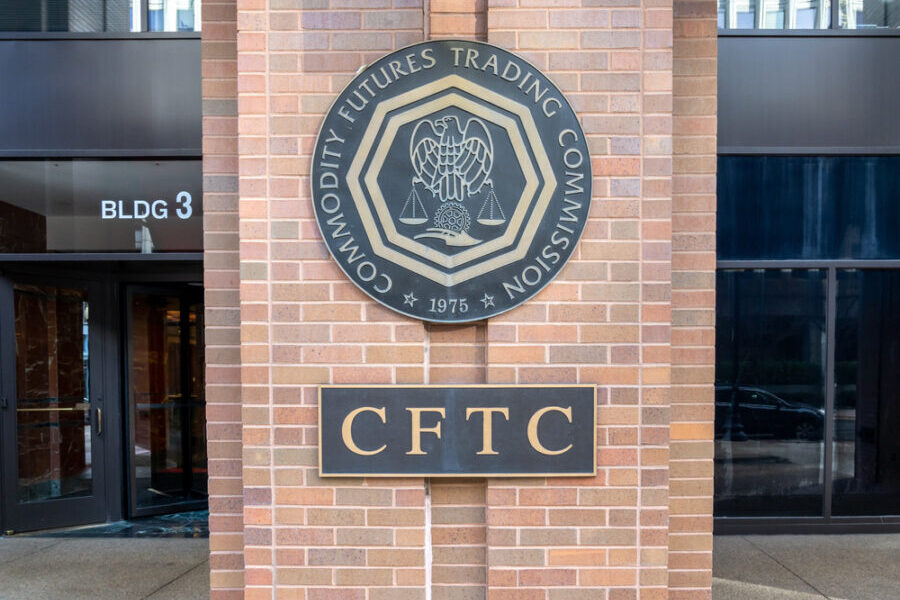
The Commodity Futures Trading Commission has maintained that it has the right to regulate prediction markets, as swaps and derivatives fall under its jurisdiction.
“We also believe that the CFTC has an important role to play in the financial space in and around commodities, precious metals, and other things,” Miller continued. “Where we differ strongly is the belief that the CFTC is enabling these prediction markets to operate national sportsbooks with very little to no regulatory oversight.”
This week, President Donald Trump also has joined the fray, posting to social media that prediction markets should be regulated by the CFTC.
Charlotte Capewell brings her passion for storytelling and expertise in writing, researching, and the gambling industry to every article she writes. Her specialties include the US gambling industry, regulator legislation, igaming, and more.

Dig Deeper
Related stories
 2025/11/25: What does the future hold for prediction markets after big players break from AGA?
 2026/06/24: CFTC sues Kentucky for trying to block prediction markets
 2026/06/29: US Democrats try to block CFTC funding supporting prediction market cases
 2025/05/31: Prediction markets are gaming’s next big shortcut to 50-state access
2025/11/25: What does the future hold for prediction markets after big players break from AGA?
2026/06/24: CFTC sues Kentucky for trying to block prediction markets
2026/06/29: US Democrats try to block CFTC funding supporting prediction market cases
2025/05/31: Prediction markets are gaming’s next big shortcut to 50-state access
The Backstory
A tax argument becomes the industry’s sharpest weapon
The American Gaming Association’s claim that states have lost more than $1 billion in tax revenue to prediction markets marks a new phase in a dispute that has moved quickly from a legal gray area to a national fight over gambling policy, federal authority and the economic compact behind regulated sports betting.
The number is designed to do more than quantify a fiscal gap. It reframes prediction markets as a public-finance issue for governors, legislatures, tribes and local communities that depend on gaming taxes for schools, infrastructure, public safety and treatment programs. By putting a dollar figure on the growth of event contracts tied to sports and other outcomes, the AGA is arguing that platforms such as Kalshi and Polymarket are not merely competing with sportsbooks. They are, in the industry’s view, bypassing the system states built after the Supreme Court opened the door to legal sports betting in 2018.
That strategy mirrors the association’s broader campaign against unregulated gambling. In prior research, the AGA said illegal gambling costs U.S. states $15.3 billion in annual tax revenue, with offshore sites, illegal sportsbooks and unregulated machines accounting for nearly one-third of the market. The prediction-market figure is smaller, but it lands in the same political lane: legal operators pay taxes, meet licensing standards and fund responsible-gaming programs, while unregulated or differently regulated rivals capture demand without the same obligations.
From PASPA repeal to a federal-state collision
The roots of the current fight run through the 2018 repeal of the Professional and Amateur Sports Protection Act, which allowed states to decide whether to legalize sports wagering. That state-by-state model produced one of the fastest expansions in U.S. gambling history. It also created a regulatory bargain: sportsbooks could reach consumers legally, but only after clearing state licensing checks, agreeing to tax rates and accepting limits on advertising, market access and responsible-gaming controls.
Prediction markets challenge that bargain because they sit under a different legal architecture. The Commodity Futures Trading Commission has authority over swaps, derivatives and certain event contracts, while state gaming regulators oversee betting. The dispute turns on whether sports-linked contracts are financial instruments or wagers by another name. The AGA’s latest position is that the distinction has become untenable as the products increasingly resemble sportsbook offerings and compete for the same customers.
That concern was already visible at ICE 2026 in Barcelona, where tribal leaders and AGA officials confronted prediction markets as a threat to regulated gaming. AGA Vice President of Government Relations Tres York warned of the “gamblefication of everything,” contrasting the sports-betting industry’s identity as regulated entertainment with prediction-market messaging that frames contracts as financial tools or portfolio products. For gaming operators, that framing matters because it can weaken the consumer-protection assumptions attached to gambling while preserving the economic appeal of betting.
Tribal sovereignty raises the stakes
The issue is especially sensitive for tribal gaming, which is built on sovereignty, compacts and negotiated revenue-sharing arrangements. Tribal governments use casino and sports-betting revenue to fund health care, housing, education and other services. If prediction markets can offer sports-like products nationally through federal oversight, tribes argue that a central pillar of the regulated system is being undercut without consultation or compensation.
Indian Gaming Association leaders have described prediction markets as a violation of tribal, state and federal law, and have urged Congress and federal agencies to intervene. Their objections go beyond lost revenue. They include concerns about know-your-customer standards, source-of-funds checks, crypto-funded activity and the potential for insider trading in markets tied to politics, geopolitics and sports. Those risks, tribal leaders argue, could erode confidence in both financial markets and legal betting if consumers view the products as functionally identical.
The tribal dimension also creates pressure for commercial sportsbook operators. DraftKings, FanDuel and other companies that built large state-licensed sports-betting businesses have explored or pursued prediction-market opportunities. That dual role creates tension with tribal and state partners that view federally regulated event contracts as a competitive end run around local licensing systems. The result is a commercial dilemma: operators want access to national products with lighter state-by-state friction, but their existing businesses depend on relationships with regulators, tribes and lawmakers who see the model as a threat.
Legal betting’s growth strengthens the backlash
The AGA’s opposition to prediction markets comes as regulated sports betting continues to expand in scale and cultural visibility. The association estimated that Americans would legally wager $3.1 billion on March Madness, up 14.8% from the prior year. That kind of growth gives the industry a powerful argument: when consumers have legal options, states can capture revenue and impose rules around age verification, integrity monitoring and responsible gambling.
But growth also makes the market more attractive to competitors operating outside traditional gaming channels. Prediction platforms can move faster than state-licensed sportsbooks because they do not need separate gaming approvals in each jurisdiction if their products remain within the CFTC’s domain. That creates a national distribution advantage that state-regulated operators do not have, particularly in states that have not legalized sports betting or have limited mobile wagering.
The responsible-gaming argument is central to the AGA’s case. Its “Have A Game Plan. Bet Responsibly” campaign encourages bettors to set budgets, understand odds, keep betting social, play legally and stay composed. Those principles also serve a policy purpose: they show lawmakers that regulated sports betting is tied to consumer safeguards. If prediction markets attract the same behavior while avoiding equivalent rules, the AGA can argue that both consumers and state regulatory systems are exposed.
Online gambling politics add pressure
The prediction-market debate is unfolding alongside broader unease over online gambling. States are weighing fiscal benefits against concerns about addiction, underage access and the reach of mobile products. In Maine, an anti-igaming coalition said 64% of residents opposed legalizing igaming, citing worries about minors and the social impact of casino-style gambling on phones. The poll was part of a push to influence Gov. Janet Mills as lawmakers considered online casino legalization.
Those politics matter because prediction markets blur categories at a time when voters and lawmakers are already debating how much gambling should move online. A sports bet placed through a state-licensed app is clearly regulated as gambling. A sports event contract offered through a federally regulated exchange can look similar to consumers but be governed differently. Opponents say that difference creates confusion, weakens state policy choices and makes it harder to enforce age, advertising and problem-gambling standards.
International developments also underscore why operators are moving online to protect revenue. In the Philippines, Bloomberry Resorts said it would launch an online gaming platform to offset revenue pressure after the offshore gaming operator ban, as the country’s regulator projected rapid igaming growth. The move shows how established casino companies increasingly view digital products as essential to their portfolios. In the U.S., that same shift intensifies the fight over which regulator controls emerging online gambling-like products.
What the $1 billion claim is meant to trigger
The AGA’s latest estimate is likely aimed at lawmakers as much as regulators. A tax-loss figure gives state officials a concrete reason to challenge prediction markets, especially in jurisdictions where sports-betting tax receipts have become part of budget planning. It also gives tribal governments a fiscal benchmark for arguing that federal inaction has real consequences for sovereign revenue.
The question now is whether Congress, the CFTC, state regulators or courts will draw a clearer boundary between financial event contracts and gambling. President Donald Trump’s support for CFTC regulation of prediction markets adds another political layer, but it does not resolve the core conflict. If federal oversight prevails broadly, prediction markets could gain a national pathway into products that states and tribes believe should be licensed locally. If states succeed, platforms may face the same fragmented market access rules as sportsbooks.
For the legal gambling industry, the stakes are structural. The post-PASPA system depends on state control, tax collection and licensed operators accepting compliance costs in exchange for market access. Prediction markets test whether that system can hold when similar consumer demand is routed through financial regulation. The AGA’s $1 billion claim is therefore not just an accusation of lost revenue. It is a warning that the economic and regulatory foundation of U.S. sports betting could be weakened if a parallel market is allowed to scale without the same rules.
