


Massachusetts regulator says prediction markets target young people

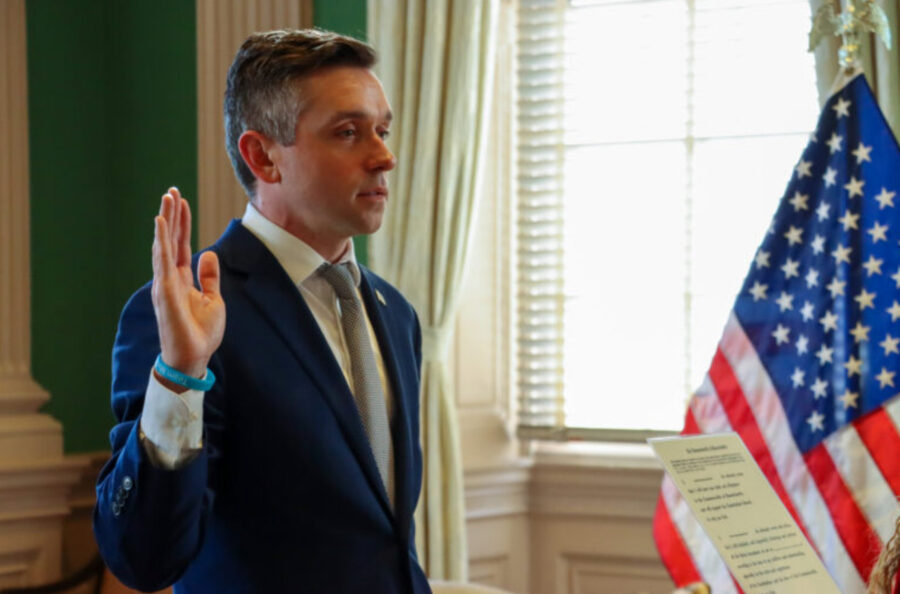
Massachusetts Gaming Commission Chair Jordan Maynard has voiced concerns that prediction markets are targeting people younger than 21.
Maynard said that prediction market operators are “illegally offering sports wagers” in an interview on television station WCVB’s “On the Record” show.

His comments follow legal action taken by Massachusetts Attorney General Andrea Campbell against prediction market operator Kalshi, claiming the company is offering illegal betting products under the appearance of “event contracts.”
Prediction market operators argue that they are federally regulated by the Commodities and Futures Trading Commission, but that argument has been challenged in multiple state-level legal cases.
Maynard said he was concerned about underage users and the absence of responsible gaming safeguards, stating that, unlike licensed operators in Massachusetts, prediction market platforms do not apply the same identity verification measures or consumer protections.

He also referenced criticism of the prediction market platform Polymarket, which recently removed a discussion market related to a military rescue operation after public pressure.
According to Maynard, the Massachusetts Gaming Commission requires operators to comply with age restrictions and responsible gaming standards, including verifying that users are at least 21 years old before allowing account access.
He added that the commission also is working with responsible gambling tools such as BetBlocker, which allows users to restrict access to gambling-related websites on personal devices.
Charlotte Capewell brings her passion for storytelling and expertise in writing, researching, and the gambling industry to every article she writes. Her specialties include the US gambling industry, regulator legislation, igaming, and more.

Dig Deeper
Related stories
 2025/09/13: Massachusetts Attorney General sues Kalshi for illegal sports wagering operations
 2025/06/10: Massachusetts gambling official calls for stricter advertising rules
 2025/09/17: Robinhood sues Massachusetts Gaming Commission in response to Kalshi lawsuit
 2026/07/27: Aristocrat Interactive launches lottery games in Massachusetts
2025/09/13: Massachusetts Attorney General sues Kalshi for illegal sports wagering operations
2025/06/10: Massachusetts gambling official calls for stricter advertising rules
2025/09/17: Robinhood sues Massachusetts Gaming Commission in response to Kalshi lawsuit
2026/07/27: Aristocrat Interactive launches lottery games in Massachusetts
The Backstory
Why Massachusetts is turning up the heat
Massachusetts’ latest warning shot at prediction markets is landing in a fast-changing landscape where the lines between event contracts and sports betting have blurred. The state’s gaming chair, Jordan Maynard, used a televised appearance to argue that some platforms are skirting consumer protections applied to licensed sportsbooks and appealing to users younger than 21. His televised comments, which echoed ongoing legal tensions over how to classify these products, followed the state attorney general’s lawsuit against Kalshi and revived questions about whether federal commodities oversight preempts state gambling laws. Maynard’s remarks also referenced recent controversies tied to event markets and the adequacy of responsible gambling checks, citing uneven identity verification and content moderation across platforms. For added emphasis, he took his case to local airwaves, discussing prediction markets and underage access on WCVB’s “On the Record,” which raised the profile of the debate beyond industry circles. That public push is a sign the state is testing both legal strategies and messaging aimed at consumer protection in an election-year atmosphere where gambling oversight has drawn uncommon attention. The conversation is no longer about whether these markets should exist, but under what guardrails—and who puts them in place.
Massachusetts is not acting in a vacuum. States have sharpened oversight as online gambling has matured, with enforcement priorities splitting along two tracks: licensed operators that must meet age-gating and safer play mandates, and gray-area or offshore platforms that require cross-border policing. The prediction market fight sits at the center of that divide, with operators asserting they sell informational event contracts while regulators see wagers functionally indistinguishable from sports bets.
The fault line: event contracts vs. sports bets
The central legal tension is classification. Prediction market firms have argued that federal commodities rules cover their event contracts, while state regulators say the products look and act like bets requiring local licensure and consumer safeguards. The disagreement intensified as product menus expanded from elections and macroeconomic indicators to propositions that echo sportsbook offerings. In practice, that growth has pitted federal permissions and pilot programs against state-level prohibitions and lawsuits. Massachusetts’ case against Kalshi is one prominent front; other jurisdictions are watching for a ruling that clarifies where federal authority ends and state gaming law begins.
The platform controversies that Maynard highlighted—such as high-profile removals of sensitive markets after public pressure—underscore a second issue: governance. Licensed sportsbooks operate within prescriptive rules for market approval, integrity monitoring and player protection. Prediction platforms’ moderation standards and onboarding checks vary, leaving regulators to argue that uneven controls can be a conduit for underage access and risky play. That regulatory delta is driving states to apply familiar sports betting frameworks to new market formats, even as the companies seek to preserve a distinct legal identity.
Youth exposure is reshaping the policy debate
Concerns about underage users are intersecting with a wider public health debate over advertising, prompts and the normalization of gambling. In Canada, a group of physicians urged curbs on sports betting marketing that saturates game broadcasts and social feeds, warning that persistent messaging may condition young viewers to associate fandom with wagering. The editorial in the Canadian Medical Association Journal argued for tighter limits to protect developing brains from risk-seeking cues and to reduce exposure across the platforms youth use most. Our coverage of that call to action detailed how Canadian doctors pressed for ad restrictions aimed at young audiences, while the underlying editorial can be read at the Canadian Medical Association Journal.
The message is resonating with U.S. regulators weighing where marketing ends and inducement begins. It also dovetails with the Boston discussion about age verification, account access and whether unlicensed platforms are effectively outflanking state-level responsible gambling programs. Maynard’s appearance on WCVB’s “On the Record” positioned the youth-risk argument at the center of the policymaking case for stricter guardrails on prediction products. That framing suggests advertising policy, not just licensing, will shape the next phase of regulation.
What Ontario’s surge signals for open markets
Empirical signals from Ontario’s legalized iGaming market are informing the conversation. A study tracking contacts with the province’s mental health helpline found a sharp rise in young men seeking gambling help since market liberalization. Our story on that analysis reported that helpline outreach among men 15 to 24 jumped more than 300% from the pre-legalization baseline to the period after private operators were allowed in. The research did not prove causation but suggested a link between broader availability, aggressive promotion and increased harm signals. The Toronto Star also highlighted the findings, underscoring political momentum for curbs on ads and inducements; its coverage is available here.
For U.S. policymakers, Ontario serves as both a test case and a warning. Expanded regulated markets can deliver consumer protections and tax revenue, but surveillance and treatment capacity must keep pace. Massachusetts officials cite their identity verification and responsible gaming standards as differentiators, especially if unlicensed platforms continue courting users through social media and influencer channels. The challenge is practical: rules have to be enforceable across devices and payment methods, not just on casino floors. Even in licensed markets, operators are recalibrating exposure and content offerings for youth-sensitive environments. In Ontario, for example, product expansion by private companies has gone hand in hand with brand partnerships and content pushes. Our recent report that High Roller Technologies named Seth Young chief executive noted the operator’s content tie-ups in Ontario, illustrating how quickly product pipelines can grow once a market opens.
Following the money: payments and enforcement
A second front in the crackdown is payments. Investigations are increasingly targeting processors that route funds to illegal sites, a tactic that can starve unlicensed networks of liquidity. Taiwanese prosecutors say they dismantled a laundering scheme that used bespoke payment platforms to channel more than NT$30.6 billion tied to offshore gambling, then rolled out a house-branded site offering slots, sports and baccarat. The case, which led to 35 arrests, shows how payments infrastructure can evolve from a service to an operator in its own right; our coverage of the arrests is here.
Vietnamese authorities are taking a parallel approach. A Ho Chi Minh City court recently jailed 43 people tied to a VND88,000 billion online gambling ring that mixed crypto exchanges, affiliate recruitment and wagers routed through a live-casino supplier. The network’s scale—and the conversion of local currency into tokens before play—illustrates why regulators are zeroing in on wallets and exchanges in addition to front-end websites. Both cases demonstrate that as enforcement intensifies, operators are likely to pivot to more sophisticated payment obfuscation, forcing regulators to coordinate with financial watchdogs and tech platforms.
The stakes for the next rulebook
Massachusetts’ pressure on prediction markets is about more than jurisdictional turf. It is a test of whether consumer safeguards developed for sportsbooks can be applied to adjacent products that tap the same behavioral drivers, particularly among younger users. Evidence from Ontario and warnings from Canadian physicians have shifted the debate from hypothetical risk to observable harm signals, raising the political cost of inaction. At the same time, international crackdowns show that when illicit operators feel the squeeze, they migrate through payments and crypto corridors that are harder to police.
What happens next will hinge on litigation outcomes and the willingness of platforms to adopt sportsbook-grade identity verification, market standards and advertising limits. If operators resist, expect states to lean on public health data and youth exposure arguments to justify tighter rules—and to try to cut off unlicensed sites at the payment layer. Either way, the regulatory playbook is expanding, and prediction markets are moving from novelty to stress test for gambling policy.
