


Sportradar misses earnings expectations in first quarter

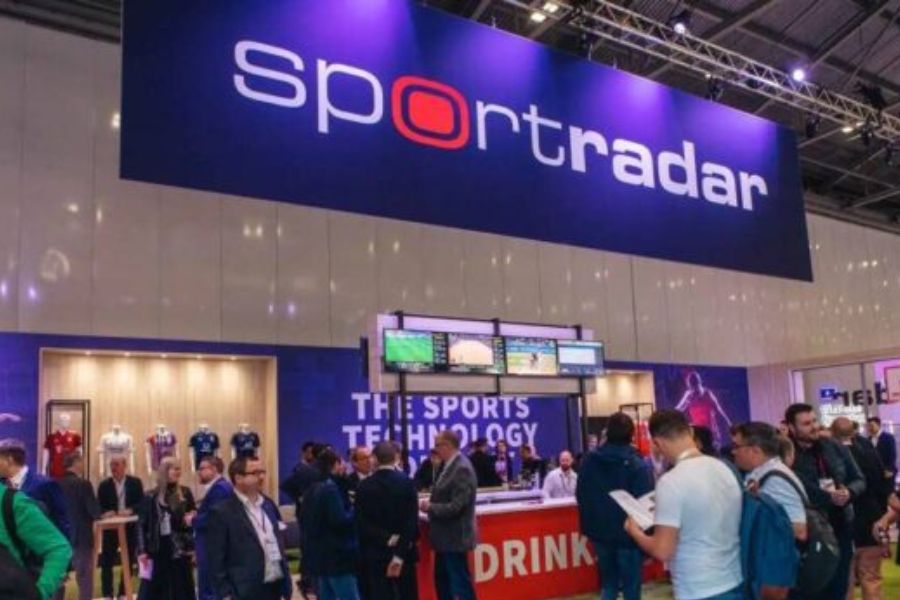
Sportradar came up short of Wall Street’s expectations in the first quarter of 2026, reporting €346 million (US$405 million)1 EUR = 1.1717 USD
2026-04-28Powered by CMG CurrenShift in revenue when The Street had expected €362 million (US$424 million)1 EUR = 1.1717 USD
2026-04-28Powered by CMG CurrenShift.
Cash flow was also a miss. Wall Street’s consensus expectation was for €70 million (US$82 million)1 EUR = 1.1717 USD
2026-04-28Powered by CMG CurrenShift. Sportradar delivered €66 million (US$77 million)1 EUR = 1.1717 USD
2026-04-28Powered by CMG CurrenShift. Sportradar posted a loss of €6 million (US$7.0 million)1 EUR = 1.1717 USD
2026-04-28Powered by CMG CurrenShift. It ended the quarter with no debt and €322 million (US$377 million)1 EUR = 1.1717 USD
2026-04-28Powered by CMG CurrenShift cash on hand.

The company named Sameer Deen Chief Operating Officer shortly before its 28 April earnings call. His appointment takes effect on 18 May. A 25-year veteran of the gaming industry, Deen was most recently Entain’s President.
Revenue from the US grew from €86 million (US$101 million)1 EUR = 1.1717 USD
2026-04-28Powered by CMG CurrenShift in the first quarter of 2025 to €89 million (US$104 million)1 EUR = 1.1717 USD
2026-04-28Powered by CMG CurrenShift. However, as a percentage of Sportradar business, the US shrank from 27.7% to 25.8%.
In the rest of the world, Sportradar revenues jumped 14% to €257 million (US$301 million)1 EUR = 1.1717 USD
2026-04-28Powered by CMG CurrenShift, up from €225 million (US$264 million)1 EUR = 1.1717 USD
2026-04-28Powered by CMG CurrenShift the year before. The betting technology and solutions division grew 15% to €288 million (US$337 million)1 EUR = 1.1717 USD
2026-04-28Powered by CMG CurrenShift. That was partly offset by shrinkage in the sports content, technology and solutions division, which was down 4% to €59 million (US$69 million)1 EUR = 1.1717 USD
2026-04-28Powered by CMG CurrenShift.

The company restated earnings guidance for a full year of revenue growth between 23% and 25%, or €1.5 billion (US$1.8 billion)1 EUR = 1.1717 USD
2026-04-28Powered by CMG CurrenShift-plus to €1.6 billion (US$1.9 billion)1 EUR = 1.1717 USD
2026-04-28Powered by CMG CurrenShift.
David McKee is an award-winning journalist who has three decades of experience covering the gaming industry.

Dig Deeper
Related stories


The Backstory
How a beat turned into a reset
Sportradar’s first-quarter miss lands after a stretch of outperformance that set high expectations. The company closed 2024 with record top line and cash generation, lifting full-year revenue 26% to €1.1 billion and adjusted EBITDA 33%, while leaning into premium rights through IMG Arena and broader product innovation. Those results, detailed in a fourth-quarter and full-year update, framed a narrative of scale benefits and a sturdier balance sheet heading into 2025.
That momentum extended into late 2025. Sportradar swung from a modest year-earlier quarterly loss to a €4.4 million profit in the fourth quarter, lifted by a 20% revenue jump to €369 million and a 48% surge in cash flow. For the full year, revenue rose 17% to a company-best €1.3 billion and net profit reached €100 million, according to the company’s subsequent earnings release. Management used those results to dramatically increase 2026 share repurchase authorization to as much as US$1 billion, signaling confidence in future cash generation.
That backdrop helps explain why a softer first quarter in 2026, including a small net loss and lighter cash flow, drew sharper scrutiny. Investors had grown accustomed to steady beats. Instead, a combination of player-favorable outcomes in key sports, currency effects and higher rights costs dented the quarter, even as overall growth in betting and gaming content persisted.
Earnings day that doubled as crisis management
Pressure on the story rose hours before the April 28 call when a law firm announced an investigation tied to short seller claims that Sportradar works with unlicensed operators, as summarized in coverage of the contentious earnings session. The call itself was marred by audio dropouts, but executives were emphatic: the company applies strict know-your-customer checks, supports only licensed clients and moves quickly to cut off any misuse or piracy of its data by third parties.
CEO Carsten Koerl argued the financial exposure is limited to a low-to-mid-single-digit share of revenue and said conversations with regulators are ongoing. He likened Sportradar’s terminals to information pipes that sometimes get syndicated or misappropriated, asserting the company acts fast to remediate. The response sought to separate intentional compliance from edge cases and to reassure partners while markets assessed legal and reputational risk.
The same call underscored ambitions beyond the current controversy. Management pointed to expanding live streaming, deeper IMG Arena monetization and new distribution in “prediction markets,” a nascent channel adjacent to sports betting. The message: short-term noise should not obscure long-term product breadth and data scale.
Buybacks, cash and the valuation argument
To reinforce that message, Sportradar leaned on its balance sheet. The company said it had already repurchased US$90 million of stock in the first quarter and unveiled a US$250 million buyback, with Koerl committing to buy shares personally. That sits atop a 2025 program that retired US$91 million of stock and a stepped-up authorization for 2026.
Buybacks do two jobs here. Tactically, they absorb supply into weakness and can steady the share price amid allegations and an earnings miss. Strategically, they broadcast management’s view that the market is undervaluing durable growth in global data rights, managed trading and streaming. The company has no debt and hundreds of millions in cash, which gives it room to keep returning capital even as it funds rights inflation and integration of IMG Arena.
The risk is timing. Rights fees climbed roughly in line with the industry, and personnel costs rose after the IMG deal. If match outcomes remain unfavorable or currency headwinds persist, buybacks could amplify financial leverage to operating volatility. Yet the prior-year cash flow gains and visibility into rights expense buffers, as noted by the finance chief on the April 28 call, help explain why the company is comfortable leaning in.
U.S. growth cools as the rest of world carries the load
One data point from the quarter will draw investor focus: the United States grew in absolute euros but shrank as a share of the business. That mix shift is not entirely surprising. U.S. sportsbook growth moderated across 2025, and several operators have prioritized profitability over promotions, a trend that can trim handle growth and vendor volume. Management also cited currency as a drag and pointed to an 18% spike in sports-rights costs, both of which inflate the denominator and can dilute U.S. contribution percentage.
At the same time, the rest of world continued to accelerate on bigger content portfolios and live streaming scale. That global breadth cushioned the quarter and keeps the company on track with reiterated full-year revenue guidance in the mid-20% range. The trade-off: investors who paid for a U.S.-led upside story now must weigh steadier international gains against a slower American ramp and the potential for regulatory frictions in new adjacent markets.
Prediction markets test the edges of regulation
A key strategic frontier is prediction markets, where Sportradar sees distribution potential to event-contract platforms. Management said major leagues have cleared marketing into that channel, and the company is holding talks with providers. The opportunity is incremental audience reach and data demand without heavy cannibalization of traditional sportsbooks, according to the April 28 commentary.
But the regulatory map is in flux. BetMGM’s leadership described prediction markets as a niche that will be sorted out between state and federal authority, while flagging some risk in licensed betting states and the possibility of “tax creep” in certain jurisdictions. That view, captured in BetMGM’s first-quarter call, reinforces why vendors like Sportradar are careful about how aggressively they position in the segment.
On the platform side, Robinhood’s recent performance shows why prediction markets intrigue operators and vendors alike. The company posted a 45% jump in second-quarter revenue and strong user monetization, per a recap of its latest results, even as regulators forced it to suspend a high-profile football championship market. That clash illustrates both the commercial pull of event contracts and the compliance risks if products blur into derivatives territory. For Sportradar, distribution into this space could add “tens of millions” over time, but only if regulatory guardrails clarify and partners scale responsibly.
What to watch next
The next checkpoints are straightforward. Investors will look for cleaner execution in the second and third quarters as currency headwinds ease and sports outcomes normalize. They will want confirmation that rights and personnel expenses settle into predictable ranges post-IMG integration. Any updates on the internal probe over short seller claims, regulator feedback or client retention will be material to the multiple.
On growth, track the mix: U.S. contribution relative to global, uptake of streaming inventory toward the 700,000-match target cited on the April 28 call and early revenue from prediction-market distribution. A steady cadence of buybacks should keep supporting the equity case, but sustained free cash flow improvement will be needed to maintain it.
After two strong years and a confident pivot into 2026, Sportradar is trying to turn a noisy quarter into a reset. The pieces that drove outperformance remain in place. The task now is to prove that the hiccups are transient, the compliance posture is durable and the new channels add growth without adding outsized risk.
