


Sportradar swings from loss to profit in fourth quarter

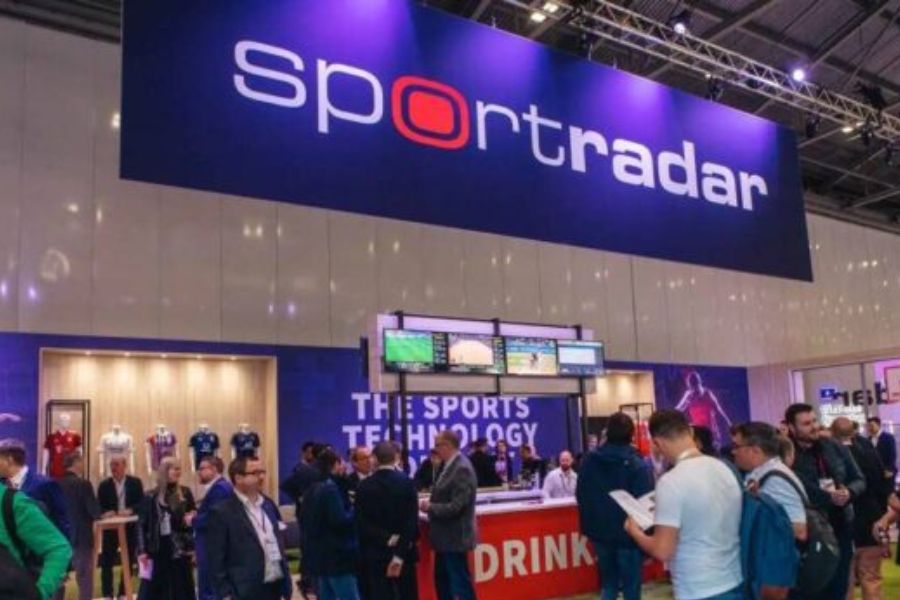
Data provider Sportradar pivoted from a modest loss in the fourth quarter of 2024 to a profit a year later. The company finished 2025’s fourth quarter €4.4 million (US$5.1 million)1 EUR = 1.1612 USD
2026-03-03Powered by CMG CurrenShift in the black.
For all of 2025, revenue was up 17% to a company-best €1.3 billion (US$1.5 billion)1 EUR = 1.1612 USD
2026-03-03Powered by CMG CurrenShift. Cash flow grew by a third to €297 million (US$345 million)1 EUR = 1.1612 USD
2026-03-03Powered by CMG CurrenShift. The full-year profit was €100 million (US$116 million)1 EUR = 1.1612 USD
2026-03-03Powered by CMG CurrenShift.

The bulk of revenue came from Sportradar’s Betting and Gaming Content division. It contributed €247.4 million (US$287 million)1 EUR = 1.1612 USD
2026-03-03Powered by CMG CurrenShift during the quarter and €817.2 million (US$949 million)1 EUR = 1.1612 USD
2026-03-03Powered by CMG CurrenShift across the entire year. Managed betting services chipped in an additional €58 million (US$67 million)1 EUR = 1.1612 USD
2026-03-03Powered by CMG CurrenShift quarterly and €229.8 million (US$267 million)1 EUR = 1.1612 USD
2026-03-03Powered by CMG CurrenShift annually.
The Marketing and Media Services division provided an additional €50 million (US$58 million)1 EUR = 1.1612 USD
2026-03-03Powered by CMG CurrenShift during the final trimester and €181.6 million (US$211 million)1 EUR = 1.1612 USD
2026-03-03Powered by CMG CurrenShift for the year. Declines were posted by the Sports Performance division and the Integrity Services one.
Of Sportradar’s revenue, €285.8 million (US$332 million)1 EUR = 1.1612 USD
2026-03-03Powered by CMG CurrenShift was generated globally and only €83.1 million (US$96.5 million)1 EUR = 1.1612 USD
2026-03-03Powered by CMG CurrenShift from the US. For the full year, those figures were €966.1 million (US$1.1 billion)1 EUR = 1.1612 USD
2026-03-03Powered by CMG CurrenShift and €323.8 million (US$376 million)1 EUR = 1.1612 USD
2026-03-03Powered by CMG CurrenShift, respectively.

Sportradar bought back US$91 million in shares during 2025 and used the earnings announcement to roll out a significant escalation of its repurchase program. For 2026, the repurchase authorization has been increased from US$300 to US$1 billion.
Fourth-quarter revenue jumped 20% to €369 million (US$428 million)1 EUR = 1.1612 USD
2026-03-03Powered by CMG CurrenShift and cash flow leapt 48% to €89 million (US$103 million)1 EUR = 1.1612 USD
2026-03-03Powered by CMG CurrenShift. US$25 million shares were bought back during the quarter.
Chief Executive Carsten Koerl called the results “another quarter of strong performance, demonstrating significant momentum across our business as we continued to drive innovation and customer adoption … These results underscore the durability of our growth strategy and our mission-critical role within the global sports ecosystem.”

Koerl continued, “The acquisition of IMG further strengthens our competitive position, and we are rapidly integrating and monetizing this premium content across our global customer base … We remain committed to relentlessly creating value for our partners, clients, and shareholders, and we are excited about the opportunities in both the short and long term.”
David McKee is an award-winning journalist who has three decades of experience covering the gaming industry.

Dig Deeper
Related stories


The Backstory
From loss to lift: how Sportradar set up its rebound
Sportradar’s swing to a fourth-quarter profit caps a two-year reset that paired heavy investment with tighter capital returns. A year earlier, the sports data group was still digesting cost inflation and currency hits while telling investors its plan through 2027 was on track. In March 2025, Chief Executive Carsten Koerl said the company had “performed ahead of the expectations we laid out” and was pushing forward on a three-year roadmap built around deeper content, data science and product monetization. He outlined a larger buyback to signal confidence and to address what he called a valuation “disconnect.” Those priorities now show up in the latest numbers.
The prior disclosures set the baseline. In late 2024, the company posted double-digit top-line gains but remained in the red for the fourth quarter on foreign exchange pressure, even as U.S. revenue surged 41% year over year and full-year sales jumped 26%. Management emphasized execution, stronger operating margins and rising free cash flow, pointing to better unit economics beneath the headline loss. That earlier update framed a transition year in which Sportradar spent to secure rights, expand live video and roll out higher-value tools across clients in betting and media.
By early 2025, the tone sharpened. Koerl reiterated that Sportradar’s “grand strategy” was “on schedule,” noting record advertising volumes, accelerated streaming output and a deepening analytics stack. He paired that message with a sharp increase in the share repurchase authorization to US$1 billion, reflecting both cash generation and a preference to redeploy capital internally over large acquisitions. The results out now, including a return to fourth-quarter profitability and record cash flow, suggest those levers began to convert into earnings momentum.
Content muscle after the IMG Arena integration
A central driver behind the inflection is the company’s rights and content portfolio. Sportradar closed its IMG Arena deal late in 2025 and immediately began distributing that content to operators. Koerl told investors “the customer response has been strong” and said the company was ahead of its synergy targets, with a 109% customer-retention rate attributed in part to the combined slate of premium events and value-added products. The integration also widened Sportradar’s live video funnel, which is core to in-play betting and higher-margin managed services.
Management had laid groundwork for that pivot in prior quarters. In fourth-quarter 2024 reporting, Sportradar stressed it was “enhancing the depth and breadth” of its portfolio and innovating on product. The company’s performance-data model for professional basketball, trained on thousands of NBA games, was flagged for expansion into tennis and soccer ahead of global tournaments. Simultaneously, Sportradar used artificial intelligence to convert player data into broadcast graphics across relationships with NBC and Peacock, a bridge between media and betting that helps monetize rights beyond odds feeds.
The rights push came with cost, including an 18% rise in match-acquisition expenses, but management said it would stay “strategic and disciplined.” The thesis: richer content and tools support higher take rates across managed trading, streaming and personalized marketing, more than offsetting rights inflation over time. The latest quarter’s mix bears that out, with Betting and Gaming Content and managed services anchoring growth while lagging units like performance and integrity services trimmed the headline.
Balancing U.S. momentum with a global engine
Sportradar’s geographic split remains a strategic hedge. Roughly 70% of revenue comes from outside the U.S., where contract tenures are longer and product breadth is wider. That base helped steady results through volatile U.S. sports outcomes that periodically clip operators and their suppliers. Even so, America has become a stronger incremental driver. In late 2024, the company reported U.S. revenue up 58% for the year to €262.7 million, underscoring penetration with top operators and leagues and a deeper push into streaming and integrity services.
The company has also leaned into a fast-emerging adjacency: prediction markets. Koerl called it a “rapidly developing opportunity” and said Sportradar is working with MLS, the NHL and the UFC on safeguards. He projected an “uplift opportunity in the tens of millions” and said clients see little cannibalization between event contracts and sports betting. That view echoes the broader monetization strategy around micro-markets and real-time engagement that content like IMG Arena’s can feed. Execution here will matter in 2026 as regulators and leagues refine guardrails.
Currency remains a swing factor. A weaker dollar weighed on prior guidance, and the company flagged FX as a risk again. But finance chief Craig Felenstein said he expects an acceleration in 2026, concentrated in the second and third quarters, backed by higher streaming volumes — more than 700,000 games projected — and continued uptake in Brazil, where Sportradar is piloting igaming products.
Peers’ scorecards sharpen the contrast
The sector backdrop helps explain Sportradar’s capital stance. Operator results have bifurcated between scale players who are harvesting cash and challengers still investing to win share. FanDuel parent Flutter used the March reporting window to announce it had flipped a US$902 million fourth-quarter 2023 loss into a US$156 million profit a year later, with revenue up 14% to US$3.7 billion and a 17.3% cash flow margin. Management credited product innovation and resilient engagement despite bettor-friendly NFL outcomes. That profitability gives Flutter freedom to keep leaning into parlay products and U.S. igaming while expanding internationally.
Flutter’s first-quarter 2025 update reinforced that picture. It posted a US$335 million profit, raised international guidance and trimmed U.S. expectations after softer sports results, but maintained that FanDuel holds leadership in online sports betting and igaming. The company also highlighted the long-term growth runway to 2030 and continued share repurchases. For suppliers like Sportradar, a healthier, better-capitalized top customer set supports steadier demand for premium data, streaming and managed services and can blunt volatility from weekly sports results.
Not all operators had tailwinds. Codere Online swung from a €3.9 million profit in 2024 to a €1.8 million loss in 2025 despite double-digit quarterly revenue growth and improving cash flow, as taxes rose in Mexico and growth cooled in smaller markets. The divergence underscores why suppliers with diversified client rosters and multi-product stacks have leaned into buybacks rather than expensive M&A. Sportradar’s move to lift its repurchase authorization to US$1 billion fits that pattern.
What’s at stake in 2026
The next leg hinges on conversion of content and tooling into predictable, higher-margin revenue. Key markers include sustained growth in managed betting services, continued churn below industry norms and successful rollout of new AI-driven products in basketball, tennis and soccer. Execution on prediction markets could open an incremental lane if regulators and leagues coalesce around standards, but it will demand guardrails to protect integrity and participants.
Rights inflation and FX remain watch items, as do macro pressures on consumer spend. Still, with a heavier-weight content slate after the IMG Arena integration, an expanding U.S. footprint and a global base that cushions volatility, Sportradar enters 2026 with clearer operating leverage. If the company delivers the acceleration flagged on its 2025 calls while keeping acquisition costs in check, the strategy investors were asked to underwrite two years ago will have moved from narrative to numbers.
Related reading: Sportradar highlighted a 22% jump in fourth-quarter revenue and record free cash flow in 2024; CEO Carsten Koerl detailed the 2025–27 plan and a bigger buyback; Flutter flipped to a fourth-quarter profit on 14% revenue growth; Flutter’s first-quarter profit and updated guidance set the 2025 tone; Codere Online’s reversal shows pressure points in key Latin American markets.
