


Sportradar execs push back on allegations in earnings call

Adversity for Sportradar continued in its first-quarter earnings call, which saw lengthy audio dropouts during its 65-minute duration. The company reported financial results early on 28 April.
Two hours before the call, the New York firm of Bronstein, Gewirtz & Grossman announced it was investigating Sportradar, which has been accused by short sellers of “providing its services to illegal and unlicensed gambling operators,” the Wall Street Journal reported. The charges had sent Sportradar stock tumbling.

Sportradar announced on Tuesday an initiative to repurchase US$250 million in shares. Chief Executive Carsten Koerl said he would buy US$10 million shares, too.
“Sportradar and I reject the unfounded allegations in the reports,” remarked Koerl. “The company’s current valuation does not reflect the strength of our business.” He said the company had bought back US$90 million worth of shares during the first quarter.
“We support only businesses that have a license,” Koerl continued. “We are running a very rigid [know your customer] process. He flatly denied that Sportradar was working with black-market or unlicensed gaming operators.

“The feedback so far is overwhelming,” said Koerl. “I get a lot of support” from business partners and regulators. Conversations with the latter were described as “an ongoing process.” He estimated that only a low-to-mid-single-digit percentage of Sportradar’s revenue was imperiled by the scandal.
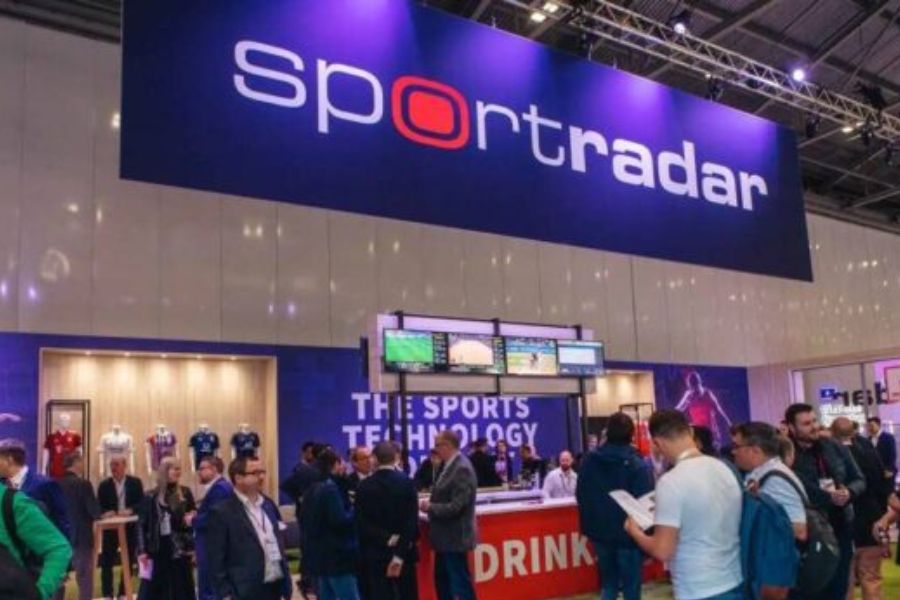
Queried about an instance of Sportradar uploading black-market data, Koerl attributed it to “a relatively young sales guy [that] was teased into it” at the recent ICE expo. “This is never a contract. When the sales team is selling something, this is the kickoff of a very intense KYC process. This is far from signing a contract,” he ended.
Koerl likened Sportradar’s products to a Bloomberg terminal: Once it is sold to a customer, Sportradar has no control over potential sub-licensing. “Some of this content is stolen and you have to have mitigation methods in place.”

Sportradar has, Koerl said, intensive KYC measures on tap for its business-to-consumer trade. But business-to-business dealings “also have some syndication” to bad actors. “As soon as we [heard] this, we shut it down immediately. We indeed have piracy. Sportradar is probably the most-attacked company.”
Koerl also announced the appointment of former Entain President Sameer Deen as Chief Operating Officer. The latter, it was said, “will be instrumental in driving our commercial efforts.”
The Chief Executive lauded the first quarter for “strong performance in betting and gaming content,” with 75% of clients using IMG Arena intellectual property. Sportradar’s relationship with Hard Rock Bet was, Koerl said, “a clear example of this.”

Koerl added that Sportradar intends to stream 700,000 matches in 2026. Less-than-expected financial results were dismissed as being “impacted by player-friendly outcomes,” particularly in European soccer.
“We see prediction markets as a significant opportunity where Sportradar is uniquely positioned” as a data provider, Koerl transitioned. He said they add new territories and total addressable market in the United States. The Chief Executive continued that Sportradar was in talks with various event-contract providers and “we are being very deliberate in our discussions.”
He added that the National Hockey League, Ultimate Fighting Championship, Major League Soccer and Major League Baseball have all green-lit the marketing of Sportradar to prediction markets. He teased “bigger news and contents … very soon. We have nothing to announce now.”
Koerl laughed and said, “it’s very tricky territory,” as to whether Sportradar would place limits on prediction-market offerings. “At the moment we don’t see limitations,” which he characterized as a regulatory matter.
Chief Financial Officer Craig Felenstein added that “we’re still very early days” in terms of working with prediction-market and traditional sports betting providers. The former were not on a scale comparable to legacy operators. Asked what the effect of prediction-market business would be, he replied, “the magnitude of the impact depends on what gets done.”
“The cannibalization is pretty small” between traditional sports betting and event contracts, Felenstein said. He explained that the market growth came from jurisdictions like California, Texas and Florida, and the addition of 18-to-20-year-old players to the fold.
Felenstein predicted “tens of millions” from prediction markets, with IMG Arena “continuing to perform better. We layer all those things in together [and] you get revenue in the range which we expected,” even if the US market wasn’t accelerating.
Despite slower growth from US sportsbooks, said Felenstein, revenue improvement would have been 16% were it not for a weak dollar. He later said that he expected the currency adversity to ease in the second and third quarters. He also said Sportradar was spending less on marketing.
Felenstein reported that Sportradar had experienced an 18% spike in sports-rights expenses but had “significant visibility” into such costs going forward. The absorption of IMG Arena, meanwhile, had increased personnel costs by 5%.
Cash on hand, Felenstein continued, had fallen 44% because of share repurchases. He added, “there is no better fundamental use of capital than investing in Sportradar shares.”
David McKee is an award-winning journalist who has three decades of experience covering the gaming industry.

Dig Deeper
Related stories


The Backstory
Why this earnings call became a stress test
Sportradar’s latest earnings call arrived with more at stake than quarterly numbers. Allegations from short sellers that the company serviced unlicensed gambling operators helped knock the stock and forced executives to defend compliance practices and revenue exposure. The call also doubled as a referendum on the company’s strategy, capital deployment and the durability of its growth engines after a year of big bets on content and scale.
The scrutiny lands after Sportradar spent two years knitting together a larger data and streaming portfolio, leaning into prediction markets and expanding outside the United States. Investors now must weigh the company’s reassurances against the risk of reputational damage, regulatory questions and any revenue tied to gray-market leakage. That calculus is complicated by near-term financial softness and a heavier reliance on buybacks to support the share price.
The growth blueprint that preceded the storm
Management has been telegraphing a multiyear expansion program anchored in content breadth, technology and cross-selling. In early March, Chief Executive Carsten Koerl told investors the company was tracking ahead of a three-year plan that runs through 2027 and boosted its repurchase authorization to as much as US$1 billion to signal confidence in the equity value. He pointed to deeper sports coverage, an extended German soccer pact and AI-driven performance data as differentiators, while reiterating that roughly 70% of revenue comes from outside the U.S. For more on those targets and capital priorities, see the company’s update that its grand strategy is on schedule.
That positioning followed a year of momentum. In the fourth quarter of 2024, Sportradar reported a 22% year-over-year revenue increase to €307 million and record full-year metrics, even as currency swings clipped the bottom line. The company also accelerated free cash flow and continued share repurchases, highlighting what it called strong execution and a deeper content portfolio. The results contextualize why management keeps leaning on scale and product depth as moats; details are in the report on its 22% rise in fourth-quarter revenue.
Deal-making that reshaped the content stack
The backbone of Sportradar’s current pitch is access to premium rights and live streams that tether sportsbooks, media partners and fans to its platform. That took a major step with the completion of the IMG Arena acquisition, a transaction structured to be accretive to margins and cash conversion. The deal brought strategic relationships with more than 70 rightsholders and thousands of official data and streaming events across global sports, bolstering what management says is now more than one million matches covered annually. The company framed the purchase as a catalyst for new products, customer retention and cross-sell. The rationale and unusual financial structure are laid out in the announcement that it completed the acquisition of IMG Arena.
Even before close, executives said IMG synergies would be both immediate and progressive, with early wins tied to media and betting content. That set up higher guidance into 2025, additional buybacks and expanded relationships with U.S. leagues. Management also used that window to outline how prediction markets might complement traditional sportsbooks if regulated consistently and supported by integrity safeguards. Those themes are detailed in the update on increased guidance and share repurchases.
From record highs to a reality check
Momentum, however, met a tougher tape in early 2026. First-quarter results missed Wall Street’s revenue and cash flow expectations, with €346 million in revenue versus a €362 million consensus and €66 million in cash flow versus €70 million expected. Sportradar posted a €6 million loss, continued to invest in rights and personnel tied to IMG and said U.S. revenue grew but represented a smaller slice of the whole as international markets expanded faster. The company reaffirmed full-year growth guidance of 23%–25% and highlighted a no-debt balance sheet with €322 million in cash. The full picture is in the report that Sportradar missed first-quarter earnings expectations.
The quarter also exposed how “player-friendly” outcomes in key sports can dent near-term performance, a reminder that even data suppliers face volatility tied to betting results and currency shifts. To offset market skepticism, management leaned harder on capital returns, naming a new chief operating officer and reiterating that IMG-driven retention and upsell would be tailwinds as the year progressed.
Integrity, prediction markets and the new scrutiny
Well before the current allegations, Sportradar was promoting its integrity services and arguing that prediction markets could grow alongside, not at the expense of, regulated sportsbooks if clear rules and protections exist. Executives described low cannibalization between the two categories and framed event contracts as incremental, concentrated around major games and special events. They also said U.S. leagues vary in posture toward prediction markets but are converging on safeguards and commercial frameworks. That narrative is captured in management’s commentary on guidance, buybacks and prediction-market positioning, as well as its later reaffirmation that the three-year strategy remains intact.
The present controversy tests those claims. If regulators or partners perceive gaps in know-your-customer processes or content syndication controls, the company could face tighter oversight, reputational drag or the loss of marginal clients. Management has argued that any exposure would be limited to a small share of revenue and that piracy and unauthorized sub-licensing are industry realities, but investors will look for concrete disclosure, remediation steps and third-party validation.
What’s at stake for investors and partners
The stakes extend beyond the next quarter. Sportradar tied its equity story to scaled rights, faster product innovation and disciplined capital returns. IMG integration, rising sports-rights costs and global expansion raise execution risk but also build a higher moat if the company can convert new content into retention and monetization. A weaker U.S. dollar and sport outcomes will remain external wild cards. Meanwhile, buybacks have become a larger lever for value support, evolving from a US$200 million plan in 2024 to a stepped-up authorization last year and ongoing repurchases alongside a fresh US$250 million initiative.
Against that backdrop, partners in leagues, media and betting will watch how the company fortifies compliance guardrails and integrity monitoring around both sportsbooks and prediction markets. The next checkpoints: clarity on any revenue at risk from compliance reviews, the pace of IMG-driven synergies and whether guidance holds as currency effects moderate. Recent history shows Sportradar can post record top-line growth and cash generation in favorable conditions, as reflected in its record 2024 revenue and cash flow. The question is whether the company can deliver similar execution under sharper scrutiny while sustaining international growth and converting its dealmaking into durable margin expansion.
