


SkyCity’s pursuit of just two New Zealand online gaming licenses by choice: CEO

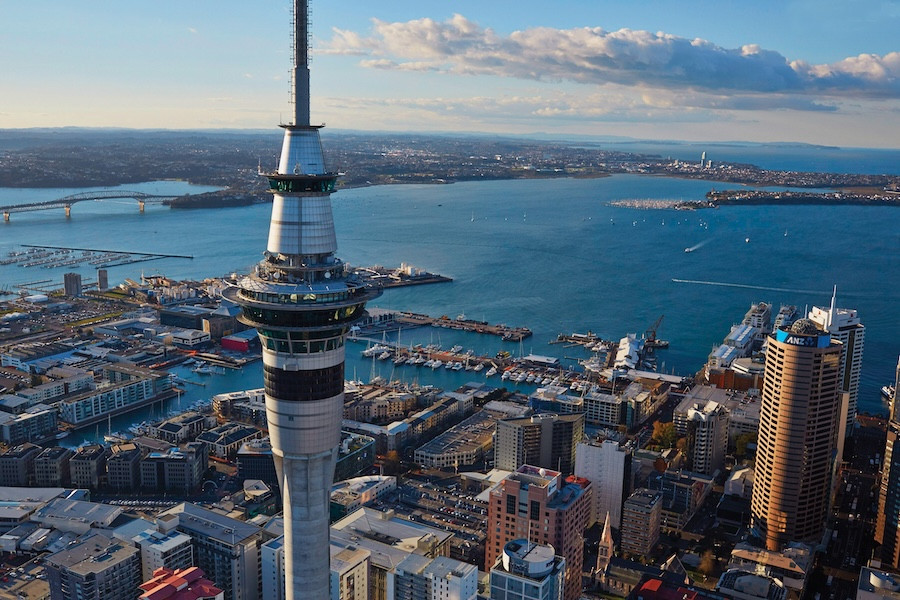
SkyCity Entertainment Group CEO Jason Walbridge has explained that the company’s decision to apply for two online casino licenses rather than the maximum three allowed under New Zealand’s online licensing regime was a deliberate capital allocation matter.
As reported by Complete iGaming, SkyCity owns two of the 11 entities that last week won the right to formally apply to the Department of Internal Affairs for the total 15 licenses on offer. Successful applicants will be required to pay NZ$15 million (US$8.5 million)1 NZD = 0.5673 USD
2026-10-21Powered by CMG CurrenShift per license following the recent auction that attracted 32 bidders.

Providing insight into the process during SkyCity’s Annual General Meeting in Auckland on Wednesday, Walbridge said the auction had settled at a price “within the scenarios we modelled” and that the company was confident it can achieve a return on the capital invested, which will include NZ$30 million (US$17 million)1 NZD = 0.5673 USD
2026-10-21Powered by CMG CurrenShift in license fees for its two licenses assuming both applications are successful.
“It was a deliberate capital allocation decision to reduce from the maximum three allowable licenses to two, ensuring we remained within our risk-adjusted, return on capital targets,” he explained.
“This is not a new market. New Zealanders have been playing these online games for years, with offshore operators operating outside of any New Zealand regulation. Regulating this market means only licensed operators will be permitted to offer online casinos; if licensed, we will be two of the 15 brands, with everyone adhering to the regulations ensuring a level playing field.”

Walbridge also outlined his expectation that the ability for SkyCity to market its online presence to domestic customers for the first time would be a game changer but warned the competitive market environment would create potential issues in regard to the level of advertising licensees engaged in.
This echoes similar comments from Entain during the recent CiG iDEA Summit in Manila last month, part of the IAG EXPO.
“We believe we can compete strongly in this important market,” Walbridge said during Wednesday’s AGM.

“Being a land-based casino operator for 30 years, we have a brand New Zealanders know and trust, which is the most important attribute of online brands, and we will now be able to advertise and market our online presence, which we haven’t been able to before. Importantly, we clearly understand the New Zealand host responsibility and AML requirements, as they are similar or the same across land and online.
“We do expect this to be a competitive market, and the level of potential advertising when the market goes live in the second half of FY27 is something we will be watching closely.”

Dig Deeper
Related stories
 2026/10/14: Analysts: SkyCity New Zealand online licensing is strategic, with neutral financial impact
 2026/08/26: SkyCity rejects two takeover proposals that “did not adequately reflect the underlying value of the company”
2026/09/30: SkyCity announces active buyer search to take over entire business
2025/03/11: New Zealand’s SkyCity calls on government to limit online gaming licenses to five
2026/10/14: Analysts: SkyCity New Zealand online licensing is strategic, with neutral financial impact
2026/08/26: SkyCity rejects two takeover proposals that “did not adequately reflect the underlying value of the company”
2026/09/30: SkyCity announces active buyer search to take over entire business
2025/03/11: New Zealand’s SkyCity calls on government to limit online gaming licenses to five
The Backstory
A strategic online push amid pressure on the core business
SkyCity Entertainment Group’s decision to pursue two New Zealand online casino licenses, rather than the maximum three available to any bidder, sits at the intersection of growth, balance-sheet discipline and regulatory change. The Auckland-based casino operator is preparing for a newly regulated domestic online casino market after years in which New Zealand customers could access offshore platforms without those operators being licensed locally.
The government’s model is designed to bring that activity inside a supervised framework, with 15 licenses available and successful auction participants required to pay NZ$15 million per license. For SkyCity, that implies a NZ$30 million commitment if both of its applications are approved by the Department of Internal Affairs. Chief Executive Jason Walbridge has framed the decision as a deliberate allocation of capital, not a retreat from the opportunity. The company is betting that two brands can generate adequate returns while limiting exposure in a market likely to attract aggressive competition from global operators.
The strategy also reflects SkyCity’s broader corporate position. The group remains New Zealand’s dominant land-based casino operator, with properties in Auckland, Hamilton and Queenstown, alongside SkyCity Adelaide in Australia. But its traditional business has been under pressure from softer earnings, restructuring and questions over valuation. Online licensing offers a defensive and offensive tool: It could protect SkyCity from customers shifting away from physical casinos while giving it a legal path to market directly to New Zealand online gamblers.
From resistance to participation
SkyCity did not begin this process as a supporter of the government’s proposed market structure. The company previously urged officials to limit the regime to five online casino licenses and argued that licenses should be restricted to New Zealand-incorporated companies. That position, outlined in SkyCity’s call for a tighter licensing cap, reflected concerns that a broad auction would favor large multinational brands and dilute the value of compliance investments by domestic operators.
The company’s position was not unique. TAB also warned that an open model could threaten domestic gambling operators and shift profits offshore. Internal Affairs Minister Brooke van Velden pushed back on the industry arguments, saying the government’s goal was a fair regulated market rather than protection for incumbents. She also raised concerns that favoring local firms could clash with New Zealand’s trade commitments.
That policy choice shaped the current competitive field. Instead of a small, protected market, the government opened an auction in which 32 bidders competed for the right to apply for 15 licenses. SkyCity emerged among 11 entities eligible to continue the formal application process. The result forced the company to convert its earlier policy preference into a commercial decision: how much to spend, how many brands to operate and how to compete in an environment broader than it wanted.
By seeking two licenses, SkyCity appears to be acknowledging both the size of the opportunity and the risks of overextension. The company can use its local brand recognition and regulatory experience, but it will not have the sheltered market it sought. Its return will depend on customer acquisition costs, channelization from offshore sites and whether the new regime can restrain unlicensed competition.
Analysts see a defensive rationale
Investment analysts have treated SkyCity’s online move as strategically important but not necessarily transformative for earnings. Forsyth Barr has described the opportunity as potentially “net present value neutral,” with returns broadly in line with the company’s cost of capital. As detailed in analysis of SkyCity’s online licensing economics, the online business is projected to contribute about 5% of group pre-overhead EBITDA once fully operational.
That assessment matters because it frames the online push less as a quick financial fix and more as a long-term hedge. SkyCity’s physical casinos remain its core earnings base, but consumer behavior is moving increasingly online. A regulated digital product could help the company retain customers who might otherwise migrate to offshore casinos or rival licensed platforms. In that sense, the value of the licenses may lie as much in protecting the existing franchise as in creating a new profit pool.
Forsyth Barr’s assumptions point to the scale of the contest. The firm estimated a pre-regulation online casino market of NZ$1.4 billion, a stabilized channelization rate of 70% and growth of about 7% over the first five years after regulation before moderating. It estimated SkyCity could capture about 13% of the market with two licenses, compared with about 7% with one. Those projections help explain why SkyCity would not want to sit out the market, even if the near-term returns are measured.
The NZ$15 million-per-license fee also imposes discipline. At three licenses, SkyCity’s upfront commitment would have risen to NZ$45 million before marketing, technology, compliance and operational costs. Two licenses allow the group to participate meaningfully while keeping the investment within management’s stated risk-adjusted return targets.
Corporate strain raises the stakes
The online licensing decision comes as SkyCity is undergoing a wider reset. The company previously reported a 38% drop in net profit and warned that up to 200 jobs could be at risk in Auckland. It has pursued asset sales and cost reductions, including a program targeting NZ$275 million to NZ$300 million in gross proceeds from property monetization. These moves are designed to strengthen the balance sheet and simplify the group while management evaluates growth options.
SkyCity’s valuation has also been tested by takeover interest. The company rejected two unsolicited takeover proposals, including a NZ$0.70-per-share cash offer from a fund managed by Oaktree Capital Management and a NZ$0.75-per-share indicative proposal from another party. The board said the offers undervalued the company and carried problematic conditions.
The process did not end there. SkyCity later confirmed an active search for a buyer for the entire business, while also continuing talks with interested parties and appointing advisers. At the same time, it has been cutting costs, with reports of more than 200 corporate roles affected and further savings targeted.
Against that backdrop, online licensing carries signaling value. A credible domestic online strategy could support the board’s argument that SkyCity has value not reflected in opportunistic bids. It gives potential buyers or investors another growth narrative, while also demonstrating that management is not relying solely on cost cutting and asset sales. But it also requires capital at a time when the company is trying to preserve flexibility.
Legal and regulatory overhang
SkyCity’s online ambitions are complicated by legal scrutiny of its existing digital operations. The company already has an online casino brand operated from Malta through Silvereye Entertainment, a Gaming Innovation Group subsidiary. Although New Zealanders may access offshore gambling sites, current domestic law makes the New Zealand Lotteries Commission the sole legal provider of online gambling games inside the country.
That tension is now before the courts. SkyCity, SkyCity Auckland Holdings and Silvereye Entertainment are facing legal action over SkyCity Online, with proceedings seeking to test whether the operation complied with the law. The case also includes an application to proceed as a funded class action for customers who allegedly lost money on the platform between February 2020 and February 2026. SkyCity has denied liability and said it will defend the proceedings.
The lawsuit underscores why the new licensing regime is consequential. A domestic framework could provide legal certainty for operators, regulators and consumers after years of ambiguity around offshore access and local branding. But past conduct, marketing practices and customer harm issues may influence how regulators and the public assess applicants. For SkyCity, its land-based compliance experience is an asset, but its existing online footprint also creates exposure.
Advertising is another emerging risk. Walbridge has said the ability to market online products to New Zealand customers for the first time could be a turning point for SkyCity. Yet he also cautioned that the volume of advertising after market launch will need close attention. Entain has raised similar concerns, warning of potential backlash if the opening of the market triggers an online gaming advertising war, according to Inside Asian Gaming’s report on Entain’s New Zealand market comments.
What comes next for the market
The remaining licensing process will determine which operators can convert auction success into live products. Successful applicants must satisfy regulatory requirements, pay license fees and prepare for a market expected to go live in the second half of SkyCity’s 2027 financial year. The government’s goal is channelization: moving players from unregulated offshore sites into licensed platforms subject to tax, anti-money laundering controls and harm-minimization rules.
For SkyCity, the next phase will test whether brand trust and local operating history can offset global rivals’ digital scale. The company has a known name, a land-based customer base and experience with New Zealand host responsibility standards. Competitors may have deeper online acquisition capabilities and international technology platforms.
The outcome will matter beyond one operator. If the regime channels enough play into licensed sites without triggering excessive advertising or harm concerns, it could validate New Zealand’s broad-market approach. If competition becomes too expensive or public backlash grows, regulators may face pressure to tighten rules. SkyCity’s choice to pursue two licenses captures that balance: enough exposure to stay relevant in a shifting gambling market, but not so much that the bet overwhelms a company already managing restructuring, legal risk and takeover interest.