


SkyCity announces active buyer search to take over entire business

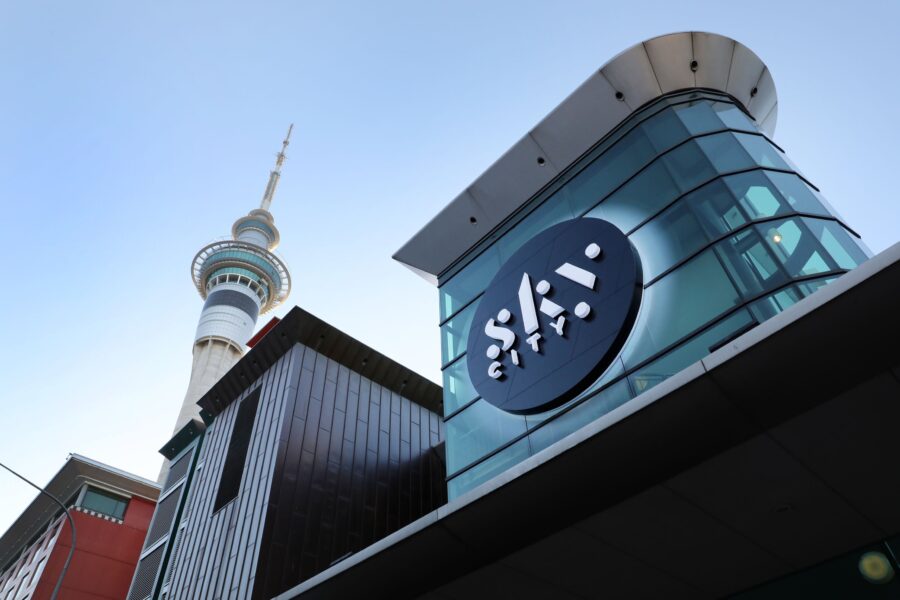
New Zealand Stock Exchange-listed casino operator SkyCity Entertainment Group is continuing its search for a buyer to take over its entire business, despite rejecting two proposals last month, arguing that they did not “reflect the underlying value of the company.”
According to The Post, SkyCity’s board told shareholders that earlier bids from US asset management firm Oaktree Capital Management and Australian property development group Iris Capital were too low. Despite that, the board remains in active talks with the bidders while also trying to engage more groups interested in buying SkyCity.

At the time of the bids, SkyCity’s shares were trading at NZ$0.64 (US$0.36)1 NZD = 0.5639 USD
2026-09-30Powered by CMG CurrenShift per share. Oaktree Capital Management had offered NZ$0.70 (US$0.39)1 NZD = 0.5639 USD
2026-09-30Powered by CMG CurrenShift in cash for each share, while Iris Capital had submitted an implied offer of NZ$0.75 (US$0.42)1 NZD = 0.5639 USD
2026-09-30Powered by CMG CurrenShift per share. Oaktree’s offer would have valued SkyCity at NZ$772 million (US$435 million)1 NZD = 0.5639 USD
2026-09-30Powered by CMG CurrenShift, while Iris’ offer valued the group at NZ$827 million (US$466 million)1 NZD = 0.5639 USD
2026-09-30Powered by CMG CurrenShift.
The company has also appointed the financial firm UBS and the legal group Chapman Tripp to engage with interested parties. The group said that it was also “evaluating other opportunities,” adding that there was no certainty that the process would “result in any transaction or other outcome.”
At the same time, SkyCity is also undergoing a company-wide restructuring. The group has already cut NZ$30 million (US$17 million)1 NZD = 0.5639 USD
2026-09-30Powered by CMG CurrenShift in costs during the current financial year, aiming to increase that to NZ$70 million (US$39 million)1 NZD = 0.5639 USD
2026-09-30Powered by CMG CurrenShift next year. The group has also reportedly laid off over 200 corporate staff.

SkyCity is aiming to bolster its operations by expanding into New Zealand’s upcoming online gaming market. A total of 15 licenses are up for grabs, with the auction process currently underway and set to end on 14 October.
While SkyCity looks to expand into the market, its online casino operations are also under legal scrutiny. In March, a lawsuit was brought against the company, SkyCity Auckland Holdings, and the Malta-based company Silvereye Entertainment, which runs its online platform.
Charlotte Capewell brings her passion for storytelling and expertise in writing, researching, and the gambling industry to every article she writes. Her specialties include the US gambling industry, regulator legislation, igaming, and more.

Dig Deeper
Related stories
 2026/08/26: SkyCity rejects two takeover proposals that “did not adequately reflect the underlying value of the company”
2026/03/06: SkyCity faces lawsuit over online casino operations
2025/02/20: SkyCity targets New Zealand online casino license in preparation for ‘Day 1 launch’
2025/03/11: New Zealand’s SkyCity calls on government to limit online gaming licenses to five
2026/08/26: SkyCity rejects two takeover proposals that “did not adequately reflect the underlying value of the company”
2026/03/06: SkyCity faces lawsuit over online casino operations
2025/02/20: SkyCity targets New Zealand online casino license in preparation for ‘Day 1 launch’
2025/03/11: New Zealand’s SkyCity calls on government to limit online gaming licenses to five
2026/08/26: SkyCity rejects two takeover proposals that “did not adequately reflect the underlying value of the company”
2026/03/06: SkyCity faces lawsuit over online casino operations
2025/02/20: SkyCity targets New Zealand online casino license in preparation for ‘Day 1 launch’
2025/03/11: New Zealand’s SkyCity calls on government to limit online gaming licenses to five
The Backstory
Lowball bids put SkyCity’s valuation in focus
SkyCity Entertainment Group’s decision to keep searching for a buyer for the entire company follows months of pressure on the casino operator’s earnings, balance sheet and growth strategy. The New Zealand-listed group has rejected two takeover proposals, but its board has left the door open to a transaction if bidders improve their terms and address conditions that directors viewed as too burdensome.
The earlier proposals placed a public marker on what financial buyers and strategic investors were willing to pay for an operator with dominant land-based assets in New Zealand, exposure to Australia and a potential entry point into a newly regulated online casino market. Oaktree Capital Management offered NZ$0.70 a share in cash, while another party, later reported as Iris Capital, made an indicative offer of NZ$0.75 a share. SkyCity said the proposals were unsolicited, conditional and nonbinding, requiring due diligence, debt financing, regulatory approvals and shareholder support.
The board’s rejection was not a refusal to engage. In turning down the two takeover proposals, SkyCity said the offers did not reflect the company’s underlying value and invited revised bids that dealt with its concerns. No improved proposals were submitted at the time, but the company’s later move to appoint advisers and continue discussions suggests the board sees value in testing the market rather than closing the process.
A strategic reset preceded the sale process
The takeover interest did not emerge in isolation. SkyCity had already begun a broad restructuring after reporting weaker earnings and outlining a strategic reset. The company disclosed a 38% drop in net profit and flagged job cuts, including potential reductions in Auckland. It also began an asset monetization program expected to raise NZ$275 million to NZ$300 million, including the sale of an office building and investment properties near SkyCity Auckland, along with a nonbinding agreement to sell The Grand Hotel.
Those actions indicate a company trying to reduce leverage, simplify operations and free capital while maintaining its core casino footprint. SkyCity’s Auckland property remains its flagship asset, supported by smaller casinos in Hamilton and Queenstown and an Australian operation in Adelaide. The group’s land-based portfolio gives it scale and brand recognition, but it also carries high fixed costs, regulatory obligations and exposure to consumer spending cycles.
Cost cutting has become a central part of the story. The company has already removed NZ$30 million in costs during the current financial year and is targeting NZ$70 million next year. More than 200 corporate roles have reportedly been eliminated. For potential acquirers, those savings may support a higher valuation if they can be sustained. For shareholders, the restructuring raises the question of whether SkyCity is worth more as a turnaround company than as a sale candidate at current share prices.
Online casino regulation reshapes the investment case
The most important growth variable is New Zealand’s move to regulate online casino gambling. SkyCity already operates SkyCity Online Casino through a Malta-licensed platform, but domestic regulation would allow the company to compete at home under a formal licensing system. The government plans to offer up to 15 licenses, creating a market that SkyCity has estimated could be worth about NZ$1 billion.
SkyCity has made a local license a priority. In February, the company said it was preparing for a “Day 1 launch” in New Zealand’s regulated online casino market, emphasizing its land-based customer database, brand recognition and ability to connect digital gambling with its casino properties. The company has argued that its domestic footprint gives it an advantage in customer acquisition, responsible gambling controls and VIP management.
That prospective growth is one reason SkyCity’s board may view the rejected bids as too low. A buyer that takes control before licenses are awarded could acquire not only established casinos but also an option on a regulated online market. The timing is therefore material: The closer New Zealand moves toward license awards and market launch, the easier it becomes for bidders and shareholders to price the opportunity, but competition may also erode the value of that opportunity.
License competition weakens the incumbent advantage
SkyCity has pushed for a narrower licensing framework, arguing that New Zealand should issue fewer online casino licenses and favor domestic companies. The company’s position reflects the commercial logic of scarcity. A market with five licenses would likely be more valuable to each holder than one with 15, especially if major offshore operators are allowed to compete.
The government has not embraced that argument. Internal Affairs Minister Brooke van Velden has said the goal is to create a fair regulated market rather than protect incumbents. She also has warned that favoring local firms could raise trade agreement issues. SkyCity’s lobbying for a smaller license pool, detailed in its call for New Zealand to limit online gaming licenses to five, underscored the tension between public policy and incumbent economics.
That tension has grown as foreign and regional operators circle the market. Stake, Virtual Gaming Worlds, Dabble and Entain have all been linked to potential bids for New Zealand online casino licenses. Their interest, outlined in reports on Australian operators eyeing New Zealand licenses, suggests SkyCity may face well-capitalized competitors with digital expertise and established online brands.
For SkyCity, the online market is both a catalyst and a risk. A license could diversify earnings away from land-based casinos and help monetize its local customer base. But if the auction attracts aggressive bidders, license costs could rise and future margins could narrow. For a potential acquirer, that uncertainty complicates valuation and may explain why initial offers were structured as conditional proposals requiring extended diligence.
Legal scrutiny clouds the online transition
SkyCity’s current online operations also carry legal risk. The company, SkyCity Auckland Holdings and Malta-based Silvereye Entertainment face proceedings in New Zealand connected to SkyCity Online. The case seeks to test whether the company’s online gaming activities comply with the law and includes an application to bring a funded class action on behalf of customers who allegedly lost money on the platform between February 2020 and February 2026.
The legal challenge matters because New Zealand law currently permits the New Zealand Lotteries Commission as the sole legal provider of online gambling games in the country, while residents can access offshore sites. SkyCity has said its online casino is operated by Silvereye, a subsidiary of Gaming Innovation Group, under a Malta gaming license. The company denies liability and has said it will defend the proceedings.
The case, described in detail when SkyCity faced legal action over its online casino operations, arrives at a sensitive moment. The company is trying to position itself as a responsible local operator ready for regulation, while the lawsuit raises questions about the legal status of its pre-regulation online model. Even if SkyCity ultimately prevails, the litigation may affect bidder diligence, regulatory perception and investor confidence.
The stakes for shareholders and bidders
SkyCity’s buyer search is therefore a test of competing views about value. The board is signaling that the company’s assets, cost reductions and online prospects justify more than the rejected offers. Potential buyers are likely to focus on the same factors but discount them for execution risk, litigation, regulatory uncertainty and the capital required to compete in a newly opened online market.
Shareholders face a trade-off. A sale could provide near-term certainty after a period of weaker earnings and restructuring. Remaining independent could preserve upside if cost cuts hold, asset sales strengthen the balance sheet and SkyCity wins a valuable online license. But independence also leaves investors exposed to operational pressure and the risk that online regulation benefits global rivals as much as, or more than, the local incumbent.
The process now puts pressure on SkyCity’s advisers to draw out bidders willing to pay for future optionality rather than only current earnings. It also puts pressure on the board to prove that rejecting the earlier proposals was in shareholders’ interests. Without a higher bid or clearer evidence that the strategic reset is lifting performance, the rejected valuations may continue to anchor market expectations.
