


SkyCity rejects two takeover proposals that “did not adequately reflect the underlying value of the company”

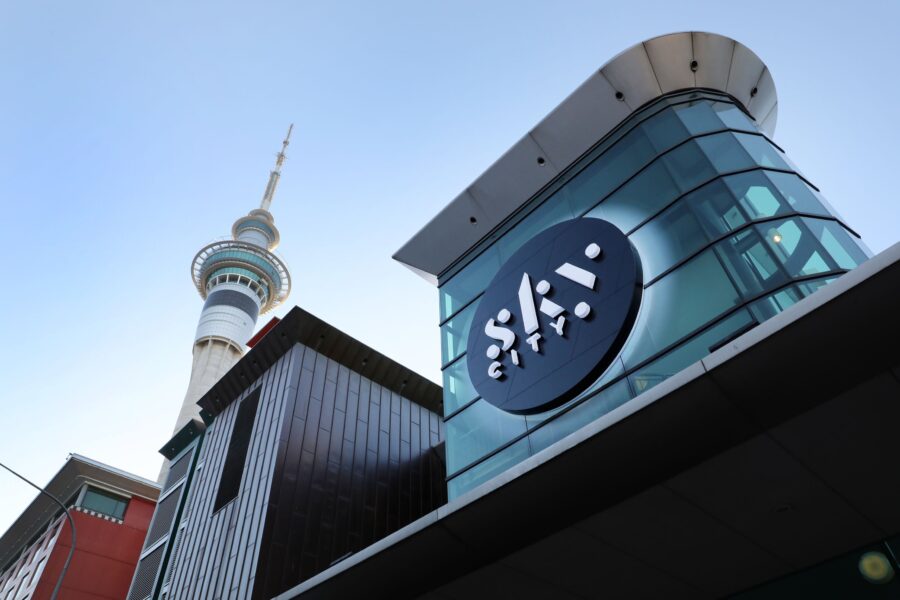
New Zealand-based casino and igaming operator SkyCity Entertainment Group has rejected two takeover proposals, after its board determined the offers didn’t adequately reflect the company’s value.
In a statement released on Tuesday, SkyCity said one proposal came from a special situations fund managed by investment management firm Oaktree Capital Management, which offered NZ$0.70 (US$0.42)1 NZD = 0.5953 USD
2026-08-26Powered by CMG CurrenShift in cash for each share. A second party made an indicative offer of NZ$0.75 (US$0.45)1 NZD = 0.5953 USD
2026-08-26Powered by CMG CurrenShift per share.

According to SkyCity, both offers were unsolicited, conditional, nonbinding and required at least eight weeks of due diligence and debt financing, as well as agreement on the transaction structure, regulatory approvals and SkyCity shareholder approval.
In its statement, the SkyCity board confirmed that some of the conditions attached to the offers were unacceptable and that it had rejected both.
“The Board unanimously determined that these proposals did not adequately reflect the underlying value of the company, and that the conditions were problematic. Accordingly, the parties were advised that SkyCity was not prepared to proceed on the terms proposed. SkyCity did indicate to each party that it was prepared to consider engaging further, including providing due diligence information, if they provided a revised proposal which addressed these issues. Neither party submitted a revised, improved proposal,” indicated the company release.

The takeover proposals come after SkyCity announced a strategic reset in response to its FY26 results, in which the company revealed a 38% drop in net profit, having previously said that up to 200 jobs could be at risk in its Auckland location.
It has announced an asset monetization program that it expects to generate gross proceeds of NZ$275 million (US$164 million)1 NZD = 0.5953 USD
2026-08-26Powered by CMG CurrenShift to NZ$300 million (US$179 million)1 NZD = 0.5953 USD
2026-08-26Powered by CMG CurrenShift, including the sale of an office building and investment properties located near SkyCity Auckland and it has entered into a non-binding agreement for the sale of The Grand Hotel.
The consolidation comes as SkyCity looks to join New Zealand’s upcoming online gaming market, with the company having expressed interest in securing a license.

New Zealand’s online gaming operators are expected to go live in December.
SkyCity already operates a Malta-based online gaming platform but has confirmed its interest in being licensed in its home country – providing an opportunity to leverage its database of patrons from its land-based operations.
SkyCity operates four casino properties in New Zealand and one in Australia.

Dig Deeper
Related stories
 2026/03/06: SkyCity faces lawsuit over online casino operations
2025/02/20: SkyCity targets New Zealand online casino license in preparation for ‘Day 1 launch’
2025/03/11: New Zealand’s SkyCity calls on government to limit online gaming licenses to five
2026/03/06: SkyCity faces lawsuit over online casino operations
2025/02/20: SkyCity targets New Zealand online casino license in preparation for ‘Day 1 launch’
2025/03/11: New Zealand’s SkyCity calls on government to limit online gaming licenses to five
 2026/08/20: Stake, VGW, and Dabble among Australian operators eyeing New Zealand online casino licenses
2026/03/06: SkyCity faces lawsuit over online casino operations
2025/02/20: SkyCity targets New Zealand online casino license in preparation for ‘Day 1 launch’
2025/03/11: New Zealand’s SkyCity calls on government to limit online gaming licenses to five
2026/08/20: Stake, VGW, and Dabble among Australian operators eyeing New Zealand online casino licenses
The Backstory
Pressure builds around a discounted valuation
SkyCity Entertainment Group’s rejection of two unsolicited takeover approaches follows a period in which the casino operator has been trying to persuade investors that its public market value does not reflect the earnings potential of its assets, brand and prospective online gambling position. The proposals, at NZ$0.70 and NZ$0.75 a share, arrived after a sharp reset in expectations, including weaker earnings, job-risk warnings and a plan to monetize noncore property holdings.
The board’s response indicates that SkyCity sees the approaches less as a control premium than as an attempt to buy into a strained balance sheet and regulatory transition at a low point. The company said both proposals were conditional, nonbinding and dependent on due diligence, financing, regulatory approvals and shareholder support. That combination gave the board room to reject the bids while still signaling it would consider improved terms that addressed value and execution risk.
The takeover interest is notable because SkyCity’s near-term earnings outlook has been clouded by cost reductions and restructuring, while its medium-term narrative increasingly depends on New Zealand’s move to regulate online casino gaming. The result is a company with mature land-based assets, property holdings that can be sold and a potentially valuable digital opportunity, but also litigation, regulatory scrutiny and political uncertainty.
A reset tied to cash, costs and property sales
SkyCity’s defensive stance cannot be separated from its recent strategic reset. The company disclosed a 38% decline in net profit in its FY26 results and previously said as many as 200 jobs could be at risk at its Auckland business. Management also outlined an asset monetization program targeting gross proceeds of NZ$275 million to NZ$300 million, including the sale of an office building, investment properties near SkyCity Auckland and a nonbinding agreement for the sale of The Grand Hotel.
Those steps are designed to strengthen the balance sheet and narrow the company’s focus at a time when investors are scrutinizing casino operators’ leverage, compliance costs and growth options. Asset sales can provide liquidity, but they also highlight the tension at the center of the SkyCity investment case: the company is attempting to sell or streamline parts of its physical footprint while preparing to invest in a regulated online market that could reshape gambling revenue in New Zealand.
In that context, a buyer with access to capital could view SkyCity as a restructuring opportunity. The board, however, appears to be arguing that the benefits of the reset should accrue to existing shareholders rather than to a bidder entering before the online market opens and before property transactions are completed.
Online gambling shifts from risk to strategic prize
The largest strategic swing factor is New Zealand’s pending online casino regime. SkyCity has already identified a domestic online gaming license as a priority, saying it wants to be ready for a “Day 1 launch” once the market is regulated. The company currently operates SkyCity Online Casino through Malta-based arrangements, but a local license would allow it to connect its land-based brand, customer database and host responsibility systems to a legal online offer.
That ambition was laid out in SkyCity’s plan to target a New Zealand online casino license, where the company described “significant growth potential” in a regulated market and positioned itself as a local operator with established customer relationships. The government’s stated aim has been to channel New Zealanders away from thousands of offshore gambling sites and toward a smaller group of licensed operators, rather than to increase gambling overall.
For SkyCity, the stakes are material. A regulated online market could create a new earnings stream without the same capital intensity as casinos and hotels. It also could help offset pressure on physical properties, where staffing, compliance and tourism cycles weigh on margins. That prospective upside helps explain why the board may believe low-price takeover approaches undervalue the business.
Market design threatens incumbents’ advantage
The online opportunity is not guaranteed to favor SkyCity. The government has considered issuing as many as 15 online casino licenses, a structure that could bring significant foreign competition into a relatively small market. SkyCity has argued for a narrower regime, including limits closer to five licenses and an emphasis on New Zealand-incorporated companies, according to its push to restrict the number of online gaming licenses.
That lobbying underscored the commercial stakes. A five-license market weighted toward local firms would likely strengthen SkyCity’s hand, while a broader auction could dilute its advantage and increase customer acquisition costs. Internal Affairs Minister Brooke van Velden has publicly resisted designing the regime around incumbents, saying the objective is a fair regulated market rather than protecting SkyCity or any existing brand. She also raised the risk that favoring domestic firms could conflict with trade obligations.
Potential bidders for SkyCity must therefore value a business whose online prospects depend partly on political and regulatory decisions still being settled. A license could be lucrative, but the price of acquiring customers in a competitive auction environment could be high, especially if well-capitalized international and Australian-linked operators enter the market.
Rivals circle the same digital opening
Competition for New Zealand online casino licenses is already shaping up. Several Australian-linked operators, including Stake, VGW and Dabble, have been associated with interest in the market, while Entain, which runs New Zealand sports and race betting operator TAB, is also understood to be among potential applicants. That competitive field was detailed in coverage of Australian operators eyeing New Zealand online casino licenses.
Those prospective entrants matter for SkyCity’s valuation. The company’s land-based footprint gives it brand recognition and a customer base, but online gambling markets often reward digital marketing scale, product depth and promotional budgets. Operators such as Stake and Entain have experience expanding across jurisdictions, while VGW has built large digital gaming operations. SkyCity’s advantage is local trust and an established regulatory presence; its challenge is converting that into digital market share without excessive spending.
This competitive backdrop gives takeover bidders a rationale for moving before the license auction and launch. If SkyCity wins a license and demonstrates early traction, its valuation could rise. If it loses out or faces intense competition, the upside narrows. The board’s rejection suggests it views the probability-weighted outcome more favorably than the bid prices implied.
Litigation adds another layer of uncertainty
SkyCity’s online strategy also faces legal risk. The company is defending proceedings tied to SkyCity Online, including claims involving SkyCity, SkyCity Auckland Holdings and Malta-based Silvereye Entertainment. The case seeks to test whether the company’s online gaming activities comply with New Zealand law and includes an application to proceed as a funded class action on behalf of customers who allegedly lost money through the platform between February 2020 and February 2026.
The lawsuit, described in coverage of legal action over SkyCity’s online casino operations, goes to the heart of the company’s transition. New Zealand’s current framework allows residents to access offshore gambling sites, while the New Zealand Lotteries Commission remains the sole legal domestic provider of online gambling games. SkyCity says its platform is operated by Silvereye under a Malta license and denies liability.
That legal overhang could complicate both a takeover and a license bid. Buyers would need to assess potential damages, reputational risk and regulatory implications. Regulators considering online licenses may also examine past conduct and operating structures. Even if SkyCity successfully defends the proceedings, the dispute reinforces why its valuation is contested: the company is both exposed to near-term legal and operational pressures and positioned for a potentially transformative regulated market.
The board’s rejection of the takeover proposals therefore fits a broader pattern in gambling dealmaking, where operators weigh cash certainty against strategic optionality. The recent Australian example of PointsBet rejecting Betr’s proposal in favor of MIXI’s cash offer showed how boards can prefer cleaner execution and clearer value when competing bids carry integration or market risks. SkyCity’s situation differs, but the principle is similar: price alone is not enough if conditions, timing and regulatory uncertainty leave shareholders carrying too much risk.
