


Analysts: SkyCity New Zealand online licensing is strategic, with neutral financial impact

After the announcement that 11 entities had earned the right to apply for the 15 online casino licenses up for grabs in New Zealand, investment firm Forsyth Barr has noted that SkyCity Entertainment Group’s venture could be “net present value (NPC) neutral,” with the rate of return broadly in line with the cost of capital.
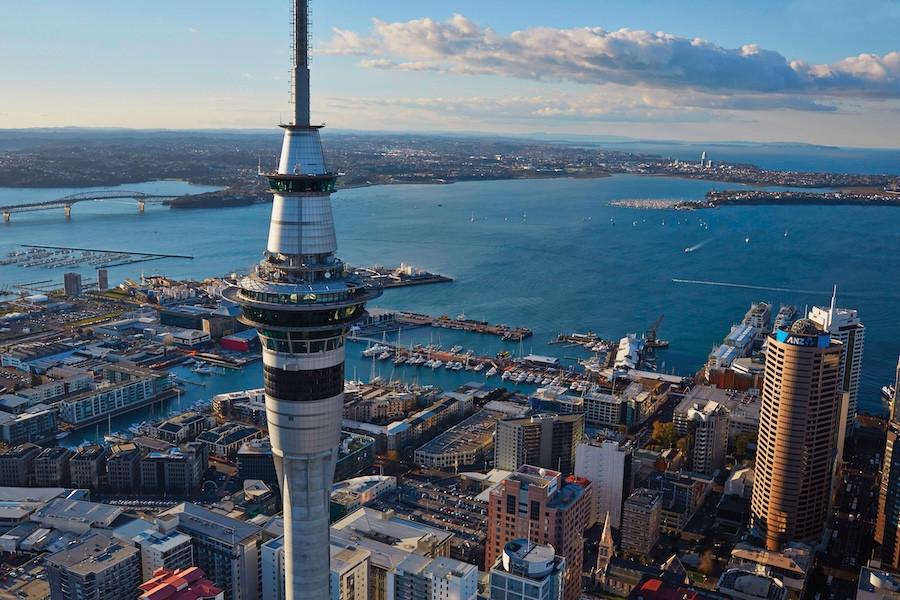
SkyCity is New Zealand’s largest integrated resort operator, with its flagship SkyCity Auckland, a casino in Hamilton and Queenstown, as well as SkyCity Adelaide in Australia. The group already operates an online arm, SkyCity Online, based in Malta.

As reported by CiG’s sister publication Inside Asian Gaming, the analysis by Forsyth Barr projects that online gaming would contribute just 5% of SkyCity’s group pre-overhead EBITDA once fully operational.
The group notes that the investment is likely more strategic than financial, noting “becoming a meaningful online operator could help insulate SkyCity from any migration away from its land-based casino to online.”
SkyCity had registered its opposition to the government’s plan to allow 15 online casino licenses, pushing to limit the number to five, a similar position expressed by online sports betting operator TAB.

The group also recently indicated that it was looking for a buyer to take over its business, after rejecting two previous proposals that it deemed too low.
Now the group is facing a NZ$15 million (US$8.4 million)1 NZD = 0.5627 USD
2026-10-14Powered by CMG CurrenShift fee per license, meaning NZ$30 million (US$17 million)1 NZD = 0.5627 USD
2026-10-14Powered by CMG CurrenShift for both it’s procuring.
According to Forsyth Barr, “We model the online opportunity as a discrete eight-year project and estimate the opportunity is broadly NPV neutral with our forecast project IRR (internal rate of return) in line with its cost of capital. The commercial assumptions we use to derive this outcome are likely more conservative than SkyCity’s business case given its own hurdle rates are likely to be in excess of its own cost of capital.”

Despite the analysts’ forecast, SkyCity CEO Jason Walbridge struck a positive tone in a Tuesday filing, noting “We are excited to have been successful in the auction to apply for two licenses and to be taking the next step towards entering the online casino gambling market in New Zealand. We know New Zealanders trust the SkyCity brand, and we will combine that trust with our deep knowledge of the New Zealand market to build a successful online business here.”
Looking at the market overall, the Forsyth Barr analysts assume a pre-regulation market size of NZ$1.4 billion (US$788 million)1 NZD = 0.5627 USD
2026-10-14Powered by CMG CurrenShift, stabilized channelization rate of 70% and market growth of around 7% over the initial five-year period post regulation, normalizing at 5% thereafter. SkyCity’s share is seen at around 13% assuming two licenses, or 7% with one.

Dig Deeper
Related stories
 2026/08/26: SkyCity rejects two takeover proposals that “did not adequately reflect the underlying value of the company”
2026/09/30: SkyCity announces active buyer search to take over entire business
2026/03/06: SkyCity faces lawsuit over online casino operations
2025/03/11: New Zealand’s SkyCity calls on government to limit online gaming licenses to five
2026/08/26: SkyCity rejects two takeover proposals that “did not adequately reflect the underlying value of the company”
2026/09/30: SkyCity announces active buyer search to take over entire business
2026/03/06: SkyCity faces lawsuit over online casino operations
2025/03/11: New Zealand’s SkyCity calls on government to limit online gaming licenses to five
2026/08/26: SkyCity rejects two takeover proposals that “did not adequately reflect the underlying value of the company”
2026/09/30: SkyCity announces active buyer search to take over entire business
2026/03/06: SkyCity faces lawsuit over online casino operations
2025/03/11: New Zealand’s SkyCity calls on government to limit online gaming licenses to five
The Backstory
Online pivot comes as SkyCity weighs its next act
SkyCity Entertainment Group’s push into New Zealand’s regulated online casino market is not an isolated growth initiative. It sits at the center of a broader strategic reset for the country’s largest casino operator, which is trying to defend its domestic customer base, stabilize earnings and preserve optionality as potential buyers circle the company.
The immediate catalyst is New Zealand’s move to license online casino gambling, bringing a market long served by offshore operators into a domestic regulatory framework. SkyCity has positioned itself to be ready from the start, saying earlier this year that obtaining a local license was a key priority and that it was preparing for a “Day 1 launch” in New Zealand’s regulated online casino market. The company framed the opportunity as a way to become an “online local hero,” using its land-based casino brand, customer database and host responsibility systems to compete with international operators.
That ambition now intersects with a more complex financial picture. SkyCity has been cutting costs, selling assets and testing market interest in the whole business after takeover approaches it deemed too low. Online gambling offers a route to relevance in a market that is moving beyond physical casino floors, but analysts have cautioned that the upside may be more defensive than transformative.
Regulation shifted the market from offshore tolerance to licensed competition
New Zealand’s online casino framework was designed to channel gamblers away from thousands of offshore websites and toward a limited group of licensed operators. The government’s approach is premised on consumer protection, tax capture and clearer oversight rather than an explicit goal of expanding gambling. Licenses are expected to create a regulated market where advertising, responsible gambling obligations and operator conduct can be monitored domestically.
For SkyCity, the policy shift opened a formal pathway to run an online casino in its home market. Its existing SkyCity Online Casino has been operated through Malta, with the company saying the platform is run by Silvereye Entertainment, a subsidiary of Gaming Innovation Group, under a Malta license. That offshore structure allowed SkyCity to participate in digital casino gaming before New Zealand created a local licensing regime, but it also exposed a legal and reputational fault line.
In March, the company disclosed that it was facing legal action testing whether its online casino activities complied with New Zealand law. The proceedings were brought against SkyCity, SkyCity Auckland Holdings and Silvereye Entertainment, and included an application to bring the case as a funded class action for customers who allegedly lost money through SkyCity Online over a multiyear period. SkyCity denied liability and said it would defend the matter. The case underscored why a domestic licensing regime matters: It could reduce ambiguity around who may offer online casino products to New Zealanders and under what conditions.
That legal backdrop makes SkyCity’s licensing effort more than a commercial expansion. A local license could strengthen the company’s regulatory footing, align its online offering with domestic rules and reduce reliance on a structure that has drawn scrutiny.
SkyCity wanted a smaller field before joining the race
SkyCity has not been a passive supporter of the government’s preferred model. The company argued that the number of online casino licenses should be capped at five, rather than as many as 15, and that licenses should be restricted to New Zealand-incorporated companies. Its position mirrored concerns from TAB NZ, which also warned that a broad market could leave domestic gambling operators vulnerable to multinational competitors.
The company’s argument was rooted in tax capture, consumer protection and domestic accountability. It told the government that the safest way to ensure online casino profits were subject to New Zealand income tax was to limit license holders to incorporated New Zealand companies. But the policy response was pointed. Internal Affairs Minister Brooke van Velden said the government was not there to protect SkyCity or any incumbent brand and was seeking a fair, regulated market.
The dispute highlighted the tension at the heart of the reforms. SkyCity’s land-based casinos give it an established brand, local customer relationships and operational infrastructure. But those advantages do not guarantee dominance in a digital market where international operators often bring larger marketing budgets, deeper online experience and established product platforms. A smaller license pool would likely have increased the value of each permit and limited competitive pressure. A 15-license framework forces SkyCity to compete more directly for online share.
Even after opposing the breadth of the framework, SkyCity moved quickly to participate. That sequence reflects the company’s practical calculation: If online casino gambling is going to be regulated in New Zealand, sitting out would risk ceding digital relationships with its own customers to offshore rivals and new licensed entrants.
Takeover pressure raised the stakes around digital strategy
SkyCity’s online ambitions are unfolding while the company is under pressure in public markets and from potential acquirers. The operator rejected two unsolicited takeover proposals after its board concluded they did not adequately reflect the company’s value. One came from a special situations fund managed by Oaktree Capital Management at NZ$0.70 a share, while another party offered NZ$0.75 a share. The bids were conditional, nonbinding and subject to due diligence, financing, regulatory approvals and shareholder approval.
The rejection did not end the process. SkyCity later said it was continuing an active search for a buyer to take over the entire business, even after concluding that the earlier approaches from Oaktree and Iris Capital were too low. The company appointed UBS and Chapman Tripp to engage with interested parties while emphasizing there was no certainty of a transaction.
That review followed operational strain. SkyCity had reported a 38% drop in net profit, signaled job reductions and launched an asset monetization program expected to raise NZ$275 million to NZ$300 million. It also moved to cut costs, including corporate staff reductions, with a target to build on NZ$30 million in savings during the current financial year and reach NZ$70 million next year.
Against that backdrop, a credible online strategy can influence how investors and bidders value the company. It may not add immediate earnings of the same scale as the core casinos, but it can help protect customer relationships, demonstrate growth optionality and reduce the perception that SkyCity is tied solely to mature physical assets.
Analysts see protection more than a profit surge
The investment case for SkyCity’s online move appears measured. Forsyth Barr’s analysis, reported by Inside Asian Gaming, projected that online gaming would contribute only about 5% of SkyCity’s group pre-overhead EBITDA once fully operational. The firm estimated the opportunity as broadly net present value neutral, with returns roughly in line with the company’s cost of capital.
That assessment suggests the online license is strategic insurance rather than a major earnings reset. The key risk for SkyCity is migration: Customers who might once have visited its physical casinos could shift more spending online, either with SkyCity or with competitors. By securing online licenses, the company can try to retain those customers within its ecosystem, link digital play with its land-based loyalty and VIP programs and use its brand trust in a market where consumer protection is a central policy objective.
The economics are still meaningful. The company faces a NZ$15 million fee per license, making the upfront cost material if it pursues two. Analysts have assumed a sizable pre-regulation market and a channelization rate that could bring most activity into licensed operators over time. But market share will be contested, and the presence of multiple license holders could compress returns through marketing spending, bonuses and platform investment.
SkyCity Chief Executive Jason Walbridge has emphasized confidence in the brand and the company’s knowledge of the New Zealand market. That message is aimed at regulators, investors and potential customers alike. The challenge will be converting local recognition into profitable digital scale while the company manages legal proceedings, restructuring and possible ownership change.
The broader bet is control of the customer relationship
SkyCity’s backstory in online gambling is therefore one of adaptation under pressure. The company first used an offshore structure to enter digital casino gaming, then pushed for a tighter domestic licensing model, then prepared to compete when the government opted for a broader field. Each step reflects the same underlying issue: control of the gambling customer relationship as the market shifts from physical venues to omnichannel play.
For the government, the licensing regime is a way to impose rules on activity that already exists. For SkyCity, it is a way to prevent digital competitors from eroding its core business and to show investors that its brand can travel beyond casino floors in Auckland, Hamilton and Queenstown. For potential acquirers, the licenses could become part of the valuation debate, adding strategic optionality even if analysts do not expect a near-term earnings windfall.
The stakes are clearest in the company’s balancing act. SkyCity must invest in online capability at a time when it is cutting costs and selling assets. It must compete in a market it wanted more tightly controlled. And it must defend legacy online operations while seeking a domestic license that could provide a cleaner path forward. The outcome will help determine whether SkyCity’s online push becomes a modest hedge against disruption or a central pillar of its next ownership and growth story.
