


Proposed Washington D.C. bill would legalize online casinos while banning sweepstakes sites

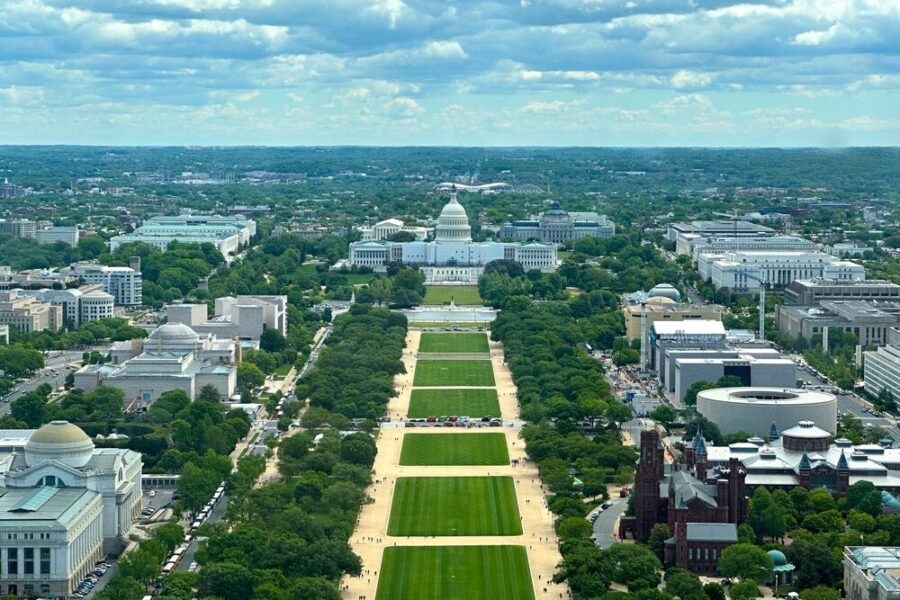
A lawmaker in Washington D.C. has proposed a bill that would legalize online casino gambling while banning dual-currency sweepstakes gaming in the District.
Councilmember Wendell Felder’s Internet Gaming and Consumer Protection Act of 2026 (B26-0656) would establish a regulated market for online casino games, along with consumer protection, licensing and taxation rules.

The bill also proposes a ban on dual-currency sweepstakes gaming platforms that allow virtual credits like sweepstakes coins to be exchanged directly or indirectly for cash or prizes. Penalties would reach up to US$100,000 per violation, increasing to US$500,000 for repeat offenses.
Councilmember Felder’s bill proposes an age limit of 21, along with a 25% tax on operator gross gaming revenue and an initial licensing fee of US$2 million. The licenses would be valid for five years, with renewals costing US$500,000.
The proposal follows a public hearing in May this year, where the Executive Director of the Office of Lottery and Gaming, Thomas R Burnside, said he knew of at least 20 unlicensed sweepstakes sites operating in the District.

He described their legal status as a gray area because District law does not currently specifically define sweepstakes products.
The proposal comes amid wider US efforts to restrict sweepstakes casinos, with multiple states adopting explicit bans or pursuing operators under existing gambling laws.
Iowa signed Senate File 2289 into law in May this year, expanding regulators’ powers to pursue sweepstakes casinos and other unlicensed gambling operators, while Florida Attorney General James Uthmeier filed lawsuits against sweepstakes casino operators, alleging illegal gambling.
Charlotte Capewell brings her passion for storytelling and expertise in writing, researching, and the gambling industry to every article she writes. Her specialties include the US gambling industry, regulator legislation, igaming, and more.

Dig Deeper
Related stories
 2026/06/16: Lobbying efforts underway in Washington, D.C. to legalize online gambling
 2026/10/12: Wyoming lawmakers vote to introduce legislation banning online sweepstakes casinos
 2025/03/05: New York Senator proposes sweepstakes ban
 2026/08/21: Florida AG sues sweepstakes operators over alleged illegal gambling
2026/06/16: Lobbying efforts underway in Washington, D.C. to legalize online gambling
2026/10/12: Wyoming lawmakers vote to introduce legislation banning online sweepstakes casinos
2025/03/05: New York Senator proposes sweepstakes ban
2026/08/21: Florida AG sues sweepstakes operators over alleged illegal gambling
The Backstory
D.C. proposal lands amid a national sweepstakes crackdown
Washington, D.C.’s push to legalize online casino gambling while outlawing dual-currency sweepstakes sites reflects two converging trends in U.S. gambling policy: states are searching for new regulated digital revenue and lawmakers are moving to close what they increasingly describe as a sweepstakes loophole.
The bill from Councilmember Wendell Felder would put the District in the small group of jurisdictions seeking to authorize full internet casino gambling, not just sports betting. At the same time, it would draw a hard line against platforms that offer casino-style games through virtual currencies that can be redeemed, directly or indirectly, for cash or prizes. That distinction has become central to legislative fights from New York to Wyoming and litigation in Florida.
The measure also arrives after months of political activity around gambling in the District. Pro-gambling groups have stepped up spending as the 2026 local election cycle approaches, and industry-backed advocates have argued that regulated internet gaming would keep money now flowing to offshore or unlicensed platforms inside the District. Critics have countered that expanded access could worsen gambling harm and create new costs for treatment and enforcement.
Lobbying turned online gambling into a D.C. election issue
The District’s current proposal did not emerge in a vacuum. Earlier this year, lobbying around online gambling in Washington, D.C. intensified as industry-aligned groups pushed for legalization and regulation of internet casino games.
American Future, a pro-gambling super PAC funded largely by the gaming industry, sent mailers supporting several local lawmakers, including Council Chairman Phil Mendelson and council members Zachary Parker, Charles Allen and Doni Crawford. The campaign reportedly cost $417,000, underscoring how quickly online gambling policy had moved from a niche regulatory issue to a subject of broader political spending.
The Sports Betting Alliance, whose members include DraftKings and FanDuel, also reportedly retained local law firms at a cost of $41,000 a month to lobby for passage of Felder’s bill. For supporters, the central argument has been fiscal and regulatory: residents are already accessing gambling products online, so the District should tax the activity, license operators and impose consumer protections rather than leave the market to offshore or unlicensed operators.
That case has met skepticism on the council. At-Large Councilmember Christina Henderson warned during a public hearing that revenue raised by internet gaming could be offset by the social costs of addiction and the need for treatment. The debate has therefore centered not only on whether online casino gambling should be permitted, but whether legalization is a consumer protection measure or a state-backed expansion of gambling risk.
Sweepstakes model becomes the legal flashpoint
The most consequential part of the District bill may be its treatment of sweepstakes casinos. These platforms typically market themselves as social casinos or promotional games, offering one currency for play and another that can be redeemed for prizes or cash equivalents. Operators argue that free-entry options and promotional structures distinguish them from gambling. Regulators and prosecutors increasingly say the resemblance to casinos is too strong to ignore.
That divide was visible in New York Sen. Joseph Addabbo’s proposed sweepstakes ban, introduced in March. The New York bill sought to define online sweepstakes games as internet or mobile contests using dual-currency systems that allow players to win cash, cash equivalents or prizes while simulating casino-style games such as slots, keno, bingo and sports wagering.
Addabbo’s approach is notable because it paired prohibition of unregulated sweepstakes activity with support for regulated igaming. That mirrors the policy structure now appearing in Washington, D.C.: lawmakers are not necessarily rejecting online casino games outright, but they want them inside licensing, tax and responsible gambling systems. In that framework, sweepstakes casinos are cast as competitors operating outside the rules rather than as harmless promotional entertainment.
The District’s proposed penalties, reaching $100,000 per violation and $500,000 for repeat offenses, suggest an enforcement-first posture. The bill would give regulators a clearer statutory basis to act against operators whose legal status has been uncertain under existing District law.
Other states have moved through courts and legislatures
Florida has pursued the sweepstakes issue through litigation rather than a new legalization framework. Attorney General James Uthmeier sued several sweepstakes casino operators over alleged illegal gambling, including platforms tied to Stake and VGW, the company behind Chumba Casino, LuckyLand and Global Poker.
The Florida lawsuits target the same dual-currency structure at the heart of the District bill. The complaints allege that players buy Gold Coins and receive associated sweepstakes currency, such as Stake Cash or Sweeps Coins, that can be redeemed for cash, gift cards or cryptocurrency. Florida also named payment processors, signaling that enforcement may extend beyond operators to the infrastructure that supports the business model.
Because online casino gambling is prohibited in Florida, the state is seeking permanent injunctions to stop the companies from operating or soliciting customers there. The lawsuits also seek consumer restitution, civil penalties and recovery of proceeds. The legal strategy relies on existing gambling and consumer protection laws, including claims tied to marketing practices and alleged deception.
Wyoming has taken a legislative route. A state gaming committee voted unanimously to introduce a sweepstakes casino ban after regulators said complaints had exposed uncertainty over whether the Gaming Commission or consumer protection authorities should handle the products. The proposed Wyoming measure would clarify that sweepstakes casinos fall under illegal gambling, even as sports betting and daily fantasy sports remain legal in the state.
Regulated igaming offers a contrast to gray-market play
The growth of regulated online casino markets also shapes the District debate. In states where igaming is legal, operators have built products that more directly link digital gambling to licensed casinos and formal oversight. For example, BetMGM launched Dual Play Baccarat in New Jersey, allowing online players to participate in a live dealer baccarat game connected to Borgata Hotel Casino & Spa in Atlantic City.
New Jersey’s model is relevant because it shows the type of market structure supporters of legalization often cite: licensed brands, tax obligations, age limits, geolocation controls and games supplied by regulated vendors. The District bill similarly proposes a 21-and-older market, a 25% tax on operator gross gaming revenue, a $2 million initial license fee and five-year licenses with $500,000 renewals.
Those requirements would create a high barrier to entry and a defined revenue stream for the District. They also would sharply distinguish licensed operators from sweepstakes companies that do not hold local gambling licenses or pay gaming taxes. For policymakers, that distinction is becoming central to enforcement credibility: if the District authorizes online casinos but allows sweepstakes sites to continue serving residents, licensed operators would face competitors not bound by the same costs or safeguards.
Stakes now turn on definitions and enforcement
The District’s Office of Lottery and Gaming has already identified the practical challenge. At a May hearing, Executive Director Thomas R. Burnside said he knew of at least 20 unlicensed sweepstakes sites operating in the District and described their status as a gray area because current law does not specifically define the products. Felder’s bill attempts to resolve that ambiguity by pairing a legal market with an explicit ban.
The next phase will test whether lawmakers can reconcile revenue ambitions with concerns over addiction, marketing and access. If the bill advances, the District could become a notable example of a jurisdiction using regulated igaming as the policy answer to unlicensed sweepstakes casinos. If it stalls, the market may remain split between legal sports betting, prohibited online casinos and sweepstakes platforms operating in disputed territory.
That tension is now playing out nationwide. States are no longer debating sweepstakes casinos as a fringe issue. They are deciding whether dual-currency gaming is a promotional product, illegal gambling or activity that should be absorbed into regulated igaming. Washington, D.C.’s bill is part of that broader shift, and its outcome could influence how other jurisdictions structure the trade-off between prohibition, legalization and enforcement.
