


Wyoming lawmakers vote to introduce legislation banning online sweepstakes casinos

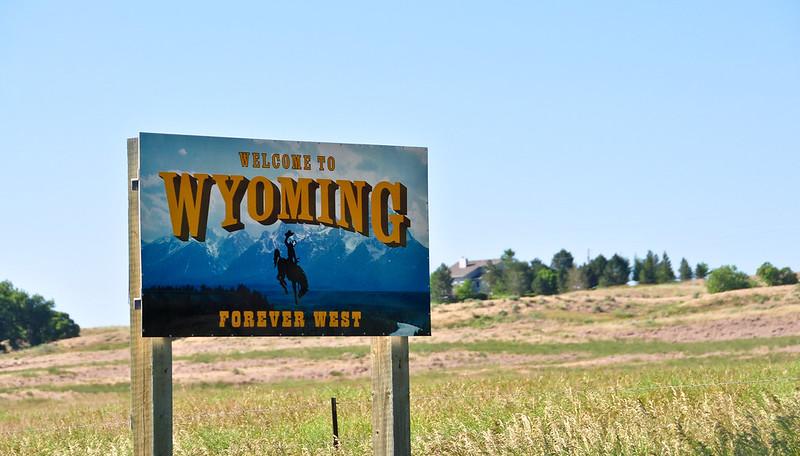
Wyoming has taken action to further restrict online casino gambling in the state after lawmakers from the state’s Select Committee on Gaming unanimously voted to introduce draft legislation banning online sweepstakes casinos.
At the moment, Wyoming bars only online casinos from operating within the state, while online sports betting and daily fantasy sports are legal.

According to the Laramie Boomerang, the initial ban on online casinos did not cover sweepstakes gaming, with Wyoming Gaming Commission head Nicholas Larramendy explaining to lawmakers last week that previously, when they received complaints regarding sweepstakes, it was unclear whether the state’s Consumer Protection and Antitrust Unit or the Gaming Commission would handle the task.
“They give it to us. We look at it. Then we get the argument that this is under consumer protection,” Larramendy had commented. He added that it would create a constant back-and-forth between the two regulators but said the new draft legislation would make it clear that sweepstakes casinos fall under illegal gambling.
Sweepstakes casinos differ from online casinos in that they use tokens instead of taking real money. Mostly, they are free to play with users able to purchase virtual coins, or sweep coins, which they can then exchange for real-world prizes. This model currently falls under promotional advertising within Wyoming’s Consumer Protection Act.

However, ahead of the unanimous vote, lawmakers also heard arguments from those who would rather sweepstakes gaming remain legal in the state.
“This is overbroad, and it does conflict with the idea that a sweepstakes in connection with a purchase of a good or service is currently valid in Wyoming and should remain valid in Wyoming,” argued Bill Gantz, an attorney for global gaming operator VGW. “If this language were adopted, Wyoming would be virtually the only state that I can think of that would not allow a free entry to be used in a game that is resulting in the award of a prize,” he continued.
Despite this, lawmakers still voted to introduce the legislation. Wyoming would become one of the latest states to ban online sweepstakes casinos, following the likes of Oklahoma and Tennessee, which also banned sweepstakes this year.
Charlotte Capewell brings her passion for storytelling and expertise in writing, researching, and the gambling industry to every article she writes. Her specialties include the US gambling industry, regulator legislation, igaming, and more.

Dig Deeper
Related stories
 2026/08/06: Wyoming postpones online casino sweepstakes ban
 2025/05/23: Wyoming regulator issues illegal igaming warning
 2026/08/25: Total Philippines gambling ad ban seen handing market back to illegal operators, data from five countries show
 2025/08/01: American Gaming Association study: Patrons consider sweepstakes to be gambling
2026/08/06: Wyoming postpones online casino sweepstakes ban
2025/05/23: Wyoming regulator issues illegal igaming warning
2026/08/25: Total Philippines gambling ad ban seen handing market back to illegal operators, data from five countries show
2025/08/01: American Gaming Association study: Patrons consider sweepstakes to be gambling
The Backstory
Wyoming moves from warning to legislation
Wyoming’s latest push to ban online sweepstakes casinos follows more than a year of concern from regulators that the state’s gambling laws have not kept pace with casino-style products offered over the internet. The state already allows online sports betting and daily fantasy sports, but not online casino gambling. Sweepstakes operators have occupied the contested space between those categories, arguing their model is promotional because users play with virtual coins and can access games without making a purchase.
That distinction has become harder for lawmakers to ignore as sweepstakes platforms increasingly resemble online casinos in format, marketing and user behavior. Slots, blackjack, roulette and poker-style games are offered through sites that do not hold Wyoming gambling licenses, while players may buy coin packages and use separate sweepstakes credits that can be redeemed for cash or prizes. Regulators have said that, in practice, consumers often treat the product as gambling even if operators frame it as a promotional sweepstakes.
The Wyoming Gaming Commission had already drawn a line publicly. In a May warning covered by Complete iGaming, the regulator said no online casino, igaming or sweepstakes site is licensed in Wyoming and cautioned that residents using such platforms do so at their own risk. That warning set the foundation for the current legislative effort: If enforcement agencies cannot clearly identify which authority is responsible, lawmakers may need to define the conduct directly in statute.
A delay exposed the enforcement problem
The unanimous committee vote came after an earlier pause. In September, lawmakers postponed action on an online casino sweepstakes ban while they weighed whether existing law already covered the activity and whether the Wyoming Gaming Commission could realistically enforce restrictions against offshore operators. That delay was not a retreat so much as a recognition that sweepstakes gaming sits at the intersection of gambling law, consumer protection and internet enforcement.
Commission Executive Director Nicholas Larramendy described the practical problem facing the state. Complaints could be routed between the Gaming Commission and the Consumer Protection and Antitrust Unit because the sweepstakes model relies on promotional-game language. If the activity is treated mainly as a consumer promotion, gaming regulators may have limited tools. If it is treated as illegal gambling, the commission’s jurisdiction becomes clearer, but enforcement against companies operating outside Wyoming remains difficult.
The bill now moving forward is intended to remove that ambiguity by expanding the definition of illegal gambling to include online casino games and sweepstakes sites. That approach would give regulators a firmer basis to act against platforms they say are targeting Wyoming residents without licensing, oversight or consumer protections. It also would signal to payment providers, advertisers and affiliated companies that the state views the business model as gambling, not merely as a marketing promotion.
The stakes are not abstract. The commission has said consumers have reported losses after offshore sites closed accounts or withheld access, leaving residents with little recourse. Because these operators are not licensed in Wyoming, the state cannot supervise game integrity, verify payouts, police advertising or mediate player disputes in the way it can for regulated sports betting companies.
Industry says the draft risks going too far
Sweepstakes operators and their advisers have pushed back by warning that broad language could sweep in ordinary promotions. Virtual Gaming Worlds, a major sweepstakes operator, has argued in Wyoming and elsewhere that lawmakers should not confuse casino-style sweepstakes platforms with retail prize drawings, product promotions or other lawful games using free entry methods. Its attorney told Wyoming lawmakers the proposal could conflict with existing rules that allow sweepstakes tied to the purchase of goods or services.
That argument goes to the central legal tension in the sweepstakes debate. Traditional sweepstakes law generally permits prize promotions if entrants are offered a no-purchase method of entry and the promotion is not structured as illegal gambling. Casino-style sweepstakes operators rely on similar concepts, but regulators and gambling industry groups say the presence of casino games, purchased coin packages and cash-redemption features changes the analysis.
The American Gaming Association has sought to strengthen that case with consumer data. In a study detailed by Complete iGaming, the trade group found that 90% of sweepstakes casino players consider the activity gambling. The AGA said many users describe sweepstakes casinos as places to wager real money and that most spend money monthly, despite the absence of safeguards required of licensed gambling operators.
For lawmakers, the question is whether intent, consumer perception and product design should matter more than the formal use of virtual tokens. If most customers believe they are gambling and can exchange winnings for money or prizes, states may be less willing to accept the argument that the product is simply a promotional game.
Other states are tightening the perimeter
Wyoming is not acting in isolation. States have begun to move against sweepstakes casinos through legislation, regulatory warnings and law enforcement actions. Oklahoma and Tennessee have approved bans this year, while several other jurisdictions have taken administrative or legal steps to limit access to unlicensed sweepstakes platforms.
New York has become one of the most visible examples. Attorney General Letitia James announced that her office had sent cease-and-desist letters to 26 operators, saying the sites violated state law by offering casino-style gambling without authorization. Complete iGaming reported that New York halted 26 sweepstakes casino operations while lawmakers considered a separate bill from Sen. Joseph Addabbo to ban the sites. The attorney general’s announcement is available through the New York attorney general’s office, and Addabbo’s proposal is listed as Senate Bill S5935A.
The New York action illustrates a broader enforcement strategy: use existing gambling law where possible, while pursuing legislation to close any claimed loopholes. The same pattern is emerging in Wyoming. Regulators first warned that unlicensed igaming and sweepstakes sites were illegal, lawmakers then examined whether current statutes were sufficient and the committee has now advanced language intended to make the prohibition explicit.
The politics also cut across party and regional lines. States with legal online sports betting but no legal online casino market are especially sensitive to products that appear to offer casino gambling without paying taxes, meeting licensing standards or complying with responsible-gaming rules. For licensed operators, the issue is competitive as well as regulatory: sweepstakes sites can operate in states where real-money online casino companies are excluded, while avoiding the costs attached to gambling licenses.
The wider lesson: channeling play or driving it offshore
The Wyoming debate also fits into a wider policy question facing gambling regulators globally: how to suppress illegal or unlicensed operators without pushing consumers further out of reach. The issue is not limited to sweepstakes. In the Philippines, a Complete iGaming analysis argued that a total gambling advertising ban could backfire by handing visibility to offshore operators that already ignore domestic law. The article found that overly broad restrictions can weaken legal channelization if licensed firms lose the ability to distinguish themselves from illegal competitors.
Wyoming’s proposal is different because it targets an unlicensed product category rather than advertising by licensed operators. Still, the same enforcement dilemma applies. A statutory ban may clarify that sweepstakes casinos are illegal, but offshore websites can change domains, rebrand and continue soliciting customers unless regulators have the resources and legal pathways to disrupt payments, marketing and access. That is why the drafting matters. A narrow bill can focus on casino-style sweepstakes that use dual-currency systems and prize redemption. An overbroad bill could create avoidable conflict with ordinary consumer promotions.
Lawmakers therefore are trying to balance three objectives: protect consumers from unregulated casino products, preserve lawful promotional sweepstakes and give regulators a statute that can be enforced beyond a warning notice. The committee’s unanimous vote suggests growing confidence that Wyoming needs a clearer prohibition. The next test will be whether the final bill can withstand industry objections while giving the Gaming Commission enough authority to act.
For consumers, the immediate message from the state has not changed. Wyoming licenses online sports betting and daily fantasy sports, but not online casino gambling. Until lawmakers settle the sweepstakes issue, regulators are likely to keep treating casino-style sweepstakes sites as unlicensed gambling platforms that offer none of the protections attached to the legal market.
