


Oklahoma anti-sweepstakes bill heads to Governor

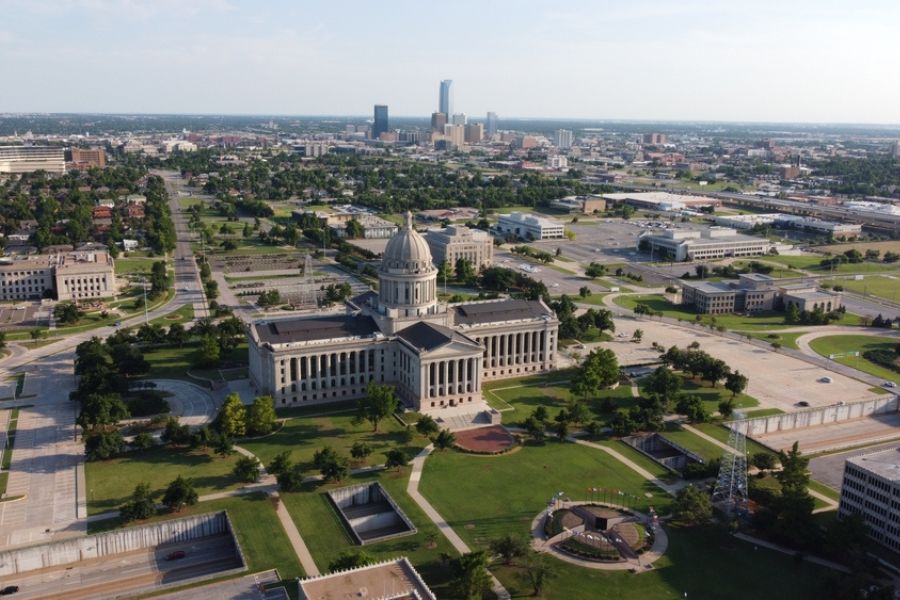
Oklahoma lawmakers have advanced a bill that would outlaw online sweepstakes casinos, with the measure now awaiting Gov. Kevin Stitt’s signature.
Senate Bill 1589, authored by Sen. Todd Gollihare, was introduced to the Oklahoma Senate in February and was swiftly referred to the Business and Insurance Committee. The bill later passed the committee on March 2 by unanimous vote and moved to the House.

The measure then received further unanimous votes by lawmakers. On April 7, it passed the House Criminal Judiciary Committee, and on April 14, it passed the Judiciary and Public Safety Oversight Committee with a vote of 15-1.
On May 4, it finally passed the House by a vote of 65-21, and on May 5, it was enrolled and signed before heading to the governor’s desk.
The measure goes on to define what constitutes online casino gaming and to amend the definition of a “representative of value” to include virtual currency used as part of a dual system that can then be exchanged for any real-world prize or cash equivalent.

The measure reserves the right for any current or future online gaming to be conducted only on tribal lands.
Those found to be gambling either through sweepstakes or other unregulated forms of gambling not on tribal land would face a Class C2 felony offense and be given a fine between US$500 and US$2,000.
If signed, the bill will go into effect on November 1.

It follows similar moves by other states, most recently Louisiana advanced a bill that would place sweepstakes casinos as a racketeering offense.
Charlotte Capewell brings her passion for storytelling and expertise in writing, researching, and the gambling industry to every article she writes. Her specialties include the US gambling industry, regulator legislation, igaming, and more.

Dig Deeper
Related stories


The Backstory
Why Oklahoma moved against sweepstakes casinos
Oklahoma’s push to outlaw online sweepstakes casinos reflects a broader fight over who controls digital wagering and how far state law should go to police gray-market gambling. Lawmakers advanced Senate Bill 1589 with lopsided committee and floor votes and sent it to Gov. Kevin Stitt for action. The bill tightens state definitions to treat virtual currencies used in dual-currency social casinos as a “representative of value” if they can be redeemed for cash or prizes, closing a popular workaround that operators say falls outside traditional gambling statutes. It also reserves any current or future online gambling to tribal lands, aligning with Oklahoma’s longstanding compact-driven framework and putting unregulated play off-reservation on the wrong side of the law with felony penalties. If signed, the measure would take effect Nov. 1.
Legislators cast the bill as a clean-up effort to protect consumers and tribal exclusivity as social casino products blur lines. The text amends core definitions to ensure that game mechanics tied to cash-out “sweepstakes” are treated like gambling. That approach mirrors efforts in other states to draw bright lines around digital casino-style games that are not taxed or licensed like full gambling operations.
For bill details and status, see the Oklahoma docket for SB 1589.
The California flashpoint reshaped the debate
Oklahoma’s action arrives as California becomes a high-profile test of how states will treat sweepstakes casinos. Lawmakers in Sacramento advanced Assembly Bill 831 to ban sweepstakes-style online casinos statewide. The measure prompted a public campaign from the Social Gaming Leadership Alliance, which urged Gov. Gavin Newsom to veto the bill and argued for a regulatory path instead of prohibition. The group pointed to survey data showing strong consumer support for allowing the games to continue under rules and taxation, and warned of economic losses if the market is shut down. Read more about the SG Leadership Alliance’s push in its appeal to Newsom. The bill text is posted by the Legislature at AB 831.
Tribal positions in California complicated the narrative. A set of smaller and more geographically isolated nations said a ban would deepen economic gaps and infringe on sovereignty with criminal penalties they argue collide with federal protections. Their opposition, detailed in coverage of tribal protests to AB 831, underscored fractures within Indian Country over how to manage off-reservation digital markets and who benefits from any new online revenue streams. Those arguments echo in Oklahoma, where SB 1589 steers any future online gambling to tribal lands while pushing unregulated sweepstakes play out of the state.
Tribal control vs. market access: lessons from sports betting
The sweepstakes crackdown is unfolding alongside a separate, high-stakes conversation about legalized sports betting in Oklahoma. The Senate narrowly advanced a bill to authorize mobile wagering primarily on tribal lands and to permit one license tied to the state’s NBA franchise, the Oklahoma City Thunder. The bill passed by the minimum threshold after an earlier attempt fell one vote short, a sign of how finely balanced the politics are when market access and monopoly concerns collide. For context, see Oklahoma’s Senate progress on sports betting.
Other states offer a preview of the trade-offs. Wisconsin moved an online sports betting bill that mirrors Florida’s model by channeling mobile bets through tribal nations. The measure advanced despite polling that showed voters opposed and amid pushback from commercial operators who prefer a constitutional route and broader market access. The debate, captured in Wisconsin’s bill heading to Gov. Tony Evers, shows how compact-centered designs can draw fire from sportsbooks that seek direct licensing. While Oklahoma’s SB 1589 focuses on sweepstakes casinos, it sits within the same policy frame: preserve tribal exclusivity, define who can offer online bets and cut out gray channels that erode compact value.
A divided national map on sweepstakes enforcement
States are split on whether to ban sweepstakes casinos outright or fold them into a regulated ecosystem. Louisiana’s experience illustrates the challenge of writing enforceable prohibitions. Lawmakers in Baton Rouge passed a bill to criminalize sweepstakes operations with large fines and jail time, only to see Gov. Jeff Landry veto it as redundant and overly broad. He argued existing powers were adequate to pursue bad actors and warned the language could interfere with ongoing enforcement. The reversal, reported in coverage of Louisiana’s veto, shows why some governors hesitate to expand criminal statutes for internet gambling when regulators can already act.
California is moving in the opposite direction with AB 831’s strict ban, though the governor has yet to decide. Oklahoma’s SB 1589 tracks closer to the California model by targeting the virtual-currency mechanics of dual-wallet social casinos and imposing state-level penalties, while also clarifying that only tribally controlled online gambling is permissible. That triangulation seeks to deter off-reservation sweepstakes play, protect compacts and avoid the enforcement ambiguity that sank Louisiana’s bill. Still, the Louisiana outcome serves as a reminder that governors may resist new crimes if regulators lack resources or if language could sweep too broadly.
Policy stakes: definitions, penalties and sovereignty
What differentiates Oklahoma’s bill is the technical rewrite of foundational gambling terms. By expressly treating redeemable virtual currencies as items of value, SB 1589 blunts operators’ arguments that their sweepstakes systems fall outside gambling definitions because purchases buy entertainment, not outcomes. The bill backs that with penalties for off-reservation, unregulated gambling and carves out online gaming exclusively on tribal lands. That exclusivity preserves a key compact pillar and may help Oklahoma in future talks over mobile sports betting and digital casino products, which would likely require new or amended agreements.
California’s tribal dissenters against AB 831 warned that blanket penalties could implicate sovereignty and limit economic options for remote nations. Those themes resonate in Oklahoma because enforcement against sweepstakes operators could ripple into player communities and local economies. The state’s compact structure creates a clear jurisdictional line, but implementation will test how smoothly agencies coordinate investigations and how courts interpret the new “representative of value” language when applied to evolving game mechanics.
What to watch as Nov. 1 approaches
If Gov. Stitt signs SB 1589, the next phase turns on enforcement guidance, coordination with tribal regulators and whether operators challenge the statute based on constitutional or federal preemption claims. California’s pending decision on AB 831 and the fallout from advocacy for a veto will influence national operators’ risk calculus. Louisiana’s veto signals governors will scrutinize drafting and agency capacity before endorsing new crimes. In Oklahoma, parallel movement on sports betting, outlined in the Thunder-linked bill, will shape how much value tribes place on digital exclusivity secured by SB 1589.
The bottom line: states are converging on a choice. Ban sweepstakes casinos with precise definitions and penalties, or build a regulatory on-ramp that taxes and supervises them while preserving compact value. Oklahoma’s bill hews to the first path and strengthens tribal control over any online future. Whether that approach curbs gray-market play or drives it deeper underground will depend on execution and whether lawmakers later pair prohibition with regulated alternatives.
