


Playson builds on Latin America presence with Colombia launch

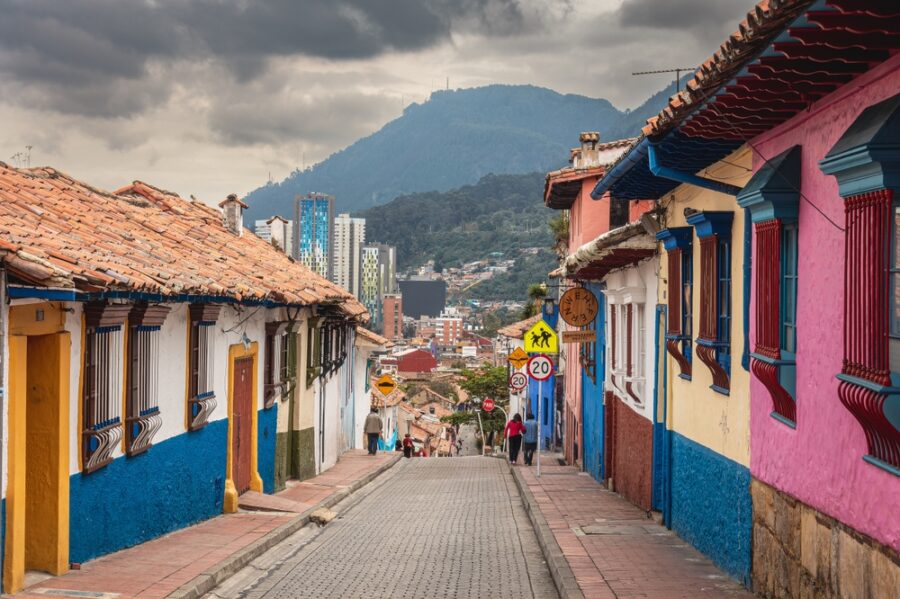
Online games developer Playson has expanded its presence in Latin America by launching in Colombia after receiving certification from the country’s gambling regulator, Coljuegos.
The approval allows Playson to offer its gaming platform and games portfolio in one of Latin America’s biggest regulated markets.

The launch took place in partnership with online operator Rush Street Interactive, which operates in multiple South American jurisdictions. The deal means Rush Street Interactive will include some of Playson’s gaming titles on its Colombian gaming platform.
Explaining the significance of the Colombian license, Playson Head of Latin America Christhian Zito said, “Entering the Colombian market is an important milestone for Playson, and doing so alongside Tier-1 operator of the region makes it even more meaningful. Colombia is a highly respected regulated market, and completing the certification process reflects months of focused work to meet its stringent requirements.”
Playson is not the only games developer looking to expand its presence in Latin America. In December, Stakelogic also entered the Colombian-regulated market through a partnership with online operator Betplay.

Dig Deeper
Related stories



The Backstory
Why Colombia Became a Launchpad
Colombia’s regulated market has emerged as a proving ground for global igaming suppliers seeking scale in Latin America. A decade of steady oversight by Coljuegos, combined with a mature online ecosystem and operators with deep regional ambitions, has drawn a wave of content deals and certifications. It also gives suppliers a blueprint for compliance and distribution before moving into larger, less settled markets. That backdrop explains why platform and content launches in Colombia often serve as the first step in regional playbooks, even as newer markets open to bigger near-term demand.
The country’s established operators, including those backed by multinational brands, have acted as anchors for content studios aiming to broaden reach quickly. Rush Street Interactive’s Rushbet, for example, has been an early conduit for suppliers building a LatAm footprint. The operator’s multi-country strategy and appetite for third-party content have helped newer studios enter and scale, and those integrations frequently spin into deals across neighboring jurisdictions once performance data supports expansion.
That dynamic has set the stage for a competitive sprint among suppliers to secure distribution, tune content to local tastes and lock in visibility with top operators. The push in Colombia now folds into a wider regional race where regulatory momentum, operator consolidation and localized product suites are reshaping who wins traffic and wallet share.
Brazil’s Opening Changes the Stakes
While Colombia offers stability, Brazil supplies raw scale. The country’s regulated online market opened Jan. 1, 2025, and has quickly become the lodestar for supplier strategy. Early movers have prioritized distribution, licensing and go-to-market partnerships to capture share as operators ramp up.
One of the most aggressive expansions came from Playson’s competitors and peers. IGT PlayDigital entered with a slate of globally tested titles after the market launched, positioning itself with a content roadmap tailored to Brazil’s growth curve. The company said it is committed to supporting customers with engagement tools and a pipeline of titles built to drive retention, as detailed in IGT PlayDigital extends Latin America presence with Brazil launch.
Playson, meanwhile, built optionality through a sequence of integrations and partnerships. After gaining Brazilian approval in early February, the supplier moved to distribute content via established operators and hubs. It added reach through its tie-up with KTO, pushing titles through the Bragg Hub and citing confidence in Brazilian demand, according to Playson expands Brazil presence with KTO partnership. The company then broadened access again through a platform deal with Cactus Gaming to penetrate Brazil and the wider region, as reported in Playson expands in Latin America through Cactus Gaming deal.
Those moves signal how suppliers are triangulating Latin America: secure credibility and data in Colombia, then convert that proof into distribution and scale in Brazil, where the addressable player base and operator competition are highest.
Rush Street’s Regional Footprint as a Catalyst
Rush Street Interactive’s early investment in Latin America has shaped the supplier landscape. The company launched operations in Colombia in 2018 and pushed deeper into the region with a July 2024 expansion to Peru under its Rushbet brand. Management called Peru a complementary pillar alongside Colombia and Mexico, with potential for further regional growth, underscoring how one integration can cascade into multi-country exposure for content partners. The strategy and its implications were outlined in Thunderkick launches in Colombia with Rushbet.
That same Rushbet partnership has become a common entry route for suppliers aiming to quickly validate content in regulated LatAm markets. Thunderkick used the relationship to debut titles such as Sword of Arthur and Midas Golden Touch 2 in Colombia, benefiting from Rushbet’s established user base and marketing infrastructure. The playbook is straightforward: land with a distributor that can test, promote and cross-sell, then iterate based on performance data while planning extensions to additional countries.
For suppliers, the advantage is speed and insight. For operators, the benefit is fresh content and the ability to localize portfolios without shouldering heavy development costs. The sum is a more fluid pipeline of games and features, with regional engagement data flowing back to studios, sharpening future releases and helping prioritize which titles to certify next.
Localizing Content and Infrastructure
A second front in the LatAm race is localization—both in content and infrastructure. Pragmatic Play advanced that agenda by committing US$15 million to a live casino studio in Bogota that could create up to 1,500 jobs and run more than 100 tables with Spanish- and Portuguese-speaking dealers. By anchoring operations on the ground and offering customizable formats, the company aims to tailor experiences to local expectations and operator brands. Details on the buildout and its market rationale are in Pragmatic Play expands LATAM presence with new operation in Colombia.
Localization extends beyond language. Suppliers are tuning volatility profiles, bonus mechanics and themes to match regional preferences, while also aligning with regulatory guardrails. Partnerships with platforms such as Bragg Hub or Cactus Gaming can accelerate that tuning by funneling real-time performance metrics across multiple operators. In parallel, suppliers are weighing how much to invest in exclusive or semi-exclusive deals to win visibility in crowded lobbies, especially in Brazil where operator competition is intense.
Infrastructure commitment also plays a regulatory role. Demonstrating local operations and compliance readiness can smooth approvals and renewals, a factor that becomes more valuable as more countries formalize online gambling frameworks. It is why suppliers are mixing remote distribution with in-market studios, tailored support teams and co-marketing plans built around national sports calendars and local payment habits.
What to Watch as Competition Tightens
The competitive map is still forming. Brazil’s growth trajectory has created a land grab for distribution that favors suppliers with broad portfolios, fast integration pipelines and strong operator relationships. Companies like IGT PlayDigital have emphasized proven franchises to capture early engagement, while studios with lighter brand recognition are leaning on network deals and curated rollouts to build momentum, as seen with Playson’s Cactus Gaming partnership for Brazil and LatAm and the KTO integration via Bragg Hub.
Colombia remains a bellwether. It provides a regulatory model and a testing ground that can de-risk expansion into newer markets. Suppliers that can pair Colombian validation with fast, compliant deployments in Brazil are best placed to convert early awareness into share as the region’s largest market matures.
Operator strategies will also shape outcomes. Multi-country brands with Latin American scale can amplify supplier launches, as Rushbet’s footprint suggests in Thunderkick’s Colombia debut. Expect more alliances that string together Colombia, Brazil, Peru and Mexico, with content roadmaps timed to national events and localized promotions.
The stakes are significant. With regulation spreading and capital flowing into localized studios and partnerships, the next 12 to 24 months will likely determine which suppliers control prime lobby real estate and recurring engagement in Latin America’s fastest-growing digital gambling markets.
