


Nebraska voters appear to reject proposals to legalize online sports betting

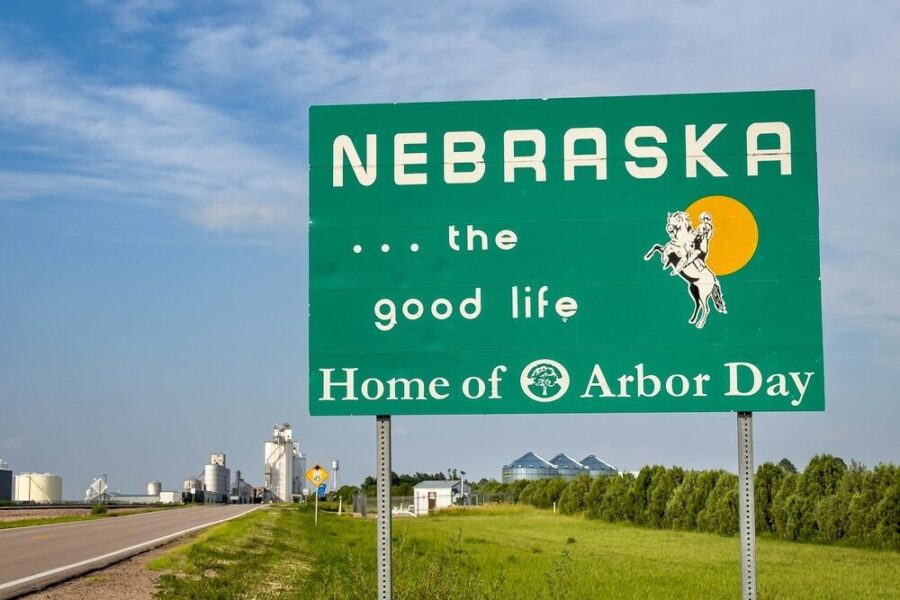
Nebraska voters appear to have rejected proposals to legalize online sports betting, according to unofficial results from Tuesday’s general election.
Both Initiative 440, which proposed amending the state constitution to legalize online sports betting, and Initiative 441, which proposed establishing a regulatory framework for the activity, were trailing in unofficial results from the Nebraska Secretary of State, with more than 350,000 votes cast against each measure.

Both measures needed to pass for online wagering to become legal. The apparent defeat follows several unsuccessful attempts to pass similar proposals through the Nebraska Legislature.
Supporters argued that residents would continue betting online regardless of state law, meaning potential tax revenue would go to neighboring states where online sports betting is legal.
Opponents argued the measures would not deliver meaningful property tax relief and highlighted the harms of expanding access to gambling. The opposition campaign, Save Nebraska Sports, was backed by state officials including Treasurer Joey Spellerberg and Auditor Mike Foley.

During his victory speech in the state treasurer race, Spellerberg said Save Nebraska Sports had been outspent 20-1 by Tax Relief Nebraska, the committee behind the measures. He added that voters understood the property tax benefits promised in advertising would be negligible.
In 2020, Nebraska voters approved casino gambling at licensed racetracks, with in-person sports betting launching in 2023. Operators pay a 20% tax on gross gaming revenue, with 70% of gaming tax proceeds allocated to the state’s Property Tax Credit Cash Fund.
The apparent rejection of both measures means sports betting in Nebraska will remain limited to in-person wagering at the state’s five racetrack casinos.

Dig Deeper
Related stories
 2026/10/26: Nebraska voters to decide on online sports betting
2026/08/24: Nebraska online sports betting measures qualify for November ballot
 2026/08/19: Nebraska pushes for legalized online sports betting but petitions face fraud concerns
 2026/07/01: Campaign to legalize online sports betting in Nebraska gets 350,000 signatures
2026/10/26: Nebraska voters to decide on online sports betting
2026/08/24: Nebraska online sports betting measures qualify for November ballot
2026/08/19: Nebraska pushes for legalized online sports betting but petitions face fraud concerns
2026/07/01: Campaign to legalize online sports betting in Nebraska gets 350,000 signatures
The Backstory
A ballot fight built around tax relief
Nebraska’s apparent rejection of online sports betting followed a campaign that framed gambling expansion as both a fiscal tool and a social risk. The two proposals on the ballot, Initiative 440 and Initiative 441, were designed to work together: one would amend the state constitution to authorize online sports wagering while the other would set the rules for regulating it. Because both needed voter approval, the defeat of either was enough to keep the market closed.
The campaign for legalization leaned heavily on a familiar argument in states that have not yet authorized mobile wagering: Nebraskans are already betting, but the activity is taking place through offshore sites, illegal bookmakers or by crossing into neighboring states. Supporters said legalization would move that activity into a regulated system, create consumer protections and capture tax revenue for property tax relief. The measures would have taxed online sports betting at the same 20% rate applied to casino gaming in the state.
Opponents countered that the promised benefits were overstated. Save Nebraska Sports, the coalition opposing the measures, argued that expanded access would increase gambling harms and do little to reduce property taxes. That message gained traction in a state where voters have already seen one gambling expansion sold partly on tax relief grounds. In 2020, Nebraska voters approved casino gambling at licensed racetracks, with in-person sports betting following in 2023.
From petition drive to statewide vote
The online wagering push began as a petition campaign backed by Tax Relief Nebraska and supported by gambling interests seeking access to a potentially valuable, if modestly sized, market. The proposals were approved for circulation after being filed in January, putting organizers on a path to gather the signatures needed for a statewide vote.
The structure of the campaign reflected Nebraska’s constitutional limits on gambling. One petition sought to change the constitution to allow licensed racetracks to offer online sports betting through partners. The second petition proposed the statutory framework, including regulation, taxation and revenue distribution. Casinos would have been able to work with operators and offer up to two online platforms, with bettors and servers required to be located in Nebraska.
By midyear, organizers reported a large cushion above the required thresholds. Tax Relief Nebraska said it had gathered more than 201,000 signatures for the constitutional proposal and 146,000 for the regulatory measure, well above the minimums then cited by the campaign. The effort was described as having collected more than 350,000 signatures across the two petitions, making ballot access appear likely even before election officials completed validation.
The campaign also drew major industry money. DraftKings and FanDuel each contributed more than $1 million, according to reports cited in prior coverage, helping fund a petition operation and advertising campaign built around the property tax message. The Sports Betting Alliance and WarHorse Casinos also supported the push, underscoring the commercial stakes for operators seeking to extend Nebraska’s existing retail sports betting market onto mobile devices.
Fraud concerns shadowed the process
Even before the measures qualified, the petition drive faced scrutiny over suspected signature irregularities. Lancaster County election officials reported potentially fraudulent signatures to state authorities, creating an early challenge for the legalization campaign. Tax Relief Nebraska said it remained confident it had submitted enough valid signatures and said any circulator found to have committed fraud should be prosecuted.
The controversy did not derail the measures. Election officials later confirmed that the petitions had met the legal requirements for the ballot. The constitutional amendment required signatures equal to 10% of Nebraska’s electorate and support across at least 38 counties, while the statutory initiative required 7% and the same geographic distribution. The measures ultimately qualified for the November ballot after state review, with questioned signatures excluded from valid totals.
That certification shifted the battle from access to persuasion. Supporters presented online betting as a controlled extension of gambling voters had already approved. Opponents used the fraud concerns and industry funding to argue the push was being driven by national sportsbook companies rather than local demand. The contrast helped define the campaign’s central tension: whether mobile betting was an inevitable activity best regulated by the state or a new form of gambling whose convenience would magnify risks.
Fiscal promises met skepticism
The pro-legalization campaign’s strongest argument was revenue. A study commissioned by Tax Relief Nebraska estimated that online sports betting could generate just under $87 million in state tax revenue over five years, with about $61 million directed to property tax relief. The framework would have allocated 70% of gaming tax proceeds to the state’s Property Tax Credit Cash Fund, mirroring the broader tax-relief rationale used for casino gambling.
That pitch came as Nebraska faced budget pressure. Ahead of the vote, supporters pointed to a projected $846 million deficit for the two-year budget ending June 30, 2029, and argued that the state should not leave gambling revenue in other jurisdictions. State Sen. Jason Prokop and Tax Relief Nebraska sponsor Jordan McGrain were among those arguing legalization would bring existing betting into a regulated market rather than create it from scratch.
Opponents, including State Treasurer Joey Spellerberg and State Auditor Mike Foley, attacked the scale of the claimed benefit. They argued the revenue would be too small to produce meaningful property tax relief and said prior gambling expansion had not translated into lower bills for homeowners. A pre-election fight over the online sports betting measures increasingly centered on whether the property tax message was a realistic fiscal plan or a marketing slogan.
The skepticism proved important because property taxes are a persistent political issue in Nebraska. For many voters, the question was not only whether the state should regulate betting but whether the payoff justified broader gambling access. Save Nebraska Sports emphasized that distinction, arguing that even if the market produced new tax revenue, it would be diluted across the state and would not materially change household tax burdens.
Sports culture became a fault line
The opposition campaign also drew on Nebraska’s deep college sports identity. A letter signed by former Nebraska football coach Tom Osborne and 44 other current and former Huskers athletes and coaches warned about game manipulation, gambling advertising and harassment of student-athletes. The intervention gave Save Nebraska Sports a culturally resonant argument in a state where college athletics carry influence beyond the campus.
Those concerns mirrored a national debate over the rapid spread of legal sports betting since the U.S. Supreme Court cleared the way for states to authorize it in 2018. As mobile wagering has expanded, universities, athletic conferences and regulators have faced new problems tied to athlete harassment, prop bets and gambling addiction. Nebraska’s vote became part of that broader reassessment, particularly in states considering whether to move from retail-only betting to full mobile access.
Supporters said regulation could address those risks through age verification, geolocation, responsible gambling tools and licensing requirements. The proposed regulatory measure would have given the Nebraska Racing and Gaming Commission until June 1, 2027, to adopt rules for the market. But opponents argued that the phone-based model was fundamentally different from in-person betting at racetrack casinos because it made wagering constant and easier to access.
What the rejection leaves in place
The apparent defeat leaves Nebraska with a limited sports betting model. Wagering remains confined to in-person bets at the state’s racetrack casinos, a structure that benefits existing properties but restricts the market compared with neighboring states where online betting is legal. Operators still pay a 20% tax on gross gaming revenue, and casino-related tax proceeds continue to flow largely toward property tax relief under the system voters approved in 2020.
For national sportsbooks, the result represents another setback in a state-by-state expansion strategy that has become more difficult as the most lucrative markets have already launched. Nebraska is not large enough to reshape the national betting industry, but its vote shows that industry-funded tax campaigns can still falter when opponents make the debate about addiction, college sports and the credibility of fiscal promises.
The outcome also complicates any near-term legislative path. Nebraska lawmakers had previously failed to pass online sports betting proposals, and the statewide vote gives opponents a fresh argument that voters are not ready to expand beyond retail betting. Supporters may return with a revised proposal, but any future effort would have to overcome the same doubts that defined this campaign: whether online wagering would deliver enough public benefit to offset the risks of making betting available statewide on mobile phones.