


Nebraska pushes for legalized online sports betting but petitions face fraud concerns

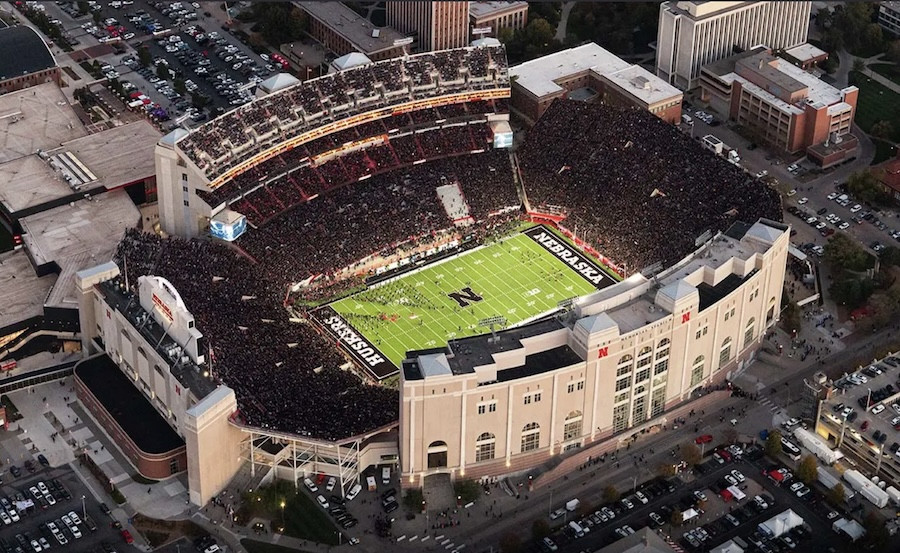
Two petitions to legalize online sports betting in Nebraska have faced fraud concerns over potentially fake signatures, despite Tax Relief Nebraska – the organization behind the petitions – saying it remained confident the matter would reach the November ballot.
The two petitions were filed earlier in January and were approved by the Nebraska Secretary of State for circulation the following month. Both tackle the possibility of expanding the state’s sports betting market to include online operators.

One petition aims to change the state’s constitutional amendment to include online sports betting and has gathered more than 201,000 signatures despite needing only around 126,000. The second petition, which would create a regulatory and tax framework for online sports betting, received 146,000 signatures, more than the 88,000 needed.
Because both petitions exceeded the minimum number of signatures, the motion is most likely headed for Nebraska’s general election in November, giving voters the chance to decide whether to legalize online sports betting.
However, according to the Lincoln Journal Star, Todd Wiltgen, Lancaster County Election Commissioner, claimed that potentially fraudulent signatures had been reported to the Nebraska Secretary of State’s Office and the county sheriff.

Yet, Tax Relief Nebraska has said that they had not heard directly from either Wiltgen or the county sheriff regarding the fraudulent signatures. Despite that, they added that they remain confident they will make the November ballot.
“We remain very confident that we submitted enough valid signatures to qualify for the ballot, and if any circulator was found to have committed fraud, they should be identified and prosecuted. Our goal is to collect signatures to get on the ballot, so fraud doesn’t help anybody,” commented Tax Relief Nebraska sponsor Jordan McGrain.
The ballot measures have also received substantial financial backing from several gambling operators, with FanDuel and DraftKings each raising over US$1.1 million for Tax Relief Nebraska, according to a report by Nebraska Public Media in April.

A separate report from Eilers and Krejcik Gaming has also estimated that online sports betting would generate approximately US$87 million in state tax revenue over its first five years.
A spokesperson for the Nebraska Secretary of State’s Office has acknowledged that there has been no update to either petition so far.
Charlotte Capewell brings her passion for storytelling and expertise in writing, researching, and the gambling industry to every article she writes. Her specialties include the US gambling industry, regulator legislation, igaming, and more.

Dig Deeper
Related stories
 2026/07/01: Campaign to legalize online sports betting in Nebraska gets 350,000 signatures
 2026/02/18: Nebraska online sports betting petitions approved for circulation
2026/04/15: Sportsbooks contributing millions to legalization campaign in Nebraska
2026/04/28: Nebraska online sports betting push projected to bring US$87 million revenue boost
2026/02/18: Nebraska online sports betting petitions approved for circulation
2026/04/15: Sportsbooks contributing millions to legalization campaign in Nebraska
2026/04/28: Nebraska online sports betting push projected to bring US$87 million revenue boost
2026/07/01: Campaign to legalize online sports betting in Nebraska gets 350,000 signatures
2026/02/18: Nebraska online sports betting petitions approved for circulation
2026/04/15: Sportsbooks contributing millions to legalization campaign in Nebraska
2026/04/28: Nebraska online sports betting push projected to bring US$87 million revenue boost
The Backstory
From retail betting to a mobile ballot fight
Nebraska’s online sports betting debate has moved from the Legislature to a likely statewide vote, turning a policy dispute over gambling access into a test of voter appetite for new tax revenue and expanded wagering. The state already permits sports betting, but only in person at licensed casino locations. That limitation has shaped the current campaign: Supporters argue Nebraska is losing taxable activity to neighboring states and illegal offshore sites, while opponents say mobile betting would make gambling more accessible and more harmful.
The immediate push centers on two petitions backed by Tax Relief Nebraska. One would amend the state constitution to allow online sports betting. The other would establish the regulatory and tax structure to govern it. The campaign says both measures have cleared the signature thresholds needed to appear before voters in the 2026 general election, though election officials still must verify signatures and address fraud concerns that have surfaced during the review process.
The structure matters because Nebraska gambling expansions have required voter approval. That made the petition drive a practical alternative after repeated legislative attempts stalled. It also means the campaign must satisfy two separate questions: whether voters want online sports betting at all and whether they accept the proposed framework for taxing and regulating it.
Petitions built around tax relief
The campaign’s appeal has relied heavily on property tax relief, a persistent political issue in Nebraska. Tax Relief Nebraska submitted more than 201,000 signatures for the proposed constitutional amendment and about 146,000 for the regulatory measure, according to the campaign’s reported signature totals. Those figures exceeded the approximate requirements of 126,000 and 88,000 signatures, respectively.
The petitions were filed Jan. 9 and approved for circulation in February. Under the proposal described when Nebraska’s online betting petitions were approved, licensed horse racing tracks could partner with operators to offer mobile wagering. Casinos would be allowed to work with up to two sportsbooks. The tax rate would mirror the 20% rate applied to Nebraska’s land-based casinos, with most proceeds directed toward property tax relief.
That design reflects lessons from Nebraska’s 2020 gambling vote, when voters legalized casino gambling tied to licensed racetracks and directed a large share of tax revenue to property tax credits. Online sports betting supporters are trying to attach the new product to that same political logic: If wagering is already happening, they argue, Nebraska should regulate it and use the proceeds for public benefit.
The ballot language is split because legalization and implementation are distinct. The constitutional amendment would authorize the activity, while the statutory initiative would provide the operating rules. If one advanced without the other, lawmakers or regulators could face uncertainty about how quickly the market could open and how revenue would be distributed.
Industry money changed the scale
The campaign also has become a major political finance story. National sportsbook operators have helped fund the petition drive, underscoring Nebraska’s value as one of the remaining states where legal sports wagering exists only in a retail form. Sportsbooks have contributed millions to the Nebraska legalization campaign, including more than $1.1 million each from FanDuel and DraftKings to Tax Relief Nebraska during February and March, according to Nebraska Public Media reporting cited in earlier coverage.
Those contributions helped professionalize a statewide signature effort that required broad geographic reach. Nebraska initiatives must not only clear a statewide signature threshold but also meet county distribution rules, requiring signatures from at least 5% of registered voters in 38 of the state’s 93 counties. That makes money, organization and paid circulation particularly important.
The industry’s interest is not limited to ballot petitions. Earlier reporting showed gambling-related companies also contributed to state officials, including Gov. Jim Pillen and Attorney General Mike Hilgers. Supporters described the donations as normal political engagement by companies affected by state policy. Critics view the spending as evidence that national operators see a lucrative opening and are using tax relief messaging to win access to the market.
Local casino interests have also supported expansion. WarHorse Casinos and the Sports Betting Alliance, which represents major sportsbook operators, have been aligned behind the push. Their support reflects the structure of the proposal, which would route online betting through licensed racetrack casino interests rather than create a wholly independent mobile market.
Revenue projections and skepticism
The fiscal case for online sports betting has been central to the campaign. A study by Eilers & Krejcik Gaming, commissioned by Tax Relief Nebraska, projected that online sports betting could generate about $87 million in state tax revenue over five years. Earlier coverage of the projected $87 million revenue boost said roughly $61 million would flow into property tax credits if the allocation mirrored Nebraska’s casino gambling formula. Another 2.5% would go to the state’s Compulsive Gambling Fund.
Supporters say the revenue is now being lost. State Sen. Eliot Bostar, who previously pushed a legislative route, cited geolocation data showing millions of attempts to access regulated sportsbooks from inside Nebraska and tens of thousands of border crossings, most into Iowa, to place bets. In that view, legalization would not create demand so much as capture activity already occurring outside Nebraska’s tax and consumer protection systems.
But the revenue argument has limits. State Sen. Brad von Gillern, chair of the Legislature’s Revenue Committee, has warned that projected proceeds would represent only a small share of Nebraska’s broader property tax program. His critique goes to the political core of the campaign: Online sports betting may raise money, but it is unlikely to transform homeowners’ bills. Opponents say framing the measure as tax relief risks overstating its practical effect.
There also are social-cost objections. During legislative debate, critics including Nebraska Family Alliance representatives and people who described gambling-related losses warned that mobile betting could worsen addiction and financial distress. Their argument is that the difference between retail and mobile betting is not convenience alone. A phone-based market allows wagering at any time, making losses faster and harder to monitor.
Why lawmakers failed to settle it
The ballot push gained momentum because the Legislature did not deliver a resolution. Nebraska lawmakers considered online sports betting proposals in recent sessions, including a bill and constitutional amendment approach that would have sent the question to voters if approved. Lawmakers heard arguments for online sports betting that emphasized regulation, tax capture and property tax relief, but the proposals did not advance into law.
Those failures reflected a familiar divide in gambling policy. Proponents said Nebraska already permits sports betting and should modernize the market to reflect how consumers place wagers. Opponents said mobile access would materially expand gambling and increase harms. The retail-only compromise approved after the 2020 vote left both sides with arguments: Supporters could say legalization had already been accepted, while opponents could say voters had not approved betting from phones.
The initiative process shifts that dispute from committee rooms to a statewide campaign. It also changes the incentives. Lawmakers can amend, narrow or delay proposals. Voters will be asked to approve or reject set language. That raises the stakes of signature validation because ballot qualification may determine whether Nebraska’s next major gambling decision is made by the electorate rather than the Legislature.
Fraud questions create a final hurdle
The latest complication is the allegation of potentially fraudulent signatures. Lancaster County Election Commissioner Todd Wiltgen reported concerns to the Nebraska Secretary of State’s Office and the county sheriff, according to earlier reporting. Tax Relief Nebraska has said it had not been contacted directly by those offices and remains confident it submitted enough valid signatures to qualify, even if some signatures are rejected.
That confidence is based on the campaign’s cushion above the minimum thresholds. Still, fraud concerns can affect more than arithmetic. They can slow certification, give opponents a line of attack and raise public doubts about a process already financed heavily by gambling interests. If officials find misconduct by circulators, the legal issue may be contained to specific signatures or individuals. Politically, however, the controversy could become part of the broader argument over whether the campaign is a grassroots tax measure or an industry-driven expansion.
If the petitions survive review, Nebraska voters will face a consequential choice in November 2026. Approval would move the state from a limited retail betting model to a regulated mobile market tied to casinos and national sportsbook brands. Rejection would preserve the current system and likely send the issue back to lawmakers or future ballot campaigns. Either outcome will shape how Nebraska balances tax policy, gambling access and consumer protection in a market that neighboring states have already embraced.
