


Nebraska online sports betting push projected to bring US$87 million revenue boost

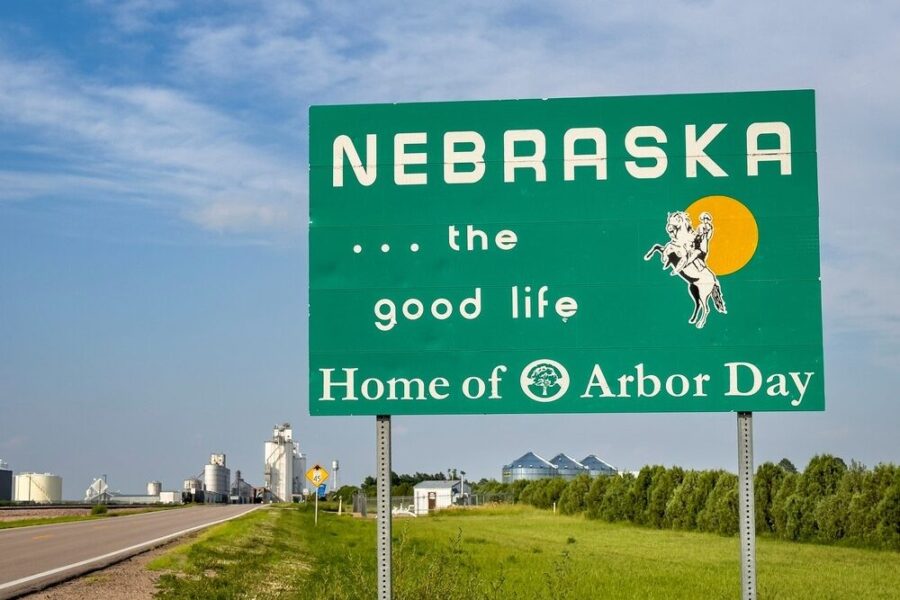
A campaign to put online sports betting on Nebraska’s 2026 ballot has received fresh backing from research projecting US$87 million in state tax revenue over five years.
The figures, produced by Eilers & Krejcik Gaming, were commissioned by petition group Tax Relief Nebraska, according to the Nebraska Examiner.

Roughly US$61 million of the projected revenue would flow into property tax credits if the measure mirrored the 70% allocation already used for voter-approved casino gambling. A further 2.5% would be directed to the state’s Compulsive Gambling Fund.
Petition sponsor Jordan McGrain said signature gathering was running ahead of schedule. He framed the initiative as a way to claw back revenue lost to neighboring states, noting that every Nebraska border state except South Dakota had already legalized online sports betting.
Opposition came from State Sen. Brad von Gillern, chair of the Legislature’s Revenue Committee, who argued the annual yield amounted to about 1% of the existing property tax program.

Von Gillern said, “If people are voting for the online gambling initiative believing that it’s going to substantially change their property tax bill, they’re going to be sadly disappointed.”
Previous legislative efforts had stalled. The most recent, Legislative Bill 421, was introduced by State Sen. Stanley Clouse alongside a constitutional amendment from State Sen. Eliot Bostar, and projected roughly US$70 million over four years.
Charlotte Capewell brings her passion for storytelling and expertise in writing, researching, and the gambling industry to every article she writes. Her specialties include the US gambling industry, regulator legislation, igaming, and more.

Dig Deeper
Related stories
 2026/07/01: Campaign to legalize online sports betting in Nebraska gets 350,000 signatures
 2026/02/18: Nebraska online sports betting petitions approved for circulation
2026/04/15: Sportsbooks contributing millions to legalization campaign in Nebraska
2025/03/11: Nebraska lawmakers to consider online sports betting
2026/02/18: Nebraska online sports betting petitions approved for circulation
2026/04/15: Sportsbooks contributing millions to legalization campaign in Nebraska
2025/03/11: Nebraska lawmakers to consider online sports betting
2026/07/01: Campaign to legalize online sports betting in Nebraska gets 350,000 signatures
2026/02/18: Nebraska online sports betting petitions approved for circulation
2026/04/15: Sportsbooks contributing millions to legalization campaign in Nebraska
2025/03/11: Nebraska lawmakers to consider online sports betting
The Backstory
Momentum builds as fiscal stakes sharpen
Nebraska’s latest push to legalize online sports betting pivots on a new revenue forecast and a familiar argument: money is leaving the state. Supporters have embraced updated projections to frame the question as tax relief versus tax leakage, while opponents warn the financial upside is limited and social costs are real. The campaign now unfolding grew from months of legislative hearings, a committee advance, grassroots organizing and, more recently, ballot petitions aimed at 2026. Each step has clarified the policy trade-offs and political math.
From hearings to a committee green light
Online wagering returned to the Legislature this year with a constitutional amendment and a companion regulatory bill. The amendment, Legislative Resolution 20CA, would put mobile sports betting to a statewide vote and require that operators be tethered to licensed racetracks. In February, the proposal advanced from the General Affairs Committee on a six-two vote, with backers touting an estimated US$32 million in annual tax receipts tied to property tax relief. That advance marked the first concrete legislative momentum for mobile betting after years of false starts.
The committee action followed a hearing that crystallized the demand argument and the geofencing plan. Sen. Eliot Bostar, the sponsor, cited data on in-state attempts to access regulated sportsbooks and tens of thousands of border crossings to place bets in Iowa, underscoring the leakage case. He pitched mobile betting as a regulated alternative to offshore sites and a recurring revenue source for one of the nation’s higher property tax burdens. Those contours are captured in Nebraska lawmakers to consider online sports betting and the subsequent committee move in Nebraska online sports betting bill advances from legislative committee, which also outlines the companion framework bill, LB 421, to license and oversee operators.
Opposition coalesced at the same time. Advocacy groups warned of addiction risks and family harm. Skeptics in the Capitol stressed that any new revenue would be marginal against Nebraska’s large property tax program. Those themes have continued to shape the debate as the push shifted from committee to the floor and then, in parallel, to the ballot.
Ballot route opens a second front
Recognizing the hurdles of a unicameral chamber where a small bloc can stall contentious measures, backers pursued a two-track strategy. Alongside legislative work, supporters filed ballot petitions that would ask voters to authorize online sports betting and direct the tax take to local governments and property tax relief. The Nebraska Secretary of State has approved two petitions for circulation ahead of the 2026 general election.
One measure would amend the state constitution to let licensed horse tracks partner with gaming operators and for casinos to host up to two sportsbooks. The second would set the tax treatment for mobile wagers, mirroring the 20 percent rate on land-based casinos and allocating proceeds to the cities and counties where bets occur with an emphasis on property tax relief. Signature thresholds are steep — roughly 10 percent of registered voters for the constitutional change and 7 percent for the statutory measure, with geographic distribution requirements — but the plan has institutional backing from WarHorse Casinos and the Sports Betting Alliance. The mechanics and supporters are detailed in Nebraska online sports betting petitions approved for circulation.
The petition drive gives proponents a fallback if the Legislature stalls and also amplifies the tax-relief message that underpins both tracks. It is the same message animating the latest revenue projection that pegs a five-year windfall for the state and channels the bulk of it to property tax credits and a share to compulsive gambling programs.
Procedural roadblocks and a tight vote count
Even with committee momentum, the floor path is narrow. LR 20CA cleared its first round 27-16, three votes shy of the 30 typically needed at the next stage. A threatened filibuster would push the threshold to 33. That math has turned a public policy debate into a procedural grind where a handful of swing votes decide whether the question reaches voters at all. The whip count and filibuster risk are laid out in Nebraska online sports gambling bill facing tough odds, which also notes high-profile opponents such as former governor Kay Orr and former Nebraska football coach Tom Osborne.
Backers counter that the policy is less about enthusiasm for betting than about governance: regulate an activity Nebraskans are already doing and capture revenue that is now flowing across state lines. That frame echoes Bostar’s argument on the floor and underpins the ballot strategy. The standoff has become a test of whether fiscal imperatives and voter sentiment can overcome procedural resistance before the 2026 election window closes.
A border economy and Iowa’s evolving rules
The cross-border leakage case runs through Iowa, where mobile sportsbooks are established and where Nebraska residents routinely drive to place legal bets. That dynamic has been a recurring point for supporters and shapes the upside estimates for tax revenue if Nebraska legalizes. It is also part of a broader Midwest pattern of states adjusting gambling rules and compliance regimes as new products emerge.
In Iowa, lawmakers this year moved to assert oversight of federally regulated prediction markets that offer contracts on real-world events. Senate File 2085 would require permits from the Department of Revenue, set a US$10 million upfront license and US$100,000 annual fee, and define covered markets across sports, politics and current affairs. The bill signals a willingness to tighten state control over adjacent wagering products as mobile betting matures. Details are in Iowa bill aims to bring prediction markets under state regulation, with the legislative text available via the state’s bill book at Iowa Senate File 2085.
For Nebraska, Iowa’s regulatory posture underscores the stakes of timing. The longer mobile betting remains illegal in Nebraska, the more entrenched cross-border habits become and the more the state cedes related tax flows. If lawmakers cannot muster the votes to advance LR 20CA this session, the petitions provide a path to let voters decide in 2026, but that introduces a multiyear lag where leakage persists and opponents can organize.
What to watch next
In the near term, watch the Nebraska Legislature’s floor calendar and whether supporters can flip a small number of votes or negotiate guardrails that draw undecided senators. Pay attention to any shifts in the revenue split that address concerns about the impact on property tax bills. On the ballot front, the pace of signature gathering, the breadth of county-level participation and the durability of coalition support from casino operators and national sportsbook alliances will signal viability. Across the river, Iowa’s handling of prediction markets will show how neighboring regulators are drawing lines around new wagering products that could influence Nebraska’s eventual framework.
