


Sportsbooks contributing millions to legalization campaign in Nebraska

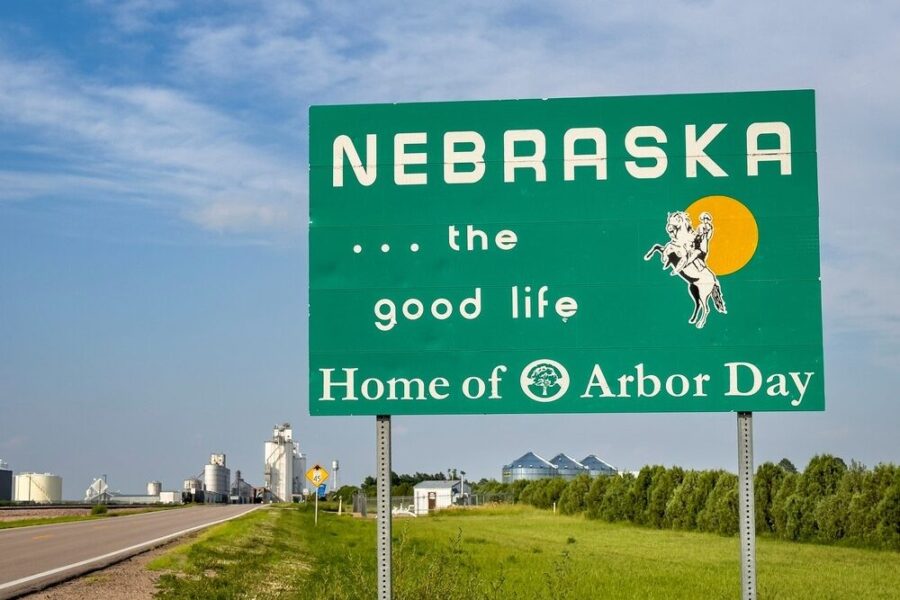
Sportsbook operators are contributing millions to political campaigns in Nebraska as efforts continue to expand legal online sports betting in the state.
Campaigning group Tax Relief Nebraska began circulating petitions in February to legalize and regulate online sports betting, aiming to secure signatures from 10% of registered voters for legalization and 7% for regulation to get the issue onto the 2026 ballot.

According to Nebraska Public Media, the group also reportedly raised more than US$2.6 million in February and March, including US$1.1 million each from operators FanDuel and DraftKings.
Elected officials, including Gov. Jim Pillen and Attorney General Mike Hilgers, have received contributions from online gambling-related companies.
Hilgers received US$75,000 from FanDuel, PrizePicks, the Coalition for Fantasy Sports, WarHorse Gaming, and Husker Gaming, a subsidiary of skill game operator Accel Entertainment.

In turn, Pillen received US$70,000 from two of the state’s casino operators, WarHorse Gaming and Grand Island Casino Resort, as well as donations from Caesars and Husker Gaming.
“We’re no different than the Nebraska Cattlemen or the [Nebraska State Education Association] or any of those other groups that are concerned about how legislation might affect them, so we give contributions to candidates that we think understand our issue,” said Lynne McNally, director of government relations at WarHorse, in response to the donations.
Nebraska voters legalized gambling in 2020, but only for in-person casino sportsbooks, and attempts to legalize online sports betting failed in 2024 and 2025.

Dig Deeper
Related stories
 2026/07/01: Campaign to legalize online sports betting in Nebraska gets 350,000 signatures
 2026/02/18: Nebraska online sports betting petitions approved for circulation
2026/04/28: Nebraska online sports betting push projected to bring US$87 million revenue boost
2025/03/11: Nebraska lawmakers to consider online sports betting
2026/02/18: Nebraska online sports betting petitions approved for circulation
2026/04/28: Nebraska online sports betting push projected to bring US$87 million revenue boost
2025/03/11: Nebraska lawmakers to consider online sports betting
2026/07/01: Campaign to legalize online sports betting in Nebraska gets 350,000 signatures
2026/02/18: Nebraska online sports betting petitions approved for circulation
2026/04/28: Nebraska online sports betting push projected to bring US$87 million revenue boost
2025/03/11: Nebraska lawmakers to consider online sports betting
The Backstory
Why the money is flowing into Nebraska now
Nebraska’s push to legalize online sports betting reached a new phase this winter when backers secured approval to circulate ballot petitions that could take the question to voters in 2026. Support from in-state operators and national alliances has been steady, reflecting a broader shift since voters authorized in-person casino sportsbooks in 2020 but lawmakers failed to advance online betting in 2024 and 2025. The latest petitions outline a path for racetrack casinos to partner with licensed operators and allow up to two sportsbooks per casino, while directing a 20% tax largely toward property tax relief and local coffers. Those mechanics and signature thresholds are detailed in a prior report on petition approval and structure, including the requirement to gather around 10% of registered voters for a constitutional amendment and 7% for a statutory tax measure. With those guardrails in place, the 2026 ballot route gives industry and civic groups a defined timeline — and a reason to invest heavily now.
The strategy echoes campaigns in other states that leaned on direct-to-voter initiatives when legislatures balked. It also puts Nebraska on a collision course with national debates over tax rates, consumer protections and the boundaries of acceptable promotions, all issues that have become central to operator economics and state budgeting. That policy context is shaping where campaign money is going, and how fast.
Lessons from states already taking bets
Neighboring and peer markets show why operators and local partners see upside in going online. In Kansas, which launched mobile wagering in 2022, the six licensed operators generated $16 million in revenue in January, an 84% jump from December, on a handle of $293.2 million. The state reported a record $301 million including retail, with a 10% tax sending $1.6 million to the State Gaming Revenues Fund for economic development, criminal justice facilities, problem gambling assistance and the general fund. Those details, broken out by operator and month, are in coverage of Kansas’ January surge. The Kansas model underscores the link between steady monthly handles, predictable tax rates and visible earmarks — a mix that ballot campaigns often highlight to voters.
At the high end of the market, New York posted a $2.4 billion online handle in March, up from $1.9 billion in February, even as gross gaming revenue slipped month over month. The state’s nine-operator field produced $82.5 million for education, with specific allocations set aside for problem gambling education and treatment and youth sports. The top-line figures and distribution mechanics are detailed in reporting on New York’s March performance. For Nebraska backers, those benchmarks frame the potential scale while giving opponents ammunition on volatility and social costs. Both sides can find a data point.
Tax policy is the quiet battleground
Where tax rates land often decides whether operators scale up or pull back — and whether voters buy in. Maryland is a timely case study. Gov. Wes Moore has backed a proposal to raise mobile sportsbook taxes to between 15% and 30% as part of the 2026 budget to address a $3 billion deficit. Major brands have warned that higher levies could crimp promotions and bonuses, and local operators say they would be hit hardest. The political back-and-forth, including signals that lawmakers could settle closer to 20%, is outlined in analysis of Maryland’s proposed tax hike. The episode shows how quickly fiscal needs can reset operator math — and how that, in turn, affects customer acquisition and retention.
Nebraska’s petition framework mirrors its land-based casino tax rate at 20% and would send revenues to the cities and counties where bets are placed, with most proceeds directed toward property tax relief. That distribution pitch aims at voters’ pocketbooks while giving local governments a clear stake. But as Maryland illustrates, rates and earmarks can shift under budget pressure. Ballot language locks in headline numbers; legislatures still shape how far those dollars go.
Scrutiny over product design and player risk
Even as states bank new revenues, legal and public health scrutiny is intensifying. A new lawsuit from the Public Health Advocacy Institute targets major sportsbooks and a data partner, alleging that platforms are engineered to spur addictive behavior and that “micro-betting” — rapid, in-play wagers — is a core risk driver. The complaint, filed in Pennsylvania and discussed in a report on the institute’s suit against sportsbooks and the NFL’s data partner, argues that advanced analytics and real-time data encourage high-frequency betting that can harm consumers.
For Nebraska policymakers and campaigners, that case signals the next phase of regulation. States that embraced online betting early are moving to tighten controls on advertising, promotions and product features. New York’s dedicated funding for problem gambling initiatives, noted in the March handle breakdown, reflects that pivot. If Nebraska voters send online wagering to the statute books, the follow-on debate will likely focus on guardrails for in-play markets, age and ID verification, daily limits and audit trails for data-driven targeting.
What Nebraska’s path could look like
The petitions now in circulation set a clear architecture: licensed horse racing tracks could partner with operators, with up to two sportsbooks per casino, and taxes would flow primarily to property tax relief and local budgets. The specifics and signature hurdles are laid out in coverage of the petition approvals. If supporters secure enough signatures in 38 of 93 counties and across the state, the measures would appear on the 2026 ballot, giving voters the final say on both the constitutional authorization and the tax distribution plan.
The stakes are straightforward. Proponents point to neighbors like Kansas, where consistent handles, a fixed 10% tax and earmarked funds have created a stable revenue stream, as outlined in the Kansas revenue report. Skeptics cite Maryland’s tax debate and litigation over platform design, arguing that market growth brings tougher rules and thinner promotions. Even in New York, where scale is unquestioned, March revenue slid as handle rose, a reminder that margins can whipsaw with odds, outcomes and promotional intensity. The question before Nebraskans won’t be whether money is in the market — it is — but how much of it the state wants to capture, under what rules, and at what social cost.
